
















The Indian Police Service (IPS) is one of the three prestigious All India Services in India. Learn about its full form, roles and responsibilities, historical background, eligibility criteria, age limit, exam pattern, salary structure, training at the SVPNPA, and career progression from ASP to DG.
 theIAShub | 30 Apr, 2025 | 18166 | 0 |


The Indian Police Service (IPS) is one of the three All India Services in India, alongside the Indian Administrative Service (IAS) and the Indian Forest Service (IFoS). Indian Police Service forms part of the UPSC Examination. Officers of the Indian Police Service hold key positions in maintaining public order, preventing and investigating crime, and ensuring internal security. It is a career known for authority, responsibility, and the ability to make a tangible difference in society.
Also Read: UPSC Result 2025
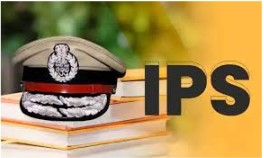
The Indian Police Service (IPS) is one of the three All India Services constituted under Article 312 of the Constitution of India. The IPS officers provide senior level leadership to Police Forces both in the States and at the Centre. The Police Division in the Ministry of Home Affairs (MHA) is responsible for Cadre management of IPS and Policy Decisions such as cadre structure, recruitment, training, cadre allocation, confirmation, empanelment, deputation, pay and allowances, disciplinary matters of IPS Officers. The Service is organized in 25 State cadres, reviewed after every 5 years. The Authorized strength of the Indian Police Service Officers stands at 5047 as on 01.01.2023. Their responsibilities include:
They serve both at the state level and in central organizations like the Central Bureau of Investigation (CBI), Intelligence Bureau (IB), National Investigation Agency (NIA), and paramilitary forces.
In 1861, the Parliament of the United Kingdom introduced the Indian Councils Act, 1861. The act created the foundation of a modern and professional police bureaucracy in India. It introduced a new cadre of police, called Superior Police Services, later known as the Indian Imperial Police. The highest rank in the service was the inspector general for each province. The rank of inspector general was equated to that of a brigadier, and similar ranks in the Indian Armed Forces, as per a central warrant of precedence issued in 1937.
In 1902–1903, a police commission was established to recommend reforms under Sir Andrew Fraser and Lord Curzon. It recommended the appointment of Indians as officers in the police. Previously, Indians could rise only to the rank of an inspector, the senior N.C.O. position. However they were not part of the Indian Imperial Police.
From 1920 onward, the Indian Imperial Police was open to Indians and the entrance examination for the service was conducted both in India and England Prior to Independence, senior police officers belonging to the Imperial Police (IP) were appointed by the secretary of state on the basis of a competitive examination. The first open civil service examination for admittance to the service was held in England in June 1893 and the ten top candidates were appointed as probationers in the Indian Imperial Police. It is not possible to identify an exact date for when the Indian Police Service came formally into being.
Around 1907, the secretary of state’s officers were directed to wear the letters “IP” on their epaulettes in order to distinguish them from other officers not recruited by the secretary through examination. Therefore, 1907 could be regarded as the starting point for the IPS. In 1948, a year after India gained independence; the Imperial Police was formally replaced by the Indian Police Service.
Also Read: Indian Revenue Service
The history of Indian policing includes several famous IPS officers who have demonstrated outstanding service and courage.
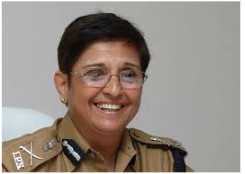
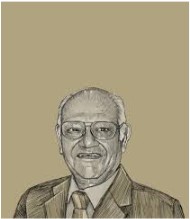

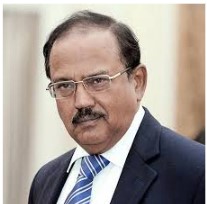
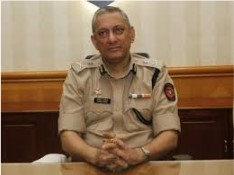
Their contributions illustrate the scope and impact of a career in the Indian Police Service.
If you are wondering how to become an IPS officer, it requires clearing one of the country’s most challenging recruitment processes — the UPSC exam for Indian Police Service. The selection process has three stages:
Candidates must secure a rank high enough in the final merit list and indicate IPS as their top preference in the services selection list.
Also Read: UPSC Exam Syllabus
The Indian Police Service exam follows the standard UPSC Civil Services Examination pattern. Here’s a summary:
Total marks: 2025 (Mains: 1750 + Interview: 275)
The final selection and service allocation depend on total marks obtained and the candidate’s preferences.
Also Read: UPSC Exam Pattern
[metaslider id=”5575″]
To appear for the Indian Police Service exam, candidates must meet specific eligibility criteria.
A candidate must hold a graduate degree from any recognized university. The stream or percentage is not a restricting factor.
Only Indian citizens are eligible for IPS.
Height, chest measurements, and vision standards are also mandatory for IPS due to the physical nature of the role.
Also Read: Indian Foreign Service
After clearing the final selection, candidates undergo structured training to prepare for their duties. The central IPS Training Centre is the Sardar Vallabhbhai Patel National Police Academy (SVPNPA) in Hyderabad.
The training is divided into:
Upon successful completion, officers receive their first posting as Assistant Superintendent of Police (ASP) in their allocated cadre.
Also Read: UPSC Result 2025
One of the frequently asked queries is about the IPS officer salary per month. The salary structure follows the 7th Pay Commission guidelines. The pay varies with rank and location.
| Rank | Pay Level | Basic Pay (₹) | Approximate Gross Salary (₹) |
| Assistant Superintendent (ASP) | Level 10 | ₹56,100 | ₹70,000 – ₹1,20,000 |
| Superintendent of Police (SP) | Level 11 | ₹67,700 | ₹85,000 – ₹1,50,000 |
| Deputy Inspector General (DIG) | Level 13A | ₹1,31,100 | ₹1,50,000 – ₹2,00,000 |
| Inspector General (IG) | Level 14 | ₹1,44,200 | ₹1,80,000 – ₹2,50,000 |
| Director General (DG) | Level 17 | ₹2,25,000 (fixed) | ₹2,50,000 – ₹3,00,000+ |
In addition to the basic salary, IPS officers receive allowances such as Dearness Allowance (DA), House Rent Allowance (HRA), Travel Allowance (TA), and Special Duty Allowance (for sensitive postings).
An IPS officer’s career begins as an ASP and progresses through structured promotions based on performance, seniority, and experience.
Along with the Indian Administrative Service (IAS) and the Indian Forest Service (IFS), the IPS is part of the All India Services[3] – its officers are employed by both the Union Government and by individual states.
The service provides leadership to various state and central police forces, including the Central Armed Police Forces (BSF, SSB, CRPF, CISF, and ITBP), the National Security Guard (NSG), National Disaster Response Force (NDRF), Intelligence Bureau (IB), Research and Analysis Wing (R&AW), Special Protection Group (SPG), National Investigation Agency (NIA), and the Central Bureau of Investigation (CBI).
Are you preparing for UPSC 2025? Join IAShub’s UPSC coaching batches to boost your preparation. Enroll now!
The Indian Police Service (IPS) is a cornerstone of India’s internal security and public administration. Understanding what is Indian Police Service, the selection process, IPS officer eligibility, training at the IPS Training Centre, career progression, and the IPS officer salary per month is essential for aspirants considering this path.

To become an IPS officer, you must clear the UPSC Civil Services Examination, followed by physical standards tests and training at the Sardar Vallabhbhai Patel National Police Academy.
A candidate must be an Indian citizen, aged 21-32 years for general category, with a graduate degree from a recognized university.
The basic monthly salary of an IPS officer starts at ₹56,100 and can go up to ₹2,25,000 depending on rank and service tenure, excluding allowances.
IPS officers are trained at the Sardar Vallabhbhai Patel National Police Academy (SVPNPA) in Hyderabad after clearing the UPSC exam.

Refine your answer writing skills and elevate your UPSC preparation with personalized support and expert feedback.
Fill out the form to get started with the program or any other enquiries !



Are you dreaming of becoming an IAS officer? Then, IAShub can be your best guide. It is one of the Best IAS Coaching in Delhi. Many students who want to clear the UPSC exam join IAShub for learning. The institute gives both online and offline classes. Their teachers are experienced and helpful. They easily explain every topic. Students also get notes, tests, and tips to do well in the exam.
IAShub is in Delhi and is trusted by many UPSC students. It offers coaching for every part of the UPSC exam – Prelims, Mains, and Interview. The classes are simple and easy to understand. The teachers are experts and guide students in the right way. IAShub is also known for its helpful notes, test series, and answer-writing practice. IAShub is the best coaching in Delhi and also gives UPSC Online Classes. This helps students from any place in India to learn. The online classes are live and also recorded. So, students can watch them anytime. These classes cover the full UPSC syllabus.
Here are some important services provided by IAShub:
The UPSC Civil Services Exam has three parts:
This exam is tough, but with the right guidance, it becomes easy to manage. Students must study smart and stay regular.
IAShub supports students from the beginning to the end. It gives the right books, tests, and notes. The classes are easy to follow, and the teachers are always ready to help. Students get personal doubt sessions too. The test series and answer checking help students learn where they need to do better. Also, free study materials save time and money.
IAShub also guides students during the final stage – the interview. Experts take mock interviews and give useful tips. This full support makes IAShub one of the best IAS coaching in Delhi.

Join 50,000+ UPSC Aspirants! 🚀
Get Free UPSC/IAS Study Materials, Daily Current Affairs, Editorial Summaries & Exam Updates.
Join Telegram Channel