Gujarat Maharashtra Statehood Day 2025 celebrates the formation of Gujarat and Maharashtra on May 1 after the division of Bombay State. The day highlights the historical journey of state formation, honors the cultural identity of both regions, showcases major events, and marks significant celebrations held across both states to remember this important moment in history.
 theIAShub | 01 May, 2025 | 4907 | 0 |

The Gujarat Maharashtra Statehood Day 2025 is celebrated by the states of Gujarat and Maharashtra on 1st May 2025 to celebrate their respective Statehood Days. From 1960, when these two states were created out of the erstwhile Bombay State, this is one of the significant events in India’s post-independence history. The Gujarat Maharashtra Statehood Day is not just a day to celebrate the formation of two states but also a reflection of the unity in diversity and the cultural richness that these two states have given to the structure of India. Candidates who are going to appear for the UPSC Exam 2025 should have knowledge about Gujarat Maharashtra Statehood Day along with their socio-political importance, as it gives an understanding about India’s historical, cultural, and political landscape.
Gujarat Maharashtra Statehood Day is celebrated May 1st every year to mark the formation of the states of Gujarat and Maharashtra. Here’s a quick overview for Gujarat Maharashtra Statehood Day 2025:
Before 1960, both Gujarat and Maharashtra were part of a larger administrative unit called Bombay State, with Mumbai (then Bombay) as its capital. However, the demand for the reorganization of states based on linguistic lines gained momentum after India’s independence. The struggle was mainly intense in the Bombay State, as Marathi-speaking people felt the need for a separate state, and similarly, Gujarati-speaking people wanted to create a state of their own.
This issue of having two states based on the linguistic lines became one of the heated topics in the 1950s, as both communities wanted administrative reorganization. The Indian government, which was led by Jawaharlal Nehru who was appointed the States Reorganization Commission in 1953 to solve these issues. Following the recommendations, the Bombay State was divided into two parts on 1st May, 1960, which led to the creation of Gujarat and Maharashtra.
Maharashtra, with Mumbai as its capital, became a state primarily for Marathi-speaking people, while Gujarat, with Gandhinagar as its capital, was carved out for Gujarati-speaking people.
Also Read: Important Days in May 2025
Maharashtra Statehood Day 2025 will be celebrated on 1st May 2025 to celebrate the formation of the state of Maharashtra. On this day in 1960, the bilingual Bombay State was reorganized, and Maharashtra was created for the Marathi-speaking population, following the success of the Samyukta Maharashtra Movement. The Maharashtra Statehood Day 2025 is also known as Maharashtra Din (महाराष्ट्र दिन), as it holds great historical and cultural significance. The official celebration includes flag-hoisting ceremonies, parades, and speeches by government leaders, particularly at important locations like Shivaji Park in Mumbai. Across the state there are cultural programs, traditional dance performances, and exhibitions showcasing the rich heritage of Maharashtra that will be organized to honor the spirit of the day. Various awards recognizing the excellence of people in different fields are also announced by the state government. Maharashtra Statehood Day 2025 is a public holiday, so government offices, schools, and many businesses will remain closed. On this day people proudly remember the sacrifices made for the formation of their state and celebrate the vibrant Marathi culture, history, and traditions. From folk dances like Lavani to traditional delicacies like Puran Poli, the spirit of Maharashtra shines brightly on this special occasion.
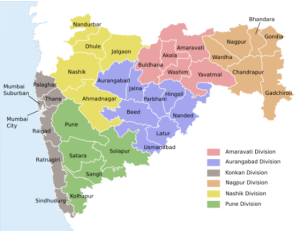
Maharashtra, located in the western peninsular region of India, is the third-largest state by area and second-most populous after Uttar Pradesh. It is the financial capital of India, with Mumbai being the state’s capital and the country’s largest city. Maharashtra is rich in history, culture, industry, and natural beauty. The state plays a leading role in India’s economy and cultural heritage.
| Feature | Details |
| State Formation Date | 1st May 1960 |
| Capital | Mumbai (Administrative) |
| Governor (2025) | C. P. Radhakrishnan |
| Chief Minister (2025) | Devendra Gangadharrao Fadnavis |
| Official Language | Marathi |
| Polity | Unicameral Legislature (Vidhan Sabha) |
| Legislative Assembly (Vidhan Sabha) Seats | 288 |
| Lok Sabha Seats | 48 (largest among all states) |
| Rajya Sabha Seats | 19 |
| Population (2021 estimate) | ~124 million |
| Literacy Rate | 82.34% (Census 2011) |
| Folk Dances | Lavani, Tamasha, Koli Dance |
| Famous Rivers | Godavari, Krishna, Bhima, Tapi, Wardha, Penganga |
| Major Cities | Mumbai, Pune, Nagpur, Nashik, Aurangabad, Solapur, Amravati, Kolhapur |
| UNESCO World Heritage Sites | Ajanta Caves, Ellora Caves, Chhatrapati Shivaji Maharaj Terminus (CST), Elephanta Caves, Victorian Gothic and Art Deco Ensemble of Mumbai |
| National Parks | Sanjay Gandhi National Park, Tadoba Andhari Tiger Reserve, Navegaon National Park, Chandoli National Park |
| Ramsar Sites | Lonar Lake, Nandur Madhameshwar, and others |
| Major Festivals | Ganesh Chaturthi, Gudi Padwa, Makar Sankranti, Diwali, Holi |
| Economic Significance | Financial, Entertainment, Industrial, Agricultural powerhouse |
| Coastline | Approx. 720 km along the Arabian Sea (Konkan Coast) |
| Education | Prestigious institutions like IIT Bombay, Tata Institute of Social Sciences (TISS), and University of Mumbai. |
| Wildlife Sanctuaries | Melghat Tiger Reserve, Bhimashankar Wildlife Sanctuary, Karnala Bird Sanctuary. |
Maharashtra’s history is rich, ancient, and influential in India’s civilization formation. The state roots go back thousands of years, through dynasties, empires, social reform movements, and India’s freedom struggle.
Also Read: National Civil Service Day
[metaslider id=”5575″]
Gujarat Statehood Day 2025 will be celebrated on 1st May, 2025. This day is celebrated as the formation of the state of Gujarat on May 1, 1960, when the former Bombay State was divided into Maharashtra and Gujarat based on linguistic lines. Every year, Gujarat Day is celebrated with parades, cultural programs, and various events showcasing the state’s rich heritage, achievements, and progress. In 2025, it will be Gujarat’s 65th Statehood Anniversary.
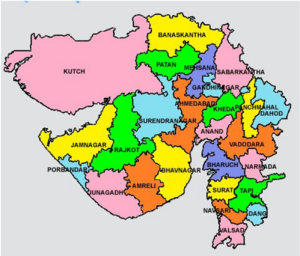
Gujarat is located on the western coast of India and is a vibrant state known for its rich history, cultural diversity, economic strength, and natural beauty. The state shares its borders with Rajasthan, Madhya Pradesh, Maharashtra, and the Arabian Sea and has an international border with Pakistan.
| Category | Details |
| Capital | Gandhinagar |
| Largest City | Ahmedabad |
| Formation Date | May 1, 1960 |
| Governor | Acharya Devvrat |
| Chief Minister | Bhupendrabhai Rajnikantbhai Patel |
| Official Language | Gujarati |
| Polity | Unicameral Legislature |
| Legislative Assembly Seats | 182 seats |
| Lok Sabha Seats | 26 seats |
| Rajya Sabha Seats | 11 seats |
| Population (Census 2011) | 6.04 crores (60.4 million); Estimated ~7 crores (70 million) by 2025 |
| Literacy Rate | 78.03% (2011 Census) |
| Folk Dances | Garba, Dandiya Raas, Tippani, Padhar Dance |
| Folk Music | Bhajan, Dayro, Marasiyas |
| Festivals | Navratri, Uttarayan (Kite Festival), Rann Utsav, Janmashtami |
| Handicrafts | Bandhani, Patola Sarees, Kutch Embroidery, Rogan painting |
| Major Rivers | Narmada, Tapi, Sabarmati, Mahi |
| Famous National Parks | Gir National Park (Asiatic Lion), Blackbuck National Park, Marine National Park (Gulf of Kutch), Vansda National Park |
| Wildlife Sanctuaries | Velavadar, Wild Ass Sanctuary (Little Rann of Kutch), Barda Sanctuary |
| UNESCO World Heritage Sites | Rani ki Vav (Patan), Champaner-Pavagadh Archaeological Park, Historic City of Ahmedabad |
| Ramsar Sites | Nalsarovar Bird Sanctuary, Thol Lake, Wadhwana Wetland, Khijadiya Wetland, etc. |
| Ports | Kandla, Mundra (largest private port in India) |
The history of Gujarat is rich, diverse, and spans thousands of years, from ancient civilizations to its modern-day significance. Gujarat state has been a land of prosperity, innovation, and cultural heritage. Below is an overview of the historical journey of Gujarat:
Ancient Gujarat (Pre-6th Century BCE)
Medieval Gujarat (7th Century – 13th Century CE)
Mughal Period (16th – 18th Century)
British Colonial Period (19th – 20th Century)
Post-Independence Era (1947 – Present)
Also Read: World Heritage Day for the UPSC Exam.
Gujarat Maharashtra Statehood Day is a celebration not just for the formation of two states but also of the cultural, political, and historical importance. For UPSC 2025 aspirants, the Gujarat Maharashtra Statehood Day offers valuable insights into key topics such as State Reorganization, Indian Polity, Regional Development, and Indian History. By understanding the importance of Gujarat and Maharashtra’s statehood, candidates can enrich their knowledge for a range of questions on Indian culture, political dynamics, and governance, providing them with a comprehensive understanding of India’s evolving national identity.
Candidates preparing for the UPSC 2025, remember that the study of India’s history, regional politics, and cultural movements like the formation of Gujarat and Maharashtra is essential in building a strong foundation for both Prelims and Mains. Consult IAShub’s UPSC coaching batches to boost preparation. Enroll now!

The division was primarily due to linguistic and cultural differences. Gujarati-speaking and Marathi-speaking populations demanded separate states to preserve and promote their languages and regional identities. That's how the Gujarat Maharashtra Statehood Day is celebrated.
Both Gujarat and Maharashtra officially came into existence on May 1, 1960.
For UPSC 2025 aspirants, understanding Gujarat Maharashtra Statehood Day is important for topics under Indian Polity (State Reorganization), Modern Indian History, Indian Geography (Regional Development), and Indian Culture (Linguistic and Cultural Identity).
Strong public movements like the Samyukta Maharashtra Movement and Mahagujarat Movement demanded the creation of separate states based on linguistic identities. This led to the bifurcation of Bombay State into Gujarat and Maharashtra.

Refine your answer writing skills and elevate your UPSC preparation with personalized support and expert feedback.
Fill out the form to get started with the program or any other enquiries !



Are you dreaming of becoming an IAS officer? Then, IAShub can be your best guide. It is one of the Best IAS Coaching in Delhi. Many students who want to clear the UPSC exam join IAShub for learning. The institute gives both online and offline classes. Their teachers are experienced and helpful. They easily explain every topic. Students also get notes, tests, and tips to do well in the exam.
IAShub is in Delhi and is trusted by many UPSC students. It offers coaching for every part of the UPSC exam – Prelims, Mains, and Interview. The classes are simple and easy to understand. The teachers are experts and guide students in the right way. IAShub is also known for its helpful notes, test series, and answer-writing practice. IAShub is the best coaching in Delhi and also gives UPSC Online Classes. This helps students from any place in India to learn. The online classes are live and also recorded. So, students can watch them anytime. These classes cover the full UPSC syllabus.
Here are some important services provided by IAShub:
The UPSC Civil Services Exam has three parts:
This exam is tough, but with the right guidance, it becomes easy to manage. Students must study smart and stay regular.
IAShub supports students from the beginning to the end. It gives the right books, tests, and notes. The classes are easy to follow, and the teachers are always ready to help. Students get personal doubt sessions too. The test series and answer checking help students learn where they need to do better. Also, free study materials save time and money.
IAShub also guides students during the final stage – the interview. Experts take mock interviews and give useful tips. This full support makes IAShub one of the best IAS coaching in Delhi.