
















Explore the Indian Foreign Service (IFS) in detail — its role, eligibility, salary, training, career progression, and how to become an IFS officer. Learn about the IFS full form, the Indian Foreign Service exam, and more.
 theIAShub | 31 Jul, 2025 | 40958 | 0 |

The Indian Foreign Service (IFS) is one of the most prestigious civil services in India. IFS officers represent the country abroad, protect its interests, and manage diplomatic relations. This career combines international exposure with public service, offering a unique mix of responsibility, travel, and influence.
In recent years, the intake into the Indian Foreign Service has averaged between 30-35 persons annually. The present cadre strength of the service stands at approximately 850 officers manning around 193 Indian missions and posts abroad and the various posts in the Ministry at home.
Also Read: UPSC Toppers List 2024
Also Known as IFS, IFS full form is Indian Foreign Service. It should not be confused with the Indian Forest Service, which shares the same abbreviation but has a different function.
The Indian Foreign Service is a Central Civil Service under Group A. It operates under the Ministry of External Affairs (MEA). IFS officers are responsible for managing India’s external affairs. Their primary role is to serve in Indian embassies, consulates, and missions abroad. They also represent India in international organizations like the United Nations.
At home, they work on foreign policy formulation, trade negotiations, cultural exchange, consular services, and crisis management. The service is a key instrument of India’s soft power and diplomatic engagement.
Also Read: Youngest IAS Officers in India
Some famous IFS officers have shaped Indian diplomacy over the years:
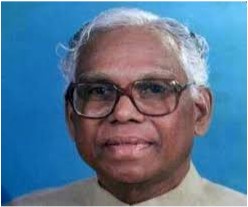
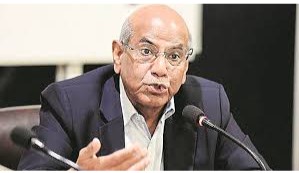
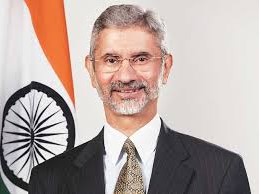
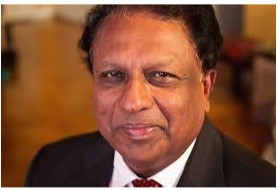

These names reflect the leadership and influence IFS officers can attain.
Also Read: UPSC marksheet
The origin of the Indian Foreign Service can be traced back to British rule. On September 13, 1783, the Board of Directors of the East India Company passed a resolution at Fort William, Calcutta (now Kolkata), to create a department, which could help “relieve the pressure” on the Warren Hastings administration in conducting its “secret and political business”. Later known as the Indian Foreign Department, it went ahead with the expansion of diplomatic representation, wherever necessary, to protect British interests.
In 1843, Governor-General Ellenborough carried out administrative reforms under which the Secretariat of the Government was organized under four departments – Foreign, Home, Finance and Military. Each was headed by a Secretary level officer. The foreign department Secretary was entrusted with the “conduct of all correspondence belonging to the external and internal diplomatic relations of the government”.
From the very beginning, a distinction was maintained between the “foreign” and “political” functions of the Foreign Department. The relations with all Asiatic powers (including native princely states of India during the British Raj) were treated as “political” and with all European powers as “foreign”.
Although the Government of India Act, 1935 sought to delineate more clearly functions of the “Foreign” and “Political” wings of the Foreign Department, it was realized that it was administratively imperative to completely bifurcate the Foreign department. Consequently, the External Affairs Department was set up separately under the direct charge of the Governor-General.
A note by Lt-Gen T. J. Hutton, Secretary, Planning and Development Department of the Government put forward the idea of establishing a separate diplomatic service to handle external activities of the Government of India. When this note was referred to the Department of External Affairs for comments, Mr Olaf Caroe, the Foreign Secretary explained the scope, composition and functions of the proposed service. Mr Caroe pointed out that as India emerged to a position of autonomy and national consciousness, it was imperative to build up a system of representation abroad that would be in complete harmony with the objectives of the future government.
In September 1946, on the eve of India’s independence, the Government of India decided to create a service called the Indian Foreign Service for India’s diplomatic, consular and commercial representation overseas.
In 1947, there was a near seamless transformation of the Foreign and Political department of the British India government into what then became the new Ministry of External Affairs and Commonwealth Relations and in 1948 the first batch recruited under the combined Civil service examination system of the Union Public Service Commission joined the service. This system of entry has remained the staple mode of intake into the IFS to this day.
Also Read: How to Prepare for UPSC
[metaslider id=”5575″]
To join the Indian Foreign Service, candidates must clear the Indian Foreign Service exam, which is the same as the Civil Services Examination (CSE) conducted by the Union Public Service Commission (UPSC).
The process has three stages:
Steps:
To appear for the Indian Foreign Service exam, candidates must meet specific criteria.
A candidate must have a graduate degree from a recognized university. There is no restriction on the stream or percentage.
IFS Number of Attempts:
Also Read: UPSC Exam Syllabus
Once selected, IFS probationers undergo a rigorous training program. It’s designed to prepare them for diplomatic responsibilities.
Candidates selected for the Indian Foreign Service through the Civil Services Examination begin a broad training program designed to build diplomatic knowledge, skills, and judgment. They start their training alongside recruits from other All India Services at the Lal Bahadur Shastri National Academy of Administration in Mussoorie.
After this, they move to the Foreign Service Institute in New Delhi for specialized training in areas essential to a diplomatic career. The program includes lectures, government attachments, and study tours both inside India and overseas. Its goal is to give each recruit a strong grounding in history, diplomacy, international relations, and basic economic and political concepts.
After completing this training, each officer receives a compulsory foreign language (CFL) assignment. Following a short posting at the Ministry of External Affairs, the officer is sent to an Indian Mission in a country where the assigned language is spoken. There, the officer enrolls in a language course and must achieve proficiency by passing an examination before final confirmation in service.
Also Read: UPSC Prelims PYQs
The IFS officer salary per month depends on the rank and posting. Pay structures follow the 7th Pay Commission.
| Rank / Post | Level (Pay Matrix) | Basic Pay (₹ per month) | Gross Salary (₹ per month)* | Key Allowances |
| Junior Grade (Entry-Level) | ||||
| Third Secretary (Trainee) | Level 10 | ₹56,100 – ₹1,77,500 | ₹80,000 – ₹1,20,000 | – Foreign Allowance (varies by country) – HRA (if applicable) |
| Second Secretary | Level 11 | ₹67,700 – ₹2,08,700 | ₹1,00,000 – ₹1,50,000 | – Same as above + Transport Allowance |
| Mid-Level | ||||
| First Secretary | Level 12 | ₹78,800 – ₹2,09,200 | ₹1,30,000 – ₹1,80,000 | – Higher Foreign Allowance – Education Allowance for children |
| Counsellor | Level 13 | ₹1,18,500 – ₹2,14,100 | ₹1,50,000 – ₹2,20,000 | – Housing abroad (or HRA) – Medical coverage |
| Senior Level | ||||
| Minister (Deputy Chief of Mission) | Level 14 | ₹1,44,200 – ₹2,18,200 | ₹2,00,000 – ₹2,80,000 | – Official residence/car abroad – Entertainment allowance |
| Ambassador/High Commissioner | Level 15-16 | ₹1,82,200 – ₹2,24,100 | ₹2,50,000 – ₹3,50,000+ | – Full diplomatic perks – Generous housing, travel, and security |
| Top-Level | ||||
| Foreign Secretary (Highest Rank) | Level 17 | ₹2,25,000 (fixed) | ₹3,50,000 – ₹4,50,000+ | – Highest diplomatic privileges – Govt. transport, security, housing |
In foreign postings, officers receive Foreign Allowance, which can be 2 to 6 times the base salary depending on the country and city.
Other benefits:
Also Read: Sociology optional syllabus
A Foreign Service Officer starts an overseas posting as a Third Secretary. Once confirmed in service, the officer moves up to Second Secretary. Further promotions follow the ranks of First Secretary, Counsellor, Minister, and finally Ambassador, High Commissioner, or Permanent Representative. Officers may also serve in Indian Consulates abroad, where the ranks are Vice-Consul, Consul, and Consul General, in that order.
At the Ministry of External Affairs, the internal structure has six ranks: Under Secretary, Deputy Secretary, Director, Joint Secretary, Additional Secretary, and Secretary.
An IFS officer’s career moves through a structured hierarchy. Promotions depend on performance, experience, and available posts.
| Domestic (MEA HQ) Roles | Foreign Postings | Top-Level Roles |
| Under Secretary | Third Secretary (Trainee Diplomat) | Foreign Secretary (Highest-ranking) |
| Deputy Secretary | Second Secretary | Ambassador to Major Countries (US, UK, China, etc.) |
| Director | First Secretary | Permanent Representative to UN/WTO/etc. |
| Joint Secretary | Counsellor | – |
| Additional Secretary | Minister | – |
| Secretary to Govt. of India | Ambassador / High Commissioner | – |
IFS officers handle diverse duties based on their postings.
As career diplomats, Foreign Service Officers work to advance India’s interests both within the country and overseas across a wide range of areas. These include political and economic ties, trade and investment, cultural exchanges, media relations, and issues involving multilateral cooperation.
The main duties of an Indian diplomat are:
In India, the Ministry of External Affairs manages the country’s external relations. Territorial divisions handle political and economic matters with specific countries, while functional divisions manage areas such as policy planning, work with international organizations, regional cooperation, legal affairs, disarmament, protocol, consular services, Indian diaspora relations, media affairs, administration, and more.
Also Read: UPSC Prelims PYQs
[metaslider id=”5575″]
The Indian Foreign Service offers a dynamic lifestyle. Officers serve in different countries every few years, which allows cultural exposure and professional variety.
Foreign postings come with challenges:
But the service also offers high social standing, global mobility, and a well-rounded work environment.
Also Read: UPSC Mains Question Paper
If you are looking for a career that allows you to:
Then the Indian Foreign Service may be the right path for you. You must understand how to become an IFS officer, the IFS officer salary, IFS officer eligibility, and prepare well for the Indian Foreign Service exam to secure a top rank.
Are you preparing for UPSC 2025? Join IAShub’s UPSC coaching batches to boost your preparation. Enroll now!
The Indian Foreign Service is more than just a government job. It’s a platform to shape India’s presence on the world stage. Whether it’s through diplomatic negotiation, cultural exchange, or trade agreements, IFS officers carry forward the interests of the nation.

To join the Indian Foreign Service, you must clear the Civil Services Examination (CSE) conducted by the UPSC, secure a top rank (usually within the top 100), and choose IFS as your preferred service.
The salary of an IFS officer ranges from ₹56,100 to ₹2,25,000 per month based on rank, plus additional allowances like foreign allowance, housing, education, and medical benefits during postings abroad.
IFS officers represent India in embassies, consulates, and international organizations, protect national interests, promote bilateral and multilateral relations, negotiate treaties, and provide consular services to Indian citizens abroad.
An IFS officer begins as a Third Secretary, then advances through Second Secretary, First Secretary, Counsellor, Minister, and ultimately Ambassador, High Commissioner, or Permanent Representative, with parallel senior roles at the Ministry of External Affairs in India.

Refine your answer writing skills and elevate your UPSC preparation with personalized support and expert feedback.
Fill out the form to get started with the program or any other enquiries !



Are you dreaming of becoming an IAS officer? Then, IAShub can be your best guide. It is one of the Best IAS Coaching in Delhi. Many students who want to clear the UPSC exam join IAShub for learning. The institute gives both online and offline classes. Their teachers are experienced and helpful. They easily explain every topic. Students also get notes, tests, and tips to do well in the exam.
IAShub is in Delhi and is trusted by many UPSC students. It offers coaching for every part of the UPSC exam – Prelims, Mains, and Interview. The classes are simple and easy to understand. The teachers are experts and guide students in the right way. IAShub is also known for its helpful notes, test series, and answer-writing practice. IAShub is the best coaching in Delhi and also gives UPSC Online Classes. This helps students from any place in India to learn. The online classes are live and also recorded. So, students can watch them anytime. These classes cover the full UPSC syllabus.
Here are some important services provided by IAShub:
The UPSC Civil Services Exam has three parts:
This exam is tough, but with the right guidance, it becomes easy to manage. Students must study smart and stay regular.
IAShub supports students from the beginning to the end. It gives the right books, tests, and notes. The classes are easy to follow, and the teachers are always ready to help. Students get personal doubt sessions too. The test series and answer checking help students learn where they need to do better. Also, free study materials save time and money.
IAShub also guides students during the final stage – the interview. Experts take mock interviews and give useful tips. This full support makes IAShub one of the best IAS coaching in Delhi.

Join 50,000+ UPSC Aspirants! 🚀
Get Free UPSC/IAS Study Materials, Daily Current Affairs, Editorial Summaries & Exam Updates.
Join Telegram Channel