
















Explore the biography of Sardar Vallabhbhai Patel, the "Iron Man of India." Learn about his crucial role in India's freedom struggle, uniting princely states, and his lasting impact on the country's unity and governance, including the Statue of Unity.
 theIAShub | 19 Apr, 2025 | 6591 | 0 |

Sardar Vallabhbhai Patel, known as the “Iron Man of India,” was a key leader in India’s history. He is famous for his strong leadership and efforts to unite the country. Sardar Vallabhbhai Patel played a major role in India’s freedom struggle and worked hard to bring all the different princely states into one united India after independence. His efforts helped lay the foundation for India’s democracy and growth. Because of his dedication and hard work, he is remembered as one of the most important leaders in Indian history.
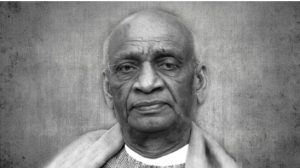
Sardar Vallabhbhai Patel was born on 31st October 1875 in Nadiad, Gujarat. He was the eldest in his family and grew up in a simple household. Although he wasn’t initially interested in politics, Patel worked hard to complete his education and later became a lawyer. His training as a lawyer helped him later in his political career.
Sardar Vallabhbhai Patel’s journey into politics started when Mahatma Gandhi saw his leadership skills and invited him to join the Indian freedom movement. In 1918, Patel led the Kheda Satyagraha, which was a protest by farmers against high taxes imposed by the British. Patel’s success in leading the farmers to victory made him a well-known leader.
After Kheda, Patel’s role as a leader grew even more. In 1928, he played a crucial role in the Bardoli Satyagraha, another farmers’ protest. It was here that Sardar Vallabhbhai Patel earned the title of Sardar, meaning “leader” in Hindi. The title became a symbol of his leadership and dedication to India’s independence struggle.
| Year | Event |
| 1875 | Born on 31st October in Nadiad, Gujarat. |
| 1913 | Joined the Indian National Congress after becoming involved in the freedom movement. |
| 1917 | Led the Kheda Satyagraha in Gujarat, advocating for farmers’ rights against oppressive taxes. |
| 1918 | Became a close ally of Mahatma Gandhi and led the Kheda Satyagraha, establishing his leadership. |
| 1928 | Led the Bardoli Satyagraha against the British decision to increase land revenue. He earned the title ‘Sardar’. |
| 1931 | Elected President of the Indian National Congress at the Karachi Session. |
| 1942 | Took part in the Quit India Movement, demanding an immediate end to British rule in India. |
| 1947 | Played a crucial role in integrating over 560 princely states into the Indian Union. |
| 15 August 1947 | Took oath as the First Deputy Prime Minister and First Home Minister of independent India. |
| 1948 | Led the Operation Polo to integrate Hyderabad into India. |
| 1950 | Died on 15th December, leaving behind a legacy of unity and integration. |
| 2018 | Statue of Unity was inaugurated on 31st October, marking the 143rd birth anniversary. |
The table highlights the most important milestones in Sardar Vallabhbhai Patel’s life and his monumental contributions to India’s independence and unification.
Also Read: Jallianwala Bagh Massacre
Sardar Vallabhbhai Patel’s legacy is very important in shaping modern India. Sardar Vallabhbhai Patel’s legacy is multifaceted, and it is through his work in post-independence India that his influence is most keenly felt.
Sardar Vallabhbhai Patel’s legacy is not just limited to the integration of princely states. He was a visionary who saw the importance of a united India, ensuring that the country would remain integrated and strong, despite its diverse regions, cultures, and religions. His leadership went beyond the time of his death in 1950, and his contributions continue to impact India today.
Patel’s political philosophy, which emphasized pragmatism, unity, and steadfastness, continues to inspire policymakers, leaders, and citizens alike. His approach to leadership and governance serves as a guiding force for India in modern times. Patel’s influence can be seen in various modern landmarks and institutions named after him.
These institutions not only celebrate his legacy but also serve as reminders of the values of unity, service, and determination that Patel stood for. Through such institutions and infrastructure, Patel’s vision of a united and prosperous India continues to thrive.
Also Read: Jyotiba Phule Jayanti
Statue of Unity is built to honor Sardar Vallabhbhai Patel for his efforts in uniting India. Standing at 182 meters (597 feet), it is the tallest statue in the world. Statue of Unity is located in Kevadia, Gujarat, and was unveiled on 31st October 2018, which was Patel’s 143rd birth anniversary.
Statue of Unity is situated against the beautiful Satpura and Vindhyachal hills, an area that holds special meaning in Patel’s life. It represents not just Sardar Vallabhbhai Patel himself, but also the important values he stood for — national unity, integrity, and independence. The statue was built to inspire future generations to follow Patel’s leadership and determination.
Prime Minister Narendra Modi called Patel the “architect of united India” when he dedicated the statue. Statue of Unity serves as a powerful reminder of Patel’s crucial role in bringing India together after its independence and partition.
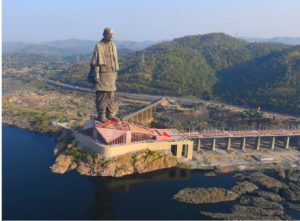
Image: Statue of Unity
The government of India commemorates 31st October as National Unity Day every year, beginning in 2014, to honor the contributions of Sardar Vallabhbhai Patel. This day celebrates his commitment to unifying the country post-independence, and it also emphasizes the importance of national unity and integrity.
Also Read: PM Ujjwala Scheme
[metaslider id=”5575″]
Sardar Vallabhbhai Patel played a key role in India’s freedom struggle. His involvement in the struggle for independence was marked by leadership, courage, and strong organizational skills. Patel’s deep commitment to the welfare of India and his unyielding spirit made him an indispensable figure in the fight against British colonial rule.
Are you preparing for UPSC 2025? Join IAShub’s UPSC coaching batches to boost your preparation. Enroll now!
Other Articles |
|
|---|---|
| TRIFED | Saansad Adarsh Gram Yojana |
| PM Kisan Yojana | Minimum Support Price |
| PM Ujjwala Scheme | PM Awaj Yojana |

Sardar Vallabhbhai Patel passed away on 15th December 1950, leaving behind a legacy of national unity and strong leadership.
The title Sardar was given to Vallabhbhai Patel by the people of Bardoli after his successful leadership in the Bardoli Satyagraha of 1928, recognizing his remarkable leadership
Patel is credited with establishing the All India Services, which became the foundation of India's administrative system, ensuring efficient governance and continuity post-independence.
Operation Polo was a military action in 1948 to integrate Hyderabad into India. Patel’s decisive leadership resulted in the peaceful annexation of the princely state.

Refine your answer writing skills and elevate your UPSC preparation with personalized support and expert feedback.
Fill out the form to get started with the program or any other enquiries !



Are you dreaming of becoming an IAS officer? Then, IAShub can be your best guide. It is one of the Best IAS Coaching in Delhi. Many students who want to clear the UPSC exam join IAShub for learning. The institute gives both online and offline classes. Their teachers are experienced and helpful. They easily explain every topic. Students also get notes, tests, and tips to do well in the exam.
IAShub is in Delhi and is trusted by many UPSC students. It offers coaching for every part of the UPSC exam – Prelims, Mains, and Interview. The classes are simple and easy to understand. The teachers are experts and guide students in the right way. IAShub is also known for its helpful notes, test series, and answer-writing practice. IAShub is the best coaching in Delhi and also gives UPSC Online Classes. This helps students from any place in India to learn. The online classes are live and also recorded. So, students can watch them anytime. These classes cover the full UPSC syllabus.
Here are some important services provided by IAShub:
The UPSC Civil Services Exam has three parts:
This exam is tough, but with the right guidance, it becomes easy to manage. Students must study smart and stay regular.
IAShub supports students from the beginning to the end. It gives the right books, tests, and notes. The classes are easy to follow, and the teachers are always ready to help. Students get personal doubt sessions too. The test series and answer checking help students learn where they need to do better. Also, free study materials save time and money.
IAShub also guides students during the final stage – the interview. Experts take mock interviews and give useful tips. This full support makes IAShub one of the best IAS coaching in Delhi.
Join 50,000+ UPSC Aspirants! 🚀
Get Free UPSC/IAS Study Materials, Daily Current Affairs, Editorial Summaries & Exam Updates.
Join Telegram Channel