
















Explore the major rivers of India, including the Ganges, Brahmaputra, Godavari, & more. Learn about their origins, tributaries, and significance across regions.
 theIAShub | 14 Apr, 2025 | 6161 | 0 |

India, a land of diverse landscapes and rich cultural heritage, is also home to numerous rivers that form an essential part of the country’s ecological, cultural, and economic fabric. These rivers provide water for irrigation, drinking, industry, and transportation, making them indispensable to the lives of millions. The river systems of India are diverse, with major rivers flowing in different directions: from the Himalayas in the north to the peninsular region in the south, and from the east to the west.
We will explore some of the major rivers of India, their characteristics, tributaries, and states they flow through.
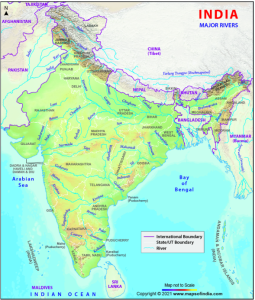
Image Credit: Maps of India
In India, rivers are grouped based on where they flow. Some rivers flow in the northern part of India, like the Ganga and Yamuna, starting from the Himalayas and moving towards the plains. Other rivers, like the Godavari and Krishna, flow in the southern part of the country, usually heading east and emptying into the Bay of Bengal. There are also rivers in the northeastern part of India, such as the Brahmaputra, that flow through hilly areas and into the plains.
Rivers are also categorized by which direction they flow. Some rivers, like the Ganga and Brahmaputra, flow east towards the Bay of Bengal, while others, like the Narmada and Tapi, flow towards the west and empty into the Arabian Sea.
Also Read: National Parks In India
The Indus River is one of the longest and most important rivers in the world. It starts from the Tibetan Plateau in the Himalayas, flows through India, and then enters Pakistan before finally emptying into the Arabian Sea. The river is about 3,180 kilometers long, making it the longest river in India. It gets water from several big tributaries like the Panjnad, Shyok, Dras, and Zanskar. The river passes through the regions of Ladakh and Gujarat in India before reaching Pakistan.
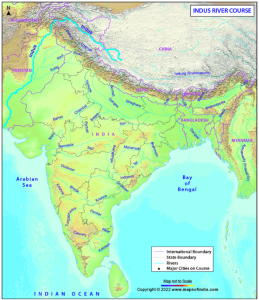
Image Credit: Maps of India
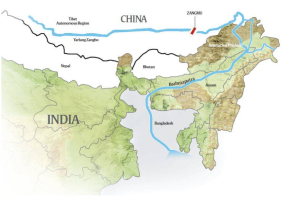
The Brahmaputra River is another important river that begins in Tibet, where it’s called the Yarlung Tsangpo, and enters India through Arunachal Pradesh. It flows through the states of Assam and West Bengal, covering about 2,880 kilometers. The river is very important because it helps create the fertile plains of Assam and provides water to much of North-East India. Some of its main tributaries are the Lohit, Subansiri, and Teesta rivers.
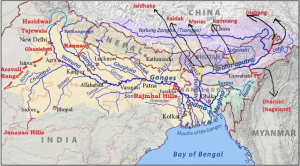
The most famous river in India, the Ganges (Ganga) holds immense cultural and spiritual significance. Originating from the Gangotri Glacier in the Uttarakhand Himalayas, it flows across the northern plains of India, covering a length of about 2,525 kilometers. The river passes through several states, including Uttarakhand, Uttar Pradesh, Bihar, Jharkhand, and West Bengal. The Ganges is joined by numerous tributaries such as the Yamuna, Ghaghara, Gomti, Kosi, and Son. It is one of the most important rivers not just for its size but for its role in religious and agricultural activities.
Also Read: Ramsar sites in India
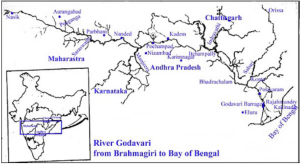
The Godavari is one of the longest rivers in South India, often referred to as the ‘Dakshina Ganga’ (the Ganges of the South). Originating in the Western Ghats near Trimbak in Maharashtra, it stretches for about 1,465 kilometers before emptying into the Bay of Bengal. The Godavari flows through the states of Maharashtra, Telangana, and Andhra Pradesh. The river has several important tributaries like the Manjira, Indravati, and Sabari. The Godavari basin is crucial for irrigation and agriculture in the regions it passes through.
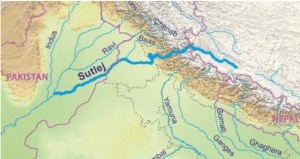
The Sutlej River is one of the major rivers in northern India and Pakistan. It originates from the Tibetan Plateau in China and flows through the state of Himachal Pradesh before entering Punjab in India and eventually crossing into Pakistan. The river is about 1,450 kilometers long. It plays a crucial role in irrigation and provides water to the fertile plains of Punjab. The Sutlej is also important for hydroelectric power generation, with several dams built along its course, including the Bhakra Nangal Dam.
[metaslider id=”5575″]
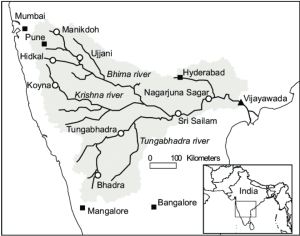
Originating from the Western Ghats in Maharashtra, the Krishna River flows across the Deccan Plateau before reaching the Bay of Bengal. The total length of the Krishna is about 1,400 kilometers. It is an important river for the states of Maharashtra, Karnataka, Telangana, and Andhra Pradesh. Major tributaries include the Bhima, Tungabhadra, and Ghataprabha rivers. The Krishna River is integral to the agricultural economy of the southern states.
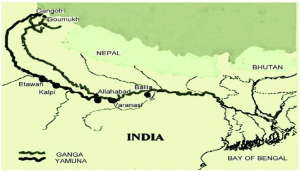
The Yamuna is one of the longest rivers in India, flowing for approximately 1,376 kilometers. It originates from the Yamunotri Glacier in the Himalayas and flows through Uttarakhand, Uttar Pradesh, Haryana, and the National Capital Territory of Delhi before merging with the Ganges at Prayagraj. The river is fed by various tributaries such as the Chambal, Betwa, and Ken rivers.
The Narmada River originates from the Vindhya Range and flows westward through Madhya Pradesh, Maharashtra, and Gujarat before draining into the Arabian Sea. The Narmada River is about 1,312 kilometers long, making it one of the largest west-flowing rivers in India. It is fed by tributaries like the Kolar, Sher, and Tawa.
The Mahanadi originates from the Eastern Ghats in Chhattisgarh and flows eastward through the state of Odisha before emptying into the Bay of Bengal. With a length of around 900 kilometers, it is one of the important rivers of Eastern India. Major tributaries of the Mahanadi include the Hasdeo, Seonath, Jonk, and Ong rivers.
The Kaveri River, originating from the Western Ghats in Karnataka, flows through the states of Tamil Nadu and finally drains into the Bay of Bengal. The Kaveri is about 805 kilometers long and is considered one of the most important rivers for irrigation in South India. It is joined by major tributaries like the Amaravati, Hemavati, Bhavani, and Noyyal rivers.
India’s rivers are classified into east-flowing and west-flowing rivers based on their direction of flow. East-flowing rivers, such as the Ganges, Mahanadi, Godavari, and Krishna, flow towards the Bay of Bengal, forming vast fertile plains and supporting agriculture. On the other hand, west-flowing rivers like the Narmada, Tapi, and Mahi flow towards the Arabian Sea. These rivers are relatively shorter and often pass through rift valleys or coastal regions, creating unique ecosystems. The difference in flow direction plays a significant role in the geographical distribution of water and resources across India.
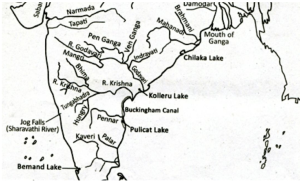
Image- West & East Flowing Rivers Map
The Ganges River originates from the Gangotri Glacier in Uttarakhand. It travels across northern India and is vital for agriculture, religious activities, and the livelihood of millions.
The River Tamraparni, located in Tamil Nadu, is one of the smallest rivers in India. It flows through the Western Ghats and is approximately 113 kilometers long.
East-flowing rivers like the Ganges and Godavari flow towards the Bay of Bengal, supporting agriculture. West-flowing rivers like the Narmada and Tapi flow towards the Arabian Sea.
The major tributaries of the Brahmaputra River include the Lohit, Subansiri, and Teesta rivers. These tributaries contribute significantly to its water volume and floodplain creation in Northeast India.

Refine your answer writing skills and elevate your UPSC preparation with personalized support and expert feedback.
Fill out the form to get started with the program or any other enquiries !



Are you dreaming of becoming an IAS officer? Then, IAShub can be your best guide. It is one of the Best IAS Coaching in Delhi. Many students who want to clear the UPSC exam join IAShub for learning. The institute gives both online and offline classes. Their teachers are experienced and helpful. They easily explain every topic. Students also get notes, tests, and tips to do well in the exam.
IAShub is in Delhi and is trusted by many UPSC students. It offers coaching for every part of the UPSC exam – Prelims, Mains, and Interview. The classes are simple and easy to understand. The teachers are experts and guide students in the right way. IAShub is also known for its helpful notes, test series, and answer-writing practice. IAShub is the best coaching in Delhi and also gives UPSC Online Classes. This helps students from any place in India to learn. The online classes are live and also recorded. So, students can watch them anytime. These classes cover the full UPSC syllabus.
Here are some important services provided by IAShub:
The UPSC Civil Services Exam has three parts:
This exam is tough, but with the right guidance, it becomes easy to manage. Students must study smart and stay regular.
IAShub supports students from the beginning to the end. It gives the right books, tests, and notes. The classes are easy to follow, and the teachers are always ready to help. Students get personal doubt sessions too. The test series and answer checking help students learn where they need to do better. Also, free study materials save time and money.
IAShub also guides students during the final stage – the interview. Experts take mock interviews and give useful tips. This full support makes IAShub one of the best IAS coaching in Delhi.
Join 50,000+ UPSC Aspirants! 🚀
Get Free UPSC/IAS Study Materials, Daily Current Affairs, Editorial Summaries & Exam Updates.
Join Telegram Channel