
















Discover the Himalayan Ranges of India, their geography, divisions, climate impact, biodiversity, and cultural significance in shaping India's landscape and heritage.
 theIAShub | 13 Mar, 2025 | 7255 | 0 |

The Himalayas, one of the most iconic and awe-inspiring mountain ranges in the world, stand as a natural divide between the Indian subcontinent and the vast Tibetan Plateau. Spanning across five countries — India, Nepal, Bhutan, Pakistan, and China — the Himalayan ranges are not only a stunning geographic feature but also a significant cultural, ecological, and spiritual element for the region. In India, the Himalayas hold immense importance due to their influence on climate, biodiversity, and spiritual heritage.
Here we provide a comprehensive overview of the Himalayan Ranges of India, including their geography, division, and the incredible natural phenomena they support.
The Himalayas stretch over 2,400 kilometers, from the western part of the Indian subcontinent to the eastern reaches of the Tibetan Plateau. The range runs in a west-to-east direction, acting as the natural border between the subcontinent’s Indo-Gangetic plain to the south and the vast Tibetan Plateau to the north. The Himalayas are home to some of the highest peaks on Earth, including Mount Everest, which is the tallest mountain in the world at an elevation of 8,848 meters (29,029 feet). More than 100 peaks in the Himalayas exceed 7,200 meters (23,600 feet) above sea level.
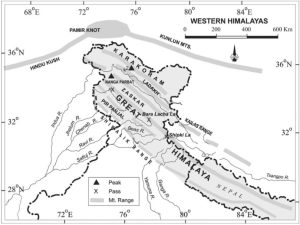
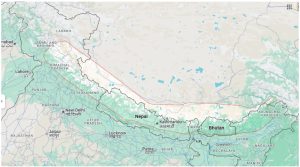
The Himalayan ranges on the map are a sight to behold, stretching across the borders of multiple countries. In India, the range is geographically significant, dividing the northern plains and river valleys from the Tibetan Plateau and the vast desert regions. The majestic mountain range plays a critical role in shaping the climate, environment, and culture of the Indian subcontinent.
The Himalayas are not a single, uniform range; they are divided into several distinct geographical and ecological zones. From north to south, the Himalayan ranges in India can be divided into the following major sections:
The northernmost section of the Himalayan range lies within the Tibetan Plateau and extends into the Indian states of Jammu and Kashmir, Himachal Pradesh, and Arunachal Pradesh. These mountains are primarily dry, cold, and covered in snow for most of the year. The Tibetan Himalayas are sparsely vegetated, with desert-like conditions and extreme temperatures.
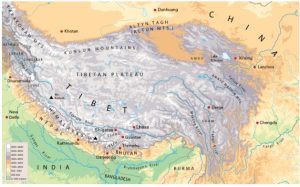
The Great Himalayas, or the Inner Himalayas, form the core of the mountain range. This is where the tallest peaks of the Himalayas are located, including Kanchenjunga (8,586 meters), Nanda Devi (7,816 meters), and, of course, Mount Everest (8,848 meters). These mountains are rugged and dramatic, with glaciers and deep valleys that have shaped the region’s unique landscapes. In India, the Great Himalayas extend across the northern regions of states like Uttarakhand, Himachal Pradesh, and Sikkim, providing both natural beauty and spiritual significance to the region.
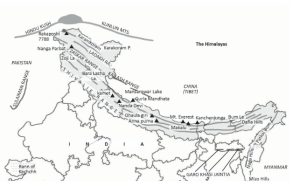
The Lower Himalayas, also known as the Sub-Himalayas or Lesser Himalayas, form a lower range that lies to the south of the Great Himalayas. These mountains are lower in elevation and characterized by rolling hills, forested landscapes, and more fertile valleys. The Lower Himalayas have been heavily settled and are home to several important hill stations in India, such as Shimla, Mussoorie, and Nainital.
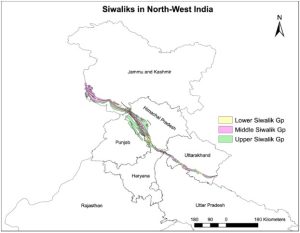
The Shivalik Hills, or the outermost foothills of the Himalayas, are located at the southern edge of the range. These hills form the boundary between the Himalayas and the Indo-Gangetic plain. The Shivalik range is the least elevated part of the Himalayas, with lower, undulating hills and extensive river valleys. The region is known for its rich biodiversity and provides a habitat for numerous species of flora and fauna.
[metaslider id=”5575″]
The Himalayan ranges in India exhibit a diversity of landscapes and ecosystems, each with its own unique features and characteristics. The climate in the Himalayas varies dramatically with altitude, influencing the vegetation and the biodiversity of the region.
On the northern side of the Himalayas, the climate is cold and dry, with conditions resembling a high-altitude desert. The Tibetan Plateau experiences freezing winters and mild summers, and the vegetation is sparse. The windswept terrain is mostly dominated by grasses and shrubs. This region is important as it forms part of the high-altitude Tibetan Plateau, home to unique wildlife such as the Tibetan antelope and snow leopards.
The southern slopes of the Himalayas, particularly in states like Uttarakhand, Himachal Pradesh, and West Bengal, receive heavy rainfall during the monsoon season. The monsoon winds from the southwest push moist air from the Indian Ocean towards the mountains, causing the air to rise and cool, resulting in significant precipitation. This leads to lush forests and a variety of plant and animal species, particularly in the lower elevations. The tropical and subtropical regions here are home to a rich biodiversity, including tigers, elephants, and rhinos in protected wildlife sanctuaries like the Jim Corbett National Park and Kaziranga National Park.
The Himalayas are not just a physical divide but also a cultural and spiritual one. For centuries, these mountains have been a significant part of Hindu, Buddhist, and Tibetan cultures. In Hinduism, many Himalayan peaks, such as Mount Kailash, are considered sacred, and they are destinations for religious pilgrimages. The Himalayas are deeply intertwined with the religious and spiritual practices of the Indian subcontinent, with many pilgrimage sites like Kedarnath, Badrinath, and Amarnath located high in the mountains.
In Tibetan Buddhism, the Himalayas are equally revered, with several monasteries and sacred sites dotting the slopes. The spiritual significance of the region is reflected in the prayers and rituals performed in the monasteries, which are often perched high above the valleys below.
The Himalayas play a crucial role in shaping the climate, biodiversity, and culture of India. They protect the subcontinent from cold winds coming from the north, acting as a shield that preserves the tropical climate of South Asia. The Himalayas also have a major influence on the water systems of the region, with many of India’s major rivers, including the Ganges, Yamuna, and Brahmaputra, originating from the glaciers of the Himalayas.
The mountain range is also home to a diverse range of ecosystems, from the temperate forests in the lower elevations to the alpine meadows and glaciers at the highest points. These ecosystems support a variety of wildlife, including endangered species like the snow leopard, Himalayan tahr, and red panda.
Are you preparing for UPSC 2025? Join IAShub’s UPSC coaching batches to boost your preparation. Enroll now!
Related Article |
|
|---|---|
| IAS Salary | Representation of People Act |
| Role of Civil Services in a Democracy | Lateral Entry in UPSC |
| Military Exercises of India | National Commission for Women |
The Himalayas stretch across 2,400 kilometers (1,500 miles) through India, passing through several states such as Jammu and Kashmir, Himachal Pradesh, Uttarakhand, Sikkim, and the northeastern regions.
Himalayas in India are divided into three main sections: Western Himalayas, Central Himalayas, and Eastern Himalayas, each differing in geography, climate, and features.
The Himalayan Ranges act as a barrier, preventing cold winds from the north, influencing monsoon patterns, and creating varying climates from tropical to alpine across different regions.
The Himalayan Ranges serve as the source for many major rivers, including the Ganga, Yamuna, Brahmaputra, and Indus, which are crucial for agriculture and livelihoods in India.


Refine your answer writing skills and elevate your UPSC preparation with personalized support and expert feedback.
Fill out the form to get started with the program or any other enquiries !



Are you dreaming of becoming an IAS officer? Then, IAShub can be your best guide. It is one of the Best IAS Coaching in Delhi. Many students who want to clear the UPSC exam join IAShub for learning. The institute gives both online and offline classes. Their teachers are experienced and helpful. They easily explain every topic. Students also get notes, tests, and tips to do well in the exam.
IAShub is in Delhi and is trusted by many UPSC students. It offers coaching for every part of the UPSC exam – Prelims, Mains, and Interview. The classes are simple and easy to understand. The teachers are experts and guide students in the right way. IAShub is also known for its helpful notes, test series, and answer-writing practice. IAShub is the best coaching in Delhi and also gives UPSC Online Classes. This helps students from any place in India to learn. The online classes are live and also recorded. So, students can watch them anytime. These classes cover the full UPSC syllabus.
Here are some important services provided by IAShub:
The UPSC Civil Services Exam has three parts:
This exam is tough, but with the right guidance, it becomes easy to manage. Students must study smart and stay regular.
IAShub supports students from the beginning to the end. It gives the right books, tests, and notes. The classes are easy to follow, and the teachers are always ready to help. Students get personal doubt sessions too. The test series and answer checking help students learn where they need to do better. Also, free study materials save time and money.
IAShub also guides students during the final stage – the interview. Experts take mock interviews and give useful tips. This full support makes IAShub one of the best IAS coaching in Delhi.

Join 50,000+ UPSC Aspirants! 🚀
Get Free UPSC/IAS Study Materials, Daily Current Affairs, Editorial Summaries & Exam Updates.
Join Telegram Channel