
















Explore the List Of Mughal Emperors from Babur to Bahadur Shah II Learn about their reigns contributions and the rise and fall of the Mughal Empire.
 theIAShub | 12 Mar, 2025 | 14348 | 0 |

The Mughal Empire, one of the most prominent and influential empires in Indian history, was established in the early 16th century. This empire was founded by Babur, a descendant of Timur and Genghis Khan, and it flourished for over 300 years, playing a pivotal role in shaping the political, cultural, and economic landscape of India.
The Mughal emperors were known for their centralised rule, military prowess, cultural patronage, and monumental architectural achievements.
The Mughal Empire was established in 1526 by Babur after he defeated the Sultan of Delhi, Ibrahim Lodi, in the First Battle of Panipat. This victory began a new dynasty that would rule India for many centuries. The empire expanded to cover a large part of the Indian subcontinent, stretching from the Deccan Plateau in the south to the Himalayas in the north, and from Bengal in the east to Afghanistan in the west.
Babur, the first emperor of the Mughal Empire, was born in present-day Uzbekistan and came to power through his conquest of the Sultanate of Delhi. His victory at the Battle of Panipat in 1526 marked the beginning of Mughal rule in India. Babur was not only a capable military strategist but also a lover of art and culture, laying the groundwork for a flourishing Mughal civilization.
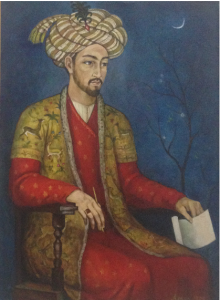
Humayun, the eldest son of Babur, succeeded his father in 1530. However, his reign was interrupted when he was defeated by Sher Shah Suri, the founder of the Suri Empire. After 15 years of exile, Humayun regained the throne in 1555 with the help of Persian forces. Unfortunately, his reign was short-lived, as he died in 1556 after a fall from the stairs.
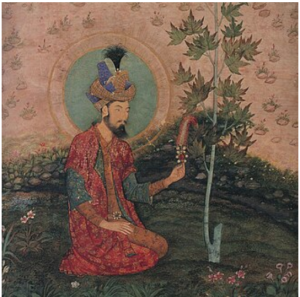
Akbar, often regarded as the greatest Mughal emperor, succeeded his father, Humayun, at the young age of 13. His reign marked the golden age of the Mughal Empire. Akbar expanded the empire significantly, incorporating Gujarat, Bengal, Kashmir, and large parts of the Deccan Plateau. Known for his tolerance towards different religions, Akbar promoted policies of religious harmony, such as abolishing the jizya tax and fostering relationships with Hindu Rajputs. He also introduced administrative reforms and a centralized system of governance, making the Mughal Empire’s List of rulers look more unified than ever before.
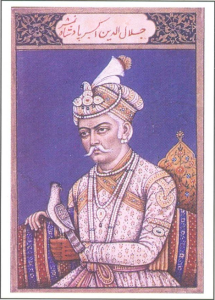
Jahangir, the son of Akbar, became the ruler in 1605. His rule is remembered for promoting art, especially Mughal painting and architecture. Jahangir loved luxury and is linked to the building of the famous Shalimar Gardens in Kashmir. While he continued his father Akbar’s policy of accepting different religions, his wife, Empress Nur Jahan, had a lot of political power and often took the spotlight in his reign.
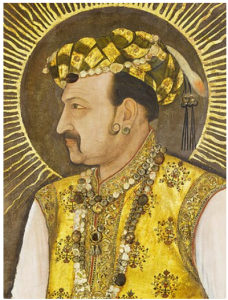
Shah Jahan, the son of Jahangir, is best remembered for his architectural achievements, most notably the construction of the Taj Mahal, a symbol of eternal love. Under his rule, the Mughal Empire reached its height in terms of wealth and power. Shah Jahan’s reign, however, was marked by lavish spending and the expansion of Mughal architecture, leading to his eventual downfall. His son, Aurangzeb, imprisoned him for the last years of his life.
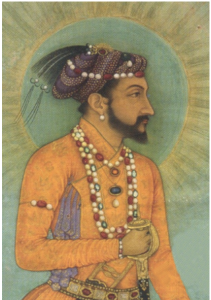
Aurangzeb, the sixth Mughal emperor, was a controversial figure in the history of the empire. His reign is noted for its military conquests, particularly in the Deccan region. He expanded the empire to its largest territorial extent, but his policies—such as the re-imposition of the jizya tax and his strict interpretation of Islam—led to growing discontent among Hindus and other religious groups. His reign marked the beginning of the decline of the Mughal Empire, as his oppressive rule caused internal strife and weakened central authority.
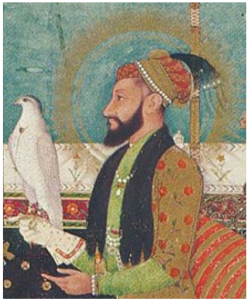
Bahadur Shah I, the eldest son of Aurangzeb, succeeded his father after a brief succession war. His reign was marked by efforts to restore stability to the empire, but he faced challenges from various factions, including the growing influence of the Marathas. His death in 1712 further deepened the fragmentation of the empire.
[metaslider id=”5575″]
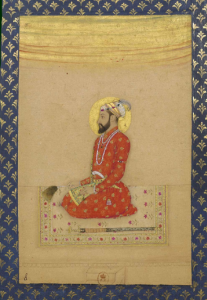
Jahandar Shah’s reign lasted only one year and was marked by ineffective leadership. His reign ended when he was defeated by his son, Farrukhsiyar, who later became the next emperor.
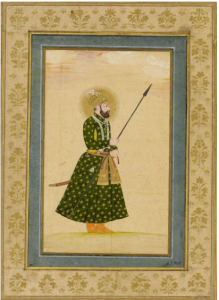
Farrukhsiyar’s reign was dominated by the influence of the Sayyid Brothers, who controlled the imperial court. His short reign saw the increasing power of the British East India Company in India and the growing influence of the Marathas. Farrukhsiyar was eventually deposed and assassinated.
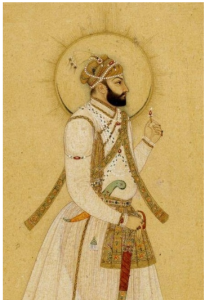
The remaining Mughal emperors were largely ceremonial, with no real power or authority. They were often controlled by various regional powers or foreign entities, such as the British. The last significant ruler, Bahadur Shah II, was exiled to Rangoon (Myanmar) after the Indian Rebellion of 1857, marking the official end of the Mughal Empire.
The last Mughal emperor, Bahadur Shah II, was a symbolic figure with little power. During the Indian Rebellion of 1857, he was captured by the British and exiled, bringing an end to the Mughal Empire. The British East India Company took control of India, ushering in British colonial rule.
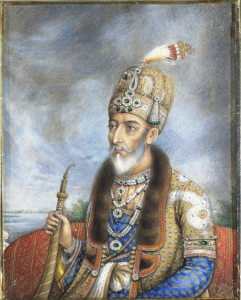
After Aurangzeb died in 1707, the Mughal Empire began its slow decline. The later emperors struggled to maintain control over the vast empire, and regional powers such as the Marathas, Sikhs, and Rajputs began to assert their independence. The following emperors were largely symbolic rulers, with little real power. However, their reigns are still crucial parts of the List of Emperors of the Mughal Empire.
Are you preparing for UPSC 2025? Join IAShub’s UPSC coaching batches to boost your preparation. Enroll now!
Akbar is renowned for religious tolerance, administrative reforms, and expanding the empire. His reign saw the establishment of a centralized system of governance and the introduction of policies promoting harmony.
The decline stemmed from Aurangzeb’s death, regional autonomy movements, and the weakening of central authority. The Marathas, Sikhs, and Rajputs gained power, and internal struggles eroded the empire’s cohesion.
Bahadur Shah II was the last Mughal emperor, ruling from 1837 to 1857. He was exiled after the Indian Rebellion of 1857, marking the end of the Mughal Empire.
The British East India Company gained significant power during the later Mughal period, influencing politics and economics, and contributing to the eventual British colonial dominance over India.

Refine your answer writing skills and elevate your UPSC preparation with personalized support and expert feedback.
Fill out the form to get started with the program or any other enquiries !



Are you dreaming of becoming an IAS officer? Then, IAShub can be your best guide. It is one of the Best IAS Coaching in Delhi. Many students who want to clear the UPSC exam join IAShub for learning. The institute gives both online and offline classes. Their teachers are experienced and helpful. They easily explain every topic. Students also get notes, tests, and tips to do well in the exam.
IAShub is in Delhi and is trusted by many UPSC students. It offers coaching for every part of the UPSC exam – Prelims, Mains, and Interview. The classes are simple and easy to understand. The teachers are experts and guide students in the right way. IAShub is also known for its helpful notes, test series, and answer-writing practice. IAShub is the best coaching in Delhi and also gives UPSC Online Classes. This helps students from any place in India to learn. The online classes are live and also recorded. So, students can watch them anytime. These classes cover the full UPSC syllabus.
Here are some important services provided by IAShub:
The UPSC Civil Services Exam has three parts:
This exam is tough, but with the right guidance, it becomes easy to manage. Students must study smart and stay regular.
IAShub supports students from the beginning to the end. It gives the right books, tests, and notes. The classes are easy to follow, and the teachers are always ready to help. Students get personal doubt sessions too. The test series and answer checking help students learn where they need to do better. Also, free study materials save time and money.
IAShub also guides students during the final stage – the interview. Experts take mock interviews and give useful tips. This full support makes IAShub one of the best IAS coaching in Delhi.
Join 50,000+ UPSC Aspirants! 🚀
Get Free UPSC/IAS Study Materials, Daily Current Affairs, Editorial Summaries & Exam Updates.
Join Telegram Channel