
















Discover the important rulers of the Maratha Empire, including Chhatrapatis and Peshwas, their reigns, contributions, and the power shift within the empire.
 theIAShub | 12 Mar, 2025 | 15267 | 0 |

The Maratha Empire, one of the most significant powers in Indian history, rose to power in the 17th and 18th centuries. Founded by the legendary Chhatrapati Shivaji Maharaj, the empire became a dominant force in the subcontinent, challenging the Mughal Empire’s hold over India. Here we will know about the important rulers of the Maratha Empire, their roles in the empire’s expansion and development, and the intricate relationship between the Chhatrapatis and Peshwas.
The foundation of the Maratha Empire can be traced back to Chhatrapati Shivaji Maharaj, the first and most celebrated ruler of the empire. Born in 1630, Shivaji was a military genius and a brilliant tactician, who defied the might of the Mughal Empire and established a stronghold in the western regions of India. His crowning as the first Chhatrapati in 1674 at Raigad fort marked the beginning of the Maratha Empire. Shivaji’s leadership, emphasis on justice, and innovative strategies in both warfare and administration laid the groundwork for the empire’s future growth.
Shivaji’s rise was characterized by his relentless campaigns against the Mughals, his ability to win over the local populace, and his establishment of a centralized administration based on merit. Under his reign, the Marathas expanded their territories significantly, securing several coastal forts and establishing a naval presence.
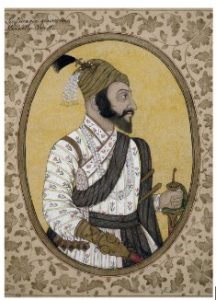
The title of Chhatrapati was passed down to Shivaji’s descendants, who continued to rule the Maratha Empire. Here is a list of all Chhatrapatis of the Maratha Empire:
The relationship between the Chhatrapati and the Peshwa was complex. Initially, the Chhatrapati held supreme authority, with the Peshwa being a subordinate official. However, with time, the Peshwas became more powerful and began exercising substantial control over the Maratha Empire. This led to a significant shift in the balance of power.
The Peshwas played a central role in administration, military strategy, and governance, often overshadowing the Chhatrapatis in terms of actual political power. This shift was a key factor in the decline of the Maratha Empire in the 19th century.
The following is a list of Peshwas of the Maratha Empire who held significant influence in the empire’s political and military affairs:
The Maratha Peshwa family tree traces the lineage of the powerful Peshwa family, who held sway over the Maratha Empire for much of the 18th century. The Peshwas were initially from the Bhat family, with Balaji Vishwanath being the first to be appointed as Peshwa. His son, Baji Rao I, further solidified the family’s control over the empire.
The Peshwa family tree includes notable figures such as Baji Rao II, who was defeated by the British and ultimately deposed, ending the Peshwa’s rule.
[metaslider id=”5575″]
Here’s a table summarizing the Important Rulers of the Maratha Empire:
| Ruler | Title | Reign Period | Key Contributions |
| Chhatrapati Shivaji Maharaj | Founder of the Maratha Empire | 1674–1680 | Established the Maratha Empire, expanded territories, fought the Mughals, and laid the foundation of Maratha rule. |
| Chhatrapati Sambhaji Maharaj | Chhatrapati | 1681–1689 | Continued Shivaji’s efforts, fought against Mughals but was captured and executed by them. |
| Chhatrapati Rajaram Maharaj | Chhatrapati | 1689–1700 | Led Maratha resistance from the southern forts after Shivaji’s death. |
| Chhatrapati Shahu Maharaj | Chhatrapati | 1707–1749 | Played a crucial role in stabilizing the empire and gave rise to the Peshwas as de facto rulers. |
| Chhatrapati Ramaraja Maharaj | Chhatrapati | 1749–1777 | His reign saw the increasing influence of the Peshwas over the empire. |
| Chhatrapati Shahu II Maharaj | Chhatrapati | 1777–1808 | His reign marked the decline of the Maratha Empire with the Peshwas exercising greater power. |
| Chhatrapati Pratapsingh Maharaj | Chhatrapati | 1818–1839 | The Maratha monarchy became largely symbolic after the British defeated the Marathas. |
| Chhatrapati Shahaji Maharaj | Chhatrapati | 1839–1848 | His reign was under British protectorate, and the monarchy had minimal power. |
| Chhatrapati Shahaji II | Chhatrapati | 1848–1879 | The last recognized Chhatrapati, but the real power was in the hands of the British. |
This table provides a concise overview of the significant rulers of the Maratha Empire and their respective contributions to the empire’s history.
Are you preparing for UPSC 2025? Join IAShub’s UPSC coaching batches to boost your preparation. Enroll now!
Chhatrapati Sambhaji Maharaj, Shivaji’s eldest son, succeeded him after his death in 1680.
The decline of the Maratha Empire occurred due to several factors, including internal conflicts, British intervention, and the weakening of the Chhatrapati’s power in favor of the Peshwas.
The Peshwas played a central role in administration, military strategy, and governance. Over time, their influence grew, especially under Chhatrapati Shahu Maharaj.
The British defeated the Marathas in the Third Anglo-Maratha War and gradually took control, with the Maratha monarchy becoming largely symbolic under British protection.

Refine your answer writing skills and elevate your UPSC preparation with personalized support and expert feedback.
Fill out the form to get started with the program or any other enquiries !



Are you dreaming of becoming an IAS officer? Then, IAShub can be your best guide. It is one of the Best IAS Coaching in Delhi. Many students who want to clear the UPSC exam join IAShub for learning. The institute gives both online and offline classes. Their teachers are experienced and helpful. They easily explain every topic. Students also get notes, tests, and tips to do well in the exam.
IAShub is in Delhi and is trusted by many UPSC students. It offers coaching for every part of the UPSC exam – Prelims, Mains, and Interview. The classes are simple and easy to understand. The teachers are experts and guide students in the right way. IAShub is also known for its helpful notes, test series, and answer-writing practice. IAShub is the best coaching in Delhi and also gives UPSC Online Classes. This helps students from any place in India to learn. The online classes are live and also recorded. So, students can watch them anytime. These classes cover the full UPSC syllabus.
Here are some important services provided by IAShub:
The UPSC Civil Services Exam has three parts:
This exam is tough, but with the right guidance, it becomes easy to manage. Students must study smart and stay regular.
IAShub supports students from the beginning to the end. It gives the right books, tests, and notes. The classes are easy to follow, and the teachers are always ready to help. Students get personal doubt sessions too. The test series and answer checking help students learn where they need to do better. Also, free study materials save time and money.
IAShub also guides students during the final stage – the interview. Experts take mock interviews and give useful tips. This full support makes IAShub one of the best IAS coaching in Delhi.
Join 50,000+ UPSC Aspirants! 🚀
Get Free UPSC/IAS Study Materials, Daily Current Affairs, Editorial Summaries & Exam Updates.
Join Telegram Channel