How to Study Maps for UPSC? Learn easy ways in this article to remember physical, political, and economic geography for Prelims and Mains. How to Study Maps for UPSC with smart techniques.
 theIAShub | 22 Mar, 2025 | 5652 | 0 |

How to Study Maps for UPSC: Maps play a crucial role in UPSC preparation, especially in Geography, International Relations, and Current Affairs. A strong understanding of maps can help aspirants answer both Prelims and Mains questions effectively. From understanding physical and political geography to linking key locations with news events, maps enhance conceptual clarity and retention.
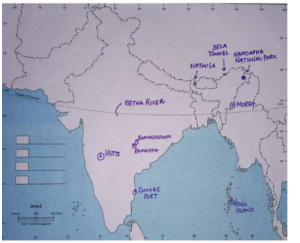
In Prelims, map-based questions frequently appear in General Studies Paper I, while in Mains, well-drawn maps add value to Geography and GS answers. Whether it’s identifying rivers, mountains, national parks, or global trade routes, mastering maps can significantly boost your score.
This article provides a structured approach to studying maps for UPSC, covering essential topics, effective techniques, and practical tips. By integrating maps with current affairs, practicing previous years’ questions, and using digital tools, you can make map study more engaging and effective. With a strategic plan, maps can become a scoring advantage in your UPSC journey.
Maps play a big role in UPSC. They are essential for understanding geographical, geopolitical, and environmental concepts relevant to the exam. They help visualize locations, trade routes, and international borders, aiding in better retention and recall. In Prelims, questions often test knowledge of physical and political geography, while in Mains, maps enhance answer presentation, making responses more impactful.
Additionally, maps connect current affairs with places, improving conceptual clarity on global and national issues. A strong grasp of maps can significantly improve performance in Geography, International Relations, and Environment-related topics across both Prelims and Mains.
Each year, around 4 to 5 questions in Prelims are directly related to maps. These questions usually ask about locations of rivers, mountains, cities, and important places. In Mains, maps are useful for explaining geographical and geopolitical topics.
Studying maps can be easy if you follow a structured approach. Here are some useful techniques:
A structured approach is needed for world maps. Focus on:
Drawing a world map can be easy if you follow a step-by-step method. You don’t need to make it perfect—just focus on the important parts.
[metaslider id=”5575″]
For Indian geography, follow a step-by-step method:
Maps are very important for the UPSC exam. They help you understand geography, history, and international issues. Many questions in the Prelims and Mains require map knowledge. However, not everyone finds maps easy to study.
Here are 13 simple tips to help you learn maps better:
For example, while studying rivers, focus on just one or two rivers at a time and learn their origin, path, and tributaries.
For example:
Even funny or silly stories work if they help you remember!
Example: If you read about an India-Germany military exercise in the Gulf of Aden, check where it is and which countries are nearby.
Example:
Example: It is not necessary to learn all 550+ Wildlife Sanctuaries in India. Just focus on the ones in the news.
Studying maps for UPSC is not just about memorizing places but understanding their importance. Regular practice, linking maps with current events, and using digital tools can help you master this crucial topic. With a smart approach, maps can become an advantage in clearing the UPSC exam successfully.
Are you preparing for UPSC 2025? Join IAShub’s UPSC coaching batches to boost your preparation. Enroll now!
Study in small parts like rivers or cities. Use colors, tricks, and practice drawing maps. Revise regularly for better memory.
Oxford School Atlas and Orient BlackSwan Atlas maps are best for UPSC. Google Maps and wall maps also help in quick learning.
Yes, maps are very important. They help in geography, current affairs, and answer writing in exams.
There are many types of maps like physical, political, and environmental. Focus on 28-30 key maps for better preparation.

Refine your answer writing skills and elevate your UPSC preparation with personalized support and expert feedback.
Fill out the form to get started with the program or any other enquiries !






Are you dreaming of becoming an IAS officer? Then, IAShub can be your best guide. It is one of the Best IAS Coaching in Delhi. Many students who want to clear the UPSC exam join IAShub for learning. The institute gives both online and offline classes. Their teachers are experienced and helpful. They easily explain every topic. Students also get notes, tests, and tips to do well in the exam.
IAShub is in Delhi and is trusted by many UPSC students. It offers coaching for every part of the UPSC exam – Prelims, Mains, and Interview. The classes are simple and easy to understand. The teachers are experts and guide students in the right way. IAShub is also known for its helpful notes, test series, and answer-writing practice. IAShub is the best coaching in Delhi and also gives UPSC Online Classes. This helps students from any place in India to learn. The online classes are live and also recorded. So, students can watch them anytime. These classes cover the full UPSC syllabus.
Here are some important services provided by IAShub:
The UPSC Civil Services Exam has three parts:
This exam is tough, but with the right guidance, it becomes easy to manage. Students must study smart and stay regular.
IAShub supports students from the beginning to the end. It gives the right books, tests, and notes. The classes are easy to follow, and the teachers are always ready to help. Students get personal doubt sessions too. The test series and answer checking help students learn where they need to do better. Also, free study materials save time and money.
IAShub also guides students during the final stage – the interview. Experts take mock interviews and give useful tips. This full support makes IAShub one of the best IAS coaching in Delhi.