
















How to Study Maps for UPSC 2025, Best Strategies for Prelims & Mains

How to Study Maps for UPSC? Learn easy ways in this article to remember physical, political, and economic geography for Prelims and Mains. How to Study Maps for UPSC with smart techniques.

THEIASHUB

How to Study Maps for UPSC: Maps play a crucial role in UPSC preparation, especially in Geography, International Relations, and Current Affairs. A strong understanding of maps can help aspirants answer both Prelims and Mains questions effectively. From understanding physical and political geography to linking key locations with news events, maps enhance conceptual clarity and retention.
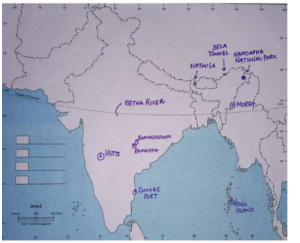
In Prelims, map-based questions frequently appear in General Studies Paper I, while in Mains, well-drawn maps add value to Geography and GS answers. Whether it’s identifying rivers, mountains, national parks, or global trade routes, mastering maps can significantly boost your score.

This article provides a structured approach to studying maps for UPSC, covering essential topics, effective techniques, and practical tips. By integrating maps with current affairs, practicing previous years’ questions, and using digital tools, you can make map study more engaging and effective. With a strategic plan, maps can become a scoring advantage in your UPSC journey.

Why Are Maps Important for UPSC?

Maps play a big role in UPSC. They are essential for understanding geographical, geopolitical, and environmental concepts relevant to the exam. They help visualize locations, trade routes, and international borders, aiding in better retention and recall. In Prelims, questions often test knowledge of physical and political geography, while in Mains, maps enhance answer presentation, making responses more impactful. 

Additionally, maps connect current affairs with places, improving conceptual clarity on global and national issues. A strong grasp of maps can significantly improve performance in Geography, International Relations, and Environment-related topics across both Prelims and Mains.

How Maps Help in UPSC?

  • Helps you understand locations of rivers, mountains, cities, and international borders.
  • Makes it easier to remember current affairs by linking them with places on the map.
  • Improves understanding of environmental changes, trade routes, and geopolitical issues.
  • Gives an edge in answer writing by adding well-drawn maps.

How Many Map-Based Questions Come in UPSC?

Each year, around 4 to 5 questions in Prelims are directly related to maps. These questions usually ask about locations of rivers, mountains, cities, and important places. In Mains, maps are useful for explaining geographical and geopolitical topics.

Important Topics for Map Study

  • Physical Geography: Mountains, rivers, plateaus, deserts, coastal features.
  • Political Geography: Countries, capitals, state boundaries, important international locations.
  • Economic Geography: Key resources like coal, oil, and minerals.
  • Environmental Geography: National parks, biosphere reserves, and climate zones.

How to Study Maps for UPSC?

Studying maps can be easy if you follow a structured approach. Here are some useful techniques:

  1. Check the Syllabus: Go through the UPSC syllabus to find out where maps are useful. Focus on topics like physical geography, international relations, and environmental geography.
  2. Learn Physical Features: Start by studying major landforms and water bodies in India and the world:
  • Mountains: Himalayas, Alps, Rockies, Andes.
  • Rivers: Ganga, Brahmaputra, Amazon, Nile.
  • Deserts and Plateaus: Thar, Sahara, Deccan Plateau.
  1. Know Countries and Capitals: Make a list of important countries and their capitals, especially in politically sensitive regions like the Middle East, South Asia, and Europe.
  2. Practice Drawing Maps: Drawing maps helps in better memory retention. Focus on key features rather than minute details.
  3. Use Online Maps and Atlases: Use Google Earth, interactive maps, and atlases like Oxford or Orient Blackswan for reference.
  4. Link Current Affairs with Maps
  • Mark areas of international disputes like the India-China border.
  • Locate key trade routes such as the Suez Canal.
  1. Solve Previous Years’ Map Questions: Practicing past UPSC questions helps you identify common patterns and important topics.

How to Study World Maps for UPSC?

A structured approach is needed for world maps. Focus on:

Key Regions

  • Middle East: Oil-producing nations, conflict zones, key waterways.
  • South & Southeast Asia: India’s neighboring countries, trade routes.
  • Africa: Resource-rich nations, deserts, and environmental challenges.
  • Europe: The European Union, major rivers, mountain ranges.

Major Physical Features

  • Oceans & Seas: Indian Ocean, Atlantic Ocean, Mediterranean Sea.
  • Rivers & Straits: Nile, Amazon, Panama Canal, Strait of Gibraltar.

How to Draw the World Map?

Drawing a world map can be easy if you follow a step-by-step method. You don’t need to make it perfect—just focus on the important parts.

  1. Start with Continents: First, draw Africa, then add Europe, Asia, and the Americas.
  2. Add Water Bodies: Sketch oceans and seas to complete the map.
  3. Mark Important Land Features: Include mountains, rivers, and deserts.
  4. Label Countries & Capitals: Highlight major countries and their capitals to improve your knowledge.

How to Learn India’s Map Easily?

For Indian geography, follow a step-by-step method:

1. Study Physical Features

  • Himalayas: Major peaks and glaciers.
  • Rivers: Ganga, Brahmaputra, Godavari, their tributaries.
  • Plateaus & Plains: Deccan Plateau, Indo-Gangetic Plains.

2. Learn the Political Map

  • Memorize state and union territory locations, especially border states like Arunachal Pradesh and Jammu & Kashmir.

3. Know Important Cities

  • Mark major cities, capitals, and economic hubs.

4. Identify Rivers & Dams

  • Study major river systems and their associated dams.

How to Study Maps for UPSC: Best Tips

Maps are very important for the UPSC exam. They help you understand geography, history, and international issues. Many questions in the Prelims and Mains require map knowledge. However, not everyone finds maps easy to study.

Here are 13 simple tips to help you learn maps better:

  1. Check Previous-Year Questions: Look at old UPSC papers to see what kind of map questions were asked. This will help you focus on important topics. Checking the last 10-15 years’ questions is enough.
  2. Study in Small Parts: Do not try to learn everything at once. Break your study into small sections like:
  • One country or state at a time
  • One feature at a time (mountains, rivers, deserts, etc.)

For example, while studying rivers, focus on just one or two rivers at a time and learn their origin, path, and tributaries.

  1. Use Colors and Drawings: Use colored pens or highlighters to mark important places but do not overdo it. Drawing maps yourself will help you remember better.
  2. Imagine and Make Stories: Try to visualize the map in your mind. You can also create short stories or tricks to remember places.

For example:

  • To remember Caspian Sea countries: KRAITKazakhstan, Russia, Azerbaijan, Iran, Turkmenistan.
  • For Karnataka Tiger Reserves: A girl named Anshi had a stick (Dandeli), kidnapped a cat (Bandipur), and crossed a river (Bhadra) before reaching a temple (Biligiri Ranganatha).

Even funny or silly stories work if they help you remember!

  1. Study Maps Regularly: Studying maps once in a while won’t help. Spend at least 30 minutes a day on maps to remember them better.
  2. Focus on Important Maps: Some maps are more important for the exam, such as:
  • India: Major rivers, mountains, states, national parks, ports, ISRO centers.
  • World: Major deserts, grasslands, rivers, important straits (like the Panama Canal, Suez Canal).
  1. Link Maps with Current Affairs: Whenever a place appears in the news (like a war zone or climate issue), find it on the map and learn about it.

Example: If you read about an India-Germany military exercise in the Gulf of Aden, check where it is and which countries are nearby.

  1. Use an Atlas and Wall Maps: Keep an atlas or wall map for quick reference. Mark new locations when you read the news.
  2. Practice on Blank Maps: Keep outline maps of India and the world. Mark important places on them instead of writing in an atlas. This will help you remember better.

Example:

  • Mark GI Tags (famous local products) on an India map.
  • Mark Tiger Reserves or National Parks on an India map.
  1. Don’t Overload Yourself: You don’t need to memorize everything. Focus on important places.

Example: It is not necessary to learn all 550+ Wildlife Sanctuaries in India. Just focus on the ones in the news.

  1. Revise Regularly: Keep revising the maps you study. Set a fixed time every week to go through the locations you have learned.
  2. Solve Map-Based Questions: Practice questions from mock tests, quizzes, and past UPSC papers. Discuss maps with other UPSC aspirants to improve learning.
  3. Learn to Draw Rough Maps: Practice drawing rough maps of India and the world in less than 30 seconds. This helps in Mains when writing answers. The map doesn’t have to be perfect, just clear enough to explain your point.

Conclusion

Studying maps for UPSC is not just about memorizing places but understanding their importance. Regular practice, linking maps with current events, and using digital tools can help you master this crucial topic. With a smart approach, maps can become an advantage in clearing the UPSC exam successfully.

Are you preparing for UPSC 2025? Join IAShub’s UPSC coaching batches to boost your preparation. Enroll now!

How to Study Maps for UPSC FAQs

Study in small parts like rivers or cities. Use colors, tricks, and practice drawing maps. Revise regularly for better memory.

Oxford School Atlas and Orient BlackSwan Atlas maps are best for UPSC. Google Maps and wall maps also help in quick learning.

Yes, maps are very important. They help in geography, current affairs, and answer writing in exams.

There are many types of maps like physical, political, and environmental. Focus on 28-30 key maps for better preparation.


UPSC QEP 2026 Batch 5 - English
Buy now View Details

Submit Your Details to Learn More


NEEV GS + CSAT Foundation 2026/27
Buy now View Details


Join theIAShub’s Mains Answer Writing Program

Refine your answer writing skills and elevate your UPSC preparation with personalized support and expert feedback.

Fill out the form to get started with the program or any other enquiries !

Let's Connect with Counselor

Best IAS Coaching In Delhi, UPSC Online & Offline Classes by IAShub

Are you dreaming of becoming an IAS officer? Then, IAShub can be your best guide. It is one of the Best IAS Coaching in Delhi. Many students who want to clear the UPSC exam join IAShub for learning. The institute gives both online and offline classes. Their teachers are experienced and helpful. They easily explain every topic. Students also get notes, tests, and tips to do well in the exam.

UPSC Online Classes by IAShub

IAShub is in Delhi and is trusted by many UPSC students. It offers coaching for every part of the UPSC exam – Prelims, Mains, and Interview. The classes are simple and easy to understand. The teachers are experts and guide students in the right way. IAShub is also known for its helpful notes, test series, and answer-writing practice. IAShub is the best coaching in Delhi and also gives UPSC Online Classes. This helps students from any place in India to learn. The online classes are live and also recorded. So, students can watch them anytime. These classes cover the full UPSC syllabus.

Key Offerings Provided by IAShub

Here are some important services provided by IAShub:

  • UPSC Prelims: IAShub teaches for Prelims with a focus on basics. It also gives daily current affairs and monthly magazines.
  • Classroom Courses: IAShub has classroom learning for students in Delhi. The environment is good and peaceful for study.
  • Live Classes: Students who live far can join live UPSC online classes. These classes are just like real classes.
  • QEP for Mains: The Quality Enrichment Program (QEP) is special for Mains preparation. It helps students write better and faster.
  • Answer Writing: Regular answer writing practice is given. Teachers also check answers and give tips to improve.
  • Free Resource: IAShub gives free notes by toppers and helpful Main Booster material.
  • Test Series: Test series are available for every subject. These help students know their weak points and improve.
  • Interview Guidance Session: IAShub also gives interview practice sessions with experts. These help students feel confident.

UPSC Exam Overview

The UPSC Civil Services Exam has three parts:

  • Prelims: It has two papers: General Studies and CSAT.
  • Mains: It has nine papers, including essays and optional subjects.
  • Interview: It tests the personality and confidence of the student.

This exam is tough, but with the right guidance, it becomes easy to manage. Students must study smart and stay regular.

How IAShub Helps in the UPSC Journey

IAShub supports students from the beginning to the end. It gives the right books, tests, and notes. The classes are easy to follow, and the teachers are always ready to help. Students get personal doubt sessions too. The test series and answer checking help students learn where they need to do better. Also, free study materials save time and money.
IAShub also guides students during the final stage – the interview. Experts take mock interviews and give useful tips. This full support makes IAShub one of the best IAS coaching in Delhi.

Best IAS Coaching In Delhi FAQs

Yes, IAShub offers live and recorded online classes. Students can attend from any part of India.

Classes are available in both English and Hindi, so students can choose the language they are comfortable with.

The classroom centre is located in Delhi. Students can visit and join offline batches there.

IAShub gives interview guidance sessions to help students prepare for the final round of UPSC.
Footer Image

