
















Explore the list of nuclear power plants in India 2025, their capacities, types of reactors, and the role of SMRs in the country's energy future.
 theIAShub | 11 Apr, 2025 | 32413 | 0 |

Nuclear energy is an important part of India’s energy system. As the country works to meet its increasing energy needs and reduce reliance on fossil fuels, nuclear power offers a reliable and eco-friendly solution. Over the years, India has made great progress in expanding its nuclear energy sector, with several nuclear power plants already in operation, some under construction, and more planned for the future.
Here we will look at the current state of nuclear power plants in India, how they contribute to the energy supply, the challenges they face, and future plans, including the move towards Small Modular Reactors (SMRs).
Nuclear power is expected to play an increasingly significant role in India’s future energy strategy. As the world shifts toward clean energy sources to combat climate change, nuclear energy offers a low-carbon, reliable option. India’s growing demand for electricity, coupled with its commitment to reducing carbon emissions, makes nuclear energy an essential part of the country’s energy mix.
In addition to large-scale reactors, the development of Small Modular Reactors (SMRs) promises to revolutionize India’s nuclear power generation. SMRs can offer solutions to some of the challenges faced by traditional nuclear plants, such as safety concerns and high construction costs.
Moreover, India’s ongoing research in thorium-based reactors and its partnership with Russia for the Kudankulam plant exemplifies the country’s commitment to expanding its nuclear energy capabilities. As more reactors are commissioned, India’s nuclear power capacity is poised to rise significantly in the coming decades, contributing to the nation’s energy security.
India has 22 operational nuclear power reactors, with a total installed capacity of 6,780 MW. Additionally, there are 8 reactors under construction at various stages, including the 500 MW Prototype Fast Breeder Reactor (PFBR) being implemented by BHAVINI, which will add a total of 6,000 MW to the country’s nuclear capacity. These reactors are spread across several plants like Tarapur, Kudankulam, and Rawatbhata, contributing significantly to the country’s energy needs. As India continues to expand its nuclear energy sector, it aims to meet growing energy demands and reduce reliance on fossil fuels.
India has a number of nuclear power plants spread across various states, primarily operated by the Nuclear Power Corporation of India Limited (NPCIL). These plants utilize different reactor technologies, such as Pressurized Heavy Water Reactors (PHWR), Light Water Reactors (LWR), and Fast Breeder Reactors (FBR). Here is a list of all the nuclear power plants in India:
List of Nuclear Power Plants in India |
|||
| 1. | Tarapur Atomic Power Plant-1 (Boisar, Maharashtra) | 12. | Kaiga Generating Station-2 (Kaiga, Karnataka) |
| 2. | Tarapur Atomic Power Plant-2 (Boisar, Maharashtra) | 13. | Rajasthan Atomic Power Plant-3 (Kota, Rajasthan) |
| 3. | Rajasthan Atomic Power Plant-1 (Kota, Rajasthan) | 14. | Rajasthan Atomic Power Plant-4 (Kota, Rajasthan) |
| 4. | Rajasthan Atomic Power Plant-2 (Kota, Rajasthan) | 15. | Kaiga Generating Station-3 (Kaiga, Karnataka) |
| 5. | Madras Atomic Power Plant-1 (Kalpakkam, Tamil Nadu) | 16. | Kaiga Generating Station-4 (Kaiga, Karnataka) |
| 6. | Madras Atomic Power Plant-2 (Kalpakkam, Tamil Nadu) | 17. | Tarapur Atomic Power Plant-3 (Boisar, Maharashtra) |
| 7. | Narora Atomic Power Plant-1 (Narora, Uttar Pradesh) | 18. | Tarapur Atomic Power Plant-4 (Boisar, Maharashtra) |
| 8. | Narora Atomic Power Plant-2 (Narora, Uttar Pradesh) | 19. | Rajasthan Atomic Power Plant-5 (Kota, Rajasthan) |
| 9. | Kakrapar Atomic Power Plant-1 (Tapi, Gujarat) | 20. | Rajasthan Atomic Power Plant-6 (Kota, Rajasthan) |
| 10. | Kakrapar Atomic Power Plant-2 (Tapi, Gujarat) | 21. | Kudankulam Nuclear Power Station-1 (Kudankulam, Tamil Nadu) |
| 11. | Kaiga Generating Station-1 (Kaiga, Karnataka) | 22. | Kudankulam Nuclear Power Station-2 (Kudankulam, Tamil Nadu) |
India’s first nuclear power plant was the Tarapur Atomic Power Station, commissioned in 1969. Located in Maharashtra, it initially used American-supplied BWR technology. Over the years, Tarapur has undergone upgrades, and Units 3 and 4 now operate with PHWR technology, providing a combined capacity of 980 MW.
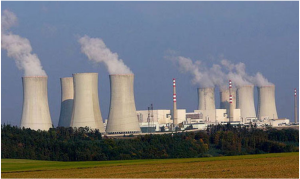
As of 2024, the Kudankulam Nuclear Power Plant in Tamil Nadu is the largest nuclear power plant in India. With a total planned capacity of 6,000 MW (from six reactors), it is a major player in the country’s nuclear energy landscape. This plant uses Russian-designed VVER-1000 reactors, which are some of the most advanced pressurized water reactors globally.
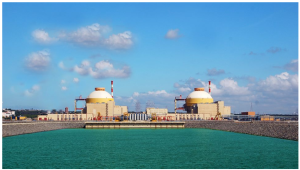
India’s nuclear power sector is evolving with a focus on technological advancements, increasing capacity, and ensuring sustainability:
These efforts are set to help India meet its growing energy needs while adhering to environmental goals.
[metaslider id=”5575″]
This table provides key facts about India’s nuclear power plants and their operations.
| Facts | Details |
| First Nuclear Power Plant | Tarapur Atomic Power Station (TAPS), commissioned in 1969. |
| Number of Operational Reactors | 22 reactors across 7 nuclear power plants (as of 2024). |
| Total Nuclear Capacity | Approximately 6,780 MW (as of 2024). |
| Main Operator | Nuclear Power Corporation of India Limited (NPCIL). |
| Regulatory Authority | Atomic Energy Regulatory Board (AERB). |
| Key Locations | Tarapur (Maharashtra), Kudankulam (Tamil Nadu), Rajasthan, and others. |
| Nuclear Fuel Used | Uranium and Thorium. |
| Safety Standards | Enforced by AERB for safe design, operation, and decommissioning. |
| Major Projects Under Construction | Kudankulam Units 5 and 6, and other upcoming plants in Haryana and Andhra Pradesh. |
| International Collaboration | India is a member of the IAEA and engages in nuclear cooperation with countries like Russia, France, and the USA. |
Nuclear power plants in India encounter several challenges:
Advantages of nuclear power plants in India are:
In India, nuclear power plants are regulated by the Atomic Energy Regulatory Board (AERB), which works under the Department of Atomic Energy (DAE). The AERB makes sure that nuclear plants follow safety rules to protect people and the environment. It creates and enforces rules for designing, running, and closing down nuclear plants. Nuclear Power Corporation of India Limited (NPCIL) is in charge of running the nuclear plants and works with AERB to make sure they meet safety standards.
India’s first nuclear power plant, Tarapur Atomic Power Station, is located in Maharashtra. It was commissioned in 1969 and is still operational today.
The Kudankulam Nuclear Power Plant in Tamil Nadu is India’s largest, with a planned total capacity of 6,000 MW across six reactors.It is a joint project between India and Russia and plays a critical role in India’s nuclear energy sector.
Small Modular Reactors (SMRs) are compact nuclear reactors designed for flexibility and safety. They offer a scalable, cost-effective alternative to traditional large nuclear plants, with reduced construction time.
Nuclear energy produces electricity without emitting greenhouse gases, making it a key part of India’s strategy to reduce carbon emissions and combat climate change.


Refine your answer writing skills and elevate your UPSC preparation with personalized support and expert feedback.
Fill out the form to get started with the program or any other enquiries !



Are you dreaming of becoming an IAS officer? Then, IAShub can be your best guide. It is one of the Best IAS Coaching in Delhi. Many students who want to clear the UPSC exam join IAShub for learning. The institute gives both online and offline classes. Their teachers are experienced and helpful. They easily explain every topic. Students also get notes, tests, and tips to do well in the exam.
IAShub is in Delhi and is trusted by many UPSC students. It offers coaching for every part of the UPSC exam – Prelims, Mains, and Interview. The classes are simple and easy to understand. The teachers are experts and guide students in the right way. IAShub is also known for its helpful notes, test series, and answer-writing practice. IAShub is the best coaching in Delhi and also gives UPSC Online Classes. This helps students from any place in India to learn. The online classes are live and also recorded. So, students can watch them anytime. These classes cover the full UPSC syllabus.
Here are some important services provided by IAShub:
The UPSC Civil Services Exam has three parts:
This exam is tough, but with the right guidance, it becomes easy to manage. Students must study smart and stay regular.
IAShub supports students from the beginning to the end. It gives the right books, tests, and notes. The classes are easy to follow, and the teachers are always ready to help. Students get personal doubt sessions too. The test series and answer checking help students learn where they need to do better. Also, free study materials save time and money.
IAShub also guides students during the final stage – the interview. Experts take mock interviews and give useful tips. This full support makes IAShub one of the best IAS coaching in Delhi.

Join 50,000+ UPSC Aspirants! 🚀
Get Free UPSC/IAS Study Materials, Daily Current Affairs, Editorial Summaries & Exam Updates.
Join Telegram Channel