
















Justice BR Gavai becomes the 52nd Chief Justice of India in May 2025. Learn about his appointment, powers, and the complete Chief Justice of India list since 1950.
 theIAShub | 15 May, 2025 | 20005 | 0 |

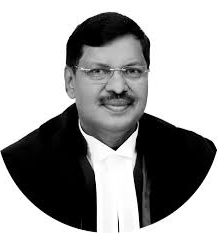
The Chief Justice of India holds the highest judicial position in the country, playing a pivotal role in interpreting the Constitution and ensuring the rule of law is upheld. As the head of the Supreme Court of India, the Chief Justice leads the judiciary in safeguarding citizens’ rights and maintaining the balance of power. As of 2025, Justice Bhushan Ramkrishna Gavai serves as the Chief Justice of India, having assumed office on May 14, 2025. His appointment holds historical significance as he is the first Buddhist and only the second Dalit to occupy this esteemed position, succeeding Justice K.G. Balakrishnan.
Also Read: UPSC Chairman List
The Chief Justice of India commands not only legal but also moral authority and must guide the judiciary through times of societal change, public scrutiny, and legal complexity. Justice Gavai will serve a six-month term, with his retirement scheduled for November 23, 2025.
His leadership comes at a crucial time when the Indian judiciary faces calls for reform and greater transparency.
Justice B.R. Gavai took oath as the Chief Justice of India on May 14, 2025 and will serve until November 23, 2025. Although his tenure spans just six months, it holds deep symbolic and historic significance. He is the first Buddhist and only the second Dalit to assume the office, following Justice K.G. Balakrishnan (2007–2010).
Also Read: Indian Aircraft Carriers
Justice Gavai belongs from Maharashtra and he began his legal practice in 1985 and was elevated to the Supreme Court in 2019. Known for his balanced judgments and commitment to social justice, his appointment comes at a crucial time when the judiciary is under increasing public scrutiny.
As the new chief judge of India, Justice Gavai shoulders significant responsibilities:
Also Read: India Pakistan War List
In exceptional circumstances, the Chief Justice of India may serve as the Acting President of India if both the President and Vice President’s offices are simultaneously vacant, in accordance with the President (Discharge of Functions) Act, 1969.
The appointment of the Chief Justice of India (CJI) is primarily guided by the principle of seniority, though it is not a constitutional requirement. Under Article 124(2) of the Constitution, the President appoints the CJI, typically based on the recommendation of the outgoing Chief Justice and in consultation with senior judges of the Supreme Court.
While the seniority convention is generally followed, there have been rare exceptions. In 1973, Justice A.N. Ray was appointed Chief Justice by superseding three more senior judges. Again in 1977, Justice M.H. Beg was chosen over Justice H.R. Khanna, breaking the seniority norm and sparking controversy.
Also Read: Chief Election Commissioner of India
[metaslider id=”5575″]
The Chief Justice holds office until the age of 65, unless removed earlier through a parliamentary process for proven misbehavior or incapacity. Beyond presiding over constitutional benches and key cases, the CJI also undertakes significant administrative duties. These include allocation of cases, supervision of the Supreme Court registry, appointment of court officers, and oversight of legal education institutions such as the National Law School of India University (NLSIU) and National Law University Delhi (NLU Delhi).
Once appointed, the Chief Justice of India holds office until the age of 65. There is no fixed tenure. Removal is only possible through a parliamentary impeachment process under Article 124(4) for “proven misbehavior or incapacity.” This strict clause ensures judicial independence.
Justice Gavai is recognized for his inclusive legal philosophy and a strong emphasis on equality, which will define his term as the Chief Justice of India.
Currently, Justice Bhushan R. Gavai serves as the Chief Justice of India. His appointment underscores the growing emphasis on representation and diversity within the judiciary. With his tenure set to conclude in November 2025, he is poised to preside over significant hearings and landmark decisions that could influence the constitutional landscape of the country.
Also Read: Budget Session 2025
Since independence, the Supreme Court has had a series of illustrious leaders. From H.J. Kania, the first Chief Justice of India, to Justice Gavai in 2025, each tenure has contributed to India’s legal evolution.
| No. | Chief Justice of India | Tenure Start | Tenure End | Highlights / Notable Facts |
| 1 | Harilal J. Kania | 26 Jan 1950 | 06 Nov 1951 | First CJI of independent India |
| 2 | M. Patanjali Sastri | 07 Nov 1951 | 03 Jan 1954 | |
| 3 | Mehr Chand Mahajan | 04 Jan 1954 | 22 Dec 1954 | |
| 4 | Bijan Kumar Mukherjea | 23 Dec 1954 | 31 Jan 1956 | |
| 5 | Sudhi Ranjan Das | 01 Feb 1956 | 30 Sep 1959 | |
| 6 | Bhuvaneshwar Prasad Sinha | 01 Oct 1959 | 31 Jan 1964 | |
| 7 | P. B. Gajendragadkar | 01 Feb 1964 | 15 Mar 1966 | |
| 8 | A. K. Sarkar | 16 Mar 1966 | 29 Jun 1966 | |
| 9 | Koka Subba Rao | 30 Jun 1966 | 11 Apr 1967 | |
| 10 | Kailas Nath Wanchoo | 12 Apr 1967 | 24 Feb 1968 | |
| 11 | M. Hidayatullah | 25 Feb 1968 | 16 Dec 1970 | |
| 12 | Jayantilal Chhotalal Shah | 17 Dec 1970 | 21 Jan 1971 | |
| 13 | Sarv Mittra Sikri | 22 Jan 1971 | 25 Apr 1973 | |
| 14 | Ajit Nath Ray | 26 Apr 1973 | 28 Jan 1977 | |
| 15 | Mirza Hameedullah Beg | 29 Jan 1977 | 21 Feb 1978 | |
| 16 | Y. V. Chandrachud | 22 Feb 1978 | 11 Jul 1985 | Longest-serving CJI (7 years, 4 months) |
| 17 | P. N. Bhagwati | 12 Jul 1985 | 20 Dec 1986 | Introduced Public Interest Litigation (PIL) |
| 18 | R. S. Pathak | 21 Dec 1986 | 18 Jun 1989 | |
| 19 | E. S. Venkataramiah | 19 Jun 1989 | 17 Dec 1989 | |
| 20 | S. Mukherjee | 18 Dec 1989 | 25 Sep 1990 | |
| 21 | Ranganath Misra | 26 Sep 1990 | 24 Nov 1991 | |
| 22 | K. N. Singh | 25 Nov 1991 | 12 Dec 1991 | Shortest tenure as CJI (17 days) |
| 23 | M. H. Kania | 13 Dec 1991 | 17 Nov 1992 | |
| 24 | L. M. Sharma | 18 Nov 1992 | 11 Feb 1993 | |
| 25 | M. N. Venkatachaliah | 12 Feb 1993 | 24 Oct 1994 | |
| 26 | A. M. Ahmadi | 25 Oct 1994 | 24 Mar 1997 | |
| 27 | J. S. Verma | 25 Mar 1997 | 18 Jan 1998 | Known for Vishaka Guidelines on sexual harassment |
| 28 | M. M. Punchhi | 18 Jan 1998 | 09 Oct 1998 | |
| 29 | A. S. Anand | 10 Oct 1998 | 31 Oct 2001 | |
| 30 | S. P. Bharucha | 01 Nov 2001 | 06 May 2002 | |
| 31 | B. N. Kirpal | 06 May 2002 | 08 Nov 2002 | |
| 32 | G. B. Pattanaik | 08 Nov 2002 | 18 Dec 2002 | |
| 33 | V. N. Khare | 19 Dec 2002 | 01 May 2004 | |
| 34 | S. Rajendra Babu | 02 May 2004 | 31 May 2004 | |
| 35 | R. C. Lahoti | 01 Jun 2004 | 31 Oct 2005 | |
| 36 | Y. K. Sabharwal | 01 Nov 2005 | 13 Jan 2007 | |
| 37 | K. G. Balakrishnan | 14 Jan 2007 | 12 May 2010 | First Dalit CJI |
| 38 | S. H. Kapadia | 12 May 2010 | 28 Sep 2012 | |
| 39 | Altamas Kabir | 29 Sep 2012 | 18 Jul 2013 | |
| 40 | P. Sathasivam | 19 Jul 2013 | 26 Apr 2014 | |
| 41 | R. M. Lodha | 27 Apr 2014 | 27 Sep 2014 | |
| 42 | H. L. Dattu | 28 Sep 2014 | 02 Dec 2015 | |
| 43 | T. S. Thakur | 03 Dec 2015 | 04 Jan 2017 | |
| 44 | J. S. Khehar | 04 Jan 2017 | 27 Aug 2017 | First Sikh CJI |
| 45 | Dipak Misra | 28 Aug 2017 | 02 Oct 2018 | |
| 46 | Ranjan Gogoi | 03 Oct 2018 | 17 Nov 2019 | First CJI from Northeast India |
| 47 | Sharad Arvind Bobde | 18 Nov 2019 | 23 Apr 2021 | |
| 48 | N. V. Ramana | 24 Apr 2021 | 26 Aug 2022 | |
| 49 | Uday Umesh Lalit | 27 Aug 2022 | 08 Nov 2022 | Second CJI directly elevated from the Bar |
| 50 | Dhananjaya Y. Chandrachud | 09 Nov 2022 | 10 Nov 2024 | Son of former CJI Y. V. Chandrachud |
| 51 | Sanjiv Khanna | 11 Nov 2024 | 13 May 2025 | Short tenure of 6 months |
| 52 | Bhushan Ramkrishna Gavai | 14 May 2025 | Incumbent | First Buddhist CJI; notable for rulings on electoral bonds and administrative overreach |
Though seniority is the convention, this tradition was notably broken in 1973 and 1977. Justice A.N. Ray and Justice Mirza Hameedullah Beg were appointed superseding more senior judges. These exceptions underscore the political and institutional complexities involved in appointing the Chief Justice of India.
Also Read: Nidhi Tewari
Also Read: Waqf Amendment Bill
[metaslider id=”5575″]
The Parliament decides the salary and benefits of the Chief Justice of India, as per the Supreme Court Judges (Salaries and Conditions of Service) Act, 1958. Periodic revisions are made based on recommendations of Pay Commissions.
As of 2024, the Chief Justice of India receives a monthly salary of ₹2,80,000, along with additional perks such as:
Post-retirement, CJIs are entitled to a pension, travel allowance, and other benefits under the Supreme Court Judges Rules.
The Chief Justice of India is not just a position, it is the embodiment of India’s legal spirit. Justice B.R. Gavai’s term, though brief, continues this proud tradition. As the judiciary faces modern challenges, the leadership of the Chief Justice remains crucial in preserving the values of justice, equality, and the Constitution.
Are you preparing for UPSC 2025? Join IAShub’s UPSC coaching batches to boost your preparation. Enroll now!
Chief Justice of India FAQs

Justice B. R. Gavai is the 52nd Chief Justice of India.
The salary of CJI is ₹2,80,000 per month (as per 2024 figures).
Harilal J. Kania was the first Chief Justice of India.
The President of India appoints the Chief Justice based on the recommendation of the outgoing CJI, following the seniority rule among Supreme Court judges.
While rare, a Chief Justice can serve as Acting President if both the President and Vice-President's offices are vacant, as per Article 65 of the Constitution (e.g., Justice M. Hidayatullah in 1969).
Justice Y. V. Chandrachud served the longest tenure—from 1978 to 1985—totaling over 7 years.

Refine your answer writing skills and elevate your UPSC preparation with personalized support and expert feedback.
Fill out the form to get started with the program or any other enquiries !



Are you dreaming of becoming an IAS officer? Then, IAShub can be your best guide. It is one of the Best IAS Coaching in Delhi. Many students who want to clear the UPSC exam join IAShub for learning. The institute gives both online and offline classes. Their teachers are experienced and helpful. They easily explain every topic. Students also get notes, tests, and tips to do well in the exam.
IAShub is in Delhi and is trusted by many UPSC students. It offers coaching for every part of the UPSC exam – Prelims, Mains, and Interview. The classes are simple and easy to understand. The teachers are experts and guide students in the right way. IAShub is also known for its helpful notes, test series, and answer-writing practice. IAShub is the best coaching in Delhi and also gives UPSC Online Classes. This helps students from any place in India to learn. The online classes are live and also recorded. So, students can watch them anytime. These classes cover the full UPSC syllabus.
Here are some important services provided by IAShub:
The UPSC Civil Services Exam has three parts:
This exam is tough, but with the right guidance, it becomes easy to manage. Students must study smart and stay regular.
IAShub supports students from the beginning to the end. It gives the right books, tests, and notes. The classes are easy to follow, and the teachers are always ready to help. Students get personal doubt sessions too. The test series and answer checking help students learn where they need to do better. Also, free study materials save time and money.
IAShub also guides students during the final stage – the interview. Experts take mock interviews and give useful tips. This full support makes IAShub one of the best IAS coaching in Delhi.
Join 50,000+ UPSC Aspirants! 🚀
Get Free UPSC/IAS Study Materials, Daily Current Affairs, Editorial Summaries & Exam Updates.
Join Telegram Channel