Discover everything you need to know about UPSC Marathi Literature optional for UPSC. Learn about the syllabus, books, notes, topper strategies, and more in this comprehensive guide.
 theIAShub | 19 Feb, 2025 | 5020 | 0 |
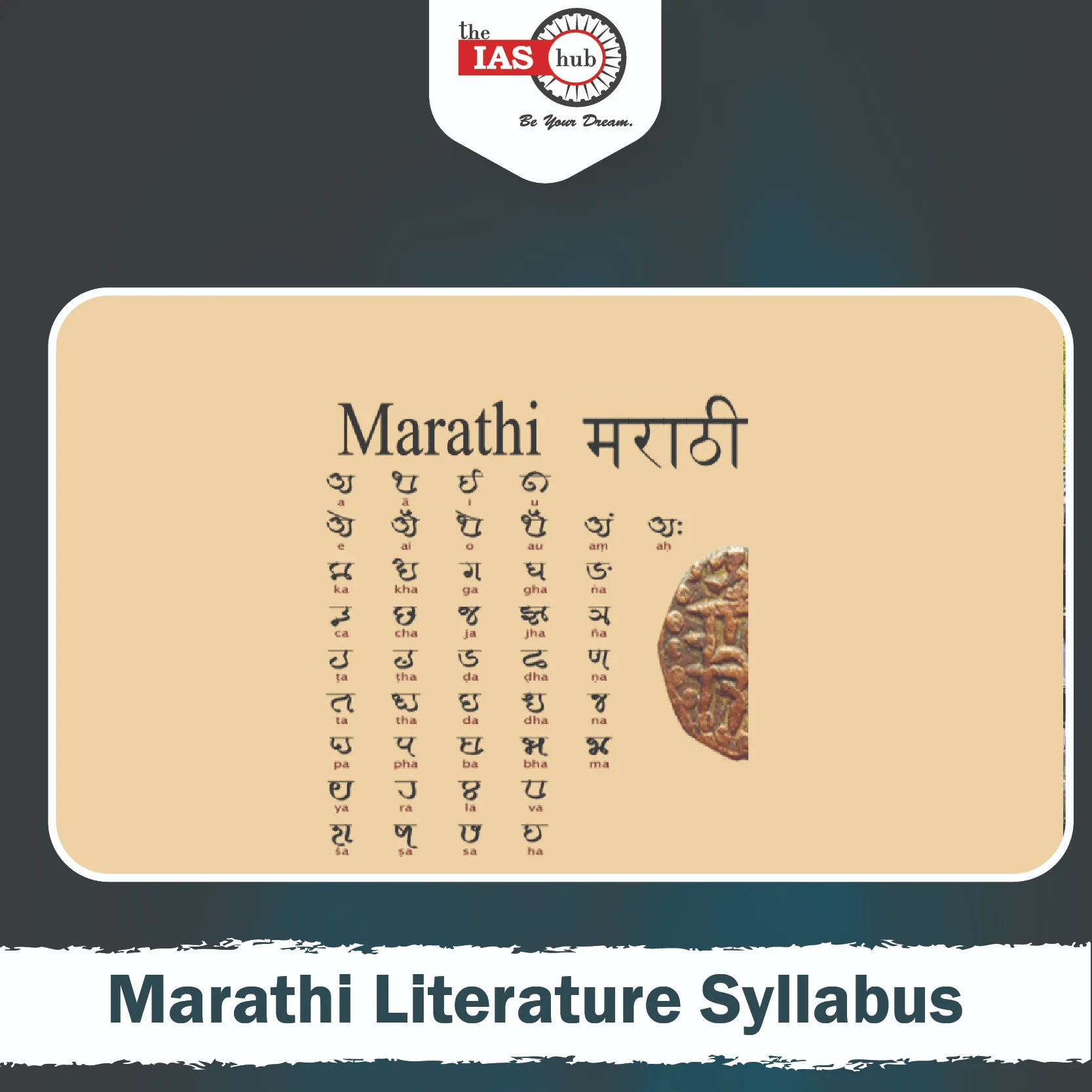

Marathi Literature is one of the most popular optional subjects for the UPSC Civil Services Examination, especially for candidates who have a strong command of the Marathi language and a deep interest in its rich literary heritage. It is a subject that not only helps you understand the cultural and historical aspects of Maharashtra but also allows you to showcase your language skills and analytical abilities.
In this article, we will cover everything you need to know about Marathi Literature optional, including its syllabus, books, notes, previous year question papers (PYQs), topper strategies, and more. Whether you are a beginner or someone looking to refine your preparation, this guide will help you explore through the subject with ease.
Marathi Literature as an optional subject offers rich cultural insights and a vast literary heritage, enhancing analytical and writing skills. It benefits candidates with a background in Marathi, providing scoring potential with a well-defined syllabus. Here are some reasons why Marathi Literature is a great choice as an optional subject for the UPSC exam:
Marathi Literature optional syllabus covers ancient to modern literary works, including poetry, prose, and criticism. It emphasizes cultural context, literary movements, and prominent authors, aiding comprehensive literary analysis.
Marathi Literature optional syllabus is divided into two papers, each covering different aspects of the subject. Each Paper consist of 250 marks. Here is a brief overview of the syllabus: (Answers must be written in Marathi)
Marathi Paper 1 covers Language and Folk-lore, including the nature and functions of language, dialects, grammar, and folk literature. It also includes the History of Marathi Literature and Literary Criticism, focusing on literary movements, forms, and evaluation methods.
| Section | Topic | Details |
| Section A | Language and Folk-lore | (a) Nature and Functions of Language (with reference to Marathi)
– Language as a signifying system: Langue and Parole; Basic functions; Poetic Language; Standard Language and dialect; Language variations according to social parameters. – Linguistic features of Marathi in the thirteenth century and seventeenth century. |
| (b) Dialects of Marathi
– Ahirani; Varhadi; Dangi. |
||
| (c) Marathi Grammar
– Parts of Speech; Case-system; Prayog-vichar (Voice). |
||
| (d) Nature and kinds of Folk-lore (with special reference to Marathi)
– Lok-Geet, Lok Katha, Lok Natya. |
||
| Section B | History of Literature and Literary Criticism | (a) History of Marathi Literature
1. From beginning to 1818 AD, with special reference to the following: – The Mahanubhava writers, the Varkari poets, the Pandit poets, the Shahirs, Bakhar Literature. 2. From 1850 to 1990, with special reference to developments in the following major forms: – Poetry, Fiction (Novel and Short Story), Drama; and major literary currents and movements: Romantic, Realist, Modernist, Dalit, Gramin, Feminist. |
| (b) Literary Criticism
1. Nature and function of Literature; 2. Evaluation of Literature; 3. Nature, Objectives, and Methods of Criticism; 4. Literature, Culture, and Society. |
Marathi Literature Optional Paper 2 focuses on the Textual Study of Prescribed Literary Works, requiring in-depth reading and critical analysis. It is divided into Prose and Poetry sections, covering selected works by prominent Marathi authors and poets.
| Section | Topic | Details |
| Section A | Prose | (1) ‘Smritisthala’
(2) Mahatma Jotiba Phule – ‘Shetkaryacha Asud’ – ‘Sarvajanik Satyadharma’ (3) S.V. Ketkar – ‘Brahmankanya’ (4) P.K. Atre – ‘Sashtang Namaskar’ (5) Sharchchandra Muktibodh – ‘Jana Hey Volatu Jethe’ (6) Uddhav Shelke – ‘Shilan’ (7) Baburao Bagul – ‘Jevha Mi Jaat Chorli Hoti’ (8) Gouri Deshpande – ‘Ekek Paan Galavaya’ (9) P.I. Sonkamble – ‘Athavaninche Pakshi’ |
| Section B | Poetry | (1) ‘Namadevanchi Abhangawani’
– Ed: Inamdar, Relekar, Mirajkar – Modern Book Depot, Pune (2) ‘Painjan’ – Ed: M.N. Adwant – Sahitya Prasar Kendra, Nagpur (3) ‘Damayanti-Swayamvar’ – By Raghunath Pandit (4) ‘Balakvinchi Kavita’ – By Balkavi (5) ‘Vishakha’ – By Kusumagraj (6) ‘Maridgandh’ – By Vinda Karandikar (7) ‘Jahirnama’ – By Narayan Surve (8) ‘Sandhyakalchya Kavita’ – By Grace (9) ‘Ya Sattet Jeev Ramat Nahi’ – By Namdev Dhasal |
UPSC Optional Marathi Literature Books provide comprehensive coverage of Marathi literature, including its history, grammar, poetry, prose, and plays. Key books focus on the evolution of literary movements, language structure, and significant themes in literature. These resources help develop a deep understanding of Marathi literature, essential for exam preparation. Here is a brief overview of UPSC Optional Marathi Literature Books:
Preparing your own notes is one of the best ways to retain information. However, if you are short on time, you can refer to the notes provided by toppers or coaching institutes. Here are some tips for making effective notes:
The Marathi Literature optional syllabus is available in PDF format on the official UPSC website. You can download it and use it as a reference for your preparation. Here are some tips for using the syllabus effectively:
Marathi Literature optional question paper is divided into two papers, each carrying 250 marks. The questions are a mix of theoretical and analytical types. Here are some tips for attempting the question paper:
Here is a list of the last five years of Marathi Literature Optional PYQ (Previous Year Question Papers) that aspirants can download and use in their preparation.
[metaslider id=”5575″]
| UPSC Marathi Literature Optional Previous Year Question Papers | |
| Year | Paper |
| 2024 | Download Paper 1 |
| Download Paper 2 | |
| 2023 | Download Paper 1 |
| Download Paper 2 | |
| 2022 | Download Paper 1 |
| Download Paper 2 | |
| 2021 | Download Paper 1 |
| Download Paper 2 | |
| 2020 | Download Paper 1 |
| Download Paper 2 | |
Marathi Literature Optional UPSC Strategy emphasizes understanding key texts and literary movements. Consistent revision and practice help in effectively covering the syllabus and scoring well in both papers. Here are some tips for preparing for Marathi Literature optional:
Marathi Literature UPSC Toppers highlight the importance of strong conceptual clarity, consistent practice, and a strategic approach to the syllabus. They often focus on understanding key literary works and connecting them with broader themes for better performance.
Many IAS toppers have chosen Marathi Literature as their optional subject. Here are some tips from toppers:
Sayali Mhetre is a UPSC topper who chose Marathi Literature as her optional subject. She secured an AIR of 398 in the 2021 UPSC exam.
Marathi Literature is a highly rewarding optional subject for the UPSC exam. With the right strategy, resources, and dedication, you can score well in this subject. Make sure to cover the entire syllabus, practice answer writing, and revise regularly. Use the recommended books, notes, and previous year question papers to enhance your preparation. By following these tips, you can master Marathi Literature and increase your chances of success in the UPSC exam.
Are you preparing for UPSC 2025? Join IAShub’s UPSC coaching batches to boost your preparation. Enroll now!
Some of the best books for Marathi Literature optional are "Marathi Vangmayacha Itihas by M.K. Naik," "Sahitya Te Samiksha by C.D. Deshmukh," and "Marathi Kavita Sangrah by Kusumagraj."
To prepare for Marathi Literature optional, understand the syllabus, make a study plan, practice answer writing, and revise regularly. Use recommended books and previous year question papers.
The syllabus for Marathi Literature optional is divided into two papers: Paper-I (History of Marathi Literature and Literary Criticism) and Paper-II (Detailed Study of Marathi Literary Texts).
To write effective answers, structure your answers well, use headings and subheadings, and support your answers with examples. Practice writing answers within the time limit.

Refine your answer writing skills and elevate your UPSC preparation with personalized support and expert feedback.
Fill out the form to get started with the program or any other enquiries !


Are you dreaming of becoming an IAS officer? Then, IAShub can be your best guide. It is one of the Best IAS Coaching in Delhi. Many students who want to clear the UPSC exam join IAShub for learning. The institute gives both online and offline classes. Their teachers are experienced and helpful. They easily explain every topic. Students also get notes, tests, and tips to do well in the exam.
IAShub is in Delhi and is trusted by many UPSC students. It offers coaching for every part of the UPSC exam – Prelims, Mains, and Interview. The classes are simple and easy to understand. The teachers are experts and guide students in the right way. IAShub is also known for its helpful notes, test series, and answer-writing practice. IAShub is the best coaching in Delhi and also gives UPSC Online Classes. This helps students from any place in India to learn. The online classes are live and also recorded. So, students can watch them anytime. These classes cover the full UPSC syllabus.
Here are some important services provided by IAShub:
The UPSC Civil Services Exam has three parts:
This exam is tough, but with the right guidance, it becomes easy to manage. Students must study smart and stay regular.
IAShub supports students from the beginning to the end. It gives the right books, tests, and notes. The classes are easy to follow, and the teachers are always ready to help. Students get personal doubt sessions too. The test series and answer checking help students learn where they need to do better. Also, free study materials save time and money.
IAShub also guides students during the final stage – the interview. Experts take mock interviews and give useful tips. This full support makes IAShub one of the best IAS coaching in Delhi.