
















Celebrate National Science Day 2025 on February 28 to honor C.V. Raman's discovery of the Raman Effect. Learn about its significance, C.V. Raman's contributions.
 theIAShub | 28 Feb, 2025 | 4811 | 0 |

National Science Day is celebrated every year on February 28 to honor the discovery of the Raman Effect by Sir C.V. Raman. This day is observed to recognize the significant contributions of scientists towards the development of India. It also aims to inspire young minds to take an interest in science and technology.
On February 28, 1928, Sir C.V. Raman announced the discovery of the Raman Effect, which later earned him the Nobel Prize in Physics in 1930. Since 1986, the Government of India has officially observed this day as National Science Day.
National Science Day is an annual event dedicated to the promotion of science and innovation. The day is marked by various activities such as science exhibitions, seminars, public speeches, and quizzes in schools, colleges, and scientific institutions. The primary goal is to spread awareness about the importance of science in everyday life and to encourage students to pursue scientific research.
In 1986, the National Council for Science and Technology Communication (NCSTC) proposed to the Government of India to designate February 28 as National Science Day. The proposal was accepted, and since then, this day has been celebrated nationwide with different themes every year.
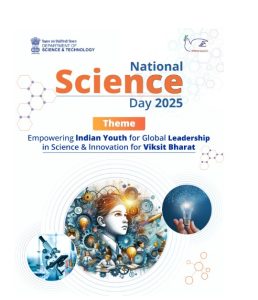
The theme of National Science Day (NSD) 2025 is “Empowering Indian Youth for Global Leadership in Science and Innovation for a Developed India.” This theme aims to highlight the role of young Indian minds in shaping the future of science and innovation for the nation’s development.
Sir Chandrasekhara Venkata Raman, commonly known as C.V. Raman, was an Indian physicist born on November 7, 1888. He is widely known for his work in the field of light scattering and is credited with discovering the Raman Effect. His groundbreaking research contributed significantly to the study of molecular physics and optics.
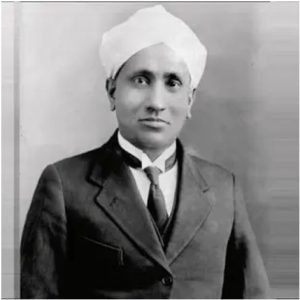
Raman pursued his higher education at the University of Madras, where he excelled in physics. His discovery of the Raman Effect revolutionized the understanding of how light interacts with molecules, which later became an essential tool in scientific research.
[metaslider id=”5575″]
C.V. Raman made numerous contributions to science, particularly in the fields of optics and acoustics. Some of his notable contributions include:
The Raman Effect is a phenomenon in which light, when passed through a transparent medium, undergoes scattering with a shift in wavelength. This effect provided scientists with a new method to study the molecular composition of different materials.
When light interacts with molecules, some of the scattered light changes in frequency due to interactions with molecular vibrations. This discovery allowed researchers to analyze the structure of materials using Raman Spectroscopy, a widely used technique in various scientific fields.
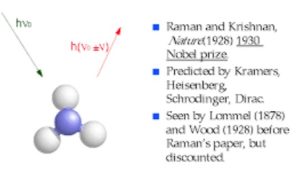
C.V. Raman was an Indian physicist who made groundbreaking contributions to the field of science. He was awarded the Nobel Prize in Physics in 1930 for his discovery of the Raman Effect.
C.V. Raman's major contribution was the discovery of the Raman Effect, which explains how light changes frequency when it passes through different materials. This discovery enhanced the understanding of light scattering and won him the Nobel Prize.
The Raman Effect is the scattering of light by molecules, resulting in a shift in the light’s frequency. It provides insight into the vibrational modes of molecules and is widely used in molecular spectroscopy.

Refine your answer writing skills and elevate your UPSC preparation with personalized support and expert feedback.
Fill out the form to get started with the program or any other enquiries !



Are you dreaming of becoming an IAS officer? Then, IAShub can be your best guide. It is one of the Best IAS Coaching in Delhi. Many students who want to clear the UPSC exam join IAShub for learning. The institute gives both online and offline classes. Their teachers are experienced and helpful. They easily explain every topic. Students also get notes, tests, and tips to do well in the exam.
IAShub is in Delhi and is trusted by many UPSC students. It offers coaching for every part of the UPSC exam – Prelims, Mains, and Interview. The classes are simple and easy to understand. The teachers are experts and guide students in the right way. IAShub is also known for its helpful notes, test series, and answer-writing practice. IAShub is the best coaching in Delhi and also gives UPSC Online Classes. This helps students from any place in India to learn. The online classes are live and also recorded. So, students can watch them anytime. These classes cover the full UPSC syllabus.
Here are some important services provided by IAShub:
The UPSC Civil Services Exam has three parts:
This exam is tough, but with the right guidance, it becomes easy to manage. Students must study smart and stay regular.
IAShub supports students from the beginning to the end. It gives the right books, tests, and notes. The classes are easy to follow, and the teachers are always ready to help. Students get personal doubt sessions too. The test series and answer checking help students learn where they need to do better. Also, free study materials save time and money.
IAShub also guides students during the final stage – the interview. Experts take mock interviews and give useful tips. This full support makes IAShub one of the best IAS coaching in Delhi.

Join 50,000+ UPSC Aspirants! 🚀
Get Free UPSC/IAS Study Materials, Daily Current Affairs, Editorial Summaries & Exam Updates.
Join Telegram Channel