


PENDENCY OF CASES in India has crossed 5 crore. Explore the causes, challenges, and effective solutions to reduce judicial backlog and speed up case disposal.
 theIASHub | 12 May, 2025 | 4930
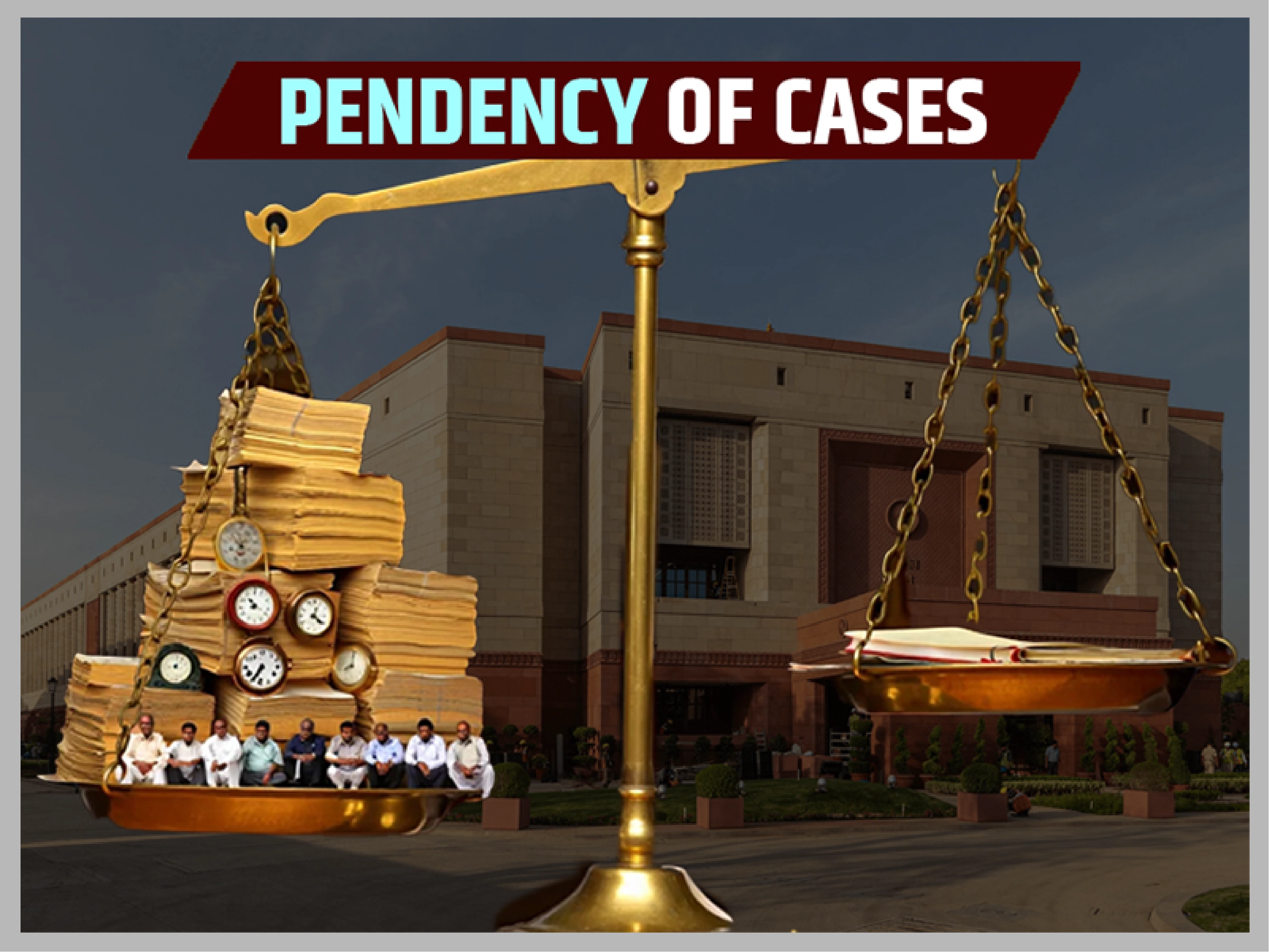

Pendency of Cases remains one of the biggest hurdles in India's judicial system. As per the National Judicial Data Grid (Dec 2023), over 5 crore cases are pending at various levels—87% in subordinate courts, 12% in High Courts, and less than 1% in the Supreme Court. This backlog slows down justice delivery, affecting governance, economic growth, and human rights. Addressing the issue of pendency of cases requires judicial reforms, improved infrastructure, and efficient dispute resolution mechanisms.

The Supreme Court has shifted from adjudicating only constitutional matters to handling regular appeals, increasing its workload and delaying crucial cases.
India has only 21 judges per million people, significantly lower than the Law Commission's recommendation of 50 judges per million. Judicial vacancies further aggravate the problem:
Frequent adjournments, judge transfers, and complex procedures contribute to case delays. Archaic laws and outdated legal processes further slow down case resolution.
Many courts lack adequate staff, technology, and courtrooms, leading to lower case disposal rates. Investment in modern legal infrastructure is crucial.
ADR mechanisms such as mediation and arbitration remain underutilized. If promoted effectively, these mechanisms can significantly reduce the burden on courts.
Excessive appeals, delays in judge appointments, and outdated case management systems further exacerbate the pendency of cases in Indian courts.

A 2009 Law Commission report estimated that at the current rate, it would take 464 years to clear all pending cases in India.
A slow judicial system leads to:
Overcrowded prisons, at 150% of their capacity, violate fundamental human rights by keeping undertrials in custody for prolonged periods without conviction.
The Supreme Court should order summary disposal of PILs older than 10 years unless they involve crucial legal or policy matters.
The pendency of cases in India demands urgent judicial reforms. Increasing the number of judges, modernizing legal infrastructure, leveraging technology, and promoting alternative dispute resolution mechanisms are essential to speed up justice delivery. If these reforms are implemented effectively, India can build a more efficient and accessible judicial system.


Refine your answer writing skills and elevate your UPSC preparation with personalized support and expert feedback.
Fill out the form to get started with the program or any other enquiries !

Are you dreaming of becoming an IAS officer? Then, IAShub can be your best guide. It is one of the Best IAS Coaching in Delhi. Many students who want to clear the UPSC exam join IAShub for learning. The institute gives both online and offline classes. Their teachers are experienced and helpful. They easily explain every topic. Students also get notes, tests, and tips to do well in the exam.
IAShub is in Delhi and is trusted by many UPSC students. It offers coaching for every part of the UPSC exam – Prelims, Mains, and Interview. The classes are simple and easy to understand. The teachers are experts and guide students in the right way. IAShub is also known for its helpful notes, test series, and answer-writing practice. IAShub is the best coaching in Delhi and also gives UPSC Online Classes. This helps students from any place in India to learn. The online classes are live and also recorded. So, students can watch them anytime. These classes cover the full UPSC syllabus.
Here are some important services provided by IAShub:
The UPSC Civil Services Exam has three parts:
This exam is tough, but with the right guidance, it becomes easy to manage. Students must study smart and stay regular.
IAShub supports students from the beginning to the end. It gives the right books, tests, and notes. The classes are easy to follow, and the teachers are always ready to help. Students get personal doubt sessions too. The test series and answer checking help students learn where they need to do better. Also, free study materials save time and money.
IAShub also guides students during the final stage – the interview. Experts take mock interviews and give useful tips. This full support makes IAShub one of the best IAS coaching in Delhi.
Join 39,000+ UPSC Aspirants! 🚀
Get Free UPSC/State PSC Study Materials, Daily Current Affairs Question & Exam Updates.
Join Telegram Channel
