


Discover the complete story of the 1975 Emergency in India, its causes, impacts, and how it reshaped Indian democracy.
 theIASHub | 20 Aug, 2025 | 3366

The Emergency in India, declared on June 25, 1975, remains one of the most controversial chapters in the nation's democratic history. Lasting for 21 months, this period saw the suspension of fundamental rights, censorship of the press, arrest of political opponents, and a significant curtailing of civil liberties. The Emergency in India was proclaimed by President Fakhruddin Ali Ahmed upon the advice of then Prime Minister Indira Gandhi, citing internal disturbances as a threat to national security.
This article delves deep into the background, causes, implementation, impacts, and eventual end of the Emergency in India, highlighting why it is widely regarded as a dark phase in Indian democracy.
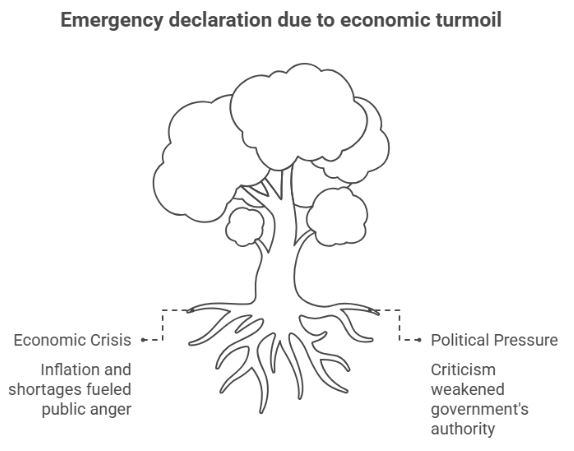
Following the 1971 Bangladesh Liberation War, India faced severe economic and social challenges. Rising inflation, oil crisis, unemployment, and food shortages created widespread dissatisfaction. The United States halted its financial aid, further worsening the economic crisis. The price of essential commodities rose rapidly, impacting the middle and lower-income groups the most.
Indira Gandhi's government, already under pressure due to growing public dissatisfaction, faced increasing criticism from both opposition leaders and the public. The Emergency in India was not a sudden move—it was preceded by growing unrest and political agitation against the government’s policies.
The roots of the Emergency in India lie in the 1971 Lok Sabha elections. Socialist leader Raj Narain, who contested against Indira Gandhi from Rae Bareli, accused her of using government machinery for electoral gains. He filed a case in the Allahabad High Court, alleging electoral malpractice.
On June 12, 1975, the Allahabad High Court found Indira Gandhi guilty of electoral misconduct. She was barred from holding any elected office for six years. This verdict triggered a political crisis and posed a direct threat to her prime ministership.
Veteran leader Jayaprakash Narayan, popularly known as JP, spearheaded a massive movement demanding Indira Gandhi’s resignation. He called for a total revolution and urged citizens, especially government employees and students, to peacefully protest and reject corrupt governance.
Faced with nationwide protests, strikes, and agitations, the government labeled the situation as an internal threat. On the night of June 25, 1975, the Emergency in India was officially proclaimed, invoking Article 352 of the Indian Constitution.
One of the first steps under the Emergency in India was the imposition of strict press censorship. Newspaper offices were raided, electricity was cut off, and pre-publication censorship was enforced. Prominent editors and journalists were arrested or threatened to fall in line with government narratives.
Thousands of opposition leaders, including JP Narayan, Morarji Desai, Atal Bihari Vajpayee, and L.K. Advani, were arrested without trial under the Maintenance of Internal Security Act (MISA). Political dissent was suppressed, and freedom of speech was curtailed.
Fundamental rights guaranteed by the Constitution, including the Right to Life and Liberty, were suspended. Citizens had no legal recourse against unlawful detention or harassment.
The Emergency in India led to an unprecedented centralization of power in the Prime Minister’s Office. Indira Gandhi ruled through ordinances and bypassed parliamentary procedures.
Under the leadership of Sanjay Gandhi, Indira’s son, a controversial family planning drive was launched. Millions of men were sterilized, often forcibly, leading to massive public outrage and long-lasting trauma.
Political and social organizations like the Rashtriya Swayamsevak Sangh (RSS) and Jamait-e-Islami were banned. Several NGOs and civil rights groups also faced suppression or dissolution.
While a few short-term economic improvements were reported, the Emergency in India derailed long-term planning. Decision-making became arbitrary, and bureaucrats acted under fear.
The Emergency in India drew sharp criticism from within and outside the country. The blatant violation of democratic values, mass detentions, suppression of dissent, and misuse of power by the executive left a deep scar on Indian democracy.
The judiciary came under government pressure. The infamous ADM Jabalpur vs. Shivkant Shukla case saw the Supreme Court siding with the state, ruling that even the Right to Life could be suspended during an emergency.
Facing mounting international criticism and domestic unrest, Indira Gandhi lifted the Emergency in January 1977 and announced fresh elections in March 1977. The opposition parties united under the Janata Party banner.
In the 1977 elections, Indira Gandhi’s Congress party suffered a humiliating defeat, and the Janata Party came to power. It marked the first time Congress was ousted from the Centre since Independence.
The Emergency in India taught the nation the importance of safeguarding democratic institutions and civil liberties. It remains a cautionary tale about how absolute power can lead to authoritarianism, even in a democratic setup. Citizens and institutions must remain vigilant to prevent any future abuse of constitutional provisions.


Refine your answer writing skills and elevate your UPSC preparation with personalized support and expert feedback.
Fill out the form to get started with the program or any other enquiries !

Are you dreaming of becoming an IAS officer? Then, IAShub can be your best guide. It is one of the Best IAS Coaching in Delhi. Many students who want to clear the UPSC exam join IAShub for learning. The institute gives both online and offline classes. Their teachers are experienced and helpful. They easily explain every topic. Students also get notes, tests, and tips to do well in the exam.
IAShub is in Delhi and is trusted by many UPSC students. It offers coaching for every part of the UPSC exam – Prelims, Mains, and Interview. The classes are simple and easy to understand. The teachers are experts and guide students in the right way. IAShub is also known for its helpful notes, test series, and answer-writing practice. IAShub is the best coaching in Delhi and also gives UPSC Online Classes. This helps students from any place in India to learn. The online classes are live and also recorded. So, students can watch them anytime. These classes cover the full UPSC syllabus.
Here are some important services provided by IAShub:
The UPSC Civil Services Exam has three parts:
This exam is tough, but with the right guidance, it becomes easy to manage. Students must study smart and stay regular.
IAShub supports students from the beginning to the end. It gives the right books, tests, and notes. The classes are easy to follow, and the teachers are always ready to help. Students get personal doubt sessions too. The test series and answer checking help students learn where they need to do better. Also, free study materials save time and money.
IAShub also guides students during the final stage – the interview. Experts take mock interviews and give useful tips. This full support makes IAShub one of the best IAS coaching in Delhi.
Join 39,000+ UPSC Aspirants! 🚀
Get Free UPSC/State PSC Study Materials, Daily Current Affairs Question & Exam Updates.
Join Telegram Channel
