2 Minute Series_9 September 2025

THEIASHUB
Get an Instant Call Back from Our Expert Mentors Now!
+91

09th September 2025

  1. Himachal Pradesh: Recently, Himachal Pradesh was officially declared a fully literate state, joining the elite ranks of Goa, Mizoram, Tripura, and the Union Territory of Ladakh.
  • Key Highlights: India’s literacy rate rose from 74% in 2011 to 9% in 2023-24, as announced by Union Education Minister.
  • Himachal ranks first in the country in student-teacher ratio.
  • Achievement credited to decades of effort, moving from 7% literacy at Independence to near-universal literacy.
  • ULLAS–Nav Bharat Saaksharta Karyakram played a key role: 3 crore learners and 42 lakh volunteers enrolled.
  • 83 Crore learners took literacy assessments with 90% success rate.
  • Learning materials now available in 26 Indian languages.
  • Himachal government plans continuous reforms to transform institutions into centres of excellence.
  • The dropout rate has now fallen to nearly zero.
  • Himachal had met all criteria for full literacy and will continue capacity enhancement.
  • Women’s groups, youth clubs, NGOs, and volunteers played a major role in achieving this milestone.


  1. Personalised Adaptive Learning: Recently, a study found that a personalised adaptive learning (PAL) software used in Andhra Pradesh government schools has doubled student learning rates, leading to measurable gains in math proficiency.
  • About PAL: By AI, introduced in 2019 for Classes 6–9.
  • Scale: Now implemented across 1,224 government schools in the state using tablets.
  • Evaluation study: Conducted by Development Innovation Lab (University of Chicago).
  • Compared 60 schools with PAL vs 60 without PAL over 17 months (2023–2025).
  • Covered 14,000 students.
  • Learning gains: Students using PAL showed 3x higher learning rates than non-users.
  • Girls gained 31 years of schooling equivalent, boys 1.54 years.
  • By grade: Class 6 → 04 years, Class 7 → 2.36 years, Class 8 → 1.77 years, Class 9 → 1.54 years.
  • Future plans: Andhra govt plans to expand PAL to PM-SHRI and secondary schools (900+ schools). Proposal to shift from tablets to Chromebooks for longer durability.
  • Broader research: PAL has earlier shown positive results in Delhi private schools (2019) and Rajasthan govt schools (2025).


  1. Sample Registration System: Recently, Kerala’s maternal mortality ratio (MMR) has shown a steep rise from 18 to 30 per one lakh live births, according to the latest Sample Registration System (SRS) bulletin for 2021–23.
  • Key Highlights: Kerala and Andhra Pradesh share the first spot among states with the lowest MMR in India.
  • The increase is largely attributed to: 97 maternal deaths in 2021 due to COVID-19.
  • A declining number of live births in the state, which affects the denominator in MMR calculation.
  • Declining live births: Earlier: 5–5.5 lakh annually; 2023: 3,93,231 live births; 2024-25 (projected): ~3.54 lakh live births.
  • Maternal deaths steady: Around 120–140 annually over the past five years. Spike in 2021-22: 220 maternal deaths, pushing MMR to 51 (due to COVID-19).
  1. Cholesterol: Recently, scientists at the Institute of Nano Science and Technology (INST), Mohali, discovered that cholesterol can be harnessed to control electron spin, paving the way for advanced quantum and spintronic technologies.
  • Why cholesterol: Acts as an ideal supramolecular platform due to its chirality (handedness) and flexibility.
  • Enables precise control of molecular properties.
  • Method: Cholesterol combined with different metal ions created nanomaterials that can filter electron spins selectively.
  • Both spin directions could be tuned in a single system using a chemical tweak or stimulus.
  • Result: Provides chemical tunability for manipulating spin information with high precision.
  • Applications: Energy-efficient memory chips for greener technology.
  • Bioelectronic devices.
  • Spin-based separation of molecules with extreme precision.
  • Significance: Represents a major advancement in using biomaterials (cholesterol-based nanomaterials) for quantum and spintronic technologies.


  1. Lists of Essential Medicines: Recently, the World Health Organization (WHO) updated its Model Lists of Essential Medicines (EML), adding new treatments for cancer, diabetes, and obesity with related comorbidities.
  • About Essential Medicines: Medicines that meet the priority health-care needs of a population.
  • The list is prepared by considering: Disease prevalence
  • Efficacy and safety of medicines
  • Comparative cost-effectiveness
  • Medicines acts as a reference register that defines the minimum medicine needs for every health-care system.
  • It is revised every two years by the Expert Committee on the Selection and Use of Essential Medicines.
  • Tanzania (1970) was the first country to develop a national Essential Medicines List (EML).
  • The first WHO Model List was published in 1977, containing 186 medicines.
  • Today, over 150 countries have their own national EMLs, adapted from the WHO model.


  1. Red Sea: Recently, internet traffic between India and Europe slowed down after two major undersea cable systems—SEA-ME-WE 4 and IMEWE—were cut in the Red Sea.
  • About the Red Sea: A semi-enclosed extension of the Indian Ocean, located between Africa and Asia.
  • To the south, it connects to the Arabian Sea and Indian Ocean through the Gulf of Aden and the narrow Bab el-Mandeb Strait.
  • In the north, it is divided by the Sinai Peninsula into the Gulf of Aqaba and the Gulf of Suez. From the Gulf of Suez, it links to the Mediterranean Sea via the Suez Canal, one of the world’s most important shipping routes.
  • The sea is known for its hot and highly saline waters and serves as a vital maritime route between Europe and Asia.
  • Its red coloration comes from algae blooms, which can alter the sea’s appearance.
  • Geologically, it lies within a fault depression formed by the movement of the Arabian and North African tectonic plates.
  • Bordering Countries: Egypt, Saudi Arabia, Yemen, Sudan, Eritrea, Djibouti
  • Mineral Resources: Petroleum deposits, evaporites, sulfur, phosphates, and heavy-metal deposits.


  1. Monkey Pox: Recently, the World Health Organization (WHO) declared that mpox (monkeypox) is no longer a Public Health Emergency of International Concern (PHEIC) following a sustained decline in global cases and deaths.
  • About mpox: Mpox is a viral zoonotic disease caused by the monkeypox virus (MPXV).
  • The virus belongs to the Orthopoxvirus genus of the Poxviridae family, which also includes variola (smallpox), cowpox, and vaccinia viruses.
  • Origin: First detected in 1958 in monkeys in Denmark.
  • The first human case was reported in 1970 in the Democratic Republic of Congo (DRC).
  • The virus is endemic in Central and West Africa, with occasional outbreaks in other parts of the world.
  • Symptoms: Fever, headache, muscle and back pain, swollen lymph nodes, and fatigue.
  • Usually starts on the face or genitals, spreading across the body (including palms and soles).


  1. Operation Guddar: Recently, in Jammu and Kashmir, security forces carried out an operation in the Guddar forest area of South Kashmir’s Kulgam district, where two terrorists were killed.
  • About Operation Guddar: A counter-terrorism operation carried out jointly by the J&K Police, Indian Army, and CRPF in the Guddar forest area of Kulgam district.
  • The operation is named after the forested region where militants were believed to be hiding.
  • Aim: To neutralize terrorists active in South Kashmir.
  • To secure forested terrain and nearby villages often used as militant hideouts.
  • To strengthen intelligence-driven, coordinated action between police and security forces.
  • Key Features: Joint participation of the Army (Chinar Corps), CRPF, and Special Operations Group (SOG) of J&K Police.
  • Conducted in high-risk forest areas, requiring specialized tactics.
  • Focus on eliminating threats while minimizing civilian casualties and collateral damage.


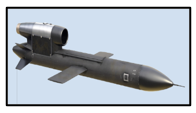
  1. FP-5 Flamingo: Recently, Ukraine unveiled its new homegrown cruise missile, the FP-5 "Flamingo", marking a major leap in its defense capabilities.
  • About FP-5 “Flamingo”: A long-range cruise missile developed by Ukraine’s Fire Point defense company.
  • It is Ukraine’s first indigenously developed heavy missile system.
  • Key Features: Range: Up to 3,000 km.
  • Warhead: 1,150 kg.
  • Maximum take-off weight: 6,000 kg.
  • Wingspan: Around 6 meters.
  • Engine: Turbofan
  • Speed: Up to 900 km/h.
  • Navigation: Combination of inertial guidance and GPS.
  • Electronic warfare resistance: Equipped with a secure GPS module and CRPA antennas to withstand jamming attempts.
  • Destructive Capability: The missile’s high terminal velocity and heavy weight allow the warhead to penetrate deep into targets before detonation, significantly boosting its destructive power.


  1. India and Israel: Recently, India and Israel signed a Bilateral Investment Agreement to boost trade, protect investors, and deepen economic ties.
  • Key Highlights: Israel becomes the first OECD member state with which India has signed such an agreement under India’s new model investment treaty framework.
  • The agreement aims to promote reciprocal investments, provide certainty and protection for investors, and strengthen Israeli exports.
  • It replaces the previous agreement signed in 1996.
  • Israel plans to open up new sectors, particularly construction, creating investment and employment opportunities for Indians.
  • Israel has already hired large numbers of Indian blue-collar workers in the past two years due to conflict-related labour shortages.


UPSC QEP 2026 Batch 5 - English
Buy now View Details
Submit Your Details to Learn More
I agree to give my consent to receive updates through SMS/Email & WhatsApp*.

NEEV GS + CSAT Foundation 2026/27
Buy now View Details


Join theIAShub’s Mains Answer Writing Program

Refine your answer writing skills and elevate your UPSC preparation with personalized support and expert feedback.

Fill out the form to get started with the program or any other enquiries !

I agree to give my consent to receive updates through SMS/Email & WhatsApp*.

Best IAS Coaching In Delhi, UPSC Online & Offline Classes by IAShub

Are you dreaming of becoming an IAS officer? Then, IAShub can be your best guide. It is one of the Best IAS Coaching in Delhi. Many students who want to clear the UPSC exam join IAShub for learning. The institute gives both online and offline classes. Their teachers are experienced and helpful. They easily explain every topic. Students also get notes, tests, and tips to do well in the exam.

UPSC Online Classes by IAShub

IAShub is in Delhi and is trusted by many UPSC students. It offers coaching for every part of the UPSC exam – Prelims, Mains, and Interview. The classes are simple and easy to understand. The teachers are experts and guide students in the right way. IAShub is also known for its helpful notes, test series, and answer-writing practice. IAShub is the best coaching in Delhi and also gives UPSC Online Classes. This helps students from any place in India to learn. The online classes are live and also recorded. So, students can watch them anytime. These classes cover the full UPSC syllabus.

Key Offerings Provided by IAShub

Here are some important services provided by IAShub:

  • UPSC Prelims: IAShub teaches for Prelims with a focus on basics. It also gives daily current affairs and monthly magazines.
  • Classroom Courses: IAShub has classroom learning for students in Delhi. The environment is good and peaceful for study.
  • Live Classes: Students who live far can join live UPSC online classes. These classes are just like real classes.
  • QEP for Mains: The Quality Enrichment Program (QEP) is special for Mains preparation. It helps students write better and faster.
  • Answer Writing: Regular answer writing practice is given. Teachers also check answers and give tips to improve.
  • Free Resource: IAShub gives free notes by toppers and helpful Main Booster material.
  • Test Series: Test series are available for every subject. These help students know their weak points and improve.
  • Interview Guidance Session: IAShub also gives interview practice sessions with experts. These help students feel confident.

UPSC Exam Overview

The UPSC Civil Services Exam has three parts:

  • Prelims: It has two papers: General Studies and CSAT.
  • Mains: It has nine papers, including essays and optional subjects.
  • Interview: It tests the personality and confidence of the student.

This exam is tough, but with the right guidance, it becomes easy to manage. Students must study smart and stay regular.

How IAShub Helps in the UPSC Journey

IAShub supports students from the beginning to the end. It gives the right books, tests, and notes. The classes are easy to follow, and the teachers are always ready to help. Students get personal doubt sessions too. The test series and answer checking help students learn where they need to do better. Also, free study materials save time and money.
IAShub also guides students during the final stage – the interview. Experts take mock interviews and give useful tips. This full support makes IAShub one of the best IAS coaching in Delhi.

Best IAS Coaching In Delhi FAQs

Yes, IAShub offers live and recorded online classes. Students can attend from any part of India.

Classes are available in both English and Hindi, so students can choose the language they are comfortable with.

The classroom centre is located in Delhi. Students can visit and join offline batches there.

IAShub gives interview guidance sessions to help students prepare for the final round of UPSC.