09th October 2025
1. Nobel Prize in Chemistry: Recently, the 2025
Nobel Prize in Chemistry was awarded jointly to Susumu Kitagawa (Japan), Richard Robson (UK/Australia), and Omar M. Yaghi (USA/Jordan) for their pioneering research on
metal-organic frameworks (MOFs).
- About MOFs: Materials that combine metals and organic molecules in a stable, porous structure.
- Scientific Breakthrough: MOFs bridge metals and organics, two chemical realms once thought incompatible.
- Structures have immense internal surface area and tunable pores, enabling selective gas and molecule storage.
- Marked a paradigm shift in materials chemistry, blending rigidity with flexibility.
- Applications: Capture of carbon dioxide and removal of Per- and Polyfluoroalkyl Substances (PFAS) and pollutants.
- MOFs can harvest water vapor even from dry desert air.
- Potential in gas storage, fuel cells, and drug delivery.
- Chemists now use AI for rational MOF design tailored to specific problems.
2. PM-KUSUM and PM Surya Ghar: Recently, India announced plans to promote its flagship PM-KUSUM and PM Surya Ghar schemes across African and island nations.
- Key Highlights: The initiative will be showcased through the International Solar Alliance (ISA)
- Aim: Help countries with poor electricity connectivity adopt solar-powered solutions.
- About PM-KUSUM (Pradhan Mantri Kisan Urja Suraksha evam Utthan Mahabhiyan): Launched: 2019
- Objective: To promote solar energy use in agriculture and provide energy security to farmers.
- Targets: Set up 100 GW solar power capacity on farmer-owned land.
- Install 14 lakh standalone solar pumps.
- Solarise 35 lakh grid-connected agricultural pumps.
- About PM Surya Ghar Muft Bijli Yojana: Launched: February 15, 2024
- Objective: Provide free electricity to households through rooftop solar installations.
- Subsidy Details: 60% subsidy for solar units up to 2 kW.
- 40% subsidy for additional capacity between 2–3 kW.
- Subsidy cap: 3 kW
- Special Components: Model Solar Village to be developed in every district.
- Incentive to Local Bodies: ₹1,000 per rooftop solar installation for ULBs and
3. Nesolynx Banabitanae: Recently, a new wasp species named Nesolynx banabitanae was discovered in Central Park (Banabitan), Salt Lake, West Bengal.
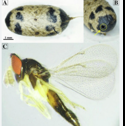
- About Nesolynx Banabitanae: The species was named in honour of “Banabitan,” the local name of Central Park, where it was first identified.
- Scientific Name: Nesolynx banabitanae
- Family: Eulophidae – A diverse group of wasps known for their parasitic behaviours.
- Ecological Role: The species is a hyperparasitoid, meaning it parasitises other parasitoid wasps.
- Specifically, it parasitises the ichneumonid parasitoid Charops aditya, which itself attacks caterpillars of the common palmfly and common castor butterflies.
- Significance of the Discovery: Marks the seventh wasp species to be identified in India.
- Highlights the rich biodiversity of urban green spaces like Salt Lake’s Central Park.
- Reveals the complex ecological interactions within insect food webs and parasitic hierarchies.
4. PM-SETU: Recently, the Prime Minister of India introduced the
PM-SETU (Prime Minister’s Scheme for Empowerment through Technology Upgradation).
- About PM-SETU: A centrally sponsored flagship scheme launched to transform India’s skill development ecosystem through technologically advanced and industry-driven Industrial Training Institutes (ITIs).
- The scheme promotes a “Government-owned, Industry-managed” model of vocational training to make India’s workforce globally competitive.
- Nodal Ministry: Ministry of Skill Development and Entrepreneurship (MSDE)
- Objectives: To upgrade 1,000 government ITIs across India and align them with the evolving skill needs of industries.
- To bridge the gap between classroom learning and real-world employability, ensuring Indian youth meet global skill standards.
- Significance: Connects Indian youth with international industry standards and global supply chains.
- - Strengthens the ITI network to build a digitally skilled, future-ready workforce.
- - Supports MSMEs and local industries by providing highly skilled manpower, contributing to Atmanirbhar Bharat.
5. Online National Drugs Licensing System (ONDLS) Portal: Recently, 18 State Drug Control Authorities adopted the
Online National Drugs Licensing System (ONDLS) portal to streamline the processing of drug-related licences.
- About ONDLS Portal: A digital single-window platform for the online processing of drug-related licences across India.
- Developed By: The Centre for Development of Advanced Computing (C-DAC) in collaboration with: Central Drugs Standard Control Organisation (CDSCO)
- Directorate General of Health Services (DGHS)
- Ministry of Health and Family Welfare
- State/UT Drugs Regulatory Authorities
- Objective: To ensure a uniform, transparent, and accountable system for drug licensing in all States and Union Territories.
- Expected Impact: Streamlines the drug licensing process through digital integration.
- Promotes ease of doing business in the pharmaceutical sector.
- Enhances regulatory transparency, accountability, and uniformity
6. Digital Governance: Recently, the
National e-Governance Division (NeGD) under the Ministry of Electronics and Information Technology (MeitY) signed an MoU with the
National E-Governance Services Limited (NeSL) to promote paperless, transparent, and real-time digital governance across India.
- Key Highlights: Integration: NeGD’s Entity Locker (cloud-based digital document management platform under DigiLocker) integrated with NeSL’s Digital Document Execution (DDE) platform
- Purpose: Enable secure, real-time digital execution of contracts, including electronic bank guarantees (e-BGs).
- About NeGD (National e-Governance Division): An independent division under Digital India Corporation (MeitY).
- Provides technical and advisory support for implementing e-Governance programmes across central and state governments.
- About NeSL (National E-Governance Services Ltd): An Information Utility regulated by Insolvency and Bankruptcy Board of India (IBBI).
- Manages financial information repositories and digital document execution in 29 states.
- Its DDE platform offers secure, paperless execution for government and corporate documents.
7. Invasive Alien Species: Recently, India’s conservation scientists raised concerns over the increasing threat of invasive alien species.
- About Invasive Alien Species: Non-native species introduced accidentally or deliberately — through ornamental use, agriculture, aquaculture, or environmental projects — that spread uncontrollably, displacing native flora and fauna.
- Global Picture: 37,000 alien species introduced worldwide by human activity.
- Around 3,500 (10%) cause serious ecological and economic damage.
- India’s Scenario: Around 139 invasive alien species identified, mostly insect pests affecting crops.
- 626 alien aquatic species recorded, mainly from aquarium trade, aquaculture, and mosquito control.
- Ecological and Socioeconomic Impacts: Native species displaced or made locally extinct.
- Alter porosity, acidity, turbidity, and nutrient cycles.
- Transformation of grasslands, forests, and wetlands.
- Shrinking habitats force wildlife into human areas.
8. Common Municipal Solid Waste Management Facilities (CMSWMFs): Recently, the Union Ministry of Environment, Forest and Climate Change (MoEFCC) proposed exempting common municipal solid waste management facilities (CMSWMFs) and common effluent treatment plants (CETPs) from the need to obtain prior environmental clearance.
- Key Highlights: Recommendations made by the Sectoral Expert Appraisal Committee (EAC) on Infrastructure Projects.
- The EAC observed that both CETPs and SWM facilities are already regulated under:
- Water (Prevention and Control of Pollution) Act, 1974.
- Air (Prevention and Control of Pollution) Act, 1981.
- These laws have comprehensive and stringent regulatory frameworks, ensuring adequate environmental oversight.
- Solid Waste Management Facilities: Categorised as “Essential Environmental Services” by the Central Pollution Control Board (CPCB) under the new industrial classification.
- The 2017 Office Memorandum had earlier clarified that only facilities with landfills required prior clearance.
- EAC’s Updated Recommendation: Exempt all Common Municipal Solid Waste Management Facilities (CMSWMF) from prior clearance.
- Value Addition: These facilities contribute to the circular economy by producing compost, energy, and secondary raw materials.
9. Stubble Management: Recently, the Centre directed Punjab, Haryana, Uttar Pradesh, and Delhi to intensify their farmer awareness campaigns on
stubble management.
- Key Highlights: Stubble collection and storage for industrial utilisation (e.g., bio-CNG, ethanol, pellet, and compost plants).
- Direct seeding and crop diversification to reduce residue burning.
- Community Involvement: Panchayats, local representatives, and nodal officers must actively engage farmers at the village level.
- Machinery Promotion: Encourage use of rotavators, choppers, bio-decomposers, and mulching equipment for residue management.
- Industrial Linkages: Connect bio-CNG plants, ethanol units, compost industries, and thermal plants with stubble collection systems.
- Fund Utilisation: States must ensure efficient use of allocated funds to avoid machinery shortages.
- Long-Term Measures: Promote crop diversification to reduce dependence on paddy and curb future stubble generation.


 theIASHub | 09 Oct, 2025







 Detailed Solutions & Explanations

