2 Minute Series_8 September 2025

THEIASHUB
Get an Instant Call Back from Our Expert Mentors Now!
+91

08th September 2025


  1. Bhupen Hazarika: Recently, the Inland Waterways Authority of India (IWAI), under the Ministry of Ports, Shipping and Waterways (MoPSW), announced the launch of “Bistirna Parore: A Musical Voyage from Sadiya to Dhubri” at Guijan, Dibrugarh. This unique cultural initiative commemorates the birth centenary of Bharat Ratna Dr. Bhupen Hazarika, the legendary “Sudhakantha” (Bard of the Brahmaputra).
  • About Bhupen Hazarika: Born on September 8, 1926, in Assam’s Tinsukia district; passed away at age 85 in Mumbai.
  • Poet, music composer, actor, journalist, author, and filmmaker.
  • One of northeast India’s leading socio-cultural reformers who used art to unite people.
  • Composed Bistirno Parore and Ganga Behti Ho Kyun, inspired by Robeson’s Ol’ Man River.
  • His songs depicted human emotions and struggles—joy, sorrow, unity, love, loneliness, and determination.
  • Served as chairman and director of several cultural boards, including India’s National Film Development Corporation.
  • Awards and Honours: Sangeet Natak Akademi Award, Dadasaheb Phalke Award, Padma Shri, Padma Bhushan and posthumously awarded the Bharat Ratna.


  1. Blood Moon: Recently, a blood moon was visible in India, during a total lunar eclipse, when the moon appeared dark red due to Earth’s shadow.
  • About Blood Moon: Refers to a total lunar eclipse, during which the moon appears reddish-copper instead of its normal white glow.
  • How it occurs: Happens when Earth comes directly between the sun and the moon.
  • Direct sunlight is blocked, but Earth’s atmosphere bends and scatters some light onto the moon.
  • Blue light is filtered out, while red light is refracted, causing the moon to appear red.
  • Features: The shade of red depends on dust, smoke, and particles in Earth’s atmosphere.
  • The reddish hue is caused by Rayleigh scattering, the same effect that makes the sky blue.
  • Visible across wide regions where the eclipse is above the horizon.
  • Significance: Helps scientists study Earth’s atmosphere, including dust, volcanic ash, and pollution levels.
  • Important for astronomy and public science awareness.


  1. Impact GST Reforms on Farmers: Recently, the Union Agriculture and Rural Development Minister said that the new GST reforms announced by the Central Government will prove to be a boon for farmers, especially small and medium cultivators.
  • Major Relief in Agriculture and Dairy Sector: GST on bio-pesticides and micro-nutrients reduced → boost to organic and natural farming.
  • GST on fertilizers (ammonia, sulphuric acid, nitric acid) cut from 18% to 5% → lower fertilizer costs for farmers.
  • GST on milk and cheese removed; reduced on butter, ghee, milk cans, and other dairy products → benefits farmers, cattle breeders, milk producers, and consumers.
    • Agricultural Equipment: GST on agricultural machinery reduced from 18% to 5% → Farmers save ₹25,000–₹63,000 on tractors + additional savings on equipment.
    • GST cut on preserved vegetables, fruits, dry fruits, fish products, and natural honey → support for allied sectors (animal husbandry, beekeeping, fish farming, poultry, agro-forestry).
    • Women self-help groups in handicrafts, leather goods, and dairy products benefit → empowerment of Lakhpati Didis and rural livelihoods.
  1. Heath AI: Recently, India became a member of the HealthAI Global Regulatory Network (GRN), joining other pioneering countries to enhance oversight of artificial intelligence in healthcare.
  • About HealthAI Global Regulatory Network: Geneva-based independent nonprofit promoting equitable access to AI-driven health innovations.
  • Functions as a global network of health regulators ensuring safe and effective use of AI in healthcare.
  • Aims to build trust, improve safety, and accelerate responsible innovation.
  • Promotes shared learning, joint standards, and early warnings of emerging risks.
  • India is part of the network through ICMR-NIRDHDS and IndiaAI.
  • About IndiaAI: Central initiative of the Government of India to develop a comprehensive and inclusive AI ecosystem.
  • Operates under the Ministry of Electronics & Information Technology (MeitY) through the Digital India Corporation.
  • Seeks to position India as a global leader in AI innovation and development.


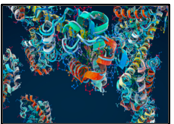
  1. Protein p47: Recently, researchers at the N. Bose National Centre for Basic Sciences (SNBNCBS) highlighted protein p47’s unexpected ability to function as a “mechanical chaperone.”
  • About P-47 Protein: A cofactor protein, commonly known as a helper of the cellular machine p97, which is vital for moving and degrading proteins.
  • Traditionally considered only an assistant involved in protein trafficking, degradation, and membrane fusion.
  • Key Findings: p47 enhances the mechanical efficiency of protein extraction from the endoplasmic reticulum (ER) lumen into the cytoplasm.
  • It stabilizes polypeptides under stress, guides them through narrow pores, lowers the risk of misfolding, and improves protein translocation.
  • Provides the first direct single-molecule evidence that cofactors like p47 have autonomous, force-dependent, chaperone-like activity.
  • Shows that p47 is not merely a passive partner of p97 but can directly stabilize proteins under force, acting as a “mechanical chaperone.”
  • Indicates that targeting mechanical cofactors such as p47 could open new therapeutic approaches for diseases related to protein instability.


  1. Mission Mausam: Recently, the India Meteorological Department (IMD) announced the installation of four additional radars in Jammu & Kashmir under Mission Mausam to provide more accurate, district-wise weather forecasts.
  • About Mission Mausam: Launched in 2024 by the Ministry of Earth Sciences.
  • Implemented by IMD, NCMRWF, and IITM.
  • Aims to improve weather and climate services through precise observation, modeling, and forecasting.
  • Supports multiple sectors such as agriculture, disaster management, and rural development.
  • Objectives: Enhance India’s forecasting ability across short-term, medium-term, extended-range, and seasonal scales.
  • Develop high-resolution models for better monsoon predictions.
  • Strengthen observational networks with advanced radars, satellites, and automated weather stations.
  • Provide actionable advisories for agriculture, water resources, energy, health, and disaster management.
  • Build capacity through national and international research collaborations.


  1. Study to Secure Rural Future: Recently, two international studies highlighted that larger, consolidated landholdings and traditional ecological knowledge can strengthen rural communities, improve forest management, and sustain ecosystems.
  • Published in Scientific Reports, the research emphasizes that modern science and local wisdom must work together to secure rural futures.
  • Key findings: Rural families depend on forests and ecosystems for food, fuel, income, traditions, and identity.
  • Challenges: shrinking landholdings, youth migration, aging populations, environmental stress, and loss of traditional knowledge.
  • Studies in China and Iran show how land size, shared services, and traditional wisdom can secure rural futures.
  • Larger, consolidated land is more productive when supported by shared services.
  • Traditional ecological knowledge strengthens ecosystem services but requires healthy environments to be effective.
  • Sustainable rural futures depend on combining modern science with local wisdom.


  1. Artificial Sweeteners: Recently, a study revealed that frequent consumption of artificial sweeteners, equivalent to one can of diet soda daily, may accelerate cognitive decline.
  • Key Findings: Memory loss progresses 62% faster in mid-life adults who consume artificial sweeteners.
  • Regular high intake speeds up brain ageing by about 1.6 years.
  • Even moderate consumption (≈66 mg/day) is linked with a 35% quicker overall cognitive decline.
  • Policy and Public Health Angle: Sweeteners are commonly added to diet drinks, sugar-free foods, packaged products, and diabetic diets.Health concerns include:
  • Aspartame – used in diet sodas and sugar-free goods; flagged by WHO (2023) as “possibly carcinogenic.”
  • Erythritol – a sugar alcohol associated with higher risk of blood clot formation.
  • In India, with obesity and diabetes on the rise, regulating and tracking sweetener use is becoming more critical.


  1. Transgender-Inclusive Curricula: Recently, the Union Social Justice and Education Ministries began developing transgender-inclusive curricula after the Supreme Court issued a notice to the Centre, States, and NCERT.
  • Key Highlights: Promoting early awareness among teachers, administrators, and police to create inclusive spaces.
  • The Transgender Persons (Protection of Rights) Act, 2019 upholds the right to self-identify gender, but ground-level execution is still weak.
  • Initiatives like Garima Greh shelters are being scaled up, with added focus on supporting transgender children and senior citizens.
  • The efforts contribute to global goals, especially SDG 4 (education for all) and SDG 10 (reducing inequality).
  • Challenges: Despite legal backing, many transgender persons still face obstacles in obtaining gender certificates.
  • Local officials often lack adequate training and sensitivity.
  • Cultural resistance continues, particularly against including sexuality and gender topics in school education.
  • Significance: Supports the inclusivity vision of NEP 2020, which stresses equity and access in education.
  • Reinforces India’s constitutional values of equality and aligns with the Supreme Court’s NALSA 2014 judgement.


UPSC QEP 2026 Batch 5 - English
Buy now View Details
Submit Your Details to Learn More
I agree to give my consent to receive updates through SMS/Email & WhatsApp*.

NEEV GS + CSAT Foundation 2026/27
Buy now View Details


Join theIAShub’s Mains Answer Writing Program

Refine your answer writing skills and elevate your UPSC preparation with personalized support and expert feedback.

Fill out the form to get started with the program or any other enquiries !

I agree to give my consent to receive updates through SMS/Email & WhatsApp*.

Best IAS Coaching In Delhi, UPSC Online & Offline Classes by IAShub

Are you dreaming of becoming an IAS officer? Then, IAShub can be your best guide. It is one of the Best IAS Coaching in Delhi. Many students who want to clear the UPSC exam join IAShub for learning. The institute gives both online and offline classes. Their teachers are experienced and helpful. They easily explain every topic. Students also get notes, tests, and tips to do well in the exam.

UPSC Online Classes by IAShub

IAShub is in Delhi and is trusted by many UPSC students. It offers coaching for every part of the UPSC exam – Prelims, Mains, and Interview. The classes are simple and easy to understand. The teachers are experts and guide students in the right way. IAShub is also known for its helpful notes, test series, and answer-writing practice. IAShub is the best coaching in Delhi and also gives UPSC Online Classes. This helps students from any place in India to learn. The online classes are live and also recorded. So, students can watch them anytime. These classes cover the full UPSC syllabus.

Key Offerings Provided by IAShub

Here are some important services provided by IAShub:

  • UPSC Prelims: IAShub teaches for Prelims with a focus on basics. It also gives daily current affairs and monthly magazines.
  • Classroom Courses: IAShub has classroom learning for students in Delhi. The environment is good and peaceful for study.
  • Live Classes: Students who live far can join live UPSC online classes. These classes are just like real classes.
  • QEP for Mains: The Quality Enrichment Program (QEP) is special for Mains preparation. It helps students write better and faster.
  • Answer Writing: Regular answer writing practice is given. Teachers also check answers and give tips to improve.
  • Free Resource: IAShub gives free notes by toppers and helpful Main Booster material.
  • Test Series: Test series are available for every subject. These help students know their weak points and improve.
  • Interview Guidance Session: IAShub also gives interview practice sessions with experts. These help students feel confident.

UPSC Exam Overview

The UPSC Civil Services Exam has three parts:

  • Prelims: It has two papers: General Studies and CSAT.
  • Mains: It has nine papers, including essays and optional subjects.
  • Interview: It tests the personality and confidence of the student.

This exam is tough, but with the right guidance, it becomes easy to manage. Students must study smart and stay regular.

How IAShub Helps in the UPSC Journey

IAShub supports students from the beginning to the end. It gives the right books, tests, and notes. The classes are easy to follow, and the teachers are always ready to help. Students get personal doubt sessions too. The test series and answer checking help students learn where they need to do better. Also, free study materials save time and money.
IAShub also guides students during the final stage – the interview. Experts take mock interviews and give useful tips. This full support makes IAShub one of the best IAS coaching in Delhi.

Best IAS Coaching In Delhi FAQs

Yes, IAShub offers live and recorded online classes. Students can attend from any part of India.

Classes are available in both English and Hindi, so students can choose the language they are comfortable with.

The classroom centre is located in Delhi. Students can visit and join offline batches there.

IAShub gives interview guidance sessions to help students prepare for the final round of UPSC.