


 theIASHub | 08 Jan, 2026


1. Population Census 2027: Recently, India has initiated formal preparations for the Population Census 2027, starting with the first phase of House listing Operations (HLO) across all States and Union Territories.
Key Highlights: House listing Operations (HLO): Each State and Union Territory will carry out the exercise over a 30-day window, with dates notified individually.
A digital self-enumeration option will be available 15 days prior to the start of field-level house listing. This marks a significant shift towards citizen-assisted digital data collection.
What is Covered in the HLO Phase: The houselisting phase focuses on housing conditions and household amenities, not individuals. Key aspects include:
Type of house, floor and roof material
Source of drinking water and cooking fuel
Main cereal consumed by the household
Number of married couples in the household
The Population Enumeration phase will record individual demographic, social, and economic details.
Census 2027 will be India’s first digital Census, using mobile applications and online self-enumeration.
2. Suryastra Rocket Launcher System: Recently, the Indian Army signed a ₹293 crore contract with NIBE Limited, in collaboration with Elbit Systems, for the induction of the Suryastra Rocket Launcher System.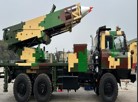
About Suryastra Rocket System: India’s first indigenous universal multi-calibre rocket launcher system.
Key Features: Designed as a modern surface-to-surface rocket artillery system.
Capable of striking targets with precision at ranges of 150 km and 300 km.
Can simultaneously engage multiple targets located at different distances.
Demonstrated a circular error probable (CEP) of less than 5 metres during trials.
Integrated with GPS, inertial navigation systems, and digital ballistic computation.
Features semi-automated reload and shoot-and-scoot capability, reducing vulnerability to enemy counter-battery fire.
3. Bio-Bitumen: Recently, in a landmark move linking sustainability with infrastructure development, the Union Minister for Road Transport and Highways highlighted the potential of transforming agricultural waste into a valuable national resource, Bio-Bitumen.
About Bio-bitumen: Produced from agricultural residue through pyrolysis, converting farm waste into a high-value construction material.
Sustainable Alternative: It serves as an eco-friendly substitute for petroleum-based bitumen, reducing reliance on fossil fuels.
Energy Security: Enables partial replacement of imported crude-oil derivatives, strengthening national self-reliance.
Blending Advantage: A 15% blending of bio-bitumen with conventional bitumen is technically feasible.
Economic Impact: Such blending can generate foreign exchange savings of about ₹4,500 crore.
Strategic Significance: Leads to a substantial reduction in crude oil import dependence while supporting circular economy goals.
Global First: India becomes the first country in the world to commercially produce Bio-Bitumen.
Benefits: With 15% blending, India can save nearly ₹4,500 crore in foreign exchange.
Utilisation of agro-waste helps curb crop residue burning.
Strengthens the circular economy and reduces pollution.
Empowers farmers by creating value from farm residue.
4. PSLV-C62 / EOS-N1 Mission: Recently, the Indian Space Research Organisation (ISRO) announced that it will launch the PSLV-C62 / EOS-N1 mission on January 12, 2026, from Sriharikota.
About PSLV-C62 Mission: A multi-payload launches mission, carrying one primary satellite and 18 secondary payloads.
Primary Payload: EOS-N1 (Anvesha), an Earth observation hyperspectral imaging satellite.
Developed mainly for Defence Research and Development Organisation (DRDO) for strategic and defence applications.
Captures data across hundreds of spectral bands, unlike conventional imaging satellites.
Enables high-precision identification of materials and objects.
Strengthens national security, border surveillance, and strategic monitoring.
Supports agricultural planning, urban mapping, mineral exploration, and environmental monitoring.
International Payload: Carries Europe’s Kestrel Initial Demonstrator (KID), a small experimental re-entry capsule developed with a Spanish startup.
Commercial Payloads: Includes 17 commercial satellites from startups and research institutions across India, Mauritius, Luxembourg, UAE, Singapore, Europe, and the USA.
Mission aims to demonstrate in-orbit servicing and refuelling technologies. These capabilities can extend satellite lifespans, reduce space debris, and enhance orbital sustainability.
5. Sagar Island: Recently, the West Bengal Chief Minister inaugurated the foundation laying of a 5-km-long bridge across the Muriganga River, aimed at connecting Sagar Island with the mainland.
About Sagar Island: Also called Gangasagar or Sagardwip, is located in the Ganges delta of West Bengal, around 100 km south of Kolkata. Administratively, it forms part of the South 24 Parganas district and comprises 43 villages.
The island lies at the mouth of the Hooghly River, a major distributary of the Ganges, with one of its arms separating Sagar Island from the mainland on the eastern side.
Though geographically part of the Sundarbans region, the island does not have mangrove forests, tiger habitats, or dense riverine networks typical of the Sundarbans delta.
Situated where the Ganges river system meets the Bay of Bengal, Sagar Island holds immense religious significance. It is a major Hindu pilgrimage centre, attracting thousands of devotees every year in mid-January for the Ganga Sagar Fair, during which pilgrims take a holy dip at the river–sea confluence.
The Ganga Sagar Fair is regarded as the second-largest religious gathering in the world, after the Kumbh Mela. The island is also home to the revered Kapil Muni Temple, a focal point of pilgrimage activities.
6. Rural Economic Transformation: Recently, the Ministry of Rural Development and the Department of Posts signed a landmark MoU to strengthen financial inclusion, logistics, and market access in rural India.
Key Highlights: Objective: Accelerate rural economic transformation through integrated financial services, logistics, and market access.
Core Convergence: Grassroots network of Deendayal Antyodaya Yojana – National Rural Livelihoods Mission (DAY-NRLM)
Nationwide reach of India Post, India Post Payments Bank (IPPB) and Dak Sevaks
Coverage Strength: Over 5 lakh rural post offices to support last-mile delivery.
Target Beneficiaries: Self Help Groups (SHGs), Women entrepreneurs, Rural enterprises and MSMEs
Doorstep Services: Delivery of Post Office Savings Schemes, Sukanya Samriddhi Yojana, cash transfers, and other financial products at household level.
Logistics & Market Access: Integration of women-led SHG enterprises with India Post logistics ecosystem.
Support for packaging, documentation, export readiness.
Use of Dak Niryat Kendras for export facilitation and promotion of SHG products.
7. Mpemba Effect: Recently, Indian scientists developed the first supercomputer-based simulation that successfully reproduces the Mpemba effect, helping explain why hot water can freeze faster than cold water.
About Mpemba Effect: A counterintuitive phenomenon in which hot water freezes more quickly than cold water when specific experimental conditions are met.
It is named after Erasto Mpemba, a Tanzanian student who scientifically reported it in 1969, though earlier observations were made by Aristotle, Francis Bacon, and René Descartes.
How Does It Occur: The effect arises because water’s freezing behaviour depends on multiple physical and molecular factors, not temperature alone.
Evaporation: Hot water loses mass as vapour, leaving less water to freeze.
Dissolved gases: Heating expels dissolved gases, subtly altering freezing dynamics.
Convection currents: Strong internal circulation in hot water enhances heat loss.
Supercooling: Hot water may start freezing at a higher temperature than colder water.
Environmental influence: Hot containers can modify surrounding conditions, improving cooling efficiency.
Significance: Enhances understanding of non-equilibrium physics and phase transitions.
Improves climate and cryosphere models, especially ice formation processes.
Has applications in industrial freezing, food processing, and materials science.
Demonstrates how supercomputing can help resolve long-standing scientific puzzles.
8. Autism Spectrum Disorders and Schizophrenia: Recently, a new evolutionary genetics study revealed that certain genetic changes linked to human brain complexity may also increase vulnerability to autism spectrum disorders and schizophrenia.
Key Findings: Genetic changes linked to autism and schizophrenia may have been favoured by natural selection during human brain evolution.
These changes helped drive human brain complexity, but also increased vulnerability to neurodevelopmental disorders.
Autism and schizophrenia themselves do not confer evolutionary benefits; they reflect evolutionary trade-offs.
Research Focus: Examined evolution of brain cell types in the neocortex (language, reasoning, perception centre). Compared gene expression across mice, chimpanzees, and humans.
General Pattern: Abundant brain cell types evolve slowly to avoid harmful mutations.
Rare cell types evolve faster across species.
Key Exception in Humans: Layer 2/3 intratelencephalic excitatory neurons evolved unusually fast in humans. These neurons are vital for communication across neocortical regions.
About 100 genes protective against autism showed reduced expression in humans compared to chimpanzees. Similar reduced expression seen for schizophrenia-protective genes.
9. India’s Coal-Fired Power Generation: Recently, India experienced a notable power-sector transition in 2025, with coal-fired generation falling despite steady economic activity due to clean energy growth.
Key Highlights: India’s coal-fired power generation fell by ~3% in 2025, only the second full-year decline in 50 years.
Source: Findings from Centre for Research on Energy and Clean Air (CREA), India Power Sector Review 2025.
Clean Energy Impact: Non-fossil generation growth accelerated to 71 TWh in 2025 (from 22 TWh average during 2019–24).

Refine your answer writing skills and elevate your UPSC preparation with personalized support and expert feedback.
Fill out the form to get started with the program or any other enquiries !
Are you dreaming of becoming an IAS officer? Then, IAShub can be your best guide. It is one of the Best IAS Coaching in Delhi. Many students who want to clear the UPSC exam join IAShub for learning. The institute gives both online and offline classes. Their teachers are experienced and helpful. They easily explain every topic. Students also get notes, tests, and tips to do well in the exam.
IAShub is in Delhi and is trusted by many UPSC students. It offers coaching for every part of the UPSC exam – Prelims, Mains, and Interview. The classes are simple and easy to understand. The teachers are experts and guide students in the right way. IAShub is also known for its helpful notes, test series, and answer-writing practice. IAShub is the best coaching in Delhi and also gives UPSC Online Classes. This helps students from any place in India to learn. The online classes are live and also recorded. So, students can watch them anytime. These classes cover the full UPSC syllabus.
Here are some important services provided by IAShub:
The UPSC Civil Services Exam has three parts:
This exam is tough, but with the right guidance, it becomes easy to manage. Students must study smart and stay regular.
IAShub supports students from the beginning to the end. It gives the right books, tests, and notes. The classes are easy to follow, and the teachers are always ready to help. Students get personal doubt sessions too. The test series and answer checking help students learn where they need to do better. Also, free study materials save time and money.
IAShub also guides students during the final stage – the interview. Experts take mock interviews and give useful tips. This full support makes IAShub one of the best IAS coaching in Delhi.
 Detailed Solutions & Explanations
Improve Your Answer Writing & Strategy
Detailed Solutions & Explanations
Improve Your Answer Writing & Strategy

