2 Minute Series_6th December 2025

THEIASHUB
Get an Instant Call Back from Our Expert Mentors Now!
+91

 06th December 2025 


  1. Slender-Billed and White-Rumped: Recently, the Bombay Natural History Society announced plans to release six critically endangered vultures, slender-billed and white-rumped, into the wild in Assam.
  • About Slender-Billed Vulture (Gyps tenuirostris): A critically endangered Old-World vulture once widespread across South Asia but now surviving only in fragmented populations.
  • Found across the Gangetic plains, Assam, northern Bangladesh, southern Nepal, Myanmar, and Cambodia.
  • Builds nests on tall trees in open spaces near human settlements, slaughterhouses, and riverbanks.
  • Key Characteristics: Size: 80–95 cm in length; 196–258 cm wingspan
  • Notable features: Slender, narrow bill, long bare neck, darker head, grey plumage with a pale rump and Juveniles show white down on the neck
  • About White-Rumped Vulture (Gyps bengalensis): A medium-sized Asian vulture, once one of the most common raptors in India, now among the fastest-declining bird species globally.
  • Occurs widely in cities, villages, plains, and open fields.
  • Nests on large trees or cliffs and often roosts close to human habitation.
  • IUCN Status: Critically Endangered
  • Key Characteristics: Size: 75–85 cm length; 180–210 cm wingspan
  • Weight: 5–7.5 kg
  • Distinguishing traits: Dark plumage, White neck ruff, Prominent white rump patch and Bright white underwing coverts visible in flight
  1. Health Security Se National Security Cess Bill, 2025: Recently, the Union Finance Minister introduced the Health Security Se National Security Cess Bill, 2025, proposing a new cess on demerit goods like pan masala to sustain revenues post-GST compensation and fund public health and national security.
  • About the Health Security Se National Security Cess Bill, 2025: The cess is designed to replace the GST compensation cess on specific “sin goods.”
  • Ensures the overall tax burden remains unchanged on demerit goods even after the existing cess is phased out.
  • Revenue generated will support: Public health programmes and National security initiatives
  • The cess is calculated based on the production capacity of manufacturing machines, not on actual output.
  • Proceeds go directly to the Consolidated Fund of India and are not shared with States.
  1. DRDO: Recently, DRDO handed over seven indigenous technologies developed under the TDF (Technology Development Fund) scheme to the Indian Armed Forces and approved 12 new strategic projects.
  • Key Highlights: DRDO transferred the following technologies to the Army, Navy, and Air Force:
  • Indigenous High-Voltage Power Supply for airborne self-protection jammers
  • Tide-Efficient Gangway for naval jetties
  • Advanced VLF–HF Switching Matrix Systems
  • VLF Loop Aerials for underwater platforms
  • Indigenous Waterjet Propulsion System for fast interceptor craft
  • Novel Process for Recovery of Lithium Precursors from used lithium-ion batteries
  • Long-Life Seawater Battery System for underwater sensing and surveillance
  • The Committee approved 12 new TDF projects across: Strategic systems
  • Aerospace technologies
  • Naval systems
  • Electronic warfare technologies
  • These approvals highlight India’s focus on building domestic capability and reducing reliance on foreign technologies in critical and emerging sectors.
  1. Rainbow Water Snake: Recently, the Rainbow Water Snake was recorded for the first time in Uttar Pradesh, with a sighting from Dudhwa Tiger Reserve, expanding its known distribution in India.
  • About the Rainbow Water Snake (Enhydris enhydris): Also known as the Rainbow Mud Snake.
  • A mildly venomous, rear-fanged aquatic species native to Asia.
  • Appearance: Stout-bodied snake with a small head.
  • Features two dark longitudinal stripes and a yellowish underbelly.
  • Exhibits rainbow-like iridescence on its smooth scales when exposed to sunlight.
  • Habitat Preference: Prefers stagnant or slow-moving freshwater with muddy bottoms.
  • Common habitats include: Paddy fields, Canals, Rivers & Wetlands
  • Global Range: Found across Southeast Asia: Cambodia, Thailand, Vietnam, Malaysia, Indonesia.
  • Present in parts of South Asia: India, Bangladesh, Nepal.
  • Conservation Status: IUCN Status: Least Concern
  1. Inno-Yoddha 2025: Recently, the Indian Army conducted its annual Idea & Innovation Competition and Seminar, Inno-Yoddha 2025, at the Manekshaw Centre in New Delhi.
  • About Inno-Yoddha: The Indian Army’s flagship innovation platform, held annually.
  • Identifies, nurtures, and scales in-house soldier-driven innovations that address real-world capability gaps.
  • Empowers personnel who operate in diverse, extreme environments to conceptualise practical and field-ready solutions.
  • Received a record 89 innovations across all arms and services.
  • 5 innovations transferred to industry via ToT: Exploder (FC Tech), Agniastra (Red Kite Digital Tech), Vidyut Rakshak (IS Trading Co), Baaz Attack Drone and Multi-purpose Octacopter
  1. Hate Speech and Hate Crimes (Prevention) Bill, 2025: Recently, Karnataka moved to become the first Indian state to introduce a dedicated legal framework against hate speech and hate crimes through the proposed Karnataka Hate Speech and Hate Crimes (Prevention) Bill, 2025.
  • Aim of the Bill: To establish a specific legal framework to prevent the spread of hatred, intolerance, and social disharmony.
  • To fill existing gaps in national laws that do not explicitly define hate speech.
  • The Bill defines hate speech as: Expressions intended to cause harm or animosity based on: Religion, Race, Caste, Sex / Gender, Sexual orientation, Place of birth / Residence, Language, Disability and Tribe
  • Definition of Hate Crimes: Acts of making, publishing, circulating, or promoting hate speech.
  • Also includes inciting, abetting, or attempting to commit such acts.
  • Regulation of Online Hate Content: A designated officer can order blocking or removal of online content linked to hate crimes.
  • Executive Magistrates and senior police officers have authority to take preventive action if a hate crime appears imminent.
  • The Bill does not apply to: Genuine works of science, literature, art, or heritage
  • Bona fide religious practices
  • Contextual or academic discussions without harmful intent
  1. India and Russia: Recently, India and Russia agreed to deepen cooperation on Arctic-related issues and expand collaboration in the nuclear energy sector.
  • Key Highlights: Both nations committed to holding regular bilateral consultations on Arctic matters.
  • They welcomed progress in ongoing collaboration on the Northern Sea Route (NSR), a key maritime corridor likely to gain global significance as polar ice melts and new sea routes open.
    • India’s Long-Standing Interest in the Arctic: India’s Arctic engagement predates independence, beginning with the 1920 Svalbard Treaty, which allows signatory nations equal rights to conduct non-military scientific and commercial activities in the Svalbard archipelago.
  • Activities permitted include hunting, fishing, mining, and research—while military bases and fortifications are prohibited.
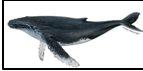
  1. Humpback Whales: Recently, the global population of Humpback whales rose from about 10,000 to nearly 80,000, driven by long-term protection measures and their adaptive feeding behaviour.
  • About the Humpback Whale (Megaptera novaeangliae): A baleen whale species belonging to the rorqual family Balaenopteridae.
  • Known for its massive size, acrobatic breaches, and complex vocalisations.
    • Migration: Among the longest migrants in the animal kingdom.
  • Travels between: Polar feeding grounds in summer and Tropical/subtropical breeding zones in winter
  • Physical Appearance: Distinguished by a hump on its back.
  • Possesses unusually long pectoral fins, which inspired its name Megaptera meaning “big-winged”.
  • Females are larger than males.
  • Distribution: Found in all major oceans, ranging from sub-polar waters to the equator.
  • Behaviour: Famous for bubble-net feeding, a sophisticated cooperative hunting technique where whales release bubbles while spiralling upward to trap dense schools of prey.
  • Conservation Status: IUCN: Least Concern
  1. Mahad Satyagraha: Recently, the Mahad Satyagraha re-entered public debate as researchers reassessed how Dr. B. R. Ambedkar’s movement shaped the ethical foundations of India’s Constitution and modern human rights discourse.
  • About Mahad Satyagraha: A historic non-violent movement led by B. R. Ambedkar demanding Dalit access to public water and rejecting caste-based exclusion.
  • Recognised as one of India’s earliest human rights movements.
  • Causes Behind the Movement: Caste-based denial of access to the Chavdar Tank, a public water source.
  • The 1923 Bole Resolution legally permitted Dalits to use public facilities, but upper-caste elites blocked implementation.
  • Increasing caste violence in Goregaon, Dasgaon, and nearby villages highlighted the need for collective assertion of rights.
  1. Indian Coast Guard Ship Vigraha: Recently, the Indian Coast Guard Ship Vigraha undertook an operational visit to Indonesia as part of its overseas deployment to ASEAN countries, strengthening maritime cooperation with Southeast Asia.
  • About ICGS Vigraha: An Offshore Patrol Vessel (OPV) of the Indian Coast Guard, commissioned in 2021.
  • Indigenously built by L&T Ship Building Limited.
  • Based in Visakhapatnam, it operates along India’s eastern seaboard.
    • Key Features: Designed to carry: One twin-engine helicopter
  • Four high-speed boats for boarding operations and search-and-rescue tasks
  • Equipped with multiple modern systems, including:
  • Integrated Bridge System (IBS)
  • Integrated Platform Management System (IPMS)
  • Automated Power Management System (APMS)
  • High-Power External Firefighting (EFF) system
  • State-of-the-art radars, sensors, navigation, and communication equipment suitable for tropical sea conditions


UPSC QEP 2026 Batch 5 - English
Buy now View Details
Submit Your Details to Learn More
I agree to give my consent to receive updates through SMS/Email & WhatsApp*.

NEEV GS + CSAT Foundation 2026/27
Buy now View Details


Join theIAShub’s Mains Answer Writing Program

Refine your answer writing skills and elevate your UPSC preparation with personalized support and expert feedback.

Fill out the form to get started with the program or any other enquiries !

I agree to give my consent to receive updates through SMS/Email & WhatsApp*.

Best IAS Coaching In Delhi, UPSC Online & Offline Classes by IAShub

Are you dreaming of becoming an IAS officer? Then, IAShub can be your best guide. It is one of the Best IAS Coaching in Delhi. Many students who want to clear the UPSC exam join IAShub for learning. The institute gives both online and offline classes. Their teachers are experienced and helpful. They easily explain every topic. Students also get notes, tests, and tips to do well in the exam.

UPSC Online Classes by IAShub

IAShub is in Delhi and is trusted by many UPSC students. It offers coaching for every part of the UPSC exam – Prelims, Mains, and Interview. The classes are simple and easy to understand. The teachers are experts and guide students in the right way. IAShub is also known for its helpful notes, test series, and answer-writing practice. IAShub is the best coaching in Delhi and also gives UPSC Online Classes. This helps students from any place in India to learn. The online classes are live and also recorded. So, students can watch them anytime. These classes cover the full UPSC syllabus.

Key Offerings Provided by IAShub

Here are some important services provided by IAShub:

  • UPSC Prelims: IAShub teaches for Prelims with a focus on basics. It also gives daily current affairs and monthly magazines.
  • Classroom Courses: IAShub has classroom learning for students in Delhi. The environment is good and peaceful for study.
  • Live Classes: Students who live far can join live UPSC online classes. These classes are just like real classes.
  • QEP for Mains: The Quality Enrichment Program (QEP) is special for Mains preparation. It helps students write better and faster.
  • Answer Writing: Regular answer writing practice is given. Teachers also check answers and give tips to improve.
  • Free Resource: IAShub gives free notes by toppers and helpful Main Booster material.
  • Test Series: Test series are available for every subject. These help students know their weak points and improve.
  • Interview Guidance Session: IAShub also gives interview practice sessions with experts. These help students feel confident.

UPSC Exam Overview

The UPSC Civil Services Exam has three parts:

  • Prelims: It has two papers: General Studies and CSAT.
  • Mains: It has nine papers, including essays and optional subjects.
  • Interview: It tests the personality and confidence of the student.

This exam is tough, but with the right guidance, it becomes easy to manage. Students must study smart and stay regular.

How IAShub Helps in the UPSC Journey

IAShub supports students from the beginning to the end. It gives the right books, tests, and notes. The classes are easy to follow, and the teachers are always ready to help. Students get personal doubt sessions too. The test series and answer checking help students learn where they need to do better. Also, free study materials save time and money.
IAShub also guides students during the final stage – the interview. Experts take mock interviews and give useful tips. This full support makes IAShub one of the best IAS coaching in Delhi.

Best IAS Coaching In Delhi FAQs

Yes, IAShub offers live and recorded online classes. Students can attend from any part of India.

Classes are available in both English and Hindi, so students can choose the language they are comfortable with.

The classroom centre is located in Delhi. Students can visit and join offline batches there.

IAShub gives interview guidance sessions to help students prepare for the final round of UPSC.