06th October 2025
1. Coral Triangle: Recently, the
Philippines unveiled plans to set up
Southeast Asia’s first coral larvae cryobank, in collaboration with research institutions from Taiwan, Indonesia, Malaysia, and Thailand.
- The project aims to develop a regional network of coral cryobanks within the Coral Triangle to safeguard coral biodiversity and strengthen restoration initiatives.
- About the Coral Triangle: Often called the “Amazon of the Seas”, the Coral Triangle is an expansive marine region covering over 10 million square kilometres.
- Member Countries: Indonesia, Malaysia, Papua New Guinea, Singapore, the Philippines, Timor-Leste, and the Solomon Islands.
- Significance: The region harbours over 75% of the world’s coral species, one-third of all reef fish, vast mangrove forests, and six of the seven known marine turtle species.
-It supports the livelihoods and food security of more than 120 million people across Southeast Asia and the Pacific.
- Major Threats: Rising carbon emissions, destructive fishing practices, pollution, and climate change are accelerating coral bleaching, habitat destruction, and marine species decline.
2. KONKAN-2025: Recently, the Indian Navy and the Royal Navy began the latest edition of their bilateral maritime
exercise,
KONKAN-2025, off India’s western coast.
- About Exercise KONKAN: It is a bilateral naval exercise between the Indian Navy and the Royal Navy (UK).
- The exercise has been held for over two decades, growing in scale and complexity, enhancing interoperability and mutual understanding in maritime operations.
- Conducted in two phases: Harbour Phase: Includes professional interactions, cross-deck visits, sports fixtures, and cultural engagements. Joint Working Group meetings and Subject Matter Expert Exchanges are also scheduled.
- Sea Phase: Involves complex maritime operational drills — anti-air, anti-surface, and anti-submarine warfare, flying operations, and seamanship evolutions.
- Participation by the UK Carrier Strike Group (UK CSG 25), led by HMS Prince of Wales, with contributions from Norway and Japan, adds international depth.
- The Indian Navy is represented by INS Vikrant’s Carrier Battle Group, along with other surface, sub-surface, and air combatants.
- The exercise underscores a shared commitment to free, open, and secure seas, aligned with the India-UK Vision 2035 and Comprehensive Strategic Partnership.
3. Conservation of Migratory Species of Wild Animals: Recently, two new assessments by the United Nations Convention on the
Conservation of Migratory Species of Wild Animals (CMS) raised an urgent alarm over how climate change is transforming wildlife habitats across Asia.
- Key Highlights: Asian elephants’ habitat is predicted to shift from South Asia (India and Sri Lanka) toward Southeast Asia, driven by climate and land-use changes.
- However, most elephants in India and Sri Lanka cannot migrate eastward, creating a “habitat gridlock” that will intensify human-elephant conflict.
- Rapid warming, glacier retreat, and shifting rainfall patterns are altering the Himalayan ecosystem, threatening species adapted to cold, high-altitude conditions.
- Data from the National Mission for Sustaining the Himalayan Ecosystem (initiated 2015) was analyzed across four river basins — Beas, Bhagirathi, Teesta, and Kameng.
- The study covered 36 mammal species, 27 bird species, and 2 fish species across various Shared Socioeconomic Pathways (SSPs).
- The report warns that some species may go extinct because no higher habitats exist for further migration.
- Recommended actions: Establish and protect climate corridors, habitat islands, and refugia to allow species movement and adaptation.
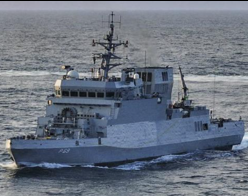
4. INS Androth: Recently, the Indian Navy announced plans to commission
INS Androth, during a ceremonial event at the Naval Dockyard in Visakhapatnam.
- About INS Androth: The second Anti-Submarine Warfare Shallow Water Craft (ASW-SWC).
- Built by Garden Reach Shipbuilders and Engineers (GRSE), Kolkata.
- It measures approximately 77 meters in length, making it the largest Indian Naval warship of its class.
- Propulsion: The vessel is powered by a diesel engine–waterjet combination, enabling high speed and exceptional manoeuvrability in shallow waters.
- Armament: It features cutting-edge lightweight torpedoes and an advanced shallow-water SONAR system for superior detection and defence capabilities.
- The vessel has over 80% indigenous content, symbolising India’s growing maritime self-reliance.
- The ship enhances the Navy’s Anti-Submarine Warfare (ASW) capabilities, particularly for littoral (coastal) operations.
- The commissioning reflects the Navy’s sustained focus on indigenisation, innovation, and capability expansion.
- The induction of Androth adds to a recent series of indigenous naval platforms — Arnala, Nistar, Udaygiri, Nilgiri, and now Androth — demonstrating balanced growth across maritime domains.
5. Xenobiology: Recently, scientists have entered an emerging field of research called
xenobiology, exploring
new frontiers of life beyond Earth’s biology.
- About Xenobiology: A new and rapidly growing branch of science studying how life could exist using biological systems different from those on Earth.
- The term comes from Greek, meaning “the study of alien life.”
- It explores whether Earth-based life is the only possible form or if alternative forms could exist with different genetic codes or chemical compositions.
- While traditional biology studies DNA, RNA, and proteins made from 20 amino acids, xenobiology looks beyond these constraints.
- Possible alternatives include life using different genetic codes, unusual chemical bonds, or solvents like methane or ammonia instead of water.
- These studies help define the boundaries of what qualifies as “life” and identify which biochemical features are essential for evolution and reproduction.
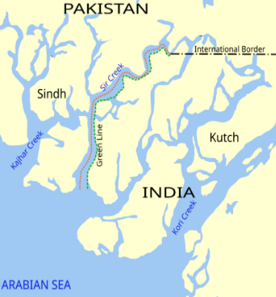
6. Sir Creek: Recently, the Union Defence Minister issued a strong warning to Pakistan, declaring that any misadventure in the
Sir Creek sector would provoke a decisive response.
- About Sir Creek: 96-kilometre-long tidal estuary, formerly known as Ban Ganga, located in the Indus River Delta.
- It is a marshy, uninhabited stretch where seawater merges with river water, making the terrain unstable and environmentally sensitive.
- Location: The creek lies along the India–Pakistan border, separating the Kutch region of Gujarat (India) from the Sindh province of Pakistan.
- It opens into the Arabian Sea, directly influencing the maritime boundaries and fishing zones of both countries.
- Key Features: Sir Creek is a narrow, muddy, and shifting water channel that frequently changes course due to tidal movements.
- It forms part of the Indus Delta wetlands, a vital habitat for migratory birds and marine biodiversity.
- Control over Sir Creek is strategically important as it affects the delimitation of Exclusive Economic Zones (EEZs) and the continental shelf, which define each nation’s rights over fishing grounds, oil, and gas exploration.
7. Phosphine (PH₃): Recently, in a ground-breaking discovery, scientists detected trace amounts of
phosphine (PH₃) for the first time in the atmosphere of a brown dwarf.
- About Wolf 1130C: An ancient brown dwarf, an object too massive to be a planet but too small to sustain hydrogen fusion like a star. Such objects are often called “failed stars.”
- Significance of Phosphine Detection: On Earth, phosphine is produced only by biological activity, but in space it can also arise through non-biological chemical reactions.
- About Phosphine: A compound made up of one phosphorus atom and three hydrogen atoms.
- Naturally produced by bacteria in low-oxygen (anaerobic) environments.
- These bacteria generate phosphine by extracting phosphate from minerals or organic matter and combining it with hydrogen.
- Presence in Space: Also found in the atmospheres of Jupiter and Saturn, likely formed under high-pressure and high-temperature conditions.
- Industrial Uses: Utilized in the semiconductor and plastics industries.
- Used in the production of flame retardants.
- Serves as a fumigant pesticide for stored grains.
8. National Camel Sustainability Initiative (NCSI): Recently, the Union government began preparations to launch the
National Camel Sustainability Initiative (NCSI).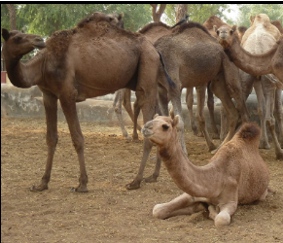
- About NCSI: A multi-ministerial national mission aimed at reversing the sharp decline in India’s camel population.
- The initiative is being developed in consultation with the Food and Agriculture Organization (FAO) and a draft policy paper.
- Objective: To restore the camel’s economic, ecological, and cultural significance in India’s arid and semi-arid regions.
- The mission aims to ensure coordinated action by involving the Departments of Animal Husbandry and Dairying, Environment, Rural Development, Tourism, and State Governments.
- Crisis Overview: India’s camel population has declined by over 75% since 1977. As per the 20th Livestock Census (2019), the camel population stands at 2.52 lakh, down from 11 lakh in 1977 and 4 lakh in 2013.
- Around 90% of camels are found in Rajasthan and Gujarat, both witnessing severe declines.
9. NATPOLREX-X: Recently, the
Indian Coast Guard (ICG) announced plans to host the 10th edition of the
National Level Pollution Response Exercise (NATPOLREX-X), along with the 27th
National Oil Spill Disaster Contingency Plan (NOSDCP) and Preparedness Meeting, off the coast of Chennai, Tamil Nadu.
- Key Highlights: The two-day event involves central ministries, coastal state governments, major ports, oil handling agencies, and maritime organizations.
- Participation includes over 100 national delegates and 40 foreign observers from 32 countries, reflecting the international importance of India’s marine pollution preparedness efforts.
- About NATPOLREX-X 2025: A biennial flagship exercise designed to:
- Evaluate and enhance national preparedness for responding to marine oil spills.
- Test inter-agency coordination and communication mechanisms as defined under the NOSDCP framework.
- It aims to ensure India’s readiness in handling large-scale marine pollution incidents effectively and swiftly.
- It seeks to strengthen inter-agency collaboration, promote best practices, and advance technological innovation in pollution response.


 theIASHub | 06 Oct, 2025









 Detailed Solutions & Explanations

