2 Minute Series_4 October 2025

THEIASHUB
Get an Instant Call Back from Our Expert Mentors Now!
+91

04th October 2025

  1. Aspirational Agriculture Districts: Recently, the Central Government identified 100 Aspirational Agriculture Districts across 29 States and Union Territories under the Prime Minister Dhan-Dhaanya Krishi Yojana (PMDDKY).
  • Key Highlights: Uttar Pradesh tops the list with 12 districts, followed by Maharashtra (9), Madhya Pradesh and Rajasthan (8 each), and Bihar (7)
  • About PMDDKY: The scheme aims to develop agricultural districts on the lines of the Aspirational Districts Programme.
  • Three factors used for district selection: Low agricultural productivity
    - Moderate crop intensity
    - Below-average access to credit
  • The scheme has five main objectives: Enhance agricultural productivity
    - Promote crop diversification and sustainable practices
    - Improve post-harvest storage at panchayat & block levels
    - Strengthen irrigation facilities
    - Facilitate access to long-term and short-term agricultural credit
  1. Cyclone ‘Shakhti’: Recently, the India Meteorological Department (IMD) confirmed the formation of Cyclone ‘Shakhti’ over the northeast Arabian Sea, marking the first major storm of the post-monsoon season.
  • About Cyclone ‘Shakhti’: The cyclone was named by Sri Lanka.
  • IMD reported that the system is likely to move west-southwestwards and intensify into a severe cyclonic storm.
  • The cyclone is a sign of the warming Arabian Sea, which is becoming more cyclonically active.
  • Rapid intensification linked to rising sea temperatures has led to recent major cyclones such as Tauktae (2021) and Biparjoy (2023).
  • About the Arabian Sea: The northwestern extension of the Indian Ocean, situated between India to the east and the Arabian Peninsula to the west.
    • Coastal countries: India, Pakistan, Iran, Oman, Yemen, and Somalia.
    • Key maritime links: Gulf of Oman – connects to the Persian Gulf and Gulf of Aden – connects to the Red Sea.
    • The Indian regions bordering the Arabian Sea are Gujarat, Maharashtra, Goa, Karnataka, Kerala, and the Union Territory of Lakshadweep.
    • Key Islands: Socotra (Yemen), Kuria Muria Islands (Oman) & Lakshadweep (India)
  1. SARAL Tool: Recently, the Anusandhan National Research Foundation (ANRF) launched the SARAL tool to make scientific research papers easier to understand through AI-generated layperson summaries, enhancing public access to science.
  • About SARAL Tool: Simplified and Automated Research Amplification and Learning, is an AI-driven platform that transforms complex research papers into simple, easy-to-understand summaries.
    Aim: To make scientific knowledge inclusive and accessible for citizens, policymakers, and industries, promoting broader understanding and application of research findings.
  • Key Features: Employs AI algorithms to extract key insights from research publications.
    - Generates videos, podcasts, posters, and presentations for wider dissemination.
    - Integrated with the AI Science and Engineering Open India Stack, supporting applications in drug discovery, aerospace, climate science, and advanced materials.
  • Significance: Bridges the gap between science and society by simplifying complex research for non-specialists.
    - Enhances research outreach and innovation adoption in academia and industry.
  1. Viksit Bharat Buildathon 2025: Recently, the Ministry of Education, in collaboration with the Atal Innovation Mission (AIM) under NITI Aayog, launched the Viksit Bharat Buildathon 2025.
  • About Viksit Bharat Buildathon 2025: It is India’s largest-ever student innovation movement, designed to engage students from Classes 6–12 across the nation.
  • The initiative aligns with the vision of Viksit Bharat @2047 — building a self-reliant, innovative, and developed India.
  • Objective: To encourage creativity, innovation, and problem-solving among school students.
    - To empower students to develop prototypes and ideas addressing real-life national challenges.
    - To nurture future innovators who contribute towards India’s journey to becoming a developed nation.
  • Themes: Students will develop solutions around four key themes of national importance:
    - Atmanirbhar Bharat – Building self-reliant systems and solutions.
    - Swadeshi – Fostering indigenous ideas and innovation.
    - Vocal for Local – Promoting local products, crafts, and resources.
    - Samriddhi – Creating pathways to prosperity and sustainable growth.
  1. Quick Response (QR) Codes: Recently, the National Highways Authority of India (NHAI) announced plans to install Project Information Sign Boards equipped with Quick Response (QR) Codes along National Highway stretches across the country, aiming to improve commuter convenience and promote transparency.
  • Key Highlights: To enhance transparency, road safety, and provide “Ease of Commuting” for highway users.
  • Purpose and Benefits: To provide project-specific information and emergency contact details to commuters.
    - To improve user awareness, transparency in highway management, and response during emergencies.
    - To enhance the overall highway travel experience by giving quick access to relevant local and project data.
  • Significance: Promotes transparency in highway projects and maintenance.
    - Provides real-time information for travellers and transporters.
    - Enhances road safety by ensuring quick access to emergency and local facilities.
  1. Model Youth Gram Sabha: Recently, the Central Government announced plans to launch the Model Youth Gram Sabha (MYGS), a school-based initiative inspired by Model UN simulations, to give students hands-on experience in local governance and Panchayati Raj institutions.
  • About MYGS: The democratic process of Gram Sabhas into classrooms across India. It is the first structured initiative to engage students directly in grassroots governance.
  • Objective: To cultivate informed and responsible citizens who understand the functioning of local governance systems.
    - Students will discuss community issues, draft village budgets, and prepare development plans, simulating real Gram Sabha activities.
  • Launched By: Ministry of Panchayati Raj, in collaboration with the Ministry of Education and Ministry of Tribal Affairs.
  • Implementation: The programme will be introduced in phases, starting with Jawahar Navodaya Vidyalayas (JNVs) and Eklavya Model Residential Schools (EMRS).
    - Each participating school will receive ₹20,000 to conduct the mock Gram Sabha sessions.
  • Key Features: Students of Classes 9–12 will role-play as Sarpanch, Ward Members, Village Secretary, Anganwadi Worker, ANM, Junior Engineers, and other local functionaries.
    - Teacher training will be conducted through National Level Master Trainers (NLMTs).
    - Includes regional and national-level competitions with prize money and certificates to encourage participation and excellence.
  1. Promotion of Research and Innovation in Pharma MedTech Sector (PRIP) Scheme: Recently, the Government of India invited applications for research and innovation projects under the PRIP Scheme, aimed at making India’s Pharma-MedTech sector globally competitive, innovation-driven, and research-oriented.
  • About PRIP Scheme: Launched by: Department of Pharmaceuticals, Ministry of Chemicals & Fertilizers.
  • Objective: To strengthen industry-academia collaboration for R&D in priority areas, foster a culture of quality research, and nurture India’s pool of scientists and innovators.
  •  Key Components:
    o   Component A – Strengthening Research Infrastructure
    - Focus: Establishment of Centres of Excellence (CoEs) in seven National Institutes of Pharmaceutical Education and Research (NIPERs).
    - Purpose: Build world-class research infrastructure in pre-identified thematic areas.
  • Component B – Promoting Research and Innovation
    - Focus: Encourage collaborative and independent research in six priority areas.
    - Eligible entities: Industries, MSMEs, SMEs, startups, and academic/research institutes.
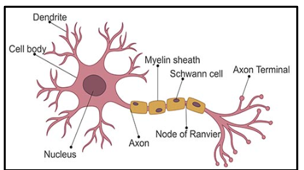
  1. Dendritic Nanotubes: Recently, a study discovered dendritic nanotubes (DNTs) in the brains of both mice and humans, revealing a new form of neuron-to-neuron connection.
  • About Neurons: The basic functional units of the brain and nervous system.
  • They are responsible for: Receiving sensory information from the environment.
    - Sending motor commands to muscles.
    - Processing and transmitting electrical and chemical signals.
  • Structure of a Neuron: Dendrites – receive incoming signals.
    - Cell Body (Soma) – integrates the signals.
    - Axon – transmits impulses away from the soma.
    - Axon Terminals – release neurotransmitters at synapses.
  • Neuronal Communication: Traditional communication occurs via synapses, where neurotransmitters cross small gaps between neurons.
  • New finding: Neurons can also connect through dendritic nanotubes (DNTs), allowing:
    - Direct electrical signal transfer between neurons.
    - Transport of proteins, including amyloid-beta, a protein associated with Alzheimer’s disease.
  1. Safe and Just Space: Recently, a landmark report by the EAT-Lancet Commission revealed that less than 1% of the world’s population currently lives in a “safe and just space”.
  • About Safe and Just Space: A state where people’s food needs and rights are met without breaching planetary boundaries.
  • Key Findings: To feed 10 billion people sustainably by 2050, the world must shift to healthier and more sustainable diets.
    - The planetary boundaries framework identifies nine key Earth system processes essential for maintaining Earth’s stability — six of these have already been transgressed: Climate, Biodiversity, Land systems, Freshwater, Nitrogen and phosphorus pollution and Novel entities (like pesticides, antimicrobials, and microplastics).
    - A shift toward “planetary healthy diets” could cut non-CO₂ agricultural emissions (like methane) by 15% by 2050.
    - The report promotes a plant-rich diet, with moderate animal-source foods and limited added sugars, salt, and saturated fats.


UPSC QEP 2026 Batch 5 - English
Buy now View Details
Submit Your Details to Learn More
I agree to give my consent to receive updates through SMS/Email & WhatsApp*.

NEEV GS + CSAT Foundation 2026/27
Buy now View Details


Join theIAShub’s Mains Answer Writing Program

Refine your answer writing skills and elevate your UPSC preparation with personalized support and expert feedback.

Fill out the form to get started with the program or any other enquiries !

I agree to give my consent to receive updates through SMS/Email & WhatsApp*.

Best IAS Coaching In Delhi, UPSC Online & Offline Classes by IAShub

Are you dreaming of becoming an IAS officer? Then, IAShub can be your best guide. It is one of the Best IAS Coaching in Delhi. Many students who want to clear the UPSC exam join IAShub for learning. The institute gives both online and offline classes. Their teachers are experienced and helpful. They easily explain every topic. Students also get notes, tests, and tips to do well in the exam.

UPSC Online Classes by IAShub

IAShub is in Delhi and is trusted by many UPSC students. It offers coaching for every part of the UPSC exam – Prelims, Mains, and Interview. The classes are simple and easy to understand. The teachers are experts and guide students in the right way. IAShub is also known for its helpful notes, test series, and answer-writing practice. IAShub is the best coaching in Delhi and also gives UPSC Online Classes. This helps students from any place in India to learn. The online classes are live and also recorded. So, students can watch them anytime. These classes cover the full UPSC syllabus.

Key Offerings Provided by IAShub

Here are some important services provided by IAShub:

  • UPSC Prelims: IAShub teaches for Prelims with a focus on basics. It also gives daily current affairs and monthly magazines.
  • Classroom Courses: IAShub has classroom learning for students in Delhi. The environment is good and peaceful for study.
  • Live Classes: Students who live far can join live UPSC online classes. These classes are just like real classes.
  • QEP for Mains: The Quality Enrichment Program (QEP) is special for Mains preparation. It helps students write better and faster.
  • Answer Writing: Regular answer writing practice is given. Teachers also check answers and give tips to improve.
  • Free Resource: IAShub gives free notes by toppers and helpful Main Booster material.
  • Test Series: Test series are available for every subject. These help students know their weak points and improve.
  • Interview Guidance Session: IAShub also gives interview practice sessions with experts. These help students feel confident.

UPSC Exam Overview

The UPSC Civil Services Exam has three parts:

  • Prelims: It has two papers: General Studies and CSAT.
  • Mains: It has nine papers, including essays and optional subjects.
  • Interview: It tests the personality and confidence of the student.

This exam is tough, but with the right guidance, it becomes easy to manage. Students must study smart and stay regular.

How IAShub Helps in the UPSC Journey

IAShub supports students from the beginning to the end. It gives the right books, tests, and notes. The classes are easy to follow, and the teachers are always ready to help. Students get personal doubt sessions too. The test series and answer checking help students learn where they need to do better. Also, free study materials save time and money.
IAShub also guides students during the final stage – the interview. Experts take mock interviews and give useful tips. This full support makes IAShub one of the best IAS coaching in Delhi.

Best IAS Coaching In Delhi FAQs

Yes, IAShub offers live and recorded online classes. Students can attend from any part of India.

Classes are available in both English and Hindi, so students can choose the language they are comfortable with.

The classroom centre is located in Delhi. Students can visit and join offline batches there.

IAShub gives interview guidance sessions to help students prepare for the final round of UPSC.