30th September 2025
1. National Crime Records Bureau: Recently, India’s National Crime Records Bureau (NCRB) 2023 data showed a sharp rise in crimes ranging from offences against foreigners to cybercrime and cases targeting Scheduled Tribes (STs).
- Key Findings: Crimes against foreigners in India rose 24% in 2023, with 238 cases and 266 victims, over half from Asian countries.
- Delhi reported the highest crimes against foreigners (63 cases), followed by Karnataka, Himachal Pradesh, Maharashtra, Haryana, and Kerala.
- Crimes committed by foreigners in India increased 2% to 2,546 cases, mainly under the Foreigners Act and Passport Act.
- Cybercrime spiked 31.2% to 86,420 cases, mostly fraud-related (69%).
- Crimes against Scheduled Tribes surged 8% to 12,960 cases, with Manipur leading (3,399 cases) due to ethnic violence.
- Crimes against Scheduled Castes saw a marginal rise of 0.4% to 57,789 cases.
- Crimes against women rose 7% to 4.48 lakh cases, led by cruelty by husband/relatives.
- Crimes against children increased 2% to 1.77 lakh cases, dominated by kidnapping and POCSO Act cases.
- Juvenile crimes rose 7%, with most offenders in the 16–18 years age group.
2. Siphon-Powered Thermal Desalination System: Recently, researchers at the Indian Institute of Science (IISc) unveiled a
siphon-powered thermal desalination system that converts seawater into clean drinking water more efficiently and reliably than existing technologies.
- Key Highlights: New siphon principle: Uses a composite siphon (fabric wick + grooved metal surface).
- Fabric wick draws salty water; gravity maintains smooth flow.
- Salt is flushed away continuously, preventing crystallization.
- How it works: Water spreads as a thin film on heated metal, evaporates, and condenses just 2 mm away on a cooler surface.
- Produces 6+ liters of clean water per square meter per hour under sunlight (much higher than conventional solar stills).
- Multistage stacking recycles heat, maximizing efficiency.
- Advantages: Low-cost, scalable, and sustainable – made from aluminum and fabric.
- Powered by solar energy or waste heat.
- Works in off-grid areas, disaster zones, and arid coastal regions.
- Can handle extremely salty water (up to 20% salt) without clogging – a big step in brine treatment.
- Impact: Potential to provide safe drinking water to millions in water-stressed regions.
3. Lecanemab: Recently, Australia’s Therapeutic Goods Administration (TGA) approved
lecanemab (Leqembi), a drug designed to slow the progression of early Alzheimer’s disease.
- About Lecanemab: A monoclonal antibody drug works by targeting amyloid proteins in the brain, a hallmark of Alzheimer’s, to help the immune system clear them.
- Effectiveness: Showed a 27% slowing of disease progression compared to placebo.
- Reduces amyloid deposits significantly, though it does not reverse symptoms.
- Who it helps: Only effective in early-stage Alzheimer’s or mild cognitive impairment due to Alzheimer’s.
- Not useful for other causes of dementia or later stages of Alzheimer’s.
- Side effects and risks: Brain swelling (ARIA): occurred in 6% of patients; higher (32.6%) in people with two ApoE4 gene copies.
- Serious brain bleeds occurred in a small number of patients, especially those also on blood thinners.
4. Suriname: Recently,
Suriname pledged to
permanently protect 90% of its tropical forests, earning praise as one of the Amazon’s most ambitious commitments.
- Key Highlights: Suriname has the world’s highest share of forest cover — about 93% of its land is rainforest, most of it still primary forest.
- Carbon sink: Suriname is one of only three countries worldwide that absorbs more carbon dioxide than it emits.
- Global significance: The pledge goes beyond the U.N. 30x30 target and comes just weeks before COP30 in Belem, Brazil.
- Biodiversity: Suriname’s forests are home to jaguars, giant river otters, tapirs, 700+ bird species, and the blue poison dart frog.
- Government plans: Conservation laws will be updated by the end of the year to: Strengthen forest protections
- Recognize ancestral Indigenous and Maroon lands
- Expand ecotourism and carbon credit opportunities
5. E-Waste: Recently, experts warned that poor practices and weak oversight threaten
India’s e-waste recycling and rare earth recovery goals.
- Key Highlights: India is promoting e-waste recycling to extract rare earth elements and precious metals as electronics consumption and manufacturing rise.
- Electronics boom: Despite having 94 crore mobile broadband connections, India accounts for only about 4% of global electronics consumption.
- Extended Producer Responsibility (EPR) framework introduced, requiring manufacturers to collect and recycle appliances/electronics.
- Critical metals: Recycling focuses on copper, aluminium, nickel, cobalt, lithium, gold, and rare earth elements (REEs).
- Geopolitical risks: China’s restrictions on REE exports highlight the importance of domestic recycling.
- Challenges: Informal players focus on repair/harvesting components, operating outside regulation.
- Accusations of “paper trading” within EPR, with recyclers overstating collections for incentives.
- Lack of material traceability and irregular inventorying of e-waste.
- Statistics: India generated 17 million metric tonnes of e-waste in 2022, but only one-third was processed through formal channels.
- Recycling progress: India mainly recovers gold, copper, aluminium, and steel from e-waste.
6. Coastal Populations: Recently, a global study revealed that while wealthier regions adapt to rising seas and coastal hazards, poorer communities in
Africa and Asia remain highly exposed or are forced closer to the water.
- Key Highlights: Published in Nature Climate Change, tracked 1,071 coastal regions across 155 countries (1992–2019) using night-time satellite light data.
- Key findings: 56% of regions saw populations moving inland.
- 26% stayed in place, while 16% moved closer to the shoreline.
- South America (17.7%) had the highest proportion moving closer to the coast, followed by Asia (17.4%), Europe (14.8%), Oceania (13.8%), Africa (12.4%), and North America (8.8%).
- Wealthier regions more likely to retreat inland or build coastal protections.
- Poorer regions, especially in Africa and Asia, often stayed put or moved closer to the sea.
- In 46% of low-income regions, populations either remained exposed or moved nearer the coast.
- Poor communities lack resources to relocate, leaving them exposed to storms, erosion, and sea-level rise.
7. Infectious Bovine Rhinotracheitis: Recently, Indian Immunologicals Ltd (IIL) launched India’s first indigenously developed
gE-deleted DIVA marker vaccine against
Infectious Bovine Rhinotracheitis (IBR).
- About IBR: Caused by Bovine Herpes Virus-1 (BoHV-1), belonging to the genus Varicellovirus under Alphaherpesvirinae.
- Endemic in India, affecting domestic and wild cattle.
- Exists in three forms: respiratory, genital, and encephalitic, with the first two being most common.
- Transmission: Spreads mainly via aerosols and also spread through infected semen from bulls to milch animals.
- Impact on cattle: Leads to infertility, abortions, and reduced milk yield, causing economic losses.
- Treatment: No specific cure exists; until now, India lacked a vaccine for the disease.
- Symptoms: Respiratory signs: Muco-purulent nasal discharge, redness of the muzzle (“red nose disease”), conjunctivitis.
- General illness: Fever, depression, loss of appetite, abortions, and drop in milk production.
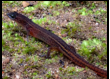
8. Beddome’s Cat Skink: Recently, a biodiversity survey recorded
Beddome’s cat skink (Ristella beddomii) for the first time at Aralam and Kottiyoor Wildlife Sanctuaries.
- About Beddome’s Cat Skink: Also known as Beddome’s ristella.
- Named after Richard Henry Beddome, a British naturalist.
- Considered rare and endemic to the Western Ghats.
- Appearance: Small reddish-brown lizard with retractile claws and bicarinate scales.
- Distribution: Found in Western Ghats forests at altitudes of 400–1,300 m.
- Reproduction: An oviparous species; egg-laying coincides with the southwest monsoon.
- Key Facts: Belong to the family Scincidae (lizards).
- Have existed since the dinosaur era.
- Typically smooth, shiny, with small or rudimentary legs.
- Mostly secretive ground dwellers or burrowers.
- Behavior: Highly alert, agile, fast-moving, and feed on insects & small invertebrates.
- Habitat: Found across diverse habitats, from deserts to rainforests, with strong camouflage ability.
- Global distribution: Widespread, with high diversity in Southeast Asia, Australian deserts, and temperate North America.
9. Andaman basin: Recently, the Union Petroleum Minister announced the discovery of
natural gas in the Andaman basin, confirming long-held assumptions about the sea’s resource richness.
- About Andaman Sea: A semi-enclosed marginal sea of the north-eastern Indian Ocean.
- Location: Lies between India’s eastern coast and the Malay Peninsula.
- Myanmar to the north, Sumatra (Indonesia) to the south.
- Bordered by the Bay of Bengal (west) and the Strait of Malacca (east).
- Size: Covers ~307,994 sq. miles, ~750 miles long and 400 miles wide.
- Geological Features: A tectonically active region, part of the Sunda Plate, bordered by the Indian Plate (NW) and the Australian Plate (SE).
- Andaman Basin: Formed by plate convergence; contains ridges, trenches, and faults.
- Andaman Trench: Formed by the subduction of the Indian Plate beneath the Eurasian Plate.
- Frequent earthquakes and volcanic eruptions make the region seismically active.
- Ecological Significance: Hosts rich ecosystems like coral reefs, seagrass meadows, and mangroves.
- Supports endangered marine fauna such as, Whale Shark, Devil Manta Ray, Dugong, Irrawaddy Dolphin and Four species of sea turtles. Important for migratory birds along the East Asian–Australasian Flyway.


 theIASHub | 30 Sep, 2025









 Detailed Solutions & Explanations

