27th September 2025
1. Diabetic Astronauts Fit for Space: Recently, a study conducted during the
Axiom-4 (Ax-4) mission revealed that astronauts with diabetes can safely undertake space missions.
- Key Findings: Research partners: Axiom Space and Burjeel Holdings (UAE).
- Research initiative: “Suite Ride” – explored remote care and diabetes management in space.
- Tools tested: Continuous glucose monitors (CGMs) and insulin pens.
- Results: CGMs performed with accuracy comparable to Earth readings in microgravity.
- Enabled real-time glucose monitoring with communication to the ground.
- Insulin pens functioned in space; now undergoing post-flight testing for formulation integrity.
- Outcome: Everyday diabetes tools used on Earth can provide end-to-end diabetes monitoring from space to ground and back.
- Significance: Opens door for future astronauts with diabetes, expands possibilities for remote healthcare innovations.
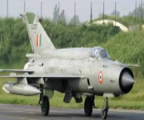
2. MiG-21: Recently, the Indian Air Force retired its last two
MiG-21 squadrons — No. 23 Panthers and No. 3 Cobras.
- About MiG-21: A supersonic jet fighter aircraft, designed by the Mikoyan-Gurevich Design Bureau (OKB) of the former Soviet Union.
- It was first inducted into the Indian Air Force (IAF) in 1963, becoming India’s first supersonic jet.
- Under a license from Russia, Hindustan Aeronautics Limited (HAL) manufactured 657 MiG-21s in India.
- Globally, it is the second most produced jet aircraft in history.
- Its NATO reporting name is “Fishbed”. It is also known by several nicknames:
- “Balalaika” (due to its triangular wing shape resembling the Russian string instrument),
- “Ołówek” (Polish for “pencil,” referencing its fuselage design), and
- “Én Bạc” (Vietnamese for “silver swallow”).
- In India, it has been part of nearly every major conflict since 1963, including: The 1965 and 1971 India-Pakistan wars, the 1999 Kargil War, the 2019 Balakot airstrikes, and most recently, Operation Sindoor.
3. Wheat on Desert Land: Recently, researchers at the
Central University of Rajasthan (CUoR) successfully grew
wheat for the first time on desert land in Banseli village of Ajmer district.
- Key Highlights: Technology used: Desert soilification with an indigenous bioformulation.
- Process: Desert sand modified into soil using polymers to enhance agricultural potential.
- Initial lab experiments tested three bioformulations on bajra, guar gum, and chickpea before shifting to field trials with wheat.
- Field trial: 13 kg wheat-4079 seeds sown on 1,000 sq. metres desert land.
- Crop harvested yielded 26 kg wheat per 100 sq. metres.
- 1:20 seed-to-harvest ratio, double that of arid zone without amendment.
- Water efficiency: Wheat crop required only 3 irrigations (vs. 5–6 normally).
- Bioformulation benefits: Enhanced water retention in sandy soil.
- Improved soil structure through cross-linking of sand particles.
- Boosted beneficial microbial activity, increasing stress resistance of crop.
- Second phase: 400 sq. feet trial field at CUoR with sand from Jaisalmer.
- Crops tested: bajra, guar gum, chickpea and achieved 54% higher yield in bioformulation-amended sand.
- Future plans: Expand the technology to other dry-region crops like millet and green gram across Rajasthan and beyond.
4. Firecracker Ban: Recently, the Supreme Court warned that a complete
firecracker ban could be counterproductive, enabling mafia groups to dominate the market.
- Key Highlights: Environment Ministry directed to consult all stakeholders, including manufacturers and sellers, to resolve the firecracker issue.
- Green crackers allowed: Manufacturers certified by NEERI and PESO can operate, but must provide an undertaking not to sell in prohibited areas.
- CJI suggested a uniform nationwide policy for manufacture, sale, and use of firecrackers.
- Observation: If banned, firecrackers must be banned across the entire country, not just in Delhi/NCR.
- Court noted: Air pollution affects poor and daily wage earners most, not just the “elite.”
- Supreme Court had confirmed a permanent ban on sale, production, and manufacture of firecrackers in Delhi and NCR, calling it “absolutely necessary” to protect clean air.
- Firecracker industry’s concern: Licences (valid till 2028) being revoked due to the April 2025 ruling.
5. Planetary Health Check Report: Recently, scientists warned that
humanity has crossed seven of the nine planetary boundaries that keep Earth habitable. The latest
Planetary Health Check report shows ocean acidification entering the danger zone, along with climate change, biodiversity loss, and freshwater depletion.
- Key Findings: Ocean acidification crossed threshold for the first time; safe operating space breached.
- Surface ocean acidity increased 30–40% since industrial era.
- Global mean surface aragonite saturation state at 2.84, below safe boundary of 2.86.
- Rising acidity threatens corals, molluscs, and plankton, endangering marine food webs and ecosystem functions.
- Land system change (forests): Global forest cover down to 59%, below safe minimum of 75%. All major biomes have breached thresholds.
- Freshwater systems: Over 20% of global land shows deviations in streamflow (22.6%) and soil moisture (22%), almost double safe limits. Major basins like Indo-Gangetic Plain and North China have exceeded thresholds.
- Biogeochemical flows (nutrients): Excessive nitrogen and phosphorus use continues. Causes pollution, dead zones, and ecological imbalances.
- Atmospheric aerosol loading remains within safe limit (0.063 vs threshold 0.10). Still harmful for human health, causing reduced life expectancy and lung cancer risks.
- Stratospheric ozone layer stable: concentrations at 285–286 DU, above safe threshold of 277 DU.
6. Swadeshi 4G Mobile Network: Recently, the Prime Minister announced the nationwide rollout of the
Swadeshi 4G Mobile Network. Built entirely on indigenous technologies, it marks a landmark step towards technological self-reliance.
- About Swadeshi 4G Mobile Network: Places India among five nations with an indigenous 4G telecom stack.
- Major milestone in the Atmanirbhar Bharat initiative.
- Assertion of technological sovereignty and reduced dependence on foreign vendors.
- Technology: Radio Access Network: Developed by Tejas Network.
- Core Network: Designed by C-DOT (Centre for Development of Telematics).
- System Integration: Handled by TCS (Tata Consultancy Services).
- Future-ready: Entire system is software-upgradable to 5G.
- Impact: Bridges the rural-urban digital divide.
- Strengthens communications in strategically sensitive regions.
- Supports an ecosystem of Indian innovators and manufacturers.
7. Prayas: Recently, the
Ministry of Ayush inaugurated “
Prayas”, the first Integrated
Neuro-Rehabilitation Centre at the All India Institute of Ayurveda (AIIA), Goa.
- About Prayas: First-of-its-kind multi-disciplinary centre in India.
- Brings together Ayurveda, Physiotherapy, Yoga, Speech Therapy, Occupational Therapy, and Modern Paediatrics under one roof.
- Special emphasis on children with neurological and developmental conditions.
- Vision & Impact: Model of integrative rehabilitation combining traditional wisdom with modern therapies.
- Aims to provide holistic, patient-centred care, improving quality of life for patients and families.
- Supports research and training in Ayush-based healthcare innovations.
8. UNEP Young Champions of the Earth Prize: Recently, the 2025
UNEP Young Champions of the Earth Prize was awarded to entrepreneurs from
India, Kenya, and the United States.
- About UNEP Young Champions of the Earth Prize: It is the flagship youth engagement initiative of the UN Environment Programme (UNEP).
- First launched in 2017 and relaunched in 2025 in collaboration with Planet A.
- Eligibility: Open to individuals under 30 years of age, recognising innovative solutions to major environmental challenges.
- Award: Each winner receives USD 20,000 seed funding, mentorship, and a global platform to expand their ideas.
- 2025 Winners: Jinali Mody (India) – Founder of Banofi Leather, which makes eco-friendly leather alternatives from banana crop waste, cutting down water use, toxic waste, and CO₂ emissions.
- Joseph Nguthiru (Kenya) – Founder of HyaPak, a company that converts invasive water hyacinth from Lake Naivasha into biodegradable packaging bags and seedling wrappers.
- Noemi Florea (United States) – Founder of Cycleau, a compact water reuse system developed with marginalized communities, designed to transform greywater into safe drinking water.
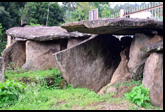
9. Dolmens: Recently, reports revealed that Kodaikanal’s 5,000-year-old
dolmens are vanishing, with fewer than half remaining compared to the early 1900s.
- About Dolmens: These are megalithic stone structures, typically made of a large flat slab placed on three vertical stones.
- They were primarily used as burial chambers, memorials, or ritual sites, though some traditions suggest they may also have been used as dwellings.
- Origin: Constructed between 1500–2000 BCE (Pre-Iron Age), making them some of the oldest known structures in the Palani Hills.
- Associated with early tribes like the Paliyans and Kurumbas, who are believed to be linked to the dolmen builders.
- Features: Simple design: Stones were not dressed or carved, but taken directly from natural quarries.
- Cap-stone slope: The slightly slanted top slab allowed rainwater runoff, protecting the chamber from flooding.
- Strategic placement: Often built on ridges, slopes, or near large rock outcrops for stability.
- Signal role: Some dolmen sites were within torch-signal visibility, suggesting possible communication use.
- Altitude: Typically located at 4,000–5,000 ft above sea level, areas rich in forest produce like cardamom and pepper, explaining early settlement choices.
- Significance: Archaeological value: Provide important evidence of pre-Iron Age societies, burial customs, and early trade networks.
- Cultural heritage: Local tribes such as the Paliyans still claim ancestral ties to these structures, giving them intangible cultural value alongside their historical significance.


 theIASHub | 27 Sep, 2025






 Detailed Solutions & Explanations

