


 theIASHub | 26 Dec, 2025


1. Tsunami-Ready Villages: Recently, India is set to become the first country in the Indian Ocean region to have over 100 ‘tsunami-ready’ villages under the UNESCO–Intergovernmental Oceanographic Commission (IOC) Tsunami Ready Programme.
About Tsunami-ready village: Certified by UNESCO’s Intergovernmental Oceanographic Commission (IOC).
Certification reflects high preparedness standards, including: Tsunami hazard awareness
Risk mapping and evacuation planning
Public display of evacuation routes
24×7 tsunami warning reception
Regular participation in mock drills
Tsunami Ready is a voluntary, community-driven initiative.
It involves active collaboration among: Local communities and leaders
State and district administrations
National emergency and disaster management agencies
India currently has 24 tsunami-ready villages across six coastal districts.
Odisha alone is set to add 72 more villages, significantly expanding coverage.
Other States/UTs identifying villages include: Gujarat, Kerala, Andhra Pradesh, Andaman and Nicobar Islands
2. Santhali Language: Recently, the President of India released the Constitution of India in the Santhali language, written in the Ol Chiki script, at a ceremony held at Rashtrapati Bhavan.
Key Highlights: The release coincides with the 100th anniversary of the Ol Chiki script.
Enhances constitutional literacy among tribal communities.
Promotes the idea that the Constitution belongs to all citizens, irrespective of language.
Reinforces the spirit of democratic participation and informed citizenship.
Santhali is one of the oldest living languages of India. It is spoken predominantly by tribal populations in: Jharkhand, Odisha, West Bengal and Bihar
Publication of the Constitution in Santhali acknowledges tribal cultural heritage and linguistic identity.
Santhali was included in the Eighth Schedule of the Constitution through the 92nd Constitutional Amendment Act, 2003.
3. World’s First Deep-Sea Test Extraction: Recently, Japan has announced the world’s first deep-sea test extraction of rare-earth mud at a depth of nearly 6,000 metres, signalling a new phase in the global race for critical minerals essential for clean energy and advanced manufacturing.
Key Highlights: Japan Agency for Marine-Earth Science and Technology will test deep-sea excavation of rare-earth-rich mud near Minamitorishima, a remote Tokyo island.
The test will be conducted from mid-January to early February 2026 using the deep-sea research vessel Chikyu.
The target sediment, known as rare-earth mud, contains valuable minerals such as neodymium and dysprosium.
These rare earth elements are essential for manufacturing high-performance magnets used in motors and power generators.
A long pipe will be lowered from the vessel and connected to a cylindrical excavator placed on the seabed.
Drilled sediment will be transported onboard through a water-circulation system inside the pipe.
The extraction method is designed to limit the spread of sediment in the ocean.
If the test succeeds, a pilot mining program is planned for February 2027 to evaluate commercial viability.
4. K-4 Missile: Recently, India successfully conducted a test of the intermediate-range ballistic missile K-4 from the nuclear-powered submarine INS Arighaat in the Bay of Bengal.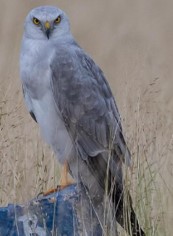
About K-4 Missile: The missile is capable of striking targets at a distance of up to about 3,500 km.
K-4, also known as Kalam-4, is a nuclear-capable submarine-launched ballistic missile.
It has been specifically designed for deployment on Arihant-class nuclear submarines.
Each Arihant-class submarine can be armed with up to four K-4 missiles.
The missile has been indigenously developed by the Defence Research and Development Organisation.
The K-4 missile is approximately 12 metres long and weighs around 17 tonnes.
It uses a two-stage solid-fuel propulsion system.
Its operational range of about 3,500 km represents a significant upgrade over the older K-15 missile, which had a range of only 750 km.
The missile can carry a payload of up to 2 tonnes, including a nuclear warhead.
A key technological feature of K-4 is its cold-launch capability from underwater platforms.
This allows the missile to be expelled from the submarine before its engine ignites, enhancing stealth and safety.
The missile is guided by an advanced inertial navigation system, supported by GPS and India’s NavIC navigation system.
5. Kimberley Process (KP): Recently, India has been selected to chair the Kimberley Process (KP), marking its third term as Chair of the international mechanism aimed at eliminating the trade in conflict diamonds.
About the Kimberley Process (KP): A tripartite initiative involving: Governments, International diamond industry and Civil society organisations
Its goal is to prevent trade in “conflict diamonds”, defined by UN Security Council resolutions as rough diamonds used by rebel groups to finance conflicts against legitimate governments.
Kimberley Process Certification Scheme (KPCS): Established under a UN resolution.
Came into force on January 1, 2003.
Serves as an international certification mechanism to regulate trade in rough diamonds.
Recognition of India’s Credibility: India’s selection reflects global confidence in its commitment to transparency and integrity in international trade, as highlighted by the Union Minister for Commerce & Industry.
Reinforces India’s stature as a responsible stakeholder in global supply chains.
6. Rabies: Recently, a One Health journal paper has highlighted that India alone accounts for nearly one-third of the world’s 59,000 annual human rabies
About Rabies: A zoonotic viral disease that can be prevented through vaccination.
It is caused by an RNA virus found in the saliva of infected animals such as dogs, cats and monkeys.
Transmission usually occurs through the bite of a rabid animal, when virus-laden saliva enters the wound.
Once clinical signs develop, rabies is almost always fatal, with death typically occurring within four days to two weeks due to cardio-respiratory failure.
In nearly 99 percent of human cases, domestic dogs are the source of infection. The incubation period generally ranges from two to three months but can vary from one week to a year, or even longer in rare instances.
Treatment: Rabies is preventable through timely vaccination of pets, avoidance of contact with wild animals, and prompt medical care after any suspected exposure, provided treatment begins before symptoms appear.
Symptoms: Early symptoms often resemble flu-like illness and may persist for a few days. These include fever, headache, nausea, vomiting, anxiety and confusion.
As the disease progresses, symptoms may escalate to hyperactivity, difficulty in swallowing, excessive salivation, hallucinations and insomnia.
7. Social Media Access for Armed Forces: Recently, the Indian Army has introduced a new policy allowing limited and regulated access to select social media platforms for its 11.5 lakh personnel.
Key Highlights: The armed forces had earlier imposed near-total bans on social networking platforms.
Personnel were even directed to delete Facebook and Instagram accounts.
The objective was to prevent leakage of classified or sensitive operational information and counter adversarial intelligence gathering.
New social media Policy: Soldiers are now allowed to access Instagram only for viewing and monitoring purposes.
Posting content, comments, or opinions is strictly prohibited, ensuring no outward digital footprint.
Platforms such as WhatsApp, Telegram, Signal, and Skype can be used for exchange of unclassified information of a general nature.
Communication is permitted only with known and verified contacts.
“Passive participation” is allowed on: YouTube, X (Twitter), Quora, and Instagram
Uploading user-generated content, posts, or messages is not permitted.
8. Annual Report on Medical Certification of Cause of Death, 2023: Recently, the Annual Report on Medical Certification of Cause of Death, 2023, released by the Office of the Registrar General of India (RGI), revealed that circulatory system diseases remained the leading cause of medically certified deaths in India in 2023.
Key Findings: Circulatory system diseases accounted for 36.4% of all medically certified deaths in India in 2023. Although still dominant, this marks a decline of about 4 percentage points compared to 2022, when such deaths exceeded 40%.
Only 22% of all registered deaths under the Civil Registration System were medically certified in 2023.
People aged 70 years and above recorded the highest share of circulatory system deaths, accounting for more than one-third of deaths in this age group.
The 55–64 years age group showed the second-highest incidence.
Diseases of pulmonary circulation and other heart diseases constituted more than half of circulatory system deaths.
In the 70+ age group, women recorded over 10 percentage points higher mortality from circulatory diseases than men.
Only a limited number of States/UTs medically certified more than 50% of registered deaths, including: Goa, Delhi, Chandigarh, Puducherry, Andaman & Nicobar Islands, Lakshadweep, Dadra & Nagar Haveli and Daman & Diu.
Goa emerged as the only State with 100% medical certification of registered deaths.
9. State of Marginal Farmers in India 2025: Recently, on Kisan Diwas, a new report titled “State of Marginal Farmers in India 2025” was released by the Forum of Enterprises for Equitable Development (FEED).
Key Findings: Less than 25 percent of India’s marginal farmers are active members of agricultural cooperatives, despite marginal farmers constituting nearly 60–70 percent of agricultural households.
The study covered six states: Andhra Pradesh, Bihar, Himachal Pradesh, Maharashtra, Tripura and Uttarakhand.
Cooperative participation among marginal farmers was found to be particularly low in Bihar, Tripura and Himachal Pradesh.
Structural barriers such as complex membership procedures, long distances to PACS (Primary Agricultural Credit Societies), limited capital availability and social exclusion restrict marginal farmers’ participation.
Due to weak cooperative linkage, marginal farmers remain dependent on informal markets and face slower income growth. Lack of digital skills, especially among women and elderly farmers, further limits the benefits of digitisation.
About 45 percent of cooperative-linked marginal farmers reported increased household income.
About 42 percent of cooperative-linked marginal farmers reported improved crop yields, while a smaller share reported decline.



Refine your answer writing skills and elevate your UPSC preparation with personalized support and expert feedback.
Fill out the form to get started with the program or any other enquiries !





Are you dreaming of becoming an IAS officer? Then, IAShub can be your best guide. It is one of the Best IAS Coaching in Delhi. Many students who want to clear the UPSC exam join IAShub for learning. The institute gives both online and offline classes. Their teachers are experienced and helpful. They easily explain every topic. Students also get notes, tests, and tips to do well in the exam.
IAShub is in Delhi and is trusted by many UPSC students. It offers coaching for every part of the UPSC exam – Prelims, Mains, and Interview. The classes are simple and easy to understand. The teachers are experts and guide students in the right way. IAShub is also known for its helpful notes, test series, and answer-writing practice. IAShub is the best coaching in Delhi and also gives UPSC Online Classes. This helps students from any place in India to learn. The online classes are live and also recorded. So, students can watch them anytime. These classes cover the full UPSC syllabus.
Here are some important services provided by IAShub:
The UPSC Civil Services Exam has three parts:
This exam is tough, but with the right guidance, it becomes easy to manage. Students must study smart and stay regular.
IAShub supports students from the beginning to the end. It gives the right books, tests, and notes. The classes are easy to follow, and the teachers are always ready to help. Students get personal doubt sessions too. The test series and answer checking help students learn where they need to do better. Also, free study materials save time and money.
IAShub also guides students during the final stage – the interview. Experts take mock interviews and give useful tips. This full support makes IAShub one of the best IAS coaching in Delhi.
 Detailed Solutions & Explanations
Improve Your Answer Writing & Strategy
Detailed Solutions & Explanations
Improve Your Answer Writing & Strategy

