26th September 2025
1. Combating Marine Plastic Litter: Recently, the India-EU Ideathon on
“Combating Marine Plastic Litter” was officially launched in New Delhi.
- Key Highlights: Launched by the Office of the Principal Scientific Adviser (OPSA), Government of India, and the Delegation of the European Union (EU) to India, under the India-EU Trade and Technology Council (TTC) Working Group 2 on Green and Clean Energy Technologies.
- Objective: To co-develop practical and innovative solutions to address marine plastic litter, inviting applications from start-ups, researchers, businesses, and other stakeholders from both India and the EU.
- Key messages: India highlighted initiatives like Swachh Sagar, Surakshit Sagar campaign and the nationwide ban on single-use plastics.
- EU emphasized joint cooperation to address marine plastic pollution affecting marine life, public health, and coastal economies.
- Participation: Over 750 participants from India and the EU, including officials, researchers, start-ups, businesses, and civil society organisations.
2. Licensing and Registration Framework: Recently, the
Food Safety and Standards Authority of India (FSSAI), under the Ministry of Health and Family Welfare, introduced a dedicated
licensing and registration framework for Ayurveda Aahara products.
- About Framework: To align traditional Ayurvedic recipes (from authoritative texts) with modern food safety and quality standards.
- To provide manufacturers an easy pathway to produce and market Ayurveda Aahara products.
- Introduced a new “Kind of Business” (KoB) category for Ayurveda Aahara.
- Standardises traditional formulations while retaining the Ayurvedic principle of personalised nutrition (prakriti-based diet).
- Supports both food industry growth and integration with prescribed Ayurvedic treatment plans.
- Approved recipes: FSSAI published a list of 91 approved Ayurveda Aahara recipes.
- Provides pre-approved references for Food Business Operators (FBOs) to ensure authenticity and compliance.
- Access: Licensing framework available on the FoSCoS portal. Official order with the list of approved recipes also accessible online.
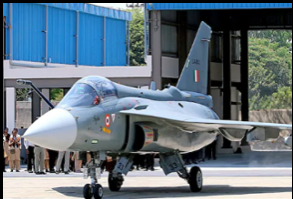
3. Tejas Mark-1A: Recently, the
Ministry of Defence (MoD) signed a contract with
Hindustan Aeronautics Limited (HAL) for the procurement of 97
Tejas Mark-1A light combat aircraft. These aircraft will be inducted into the Indian Air Force (IAF).
- Key Highlights: 68 fighter jets and 29 twin-seaters
- Deliveries to start in 2027–28 and completed over six years.
- Indigenisation: New Tejas Mk-1A has 64% indigenous content.
- Features 67 new items compared to the 2021 contract.
- Advanced systems include: UTTAM AESA Radar, Swayam Raksha Kavach, indigenous control surface actuators.
- Impact: Enhances IAF’s operational capability and defence preparedness.
- Reinforces Aatmanirbhar Bharat and self-reliance in defence manufacturing.
- Procurement category: Done under ‘Buy (India-IDDM)’ (Indigenously Designed, Developed, and Manufactured) of Defence Acquisition Procedure 2020.
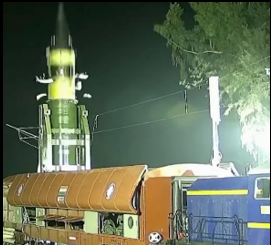
4. Rail-Based Test: Recently, India successfully conducted a
rail-based test launch of the Agni-Prime (Agni-P) missile. This marks a significant leap in the country’s strategic defence capabilities.
- Key Highlights: India joins a select group (Russia, US, China, possibly North Korea) with the capability to launch long-range ballistic missiles from rail-based platforms.
- Strategic significance: Strengthens India’s second strike capability, crucial under its ‘No First Use’ nuclear doctrine.
- Mobile launchers are harder to detect and more survivable compared to fixed silos, which are increasingly vulnerable.
- Advantages of rail-based systems: Access to 70,000 km of Indian Railways network ensures wide mobility without special road prep.
- Ability to hide in railway tunnels to evade satellite surveillance.
- Cheaper and easier to scale compared to submarine-launched ballistic missiles (SLBMs).
- About Agni-P missile specs: Successor to Agni-I (range 700–1,000 km, first tested in 1989).
- Range: 1,000–2,000 km; Weight: 11,000 kg.
- Two-stage solid-fuel propulsion.
- Can carry high explosive, thermobaric, or nuclear warheads.
- Incorporates advanced tech from Agni-IV and Agni-V (propulsion & navigation).
5. National Initiative on Water Security: Recently, the Union Minister for Rural Development and Agriculture & Farmers’ Welfare, along with the Union Jal Shakti Minister, jointly launched the
National Initiative on Water Security. The event was held at Krishi Bhawan, New Delhi.
- About National Initiative on Water Security: Mandated MGNREGA allocations for water conservation: 65% of funds in over-exploited/critical rural blocks.
- 40% in semi-critical blocks.
- 30% even in blocks without water scarcity.
- Objective: To make water security a national priority under MGNREGA.
- Ensure mandatory spending on water conservation and harvesting.
- Boost groundwater recharge, rejuvenate rivers, and promote long-term water management.
- Budget: From the ₹88,000 crore MGNREGA budget, significant portions now earmarked for rainwater harvesting and conservation works.
- Background achievements (2014–2025): Women’s participation rose from 48% (2014) to 58% (2025).
- 25 crore+ water assets (ponds, check dams, tanks) created.
- Under Mission Amrit Sarovar, 68,000+ reservoirs built/rejuvenated.
6. Nightmare Bacteria: Recently, health officials in the United States raised concerns over the sharp rise of drug-resistant “
nightmare bacteria.” The warning came in a new report by the
Centers for Disease Control and Prevention (CDC).
- About Nightmare Bacteria: Drug-resistant bacteria carrying the NDM gene (New Delhi metallo-β-lactamase).
- Known for resisting even carbapenems, the last-resort class of antibiotics.
- Can cause common infections (UTIs, pneumonia, bloodstream infections) to become life-threatening.
- CDC findings (2019–2023): Overall carbapenem-resistant infections rose 69% in the US.
- NDM-gene infections rose by 460% (from ~0.25 to ~1.35 per 100,000 people).
- In 2023, out of 4,341 carbapenem-resistant cases, 1,831 were NDM-related.
- Why the rise: COVID-19 pandemic drove massive antibiotic use → accelerated drug resistance.
- Misuse of antibiotics (not finishing doses, over-prescription).
- Early signs of carbapenem-resistant infection: UTIs: burning, frequent urge, cloudy urine.
- Bloodstream infections: high fever, rapid heartbeat, low blood pressure.
- Pneumonia: cough, chest pain, shortness of breath.
7. WHO Global Summit: Recently, the
Ministry of Ayush signed an agreement with the
World Health Organization (WHO) to co-host the
2nd WHO Global Summit on Traditional Medicine.
- About WHO Global Summit: The summit aims to promote global collaboration in the field of traditional medicine.
- Theme: “Restoring balance for people and planet: The science and practice of well-being”.
- Dates & Venue: To be held in New Delhi, from 17–19 December 2025.
- Purpose of Summit: To provide an international platform for experts, policymakers, and stakeholders.
- To advance the role of traditional medicine in global health and sustainable development.
- Commitment: Ministry of Ayush and WHO reaffirmed focus on evidence-based traditional medicine to promote human and planetary well-being.
8. Taxation: Recently, the Supreme Court of India ruled that
taxation cannot be weaponised to discriminate between locally manufactured goods and similar goods imported from other states. This judgment reinforces the principle of fair trade and non-discrimination in taxation.
- Case background: Rajasthan govt’s 2007 notification exempted VAT on locally made asbestos cement sheets and bricks (with ≥25% fly ash).
- Similar products from outside the state were still taxed, giving locals a price advantage.
- Outside manufacturers challenged it as discriminatory.
- Supreme Court ruling: Held the notification violated Article 304(a) of the Constitution (prohibits discriminatory taxation on goods imported from other states). Quashed the Rajasthan govt order.
- Key clarifications by SC: A tax on imported goods is not discriminatory if no similar goods are produced in the state.
- States may design fiscal laws to ensure equal tax burden on local and imported goods.
- Tax rebates/incentives for specific classes of dealers in non-hostile, limited-time, backward-area development contexts are not discriminatory.
9. K Visa: Recently,
China launched a new visa category called the “K Visa,” effective from October 1, 2025. This follows revisions to the Regulations on the Administration of the Entry and Exit of Foreigners.
- About K Visa: The visa is designed to attract foreign youth and professionals in STEM fields (Science, Technology, Engineering, and Mathematics).
- Eligibility: Graduates with a bachelor’s degree or higher from reputed universities or research institutions.
- Professionals engaged in STEM-related teaching or research.
- Key Features Compared to Existing Visas: Greater flexibility in entry frequency and validity.
- Wider scope of permitted activities, including education, science, technology, culture, entrepreneurship, and business.
- No need for local enterprise sponsorship.
10. Sixth Schedule: Recently,
Ladakh experienced one of its most severe outbreaks of violence in decades. The unrest was driven by demands for statehood and inclusion under the
Sixth Schedule of the Constitution.
- About the Sixth Schedule: The Sixth Schedule of the Indian Constitution provides for the administration of tribal areas in the Northeast, based on the recommendations of the Bordoloi Committee (a Constituent Assembly sub-committee on the North-East Frontier Tribal and Excluded Areas).
- It was incorporated to safeguard the distinct identity and traditions of tribal communities by ensuring autonomous self-governance.
- Came into force in 1950, under Articles 244(2) and 275(1).
- Unlike the Fifth Schedule, which governs other tribal areas in India, the Sixth Schedule grants greater autonomy through elected Autonomous Councils with legislative, judicial, and financial powers.
- It is applicable to the states of Assam, Meghalaya, Tripura, and Mizoram.
- Key Provisions: Article 244(2): Extends Sixth Schedule provisions to specified tribal areas of Assam, Meghalaya, Tripura, and Mizoram.
- Article 275(1): Provides for annual grants-in-aid from the Consolidated Fund of India to promote the welfare of Scheduled Tribes. These funds are utilised for infrastructure development schemes, including access to safe drinking water, road connectivity, electricity, and housing.


 theIASHub | 26 Sep, 2025






 Detailed Solutions & Explanations

