25th September 2025
1. ECINET: Recently, the
Election Commission of India (ECI) introduced a
new e-sign feature on its digital platform,
ECINET, to streamline voter registration and verification.
- Key Highlights: The feature requires applicants (for addition, deletion, and correction of voter names) to verify identity using Aadhaar-linked phone numbers.
- After filling the form, applicants are redirected to a CDAC-hosted portal to enter Aadhaar and generate an OTP for verification.
- Only after Aadhaar-based authentication can the form be submitted on ECINET.
- This measure was introduced in response to allegations of fraudulent voter name additions and deletions in some constituencies.
- ECINET was first used during June 19 bye-elections in Kerala, Gujarat, Punjab, and West Bengal.
- ECINET integrates 40+ existing EC mobile and web applications into a single platform.
- Benefits of ECINET: Faster uploading of voter turnout trends.
- Index cards published within 72 hours of results.
- Presiding officers upload turnout data directly, eliminating manual delays.
- Ensures final turnout figures are submitted before officers leave polling stations.
2. Lenacapavir: Recently, Dr. Reddy’s Laboratories and Hetero Labs signed agreements to supply generic versions of Gilead Sciences’ HIV drug
Lenacapavir. From 2027, it will be available at $40 per patient annually in 120 low- and middle-income countries.
- About Lenacapavir: An antiretroviral drug used for HIV prevention as pre-exposure prophylaxis (PrEP).
- PrEP reduces the risk of HIV infection in HIV-negative individuals who are at risk.
- Studies show 9% effectiveness in preventing HIV transmission.
- It is a long-acting injectable, given twice a year.
- Developed by Gilead Sciences, marketed as Yeztugo.
- Mechanism: Acts as a capsid inhibitor, blocking the virus’s protein shell (capsid) needed for replication.
- Offers a convenient, discreet, and highly effective alternative to daily oral PrEP pills.
3. Maitri 2.0: Recently, the
Indian Council of Agricultural Research (ICAR) launched the second edition of the Brazil–India Cross-Incubation Programme in Agritech, called
Maitri 2.0, in New Delhi.
- About Maitri 2.0: This programme serves as a two-way collaborative platform for innovators from India and Brazil to co-create solutions, aiming to build a stronger, inclusive, and innovative agri-food ecosystem that supports global food security.
- Objectives: Strengthen incubator partnerships between India and Brazil.
- Promote co-incubation models and facilitate exchange of best practices.
- Create new opportunities in sustainable agriculture, digital technologies, and agri-value chains.
- Develop inclusive innovation ecosystems with direct benefits for farmers.
- The initiative highlights the broader Brazil–India strategic partnership, aligned with the leaders’ vision for deeper cooperation in agriculture, emerging technologies, and food and nutritional security.
- It also enhances bilateral collaboration in agri-tech, positioning both nations as key voices in global discussions on sustainable agriculture and climate resilience.
4. World Food India (WFI) 2025: Recently, the Ministry of Food Processing Industries (MoFPI) announced it will host the 4th edition of
World Food India (WFI) 2025 at Bharat Mandapam, New Delhi.
- About WFI 2025: Showcase India as Global Food Hub.
- Bring together government, investors, global & domestic food companies, startups, innovators, logistics and technology players.
- Provide B2B, B2G, G2G networking opportunities for partnerships and collaborations.
- Key Features & Events: Knowledge sessions & panel discussions with policymakers and industry leaders.
- Sectoral exhibitions on food processing, packaging, machinery, cold chain.
- Culinary experiences & chef competitions celebrating Indian and global food.
- 3rd Global Food Regulators Summit (FSSAI) – harmonization of food safety standards.
- 24th India International Seafood Show (IISS) – seafood exports and market linkages.
- Special events: Startup Grand Challenge, CEO Round Table, State & Country Pavilions, Digital Showcase, Great Indian Food Street.
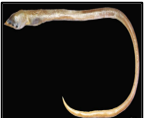
5. Apterichtus Kanniyakumari: Recently, researchers from the
National Bureau of Fish Genetic Resources (NBFGR) identified a new species of
finless snake eel, naming it
Apterichtus kanniyakumari in honour of
Kanniyakumari. The species was discovered off the Colachel coast.
- About Apterichtus kanniyakumari: Distinct golden-yellow body colouration.
- Ventral side of the head is pale white, with yellow lines along the lower jaw.
- Presence of three black blotches – one behind the eyes, one at the rictus, and another just behind the rictus origin.
- Molecular analysis using mitochondrial CO1 gene shows it forms a separate clade alongside its related species, Apterichtus nanjilnaduensis.
- About Snake Eels (Family: Ophichthidae): Named for their snake-like body shape.
- Found in tropical and temperate oceans worldwide.
- Prefer sandy habitats in shallow seas, but some species live at depths of up to 800 metres.
- Use their tail to burrow backward into the seabed, creating a safe hiding place.
6. Goods and Services Tax Appellate Tribunal (GSTAT): Recently, the Union Minister for Finance and Corporate Affairs formally launched the
Goods and Services Tax Appellate Tribunal (GSTAT) in New Delhi.
- About GSTAT: A statutory appellate body established under the Central Goods and Services Tax Act, 2017 (CGST Act).
- Deals with appeals under the CGST Act and respective State/UT GST Acts.
- Functions through a Principal Bench in New Delhi and 31 State Benches across 45 locations in India.
- Has powers equivalent to a Civil Court, including hearing cases, passing orders, imposing penalties, and revoking or cancelling registrations.
- Composition: Principal Bench: President (Head), one Judicial Member, and two Technical Members (one from Centre, one from State).
- State Benches: Two Judicial Members, one Technical Member (Centre), and one Technical Member (State).
- Eligibility Criteria: President: Must be a Supreme Court Judge or former Chief Justice of a High Court.
- Judicial Member: Must be a High Court Judge or have served as an Additional District/District Judge for at least 10 years.
- Technical Member (Centre): Group A IRS or All India Service officer with: At least 25 years in Group A service and Minimum 3 years administering GST in the Central Government.
- Age & Tenure: President: Holds office for 4 years or until age 70 (whichever earlier).
- Judicial & Technical Members: Hold office for 4 years or until age 67 (whichever earlier).
7. Combined Operational Review and Evaluation (CORE) Programme: Recently, the
Combined Operational Review and Evaluation (CORE) Programme was held in New Delhi, organised by the Headquarters Integrated Defence Staff (HQ IDS).
- About the CORE Programme: Acts as a civil-military engagement platform to deliberate on national security issues.
- Involves participation of senior officers from the Indian Armed Forces and officers from the Ministries of Defence, External Affairs, and Home Affairs.
- Organised by: Integrated Defence Staff (IDS).
- Focuses on evolving regional and global security challenges, including:
- Impact of technological transformation on modern warfare.
- Importance of strategic communication.
- Need for greater civil-military synergy in addressing complex, multidimensional threats.
- Features: Provides participants with in-depth exposure to contemporary national and regional security challenges.
- Includes interactions with subject matter experts for deeper insights.
- Aims to enhance strategic awareness and equip officers with new perspectives.
- Designed to prepare officers for well-informed, balanced, and pragmatic decision-making in future leadership roles.
8. Scheme on Capacity Building and Human Resource Development: Recently, the Union Cabinet approved the Department of Scientific and Industrial Research (DSIR) / Council of Scientific and Industrial Research (CSIR)
Scheme on “
Capacity Building and Human Resource Development” for the 15th Finance Commission cycle (2021-22 to 2025-26).
- ·About the Scheme: Covers R&D institutions, national laboratories, Institutes of National Importance, Institutes of Eminence, and Universities across India.
- Provides a platform for young researchers aiming to build careers in universities, industry, national R&D labs, and academic institutions.
- Guided by eminent scientists and professors, with a focus on fostering growth in Science, Technology, Engineering, Medical, and Mathematical (STEMM) sciences.
- Significance: Enhances India’s scientific and technological capacity by nurturing skilled human resources.
- Contributes to achieving Sustainable Development Goals (SDGs) for the S&T sector.
- Helps increase the number of researchers per million population, strengthening India’s global research standing.
9. Cold Start Exercise: Recently, India announced it will conduct a large-scale tri-service exercise ‘
Cold Start’ in Madhya Pradesh. It will be the biggest joint drill on drones and counter-drone systems since Operation Sindoor.
- ·About Exercise Cold Start: A tri-service military drill focused on testing drones and counter-drone systems.
- Objective: Simulate aerial threats and assess defence responses in modern warfare.
- Host: Conducted in Madhya Pradesh.
- Participants: Indian Army, Navy, and Air Force (jointly).
Supported by industry partners, R&D agencies, and academic institutions.
- Aims: Assess operational readiness against drones, UAVs, and other aerial threats.
- Detect gaps and enhance air defence capabilities.
- Strengthen India’s technological edge in counter-drone and jamming systems, particularly against Pakistan.
- Key Features: Live demonstrations of drones and counter-drone technologies.
- Use of GPS jamming, electronic warfare tools, and surveillance systems.
- Inspired by the Sudarshan Chakra concept for integrated defence against drones, UAVs, hypersonic missiles, and similar threats.
- Testing and showcasing of indigenous technologies developed with industry and academia.


 theIASHub | 25 Sep, 2025







 Detailed Solutions & Explanations

