24th September 2025
1. Nuclear Fusion Power to India: Recently, researchers at the
Institute for Plasma Research (IPR) in Gandhinagar unveiled an ambitious roadmap to bring
nuclear fusion power to India.
- Key Highlights: India plans to build its first fusion electricity generator: Steady-state Superconducting Tokamak-Bharat (SST-Bharat).
- Will be a fusion-fission hybrid reactor.
- Power output: 130 MW (100 MW from fission, 30 MW from fusion).
- Efficiency target: output-to-input ratio of 5.
- Estimated cost: ₹25,000 crore.
- Goal: a full-scale demonstration reactor by 2060 with a Q value of 20 and 250 MW output.
- Fusion vs fission: Fusion produces less radioactive waste than fission.
- Controlled fusion requires extreme conditions like inside stars.
- Methods of fusion: Inertial confinement: uses lasers/X-rays.
- Magnetic confinement (India’s focus): uses powerful magnetic fields in tokamaks.
- India’s present machine: SST-1 tokamak at IPR: Produced plasma for 650 ms.
- Designed to hold plasma up to 16 minutes. It is a research machine, not for power generation.
2. Nationally Determined Contributions: Recently, India announced it will present its updated
Nationally Determined Contributions (NDCs) at the upcoming U.N. Climate Change Conference (
COP30) in Belém, Brazil.
- Key Highlights: Updated NDCs (NDC 3.0) likely to include higher energy efficiency improvement targets.
- India’s 2022 NDCs (for 2030): Reduce emissions intensity of GDP by 45% compared to 2005.
- Source 50% of electric power capacity from non-fossil fuels.
- Create a carbon sink of at least 2 billion tonnes.
- Progress so far: By 2019, India reduced emissions intensity of GDP by 33% from 2005 levels.
- By June 2025, 50% of installed power capacity from non-fossil sources
- NDC 3.0 (targets for 2035): Expected to show degree of emission reductions by 2035.
- Only 30 out of ~190 countries have submitted so far; many submit just before climate talks.
- Global context: Even full compliance with current NDCs may still result in 3°C warming by 2100, missing Paris goals.
- EU: yet to set 2035 target; proposed 90% cut by 2040 (vs 1990). Possible 66–72.5% cut by 2035.
- Australia: aims for 62–70% cut by 2035 (vs 2005).
- USA: exited the Paris Agreement.
- China: uncertain if it will announce ambitious NDCs before COP30.
3. Impact of Anthropogenic Activities on Forests: Recently, a study published in
Science revealed that nearly 80% of tropical forests have become fragmented over the past two decades due to anthropogenic activities.
- Key findings: Globally, 51–67% of forests have become fragmented.
- Causes of fragmentation: Shifting agriculture: 61% in tropics, 37% globally.
- Forestry: 34% globally; main driver in temperate (81%) and boreal forests (38%).
- Wildfires: 14% globally; 62% driver in boreal forests.
- Commodity-driven deforestation & urbanisation: less than 15% globally.
- Mining, energy development, selective logging also contributors.
- Effects of fragmentation: Shrinking and splitting of forest patches.
- Loss of core habitats, threatening species that need intact forests.
- Disruption of connectivity → reduced wildlife movement, long-term population declines.
- Edge habitats expanded (2000–2010), exposing forests to disturbances.
- Forests becoming warmer, drier due to microclimate changes.
- Regional observations: Tropics: overwhelmingly driven by shifting agriculture (61%).
- Temperate: mostly forestry (81%).
- Boreal: mainly wildfires (62%) and forestry (38%).
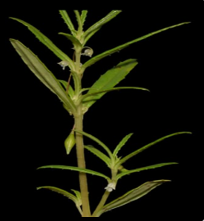
4. Impatiens Selvasinghii: Recently, researchers identified a new species of flowering plant,
Impatiens selvasinghii, in the Kudremukh range of the Western Ghats, Karnataka, at an altitude of 1,630 metres.
- About Impatiens Selvasinghii: Belongs to the balsam family and is notable for being one of the smallest-flowered balsams from the Western Ghats.
- Characterised by its tiny flower size and distinctive, prominently-lobed wing petals.
- Plays an ecological role as small insects depend on it.
- In India, the genus Impatiens has over 280 taxa, mainly found in the Eastern Himalayas and Western Ghats.
- More than 210 taxa are endemic to India and around 130 species are endemic to the Western Ghats.
- Nearly 80% of these taxa in the Western Ghats are endangered.
5. Tropical Forests Forever Facility: Recently, Brazil became the first country to announce an investment in the
Tropical Forests Forever Facility (TFFF).
- About TFFF: A global permanent multilateral fund designed to support long-term tropical forest conservation.
- A Brazil-led initiative, first proposed at COP28 (UAE, 2023).
- Goal: Mobilise US$125 billion from public and private sources through a blended finance structure.
- Investments will be directed into a diversified portfolio that yields returns higher than its cost of capital.
- The returns will be used to pay tropical forest countries (TFCs) a fixed amount per hectare of preserved forest.
- Fund Management: Operated through a Multilateral Development Bank (MDB), such as the World Bank.
6. Varkala Cliff: Recently,
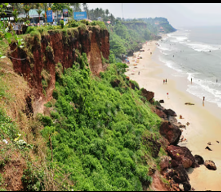
Varkala Cliff in Kerala was added to UNESCO’s tentative World Heritage list.
- About Varkala Cliff: Only place in Kerala where cliffs meet the Arabian Sea.
- Formations from the Mio-Pliocene age with laterite and sandstone layers.
- Fossils and sedimentary bands reveal millions of years of earth’s climate history.
- Extremely fragile, laterite easily crumbles under human or natural pressure.
- Spiritual and cultural significance: Janardana Swamy temple (2000+ years old) at southern end, site of Karkidaka Vavu rituals.
- Sivagiri Mutt, founded by Sree Narayana Guru, adds cultural depth.
- Fisherfolk see the cliff as a protective landmark.
- Environmental threats: Monsoon-triggered landslides and cracks already visible.
- Sea-level rise, stronger monsoons, surges worsening erosion.
- 2018 and 2019 floods destabilised cliff layers.
7. AI-enabled Nature Experience Centre: Recently,
Betla National Park in Jharkhand was chosen to host
India’s first AI-enabled nature experience centre.
- Key Highlights: Set up inside the Palamu Tiger Reserve (PTR) at Betla National Park.
- A high-tech nature interpretation and experience hub that uses AI, AR/VR, holograms, and immersive sound to recreate the feel of real jungle life.
- Developed by PTR authorities, under the leadership of Deputy Director Prajesh Kant Jena.
- Key Features: AI Assistants for guided learning and interaction.
- 3D holographic projections showing lifelike animal movements.
- Augmented reality & immersive soundscapes (e.g., waterfalls, bird calls, predator-prey chases).
- Ecosystem simulations: food-sharing, herd movement, hunting behaviour.
- About Betla National Park: Located in Latehar district, Jharkhand (around 170 km from Ranchi).
- The only National Park in Jharkhand.
- Known for elephant rides, jeep safaris, waterfalls, and tribal eco-tourism.
- Declared a National Park in 1986.
- One of the first nine tiger reserves launched under Project Tiger (1973).
8. Barren Island: Recently, India’s only active volcano,
Barren Island, erupted twice within eight days.
- About Barren Island: Situated in the Andaman Sea, about 138 km northeast of Port Blair.
- Part of the Andaman & Nicobar Islands (Union Territory of India).
- An uninhabited island with rugged volcanic cones, ash deposits, and limited vegetation.
- The only confirmed active volcanic site in South Asia.
- Origin & Geological Background: Lies in a volcanic belt created at the convergent boundary of the Indian and Burmese tectonic plates.
- Oldest lava flows: ~1.6 million years old.
- Formed on oceanic crust dating back ~106 million years.
- Physical Features: Size: Around 3 sq. km.
- Elevation: Rises 354 m above sea level.
- Structure: A 2-km-wide caldera formed by the collapse of an earlier cone.
9. Niti Aayog: Recently,
NITI Aayog released its flagship report, “
Pathways to Progress: Analysis and Insights into India’s Innovation Story”, offering a comprehensive account of India’s achievements, challenges, and opportunities in science, technology, and innovation.
- Key Findings: The report captures India’s progress in building a robust innovation ecosystem and outlines strategies to strengthen the country’s position as a global innovation hub.
- The document provides: A holistic overview of India’s innovation ecosystem at national and state levels.
- Analysis of industry and grassroots innovations, startups, and collaborations between universities, industry, and government
- India’s performance in global innovation rankings
- Systemic challenges and a forward-looking roadmap to scale deep technology innovation, enhance knowledge creation, and integrate with global ecosystems
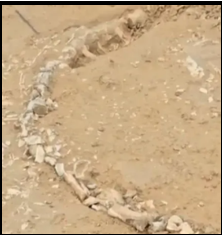
10. Phytosaur: Recently, ancient fossilised remains uncovered in Megha village, Jaisalmer, raised speculation that they could belong to a
Phytosaur from the Late Triassic–Jurassic period.
- About Phytosaurs: Extinct, large semi-aquatic reptiles resembling modern crocodiles.
- Belong to the order Phytosauria.
- Flourished during the Late Triassic and possibly into the Early Jurassic.
- Characterised by elongated snouts, heavy body armour, and varied feeding adaptations.
- Fossil Details: The specimen is about 6–7 feet long, with parts of the spine structure visible.
- Likely from the Jurassic age.
- Morphological Diversity: Long-snouted forms → specialised in fish-eating.
- Short-snouted forms → adapted for hunting land animals.
- High-snouted forms → generalist feeders.
- Geographical Distribution: Phytosaur fossils reported from India, Europe, North America, Brazil, Morocco, Thailand, and Madagascar.
- Earlier finds in Rajasthan include dinosaur remains at Akal and Thaiyat, along with shark and marine fossils.


 theIASHub | 24 Sep, 2025









 Detailed Solutions & Explanations

