23rd September 2025
1. Polluted River Sites: Recently, the
Central Pollution Control Board (CPCB) reported a slight reduction in the number of
polluted river sites across India, with 807 locations in 2023 found unfit for bathing compared to 815 in 2022.
- Key Findings: Number of polluted river stretches (PRS) also declined: 296 in 271 rivers (2023) compared to 311 in 279 rivers (2022).
- Maharashtra (54) had the maximum PRS, followed by Kerala (31), Madhya Pradesh (18), Manipur (18), and Karnataka (14).
- Tamil Nadu, Uttar Pradesh, and Uttarakhand had the most ‘Priority 1’ polluted stretches (5 each).
- In 2022, Gujarat and Uttar Pradesh had the most ‘Priority 1’ stretches (6 each).
- ‘Priority 1’ stretches (Biological Oxygen Demand >30 mg/L) reduced to 37 in 2023 from 45 in 2022.
- Increase observed in Priority 2 (20-30 mg/L) and Priority 3 (10-20 mg/L) stretches, suggesting remediation progress.
- CPCB monitors water quality at 4,736 locations nationwide, including rivers, lakes, creeks, drains, and canals.
2. Shipbuilding Programme: Recently, the Indian Navy launched its largest indigenous
shipbuilding programme, with 54 vessels under construction at different stages in domestic shipyards.
- Key Highlights: Several ships are nearing delivery, with some to be commissioned within 2025.
- All 54 vessels expected to join the fleet by 2030.
- India aims to expand naval strength to 200+ warships and submarines by 2035, with a possible rise to 230 by 2037.
- Programme aligns with SAGAR vision (Security and Growth for All in the Region) and reinforces India’s role as a first responder and preferred security partner in the Indian Ocean Region.
- Shipbuilding drive is powered by Atmanirbhar Bharat, boosting self-reliance and employment in defence manufacturing.
- Navy has transitioned from a “Buyer’s Navy” to a “Builder’s Navy”.
- INS Tamal (stealth multi-role frigate, built in Russia) commissioned in July 2025, the last major foreign-built warship; marks a turning point in naval modernisation.
- Androth, second of eight Anti-Submarine Warfare Shallow Water Crafts (ASW-SWC) built by GRSE, Kolkata, delivered recently with 80% indigenous content.
3. India and Morocco: Recently,
India and Morocco took a major step towards strengthening their defence partnership by signing a Memorandum of Understanding (MoU) on
defence cooperation in Rabat.
- About the MoU: Establishes a robust institutional framework for collaboration in: Defence industry, Joint exercises, Military training and Capacity building.
- Both sides agreed on a comprehensive roadmap covering: Counter-terrorism, Maritime security, Cyber defence, Peacekeeping operations, Military medicine and Expert exchanges
- New Defence Wing announced at the Embassy of India in Rabat to accelerate cooperation.
- India showcased its defence industry capabilities, including drone and counter-drone technologies, and expressed readiness to meet Moroccan defence requirements.
4. Breast Cancer Awareness Programme: Recently, a
Breast Cancer Awareness Programme was organised at the National Institute of Homoeopathy (NIH), Kolkata under the
Swasth Naari Sashakt Pariwar Abhiyaan (SNSPA).
- About Breast Cancer Awareness Programme: Educate female patients about breast cancer, its early warning signs, and the importance of self-examination and timely medical consultation.
- Programme was actively supported by interns, PGTs, and faculty members.
- Initiative reinforced the message: “Early detection saves lives.”
- Interns and PGTs distributed IEC material to raise awareness and sensitise women on:
- Significance of early detection
- Correct method of Breast Self-Examination (BSE)
- Appropriate time and frequency of self-examination
- Session focused on awareness, breaking myths, and encouraging proactive health measures.
5. Quasi-Moon: Recently, astronomers identified a new celestial companion to Earth:
2025 PN7, a tiny asteroid that appears to be a
quasi-moon.
- About quasi-moon: An object that follows a similar orbital path to Earth around the sun without being gravitationally bound to the planet.
- Discovered in summer 2025 by Pan-STARRS observatory in Hawaii.
- Unlike mini-moons (temporarily captured by Earth), quasi-moons remain in sustained proximity.
- 2025 PN7 is estimated to be about 62 feet in diameter with a faint magnitude of ~26, making it very hard to detect.
- Astronomers believe it has been a quasi-satellite since ~1955 and will continue for the next 60 years.
- It is considered the smallest and least stable quasi-moon found so far.
- Only seven other quasi-moons of Earth have been documented before this discovery.
- Its motion allows repeated close passes, making it easier to study over decades despite its small size.
- Quasi-moons can evolve into Trojan or horseshoe orbits, and vice versa, over time.
- Detection is difficult because telescopes can only spot it when it’s particularly close to Earth.
- Experts confirm it is almost certainly a natural rocky asteroid, not space debris.
- The discovery highlights that Earth’s neighborhood still holds hidden celestial objects.
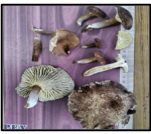
6. Lactifluus Khasianus: Recently, researchers have formally identified a new edible mushroom species,
Lactifluus khasianus.
- About Lactifluus khasianus: The species was discovered in the East Khasi Hills of Meghalaya, where it is locally called “Tit iongnah.”
- It belongs to the Lactifluus sect. Gerardii group of fungi.
- Distinguishing features include its chocolate-brown cap, unique microscopic characteristics, and genetic markers.
- It grows in association with Khasi pine (Pinus kesiya), typically at altitudes around 1,600 metres.
- Though it bears resemblance to Lactifluus gerardii, which occurs in North America and Asia, it differs in having larger cystidia and distinctive DNA profiles.
- It is the fifth confirmed species of this section in India, and importantly, the first reported edible species.
- For Khasi villagers, however, the mushroom is well known; it is traditionally collected from forest floors, sold in local markets during the monsoon, and enjoyed as a seasonal delicacy.
7. LEADS 2025: Recently, the Union Commerce & Industry Minister unveiled
LEADS 2025 in New Delhi as part of the decade-long Make in India celebrations.
- About LEADS: Stands for “Logistics Ease Across Different States”
- A national index and survey that evaluates and ranks the logistics ecosystem of States and Union Territories, highlighting gaps and best practices to strengthen supply chain performance.
- Released by the Ministry of Commerce and Industry, Department for Promotion of Industry and Internal Trade (DPIIT).
- Key Features of LEADS 2025:
- Corridor Performance Tracking: Evaluation of 5–7 national corridors on journey time, truck speed, and waiting time.
- API-Based Analytics: Real-time data on section-wise truck speeds for sharper insights.
- State Rankings: Classification into Leaders, Achievers, and Aspirers to encourage healthy competition.
- Policy Recommendations: Tailored interventions for individual States/UTs.
- Digital Dashboard: An interactive platform enabling States/UTs to track logistics performance continuously.
8. Evo AI Model: Recently, scientists at Stanford University, in collaboration with the Arc Institute, developed
Evo, an advanced AI foundation model for
genomics. It is capable of designing new
bacteriophages to combat drug-resistant infections.
- About Evo AI Model: A large-scale AI model trained on microbial and viral genetic sequences.
- Works like a “ChatGPT for DNA”, capable of predicting, designing, and generating genetic code for synthetic biology.
- Developed by Stanford University and Arc Institute.
- Aim & Purpose:
- Therapeutic Design: Create bacteriophages that can kill harmful, drug-resistant bacteria.
- Mutation Insights: Predict effects of DNA mutations on protein function and disease.
- Accelerate Research: Replace slow lab trial-and-error with AI-driven genetic design.
- Key Features:
- Extended Context Length: Understands long stretches of DNA and their interactions.
- Nucleotide-Level Precision: Works at single base-pair accuracy.
- Generative Capability: Proposes new proteins and synthetic genomes.
- Faster R&D: Cuts decades of work into weeks, reducing cost and time.
- Open Access: Publicly available for non-commercial academic research.
9. Super Typhoon Ragasa: Recently, China began preparing for mass evacuations as
Super Typhoon Ragasa approached its southern coast, prompting the city of Shenzhen to start relocating 400,000 residents from coastal and low-lying areas.
- About Super Typhoon Ragasa: A Category 5 Super Typhoon with sustained winds around 205 km/h and gusts reaching 250 km/h.
- Local Name: Known in the Philippines as “Nando”.
- Significance: Among the strongest typhoons to strike the region in recent years.
- Origin & Path: Developed over the western Pacific Ocean, fueled by warm waters and low wind shear.
- Tracking through the Luzon Strait, with impacts expected on the Babuyan Islands before moving toward southern China.
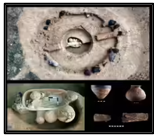
10. Terracotta Sarcophagus: Recently, a
terracotta sarcophagus from Kilnamandi in Tiruvannamalai district, Tamil Nadu, was dated to 1692 BCE through AMS radiocarbon dating. This finding places the burial in the
Late Harappan period.
- About Terracotta Sarcophagus: A terracotta coffin used for burials, containing charcoal, pottery, and grave goods. Serves as crucial archaeological evidence for burial practices and the socio-cultural life of ancient Tamilakam.
- Key Features:
- Grave Goods: Included etched carnelian beads (sourced from Gujarat/Maharashtra), iron tools, and pottery.
- Graffiti Marks: Fork-like symbols, semi-concentric “U” shapes, and vertical wavering lines—showing about 90% similarity with Indus Valley symbols.
- Clan Identity: Graffiti restricted to certain burials, pointing to clan-based traditions.
- Associated Finds: Long iron spears (7–8 feet), collective urn burials within slab enclosures, and high-tin bronze objects.
- Significance:
- Trade Links: Confirms south–north trade connections between Tamil Nadu and Harappan regions (Gujarat, Maharashtra).
- Graffiti Tradition: Pushes back the timeline of Tamil Nadu’s graffiti marks to the 17th century BCE.
- Complex Society: Use of iron tools and clan-based organized burials indicates early social stratification.


 theIASHub | 23 Sep, 2025







 Detailed Solutions & Explanations

