2 Minute Series_21 January 2026

THEIASHUB
Get an Instant Call Back from Our Expert Mentors Now!
+91

21st January 2026

  1. Green Energy Corridor (GEC): Recently, the Government of India is planning Green Energy Corridor (GEC) Phases 3 and 4, a nationwide, next-generation transmission backbone to evacuate massive clean power additions and stabilise the national grid.
  • About GEC: India’s flagship transmission programme for integrating renewable energy into the national grid.
  • It is a critical enabler of India’s target of 500 GW non-fossil fuel capacity by 2030.
  • Focus: Evacuation, balancing, and grid stability for solar and wind power.
  • Phase 1: Targeted renewable evacuation: ~20 GW
  • Coverage: 8 states including Gujarat, Rajasthan, Tamil Nadu, Karnataka
  • Phase 2: Additional integration target: ~20 GW
  • Expanded coverage including Kerala and Uttar Pradesh
  • Phases 3 & 4: Planned evacuation capacity: ~150 GW of renewable energy
  • Scale: 8–10 times larger than Phases 1 and 2 combined
  • Coverage: Entire country, beyond traditional solar–wind hubs
  • Strategic Importance: Enables large-scale renewable deployment beyond desert and coastal hubs. It Improves: Grid stability, Interstate power exchange and peak demand management
  • Enhances credibility of India’s net-zero and energy security commitments
  1. Central Motor Vehicles (Second Amendment) Rules, 2026: Recently, the Government of India notified the Central Motor Vehicles (Second Amendment) Rules, 2026, strengthening enforcement of toll (user fee) payments on National Highways.
  • Key Highlights: The move directly links pending toll dues with vehicle-related services, signaling a shift towards stricter, technology-driven compliance.
  • Improve Electronic Toll Collection efficiency, prevent toll evasion, and ensure timely user fee payment on National Highways.
  • “Unpaid user fee” now legally defined where ETC records vehicle passage but toll payment is not received under the National Highways Act, 1956.
  • No Objection Certificate (NOC) for vehicle ownership transfer or inter-state transfer will not be issued if toll dues are pending.
  • Renewal or issuance of Certificate of Fitness is barred until unpaid National Highway user fees are cleared.
  • Commercial vehicles must have zero unpaid user fee to obtain or renew a National Permit.
  • Amendments facilitate smoother user fee recovery under the upcoming Multi-Lane Free Flow (MLFF) barrier-less toll system.
  1. Vālmīkirāmāyaṇam: Recently, in a landmark cultural and scholarly development, a 233-year-old Sanskrit manuscript of the Vālmīkirāmāyaṇam has been permanently gifted to the International Ram Katha Museum, Ayodhya.
  • About Vālmīkirāmāyaṇam: Accompanied by the Tattvadīpikā ṭīkā, preserving a classical exegetical tradition. Composed by Valmiki (Ādi Kavi), with commentary authored by Maheshvara Tirtha.
  • Written in Sanskrit using the Devanāgarī script.
  • Dated to Vikrama Saṁvat 1849, corresponding to 1792 CE.
  • Represents a rare and carefully preserved textual lineage of the Ramayana
  • The manuscript encompasses five major kāṇḍas: Bālakāṇḍa, Araṇyakāṇḍa, Kiṣkindhākāṇḍa, Sundarakāṇḍa, and Yuddhakāṇḍa.
  • Integrates rich epic narration with deep philosophical interpretation, exemplifying the Itihāsa tradition.
  • Objective: Develop Ayodhya as a global centre for Ramayana heritage
  • Strengthens India’s manuscript preservation movement
  • Aligns with India’s soft power diplomacy rooted in Itihāsa–Purāṇa traditions
  1. India–AI Impact Summit 2026: Recently, India is set to host the India–AI Impact Summit 2026 at Bharat Mandapam, marking the first time a Global South nation convenes a global AI summit.
  • Key Highlights: Theme: “Welfare for All, Happiness of All”, aligning AI with inclusive development.
  • Led by the Government of India with policy anchoring by MeitY under the IndiaAI Mission.
  • Summit framework based on People, Planet, and Progress to guide responsible AI adoption.
  • Seven Chakras of cooperation: Human Capital; Inclusion; Safe & Trusted AI; Resilience & Sustainability; Science; Democratizing AI Resources; AI for Economic Growth & Social Good.
  • AI applications highlighted in justice delivery, smart cities, welfare schemes, and service efficiency.
  • Sectoral AI use cases: Focus on healthcare, agriculture, education, finance, commerce, and rural economy.
  • Strengthens multilateral cooperation and translates global AI principles into development outcomes.
  • India AI Tinkerpreneur bootcamp for school students to foster early AI and entrepreneurship skills.
  • Expected outcomes: Stronger AI governance, workforce transition, ecosystem partnerships, and responsible AI deployment.
  • Strategic significance: Positions India as a global hub for development-oriented, inclusive, and trusted AI innovation.
  1. Bark Spiders: Recently, an international research team from China, Madagascar, Slovenia, and the United States studied bark spiders to identify the environmental and biological factors enabling production of exceptionally tough silk.
  • Key Highlights: The study focused on Caerostris darwini and Caerostris kunthneri, expanding understanding of spider silk biomechanics.
  • About Darwin’s Bark Spider: An extraordinary orb-weaving spider known for creating the largest and strongest webs ever recorded.
  • It belongs to the Araneidae family, commonly called orb-weaver spiders.
  • First discovered in 2001 and formally described in 2009.
  • Native to Madagascar, where it inhabits riverine forests and wetland ecosystems.
  • Physical Appearance: Females are medium-sized, measuring around 2–2.5 cm, while males are much smaller.
  • Produces silk that surpasses steel and most synthetic fibres in both strength and toughness.
  • Its silk is more than twice as tough as any other spider silk studied to date.
  • Lifespan is relatively short, typical of orb-weaving spiders, with females generally outliving males.
  • Ecological Importance: Plays a key role in regulating insect populations, contributing to the balance of freshwater and forest ecosystems.
  1. Anaemia: Recently, Indian states are shifting from oral pills to single-dose IV iron therapy for pregnant women to tackle persistently high anaemia more effectively.
  • Key Highlights: Anaemia remains widespread in India, affecting 1% of children, 57% of women, and 52.2% of pregnant women (NFHS 2019–21).
  • In pregnancy, anaemia increases the risk of pre-term delivery, low birth weight, and maternal complications.
  • Oral iron therapy often fails due to poor compliance caused by gastrointestinal side effects and slow haemoglobin response.
  • Late detection and irregular intake result in many women not reaching safe haemoglobin levels before delivery.
  • Intravenous iron existed earlier under Anaemia Mukt Bharat but required multiple infusions and hospital visits.
  • Ferric Carboxymaltose (FCM) has transformed care by enabling a single-dose IV infusion.
  • Single-dose FCM ensures rapid haemoglobin correction, especially critical in late pregnancy.
  • IV iron is recommended for severe anaemia (Hb 5–6.9 g/dL in pregnancy; 5–7.9 g/dL in lactation).
  • IV iron is also indicated in moderate anaemia when oral iron is not tolerated or ineffective.
  • Single-dose IV FCM offers a reliable, time-efficient, and outcome-oriented solution for maternal anaemia management.
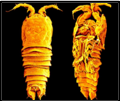
  1. Indiaphonte Bijoyi: Recently, scientists formally identified a previously unknown microscopic crustacean as a new genus and species, named Indiaphonte bijoyi.

  • About Indiaphonte bijoyi: It is a copepod belonging to the family Laophontidae under the order Harpacticoida, a group adapted to life within marine sediments.
  • The species is part of meiofauna, minute aquatic invertebrates measuring less than 1 mm and observable only under a microscope.
  • Found in the Kavaratti lagoon, a shallow, coral-rich lagoon known for high marine biodiversity.
  • The genus name Indiaphonte reflects India’s contribution to marine taxonomy, while bijoyi honours noted marine scientist Bijoy Nandan.
    • Researchers identified a unique combination of morphological features not seen in any previously known genus within Laophontidae.
  • Physical features: Measures approximately 518–772 micrometres, with females slightly larger than males; body is semi-cylindrical, flattened top-to-bottom, widest at mid-section, and tapering towards the rear.
  • Adaptive anatomy: Possesses antenna-like sensory structures and specialised limbs suited for movement and survival within sediment environments.
  • While crustaceans include large forms like crabs, lobsters, prawns, krill, and barnacles, microscopic groups include copepods, cladocerans, ostracods, and amphipods.
  • Meiofaunal copepods play a critical role in nutrient recycling, grazing on microalgae, and supporting aquatic food webs.
  1. Mandatory Labelling of AI-Generated Content: Recently, the Government of India is set to finalise rules requiring mandatory labelling of AI-generated and synthetic content.
  • Key Highlights: Ensure AI-generated or synthetic content is clearly distinguishable from factual, human-created information.
  • The rules will apply to AI tool providers (e.g., ChatGPT, Grok, Gemini) and major social media platforms.
  • Labelling allows users to critically assess content and prevents AI outputs from masquerading as truth. Large tech firms and platforms are considered technically capable of implementing clear AI labelling.
  • Draft regulations are in the final stages and currently undergoing legal scrutiny.
  • Draft rules mandate labelling, traceability, accountability, and metadata embedding for AI-generated or modified content.
  • Visibility requirement: Labels must cover at least 10% of visual content or the first 10% of an audio clip.
  1. Pax Silica Summit: Recently, the United States convened the first Pax Silica Summit, signalling a strategic push to secure rare earth elements (REEs), semiconductors, and AI supply chains amid rising geopolitical competition.
  • About Pax Silica: Pax (peace) + Silica (core material for semiconductors) symbolises peace through secure technology supply chains.
  • The initiative aims to: Reduce coercive economic dependencies
  • Secure global tech and AI supply chains
  • Build trusted digital and manufacturing infrastructure
  • India’s Strategic Relevance to Pax Silica: India contributes robust digital public infrastructure, rapid enterprise-level AI adoption, a vast technology workforce, and a long-standing India–U.S. collaboration ecosystem.
  • Strong policy momentum is visible through the National AI and Semiconductor Missions, backed by large public funding, domestic investments (e.g., Tatas), global players like Micron, and a growing AI start-up base.
  • Pax Silica enables India to scale partnerships with Japan, Singapore, Israel and others, accelerating semiconductor fabs and AI ecosystem development.
  • Participation reduces India’s vulnerability to unilateral export controls and supply-chain coercion in critical technologies.


UPSC QEP 2026 Batch 5 - English
Buy now View Details
Submit Your Details to Learn More
I agree to give my consent to receive updates through SMS/Email & WhatsApp*.

NEEV GS + CSAT Foundation 2026/27
Buy now View Details


Join theIAShub’s Mains Answer Writing Program

Refine your answer writing skills and elevate your UPSC preparation with personalized support and expert feedback.

Fill out the form to get started with the program or any other enquiries !

I agree to give my consent to receive updates through SMS/Email & WhatsApp*.

Best IAS Coaching In Delhi, UPSC Online & Offline Classes by IAShub

Are you dreaming of becoming an IAS officer? Then, IAShub can be your best guide. It is one of the Best IAS Coaching in Delhi. Many students who want to clear the UPSC exam join IAShub for learning. The institute gives both online and offline classes. Their teachers are experienced and helpful. They easily explain every topic. Students also get notes, tests, and tips to do well in the exam.

UPSC Online Classes by IAShub

IAShub is in Delhi and is trusted by many UPSC students. It offers coaching for every part of the UPSC exam – Prelims, Mains, and Interview. The classes are simple and easy to understand. The teachers are experts and guide students in the right way. IAShub is also known for its helpful notes, test series, and answer-writing practice. IAShub is the best coaching in Delhi and also gives UPSC Online Classes. This helps students from any place in India to learn. The online classes are live and also recorded. So, students can watch them anytime. These classes cover the full UPSC syllabus.

Key Offerings Provided by IAShub

Here are some important services provided by IAShub:

  • UPSC Prelims: IAShub teaches for Prelims with a focus on basics. It also gives daily current affairs and monthly magazines.
  • Classroom Courses: IAShub has classroom learning for students in Delhi. The environment is good and peaceful for study.
  • Live Classes: Students who live far can join live UPSC online classes. These classes are just like real classes.
  • QEP for Mains: The Quality Enrichment Program (QEP) is special for Mains preparation. It helps students write better and faster.
  • Answer Writing: Regular answer writing practice is given. Teachers also check answers and give tips to improve.
  • Free Resource: IAShub gives free notes by toppers and helpful Main Booster material.
  • Test Series: Test series are available for every subject. These help students know their weak points and improve.
  • Interview Guidance Session: IAShub also gives interview practice sessions with experts. These help students feel confident.

UPSC Exam Overview

The UPSC Civil Services Exam has three parts:

  • Prelims: It has two papers: General Studies and CSAT.
  • Mains: It has nine papers, including essays and optional subjects.
  • Interview: It tests the personality and confidence of the student.

This exam is tough, but with the right guidance, it becomes easy to manage. Students must study smart and stay regular.

How IAShub Helps in the UPSC Journey

IAShub supports students from the beginning to the end. It gives the right books, tests, and notes. The classes are easy to follow, and the teachers are always ready to help. Students get personal doubt sessions too. The test series and answer checking help students learn where they need to do better. Also, free study materials save time and money.
IAShub also guides students during the final stage – the interview. Experts take mock interviews and give useful tips. This full support makes IAShub one of the best IAS coaching in Delhi.

Best IAS Coaching In Delhi FAQs

Yes, IAShub offers live and recorded online classes. Students can attend from any part of India.

Classes are available in both English and Hindi, so students can choose the language they are comfortable with.

The classroom centre is located in Delhi. Students can visit and join offline batches there.

IAShub gives interview guidance sessions to help students prepare for the final round of UPSC.