2 Minute Series_19th December 2025

THEIASHUB
Get an Instant Call Back from Our Expert Mentors Now!
+91

19th December 2025

  1. DHRUV64: Recently, the Ministry of Electronics and Information Technology announced the launch of DHRUV64, an indigenous microprocessor to strengthen India’s domestic processor development ecosystem.
  • About DHRUV64: India’s first completely indigenous 64-bit microprocessor.
  • A microprocessor is a single semiconductor chip that performs the core computing functions—arithmetic, logic, control, storage, input and output—acting as the CPU of electronic systems.
  • It has been developed by the Centre for Development of Advanced Computing (C-DAC) under MeitY’s Microprocessor Development Programme.
  • Key Features: It is a 64-bit, dual-core processor operating at 1 GHz, serving as the central processing unit for electronic devices.
    - It is capable of running operating systems while remaining energy-efficient for embedded applications.
    - Compared to commercial smartphone and laptop processors, its performance is relatively modest.
    - It has fewer cores, lower clock speeds, and does not include integrated GPUs or specialised accelerators for AI or graphics-intensive tasks.
    - DHRUV64 is built on the RISC-V architecture, an open and royalty-free instruction set that allows chip design without licensing fees.
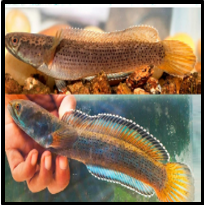
  1. Channa Bhoi: Recently, a new species of snakehead fish, Channa bhoi, was discovered by scientists in Meghalaya.
  • About Channa bhoi: It was found in a small mountain stream near Iewmawlong village in the Ri-Bhoi district of Meghalaya.
  • The species is named in honour of the indigenous Bhoi people of the Khasi tribe inhabiting the Ri-Bhoi region.
  • It belongs to the Gachua group of snakehead fishes, which is noted for its rich diversity in the Eastern Himalayan region.
  • The fish is distinct from related species due to its unique colouration.
  • It has a bluish-grey body with tiny black spots on each scale, forming eight to nine horizontal broken lines along its sides.
  • Its pectoral fins show characteristic banding patterns.
  • Phylogenetic studies reveal it as a sister species to Channa bipuli, another snakehead species native to Northeast India.
  • With this discovery, the total number of Channa species recorded in India has increased to 26.
  1. Aravalli Hills: Recently, the Supreme Court finalised a uniform definition of the Aravalli hills and imposed a pause on new mining leases across Delhi, Haryana, Rajasthan and Gujarat.
  • About Aravalli Hills: One of the world’s oldest mountain systems, with a geological history of nearly two billion years.
  • Extends about 650 km from Delhi to Gujarat, passing through Haryana, Rajasthan and Gujarat.
  • Forms a critical ecological backbone of north-western India.
  • Acts as a natural barrier against desertification by preventing the eastward spread of the Thar Desert into the Indo-Gangetic plains.
  • Plays a key role in regional climate regulation by influencing rainfall patterns and moderating temperatures.
  • Provides diverse ecosystems including forests, grasslands and wildlife habitats, aiding biodiversity conservation.
  • Supports or gives rise to major rivers such as the Chambal, Sabarmati and Luni.
  • Rich in mineral resources like limestone, marble, sandstone, copper, zinc and tungsten, making it a historic mining region.
  1. Common Logo for all Regional Rural Banks: Recently, the Government of India, in collaboration with NABARD, unveiled a common logo for all Regional Rural Banks to strengthen the rural financial architecture.
  • Key Highlights: Following the “One State One RRB” principle, 26 Regional Rural Banks were consolidated across 11 States and Union Territories.
  • After consolidation, 28 Regional Rural Banks continue to operate across the country through a network of more than 22,000 branches in over 700 districts.
  • The introduction of a common logo aims to enhance the visibility, identity, and recognisability of Regional Rural Banks, particularly in rural and remote areas.
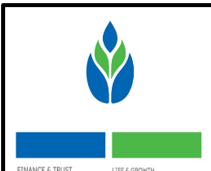
  • The logo reflects the core themes of progress, nurturing, and enlightenment, aligned with the developmental mandate of Regional Rural Banks.
  • The upward arrow in the logo represents progress, growth, and advancement of rural economies.
  • The hands symbolise care, support, and nurturing of rural communities.
  • The flame signifies enlightenment, knowledge, warmth, and empowerment of rural populations.
  • The colour scheme conveys institutional values, with dark blue representing finance and trust, and green symbolising life and growth.
  • The unified branding is expected to give Regional Rural Banks a modern, distinct, and easily recognisable identity nationwide.
  1. India and Russia: Recently, Russia approved a logistics-sharing agreement with India, reinforcing India–Russia defence ties with strategic implications for the Indo-Pacific and Arctic regions.
  • Key Highlights: The Reciprocal Exchange of Logistics Support (RELOS) has been ratified: RELOS establishes a formal framework for reciprocal logistical support between the Indian and Russian armed forces during deployments and operations.
  • The agreement governs the movement of military personnel, warships, and military aircraft, including access to airspace and ports of both countries.
  • It enables refuelling, repairs, maintenance, and other support services for military forces operating on the other country’s territory.
  • The agreement allows its provisions to be used in additional situations, subject to mutual consent of India and Russia.
  • The agreement supports India’s Indo-Pacific strategy by leveraging Russia’s extensive military infrastructure across Eurasia and the Arctic region.
    • RELOS deepens India–Russia defence cooperation and reinforces both countries’ commitment to a multipolar global order.
  1. India and the Netherlands: Recently, India and the Netherlands renewed their commitment to a free, open, inclusive, and rules-based Indo-Pacific region.
  • Key Highlights: Talks covered bilateral security concerns and priority areas for co-development and co-production of defence equipment.
  • To enhance military-to-military engagement, positioning defence cooperation as a key pillar of the Strategic Partnership.
  • Emphasis was placed on connecting defence industries of both countries, particularly in niche and advanced technologies.
  • A Letter of Intent was exchanged between the Defence Secretary of India and the Netherlands Ambassador to India, in presence of both ministers.
  • Both countries plan to develop a Defence Industrial Roadmap focusing on technology collaboration, co-production and co-development.
  • Strong people-to-people relations were highlighted, with the Indian diaspora in the Netherlands acting as a bridge of friendship.
  • India and the Netherlands aim to expand defence cooperation in identified areas for long-term mutual benefit.
  1. UNESCO: Recently, UNESCO’s flagship report Bhasha Matters: The State of the Education Report for India 2025 emphasized the importance of mother-tongue based education for improving equity, learning outcomes, and linguistic inclusion. It called for launching a National Mission on Mother-Tongue Based Multilingual Education (MTB-MLE).
  • Key Highlights: Create a unified national framework with effective Centre–State coordination.
  • Formulate and implement context-specific MTB-MLE policies aligned with local linguistic diversity.
  • Recruit multilingual teachers and reform pre-service and in-service teacher training.
  • Develop flexible language learning pathways based on students’ linguistic backgrounds.
  • Systematically involve communities and integrate local knowledge systems into schooling.
  • Produce quality textbooks, assessments and teaching materials in multiple languages.
  • Extend MTB-MLE across middle, secondary and alternative education with gender sensitivity.
  • Leverage digital platforms for multilingual teaching, learning and teacher support.
  • Invest in translation, speech and AI tools while addressing the digital divide.
  • Ensure adequate and equitable funding for multilingual education and language-responsive technologies.
  1. Freshwater Sponges: Recently, scientists highlighted freshwater sponges as natural allies in combating aquatic metal pollution and ecosystem degradation.
  • Key Findings: Freshwater sponges from the Sundarban delta were studied; findings published in Microbiology Spectrum (American Society for Microbiology).
  • Freshwater sponges are among the earliest multicellular eukaryotes and play a vital role by filtering large volumes of water.
  • The study identified freshwater sponges as effective bioindicators for monitoring toxic metal pollution in aquatic ecosystems.
  • Sponges were found to accumulate significantly higher concentrations of toxic metals such as arsenic, lead, and cadmium.
  • Microbial communities living within sponges play a crucial role in detoxifying polluted water and maintaining ecosystem health.
  • Sponge-associated bacterial communities were found to be distinct from surrounding water, shaped by sponge species and habitat.
  • These microbial symbionts actively contribute to metal resistance and detoxification in contaminated environments.
  • Given widespread heavy-metal pollution in the Gangetic plain, freshwater sponges show strong promise for bioremediation strategies.
  1. Agroforestry: Recently, new research by the Indian Council of Agricultural Research provided strong evidence that smallholder agroforestry delivers significant climate and livelihood benefits.
  • Key Findings: Scientists from ICAR worked with 15 farmers in Odisha’s Eastern Ghats to integrate trees with existing crops on one-acre family farms.
  • Agroforestry farms sequestered up to 154.5 megagrams of carbon dioxide equivalent over nine years while maintaining food production.
  • The Eastern Ghats region faces severe climate stress due to erratic monsoons, intense rainfall, crop failures, and rising livelihood insecurity among tribal communities.
  • Researchers highlighted agroforestry-based eco-village models integrating trees, crops, and livestock as sustainable solutions for food, nutrition, and livelihood security.
  • Carbon sequestration varied by slope position, with lower slopes showing higher carbon storage due to better moisture and nutrient retention.
  • Agroforestry farms also released substantial oxygen, delivering ecosystem services beyond carbon storage.
  • The findings support India’s Paris Agreement commitment to create additional carbon sinks of 2.5–3.0 billion tonnes.
  • Scaling smallholder-led agroforestry in climate-vulnerable regions can simultaneously enhance climate resilience, farm incomes, and environmental sustainability.


UPSC QEP 2026 Batch 5 - English
Buy now View Details
Submit Your Details to Learn More
I agree to give my consent to receive updates through SMS/Email & WhatsApp*.

NEEV GS + CSAT Foundation 2026/27
Buy now View Details


Join theIAShub’s Mains Answer Writing Program

Refine your answer writing skills and elevate your UPSC preparation with personalized support and expert feedback.

Fill out the form to get started with the program or any other enquiries !

I agree to give my consent to receive updates through SMS/Email & WhatsApp*.

Best IAS Coaching In Delhi, UPSC Online & Offline Classes by IAShub

Are you dreaming of becoming an IAS officer? Then, IAShub can be your best guide. It is one of the Best IAS Coaching in Delhi. Many students who want to clear the UPSC exam join IAShub for learning. The institute gives both online and offline classes. Their teachers are experienced and helpful. They easily explain every topic. Students also get notes, tests, and tips to do well in the exam.

UPSC Online Classes by IAShub

IAShub is in Delhi and is trusted by many UPSC students. It offers coaching for every part of the UPSC exam – Prelims, Mains, and Interview. The classes are simple and easy to understand. The teachers are experts and guide students in the right way. IAShub is also known for its helpful notes, test series, and answer-writing practice. IAShub is the best coaching in Delhi and also gives UPSC Online Classes. This helps students from any place in India to learn. The online classes are live and also recorded. So, students can watch them anytime. These classes cover the full UPSC syllabus.

Key Offerings Provided by IAShub

Here are some important services provided by IAShub:

  • UPSC Prelims: IAShub teaches for Prelims with a focus on basics. It also gives daily current affairs and monthly magazines.
  • Classroom Courses: IAShub has classroom learning for students in Delhi. The environment is good and peaceful for study.
  • Live Classes: Students who live far can join live UPSC online classes. These classes are just like real classes.
  • QEP for Mains: The Quality Enrichment Program (QEP) is special for Mains preparation. It helps students write better and faster.
  • Answer Writing: Regular answer writing practice is given. Teachers also check answers and give tips to improve.
  • Free Resource: IAShub gives free notes by toppers and helpful Main Booster material.
  • Test Series: Test series are available for every subject. These help students know their weak points and improve.
  • Interview Guidance Session: IAShub also gives interview practice sessions with experts. These help students feel confident.

UPSC Exam Overview

The UPSC Civil Services Exam has three parts:

  • Prelims: It has two papers: General Studies and CSAT.
  • Mains: It has nine papers, including essays and optional subjects.
  • Interview: It tests the personality and confidence of the student.

This exam is tough, but with the right guidance, it becomes easy to manage. Students must study smart and stay regular.

How IAShub Helps in the UPSC Journey

IAShub supports students from the beginning to the end. It gives the right books, tests, and notes. The classes are easy to follow, and the teachers are always ready to help. Students get personal doubt sessions too. The test series and answer checking help students learn where they need to do better. Also, free study materials save time and money.
IAShub also guides students during the final stage – the interview. Experts take mock interviews and give useful tips. This full support makes IAShub one of the best IAS coaching in Delhi.

Best IAS Coaching In Delhi FAQs

Yes, IAShub offers live and recorded online classes. Students can attend from any part of India.

Classes are available in both English and Hindi, so students can choose the language they are comfortable with.

The classroom centre is located in Delhi. Students can visit and join offline batches there.

IAShub gives interview guidance sessions to help students prepare for the final round of UPSC.