


 theIASHub | 19 Jan, 2026

1. INS Sagardhwani: Recently, INS Sagardhwani, DRDO’s oceanographic research vessel, was flagged off from Kochi for the fifth edition of the Sagar Maitri initiative (SM-5).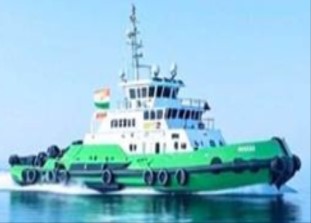
About Sagar Maitri: A flagship collaborative initiative of: The Indian Navy and the Defence Research and Development Organisation
Objective: Promote scientific cooperation, socio-economic collaboration, and ocean research among Indian Ocean Rim (IOR)
It operationalises India’s maritime vision of Mutual and Holistic Advancement for Security and Growth Across Regions (MAHASAGAR).
About INS Sagardhwani: It is an indigenously built marine acoustic research vessel designed and developed by Naval Physical and Oceanographic Laboratory (NPOL) under Defence Research and Development Organisation (DRDO), Kochi.
The ship was constructed by Garden Reach Shipbuilders & Engineers Ltd (GRSE).
It was launched in July 1994.
NPOL specialises in research related to the ocean environment, underwater acoustics, and allied scientific domains.
2. Guillain-Barré Syndrome (GBS): Recently, Madhya Pradesh issued a public health alert after two children died of Guillain-Barré Syndrome (GBS) in Neemuch, with 18 cases reported within days.
About GBS: A rare autoimmune neurological condition in which the body’s immune system damages the peripheral nerves.
The peripheral nervous system operates outside the brain and spinal cord.
It regulates voluntary muscle movement and sensory functions such as pain, touch, and temperature.
Since the immune system itself causes nerve injury, GBS is classified as an autoimmune disorder.
Clinically referred to as acute inflammatory demyelinating polyradiculoneuropathy (AIDP).
Can develop at any age, but is most commonly observed in individuals aged 30–50 years.
Symptoms: Often starts with a mild or unexplained fever.
Followed by gradually increasing muscle weakness and nerve-related symptoms.
Severe cases can result in near-total paralysis and respiratory failure.
Treatment and outcome: No definitive cure is currently available. Treatment focuses on symptom management and faster recovery.
3. First Open-Sea Marine Fish Farming Project: Recently, India launched its first open-sea marine fish farming project at North Bay in the Andaman Sea, marking a major shift in harnessing maritime potential.
About Open-Sea Marine Fish Farming Project: India’s first open-ocean, cage-based marine aquaculture initiative. Operated in natural deep-sea conditions, moving beyond conventional near-shore aquaculture practices.
Emphasises advanced, science-driven marine farming systems.
Focus areas include: Marine finfish culture in open-sea cages and Seaweed cultivation in offshore environments
Aims to integrate technological innovation with sustainable livelihood creation for coastal communities.
Significance: Positions oceans as core economic assets, strengthening India’s Blue Economy alongside land and Himalayan resources.
Ends coastal overdependence by expanding resource use into offshore maritime zones.
Supports national goals of sustainable fisheries, coastal employment, and ocean-led growth.
Applies advanced NIOT technology through robust open-sea cages built for harsh marine conditions.
Enables resilient, scalable offshore aquaculture suited to strong currents and open-ocean environments.
4. River Deltas: Recently, a global study published in Nature found that more than half of India’s major river deltas are sinking faster than rising sea levels, significantly heightening flood risk.
Key Findings: The Ganga–Brahmaputra, Brahmani, Mahanadi, Godavari, Cauvery and Kabani deltas show significant land subsidence, threatening millions of inhabitants.
Excessive groundwater extraction is identified as the dominant cause of accelerated subsidence, far outweighing natural geological compaction.
India’s Brahmani, Mahanadi and Ganga–Brahmaputra show subsidence across over 90% of their area
Fastest sinking Indian deltas: Brahmani: ~77% area subsiding, Mahanadi: ~69% area subsiding
Seven deltas, including Ganga–Brahmaputra, account for 57% of global subsiding delta area, amplifying regional and global risk.
Major delta cities such as Kolkata are subsiding at rates comparable to or higher than surrounding landscapes, heightening infrastructure and displacement risks.
5. Kaziranga Elevated Corridor: Recently, the Prime Minister of India laid the foundation stone of the Kaziranga Elevated Corridor in Assam and flagged off two Amrit Bharat Express trains, boosting wildlife-sensitive infrastructure and Northeast connectivity.
About Kaziranga Elevated Corridor Project: A 45 km wildlife-friendly elevated corridor passing through the Kaziranga landscape.
Part of the four-laning of the Kaliabor–Numaligarh stretch of NH-715.
Includes bypasses at Jakhalabandha and Bokakhat to divert heavy traffic away from sensitive zones.
Key Objectives: Facilitate safe wildlife movement by maintaining ecological connectivity between fragmented habitats.
Minimise vehicular accidents on NH-715 through effective wildlife–road mitigation measures.
Safeguard biodiversity during monsoon floods by providing secure natural passageways.
Encourage eco-tourism and sustainable local livelihoods aligned with conservation goals.
Create employment opportunities for local communities during both construction and operational phases.
Ecological Significance of Kaziranga: Home to the world’s largest population of one-horned rhinoceroses. Supports: Tigers, Asian elephants, Wild water buffalo and Swamp deer
A UNESCO World Heritage Site, representing a globally important grassland–wetland ecosystem.
6. Child Trafficking: Recently, child trafficking continues to be rampant even after large-scale rescues, with convictions distressingly low at just 4.8% (2018–22).
Key Highlights: The Supreme Court categorically held child trafficking to be a serious violation of the right to life and laid down stringent preventive directions.
International legal framework: The Palermo Protocol (2000) adopts a victim-centric definition, emphasising exploitation as the core element, irrespective of consent.
Strengthened Indian legal definition: Bhartiya Nyaya Sanhita, 2023 (Section 143) widens the scope of trafficking to include coercion, deception, inducement, slavery, sexual exploitation, and organ removal.
Robust constitutional protection for children:
Articles 23 and 24 prohibit trafficking, forced labour, and employment of children in hazardous occupations.
Article 39(e) and (f) mandate State protection against abuse, exploitation, and moral or material abandonment.
Comprehensive statutory framework against trafficking:
BNS Sections 98–99 criminalise the buying and selling of minors.
Immoral Traffic (Prevention) Act, 1956 addresses trafficking for sexual exploitation.
Juvenile Justice Act, 2015 ensures care, protection, and rehabilitation of victims.
Criminal Law Amendment Act, 2013 treats trafficking as an offence irrespective of victim consent
7. Bagurumba Dwhou 2026: Recently, the Prime Minister of India addressed Bagurumba Dwhou 2026 at Sarusajai Stadium in Guwahati, highlighting the cultural heritage of the Bodo community.
About Bagurumba Dwhou: A mega cultural festival that showcases and celebrates the identity, heritage, and traditions of the Bodo community.
Built around Bagurumba, the classical folk dance that forms the cultural core of Bodo society.
In 2026, the festival witnessed a historic synchronised performance by over 10,000 Bodo artists.
Performers represented 81 Assembly constituencies from 23 districts of Assam, highlighting wide community participation.
Embodies the deep harmony between nature, culture, and collective community life.
Cultural Significance: Deeply inspired by natural elements such as butterflies, birds, flowers, and leaves.
Traditionally performed by young Bodo women, accompanied by male musicians playing indigenous instruments.
Symbolises peace, fertility, joy, and social harmony.
Closely linked with important Bodo festivals like Bwisagu (Bodo New Year) and Domasi, reinforcing its ritual and cultural importance.
8. Domestic Workers: Recently, a committee constituted on the directions of the Supreme Court of India concluded that domestic workers do not need a standalone legislation, stating that existing labour codes provide adequate coverage.
Key Highlights: The committee stated that protection is available through: Code on Wages, 2019
Code on Industrial Relations, 2020
Code on Occupational Safety, Health and Working Conditions, 2020
Code on Social Security, 2020
Ground reality of domestic workers: Millions of domestic workers continue to face long working hours, low wages, absence of leave, and no social security, reflecting life at the margins.
The Court sought examination of a dedicated legal framework to ensure welfare, protection, and regulation of domestic workers’ rights.
Labour rights organisations argue the committee underestimates structural vulnerabilities unique to domestic work.
Studies by the International Labour Organization, WIEGO, and the Martha Farrell Foundation highlight systemic exclusion and informality in domestic work.
Gaps in labour codes: Labour codes are built around formal employer–employee relationships and institutional workplaces.
Domestic workers are explicitly included only under the Social Security Code, and excluded in practice from the other three.
Migrants face exclusion from welfare schemes due to documentation gaps and lack of awareness.
9. Board of Peace for Gaza: Recently, the United States invited India to join the Board of Peace for Gaza, marking a significant diplomatic development.
About Board of Peace for Gaza: A S.-led multilateral body proposed under Trump’s Gaza peace plan.
Intended to supervise Gaza’s post-conflict governance.
Will oversee a temporary transitional governance committee of technocratic, apolitical Palestinian and international experts.
Role of the Board in Gaza’s Governance: Supervises the transitional governance committee.
Channels international funding for reconstruction.
Coordinates redevelopment until Palestinian Authority reforms are completed.
Acts as a political guarantor of stability and security.

Refine your answer writing skills and elevate your UPSC preparation with personalized support and expert feedback.
Fill out the form to get started with the program or any other enquiries !
Are you dreaming of becoming an IAS officer? Then, IAShub can be your best guide. It is one of the Best IAS Coaching in Delhi. Many students who want to clear the UPSC exam join IAShub for learning. The institute gives both online and offline classes. Their teachers are experienced and helpful. They easily explain every topic. Students also get notes, tests, and tips to do well in the exam.
IAShub is in Delhi and is trusted by many UPSC students. It offers coaching for every part of the UPSC exam – Prelims, Mains, and Interview. The classes are simple and easy to understand. The teachers are experts and guide students in the right way. IAShub is also known for its helpful notes, test series, and answer-writing practice. IAShub is the best coaching in Delhi and also gives UPSC Online Classes. This helps students from any place in India to learn. The online classes are live and also recorded. So, students can watch them anytime. These classes cover the full UPSC syllabus.
Here are some important services provided by IAShub:
The UPSC Civil Services Exam has three parts:
This exam is tough, but with the right guidance, it becomes easy to manage. Students must study smart and stay regular.
IAShub supports students from the beginning to the end. It gives the right books, tests, and notes. The classes are easy to follow, and the teachers are always ready to help. Students get personal doubt sessions too. The test series and answer checking help students learn where they need to do better. Also, free study materials save time and money.
IAShub also guides students during the final stage – the interview. Experts take mock interviews and give useful tips. This full support makes IAShub one of the best IAS coaching in Delhi.
 Detailed Solutions & Explanations
Improve Your Answer Writing & Strategy
Detailed Solutions & Explanations
Improve Your Answer Writing & Strategy

