


 theIASHub | 15 Dec, 2025


1. New Ramsar Sites: Recently, in a significant boost to India’s wetland conservation efforts, Siliserh Lake (Rajasthan) and Kopra Jalashay (Chhattisgarh) have been designated as Ramsar Sites.
About Siliserh Lake: Located in Alwar district, Rajasthan
A human-made lake situated within the buffer zone of Sariska Tiger Reserve
Constructed in 1845 by Maharaja Vinay Singh to supply drinking water to Alwar city
Lies in a semi-arid ecological zone
Ecological Importance: Acts as a crucial water source in an otherwise water-stressed region
Supports regional biodiversity and local microclimate regulation
Biodiversity & Fauna: Habitat for 149 bird species and 17 mammal species
Supports more than 1% of the global biogeographic population of Black Stork (Ciconia nigra), fulfilling a key Ramsar criterion
About Kopra Jalashay: Situated near Bilaspur, Chhattisgarh
A reservoir in the upper catchments of the River Mahanadi
Exhibits strong hydrological and ecological connectivity with surrounding landscapes
Ecological Significance: Supports diverse wetland habitats due to seasonal water fluctuations
Acts as an important node in the Mahanadi riverine ecosystem
Hosts over 60 migratory bird species
2. One Nation–One Port Process (ONOP): Recently, the One Nation–One Port Process (ONOP) framework is set to cut port-related documentation by about 33%, reducing turnaround time, costs, and delays in India’s maritime trade.
About ONOP: A reform initiative of the Ministry of Ports, Shipping and Waterways (MoPSW) designed to bring uniformity in procedures across Indian ports.
Aim: To standardise documentation requirements, approval systems, and operational workflows across all major and selected minor ports.
Key Features: Promotes ease of doing business by eliminating port-specific procedural variations.
Ensures uniform processes across major and selected minor ports, addressing inconsistencies that caused delays and higher logistics costs.
Upgrades the National Logistics Portal – Marine (NLP-Marine), also known as “Sagar Setu”, to enable seamless electronic submission and processing of ship-related information at all Indian ports.
Significance: ONOP is expected to significantly improve cargo handling efficiency, reduce vessel turnaround time, lower logistics costs, and enhance India’s competitiveness in global trade through streamlined port operations.
3. MH-60R Seahawk Helicopter: Recently, the Indian Navy is set to commission its second MH-60R Seahawk squadron, INAS 335, enhancing maritime surveillance and anti-submarine warfare capabilities.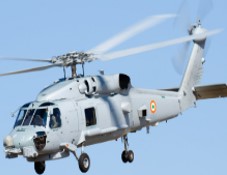
MH-60R Seahawk Helicopter: Designed to counter both conventional and asymmetric threats
Capable of: Maritime surveillance, Anti-Submarine Warfare (ASW), Anti-Surface Warfare (ASuW) and Search and Rescue (SAR)
Equipped with: State-of-the-art avionics suite and Advanced sensors and weapons
Fully integrated with fleet operations
Operational Significance for Indian Navy: Improves real-time monitoring of vast sea lanes
Strengthens detection and tracking of submarines and surface threats
Extends operational reach of the Navy
Enables sustained operations across distant maritime domains
Supports India’s role as a net security provider in the Indian Ocean Region (IOR)
4. Ponduru Khadi: Recently, Ponduru Khadi of Andhra Pradesh received the GI tag, aiding global protection and promotion of this unique Gandhian fabric.
About Ponduru Khadi: A handspun and handwoven cotton fabric from Ponduru village, Srikakulam district, Andhra Pradesh
Locally known as “Patnulu”
Recognized for its extreme fineness, purity, and traditional production methods
Historical Significance: Gained prominence during the pre-independence period
Mahatma Gandhi praised its virtues in Young India, the national weekly edited by him
Closely associated with the Swadeshi Movement and self-reliant rural economy
Produced from indigenous cotton types: Hill cotton, Punasa cotton and Red cotton.
The entire process, from raw cotton to finished fabric, is fully manual, preserving traditional craftsmanship.
Unique Characteristics: Cotton is cleaned using the jawbone of the Valuga fish
This method is exclusive to Ponduru and not practiced anywhere else in the world
Ponduru is the only place in India where spinners use: Single-spindle charkhas and 24-spoked “Gandhi Charkha”
Fabric has a very high yarn count of 100–120
Results in a lightweight, breathable, and premium-quality textile
5. Lunarcrete: Recently, lunarcrete has emerged as a useful local material for building safe and stable habitats on the Moon.
About Lunarcrete: A broad term for concrete manufactured on the Moon, designed to support long-term lunar settlements
Raw Material: Uses lunar regolith (fine grey soil covering the Moon)
Replaces Earth’s sand and gravel as the main aggregate
Why Lunarcrete is Needed: Extreme temperature variation: +120°C to –130°C
High exposure to cosmic and solar radiation
Transporting construction material from Earth is costly and impractical
Significance: Enables self-sustaining lunar bases
Reduces dependence on Earth-based supply chains
Supports future missions to Mars and deep space
Advances in-situ resource utilisation (ISRU)
Encourages international competition and collaboration in space infrastructure
6. CoalSETU: Recently, the Cabinet Committee on Economic Affairs approved the CoalSETU policy by creating a dedicated CoalSETU window to streamline coal linkage allocation.
About CoalSETU: A new policy mechanism that enables auction of coal linkages for diverse industrial uses and exports, ensuring transparent and optimal utilisation of domestic coal.
Operated under: Ministry of Coal
Aim: To optimise utilisation of domestic coal resources and reduce dependence on coal imports.
Key Features: Coal linkages to be auctioned on a long-term basis for any industrial use or export.
Unlike the earlier Non-Regulated Sector (NRS) policy, 2016, which restricted coal use to specified sectors such as cement, sponge iron and aluminium (excluding fertilizer/urea), CoalSETU allows wider industrial participation.
Consistent with coal sector liberalisation, including commercial coal mining without end-use restrictions.
Coking coal will not be offered under the CoalSETU window.
Coal linkage holders permitted to export up to 50% of their allocated coal.
Coal can be used for captive consumption, export, coal washing, or distribution among group companies.
Traders are not eligible to participate, and resale of coal within the domestic market is prohibited.
7. Gestational Diabetes: Recently, a multicentric Indian study revealed that early gestational diabetes affects nearly one in five pregnant women, raising major public health concerns.
About Gestational Diabetes Mellitus (GDM): High blood sugar first detected during pregnancy.
It usually appears between 24–28 weeks, but it can start earlier.
When detected before 20 weeks, it is called early GDM.
A study across seven antenatal clinics studied over 3,000 pregnant women.
Early GDM affected 5%, while late GDM affected 19.5% of women.
Women with early GDM have a higher risk of developing diabetes later in life.
Early GDM is linked to higher body weight, BMI, blood pressure, and sugar levels early in pregnancy.
Family history of diabetes was more strongly linked with late GDM.
Screening was done early using fasting blood sugar and HbA1c
Women with high early results were tested again at 24–28 weeks.
India’s GDM burden is 3–4 times higher than Western countries.
Unlike the West, India needs wider screening, not only for high-risk women.
Researchers stress the need for better timing, tests, and treatment methods.
8. Dieback Disease: Recently, thousands of neem trees in Telangana have been drying up, prompting the Forest College & Research Institute (FCRI), Mulugu, to begin a detailed study on dieback disease.
About dieback disease: It causes upper branches to dry, leaves to thin, and flowers to disappear.
A fungus named Phomopsis azadirachtae is the main cause.
The fungus spreads more during heavy monsoons, high humidity, and temperature changes.
Neem trees are considered very important for both environment and culture.
The study maps dying trees, studies the fungus, and checks pollution and soil hardness effects.
A simple three-spray treatment was developed.
Sprays used: Carbendazim first, Thiophanate-methyl after one week, Profenofos after 20 days.
Trials in 2023 showed treated neem trees recovered well.
Untreated trees continued to decline, showing the treatment’s effectiveness.
Climate change is making urban trees more vulnerable.
FCRI invites support from forest departments, NGOs, farmers, and citizens.
The goal is to protect neem trees and strengthen green cover across India.
9. CITES: Recently, CITES (Convention on International Trade in Endangered Species of Wild Fauna and Flora) marked its 50th anniversary at the 20th Conference of the Parties in Samarkand, Uzbekistan, the first such meeting held in Central Asia.


Refine your answer writing skills and elevate your UPSC preparation with personalized support and expert feedback.
Fill out the form to get started with the program or any other enquiries !
Are you dreaming of becoming an IAS officer? Then, IAShub can be your best guide. It is one of the Best IAS Coaching in Delhi. Many students who want to clear the UPSC exam join IAShub for learning. The institute gives both online and offline classes. Their teachers are experienced and helpful. They easily explain every topic. Students also get notes, tests, and tips to do well in the exam.
IAShub is in Delhi and is trusted by many UPSC students. It offers coaching for every part of the UPSC exam – Prelims, Mains, and Interview. The classes are simple and easy to understand. The teachers are experts and guide students in the right way. IAShub is also known for its helpful notes, test series, and answer-writing practice. IAShub is the best coaching in Delhi and also gives UPSC Online Classes. This helps students from any place in India to learn. The online classes are live and also recorded. So, students can watch them anytime. These classes cover the full UPSC syllabus.
Here are some important services provided by IAShub:
The UPSC Civil Services Exam has three parts:
This exam is tough, but with the right guidance, it becomes easy to manage. Students must study smart and stay regular.
IAShub supports students from the beginning to the end. It gives the right books, tests, and notes. The classes are easy to follow, and the teachers are always ready to help. Students get personal doubt sessions too. The test series and answer checking help students learn where they need to do better. Also, free study materials save time and money.
IAShub also guides students during the final stage – the interview. Experts take mock interviews and give useful tips. This full support makes IAShub one of the best IAS coaching in Delhi.
 Detailed Solutions & Explanations
Improve Your Answer Writing & Strategy
Detailed Solutions & Explanations
Improve Your Answer Writing & Strategy

