2 Minute Series_13th OCTOBER 2025

THEIASHUB
Get an Instant Call Back from Our Expert Mentors Now!
+91

13th October 2025

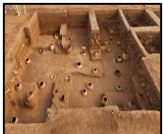
  1. Iron Age culture: Recently, the Tamil Nadu State Department of Archaeology (TNSDA) uncovered compelling evidence of an Iron Age culture at Thirumalapuram in Tenkasi district, comparable to the renowned sites of Adichanallur and Sivagalai.
  • Key Highlights: Location: Situated 10 km northwest of Thirumalapuram village, between two seasonal streams originating from the Western Ghats near Kulasegarapereri tank.
    • Estimated Period: Tentatively dated to the early to mid-third millennium BCE.
    • Excavation Details: Discovery of a rectangular stone slab chamber with urn burials and urns, the first-of-its-kind in Tamil Nadu. The chamber, made of 35 stone slabs, was filled with cobblestones up to 1.5 metres deep.
    • Artefacts Unearthed: Ceramics: Rich collection from graves and grave goods including:
      - White-painted black-and-red ware
      - Red ware, red-slipped ware, black-polished ware, and coarse red ware
    • Symbolic Discoveries: Urn symbols considered among the most striking finds. One red-slipped pot depicted dotted designs of a human figure, mountain, deer, and tortoise.
    • Antiquities Found (78 in total): Items made of bone, gold, bronze, and iron — including tweezer, sword, spearhead, gold ring, axe, dagger, chisel, bonehead, and arrowhead.
  1. Connectivity and Innovation Centre (CIC): Recently, India and the United Kingdom jointly launched the India–UK Connectivity and Innovation Centre (CIC).
  • About the CIC: Designed to advance digital inclusion and develop secure, innovative, and resilient communication systems.
  • It will operate under the UK–India Technology Security Initiative, jointly implemented by the UK Research and Innovation (UKRI) and India’s Department of Telecommunications (DoT).
  • The Centre aims to integrate both nations’ research and industry expertise, connecting academic research, lab testing, field trials, and market deployment in advanced connectivity technologies.
  • Key Focus Areas (2025–2029): AI in Telecom: Enhance network efficiency, optimise operations, and enable new digital services.
    - Non-Terrestrial Networks (NTNs): Develop satellite and airborne systems for high-speed rural connectivity.
    - Telecom Cybersecurity: Strengthen network resilience with secure and interoperable communication systems.
  1. Project Waterworth: Recently, Meta Platforms chose Mumbai and Visakhapatnam as the landing sites in India for its multibillion-dollar undersea cable project, Waterworth.
  • About Project Waterworth: A flagship subsea cable initiative by Meta Platforms, designed to enhance global data connectivity and support the growing demand for digital infrastructure.
  • Connectivity: Links the United States, India, Brazil, and South Africa, forming the world’s longest subsea cable — stretching over 50,000 km.
  • Route Design: Built in a W-shaped configuration, the route strategically bypasses the Red Sea corridor to minimize geopolitical and cable damage risks.
  • Timeline & Capacity: Expected to become operational by 2030, with an impressive design capacity of 1 petabit per second (Pbps).
  • Strategic Importance: Strengthens India’s position as a major hub in the global AI and data infrastructure network.
    - Supports data localisation initiatives and enhances the country’s digital ecosystem.
    - Boosts connectivity resilience across continents, enabling faster and more secure data transfer.
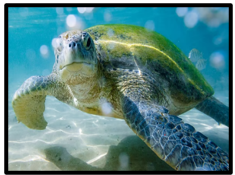
  1. Green Sea Turtle: Recently, the International Union for Conservation of Nature (IUCN) upgraded the Green Sea Turtle’s Red List status from Endangered to Least Concern, highlighting the success of long-term global conservation efforts.
  • About Green Sea Turtle: The largest hard-shelled sea turtle in the world.
  • Its name refers to the green-colored fat beneath the shell (carapace), not the shell’s color, which varies from olive to black.
  • Diet: Changes with age — juveniles are carnivorous, while adults become omnivorous.
  • Acts as a keystone species in tropical marine ecosystems, maintaining healthy seagrass beds and coral reefs.
  • Distribution: Found across tropical and subtropical waters worldwide.
  • Distinct Features: Possesses a small head compared to other sea turtles.
    - No visible ears — their eardrums are covered by skin; they hear best at low frequencies and have an excellent sense of smell.
    - Lifespan: Estimated at 60–70 years.
  • Conservation Status: IUCN Red List: Least Concern (improved from Endangered).
  1. QR code-based Kiosk: Recently, Gurugram became India’s first city to launch a QR code-based kiosk for seamless traffic challan payments, marking a major step toward digital governance and smart city infrastructure.
  • Key Highlights: A joint initiative of the Gurugram Police and the Gurugram Metropolitan Development Authority (GMDA).
  • CSR Initiative: Set up under a Corporate Social Responsibility (CSR)
  • Functionality: Drivers can check and pay pending challans by entering their vehicle number and scanning a QR code.
    - Challans pending in court or overdue by more than 90 days cannot be paid through the kiosk.
  • Objective: To make challan payment faster and simpler, easing the workload of traffic police while enhancing citizen convenience through digital tools.
  • Emergency Call Feature: A trial run of video-based emergency call points was conducted earlier.
    - These will be linked to Dial 112 and the Police Commissioner’s Control Room, operating 24×7. Each unit will have beacon lights for visibility and allow citizens to connect via video call for emergencies or help requests.
  1. Natural Farming: Recently, farmers in Himachal Pradesh have increasingly embraced natural, chemical-free farming practices, backed by State policies that promote sustainable agriculture and farmer welfare.
  • Flagship Scheme: Implemented under Prakritik Kheti Khushhal Kisan Yojana (PK3Y), launched seven years ago.
  • Aims to promote non-chemical, natural farming across the State.
  • 06 lakh farmers trained, with 2.22 lakh farmers practising natural farming partially or fully across 38,437 hectares.
  • Over 2 lakh farmers certified under CETARA–NF (Certified Evaluation Tool for Agriculture Resource Analysis), a self-assessment certification system for natural farmers.
  • Government Support and MSP: Minimum Support Prices (MSPs) introduced under PK3Y for naturally grown crops: Maize: ₹40/kg, Wheat: ₹60/kg, Raw turmeric: ₹90/kg and Barley (Pangi tribal belt, Chamba): ₹60/kg
    - Himachal Pradesh offers the highest MSPs in India for naturally grown crops.
    - Strengthens market confidence and encourages wider adoption of natural farming.
  1. Sugamya Bharat App: Recently, the Ministry of Social Justice and Empowerment launched the revamped “Sugamya Bharat App” during the Purple Fest in Goa.
  • About Sugamya Bharat App: Launched under: Accessible India Campaign (Sugamya Bharat Abhiyan)
  • Implementing Agency: Department of Empowerment of Persons with Disabilities (DEPwD), under the Ministry of Social Justice and Empowerment.
  • Purpose: A citizen-led digital platform designed to make India’s public spaces more inclusive for divyangjan (persons with disabilities) and senior citizens.
  • Nature: A flagship initiative aimed at advancing accessibility and promoting participation through technology.
  • Key Features: Offers a single platform for accessing government schemes, scholarships, benefits, and employment opportunities, simplifying navigation for users.
    - Lists opportunities from both government and private sectors, customized for persons with disabilities.
    - Available in 10 Indian languages.
    - Allows users to register complaints about inaccessible infrastructure or services, ensuring public accountability.
    - Provides real-time assistance and improved user experience.
  1. SPARK–4.0: Recently, the Central Council for Research in Ayurvedic Sciences (CCRAS) under the Ministry of Ayush launched SPARK–4.0 (Studentship Program for Ayurveda Research Ken) for the year 2025–26.
  • Key Highlights: It is the fourth edition of CCRAS’s flagship program designed to promote research orientation among BAMS undergraduates.
  • Implementing Body: Central Council for Research in Ayurvedic Sciences (CCRAS), Ministry of Ayush, and Government of India.
  • Objective: To foster scientific curiosity and a research-driven mindset among young Ayurveda scholars, integrating classical Ayurvedic wisdom with modern scientific approaches.
  • Main Features: 300 BAMS students will receive ₹50,000 studentships (₹25,000 per month for two months).
    - Open to students from NCISM-recognized Ayurveda colleges across India.
    - Participants undertake short-term, faculty-guided independent research projects.
    - Successful candidates are awarded a certificate upon completion.
  • Significance: Prepares a pipeline of trained researchers, promoting innovation and the integration of traditional medicine into public health systems.
  1. Araneus Nox Spider: Recently, a survey conducted in the Idukki Wildlife Sanctuary recorded the Araneus nox spider species in India for the first time.
  • About Araneus nox: An orb-weaving spider belonging to the family Araneidae.
  • Commonly known as the Leathery Garden Orb-weaver.
  • It was first described in 1877 by French arachnologist Eugène Simon from Basilan, Philippines.
  • The species is known for spinning near-perfect, vertically oriented circular webs on vegetation and tree branches.
  • Habitat: Commonly found in gardens, forests, and backyards.
  • Distribution: Widely distributed across Southeast Asia, including Cambodia, Laos, Myanmar, Thailand, Vietnam, the Philippines, Malaysia, and Indonesia.
  • Appearance: Its coloration ranges from light brown to jet black, sometimes showing clusters of light brown setae on the sides of the abdomen. It has a distinctively textured, leathery abdomen, characteristic of small to medium-sized orb-weavers.
  1. Diethylene Glycol (DEG): Recently, Madhya Pradesh witnessed a heartbreaking tragedy as at least 14 children died after consuming Coldrif syrup, later found to be contaminated with the deadly chemical diethylene glycol (DEG).
  • About DEG: Chemical Name: 2,2-oxydiethanol / diglycol (Formula: C₄H₁₀O₃)
  • Appearance: Clear, colourless, and odourless liquid.
  • Properties: Soluble in both water and many organic compounds; hygroscopic (absorbs moisture).
  • Industrial Uses: Commonly used in antifreeze, brake fluids, and solvents — it has no safe application in human consumption.
  • Toxicity: When ingested, DEG is metabolized into toxic compounds that cause severe kidney damage, leading to acute kidney injury, anuria (inability to urinate), and often death.
  • Symptoms of Poisoning: Nausea, vomiting, abdominal pain, and lethargy, which can quickly progress to renal failure.


UPSC QEP 2026 Batch 5 - English
Buy now View Details
Submit Your Details to Learn More
I agree to give my consent to receive updates through SMS/Email & WhatsApp*.

NEEV GS + CSAT Foundation 2026/27
Buy now View Details


Join theIAShub’s Mains Answer Writing Program

Refine your answer writing skills and elevate your UPSC preparation with personalized support and expert feedback.

Fill out the form to get started with the program or any other enquiries !

I agree to give my consent to receive updates through SMS/Email & WhatsApp*.

Best IAS Coaching In Delhi, UPSC Online & Offline Classes by IAShub

Are you dreaming of becoming an IAS officer? Then, IAShub can be your best guide. It is one of the Best IAS Coaching in Delhi. Many students who want to clear the UPSC exam join IAShub for learning. The institute gives both online and offline classes. Their teachers are experienced and helpful. They easily explain every topic. Students also get notes, tests, and tips to do well in the exam.

UPSC Online Classes by IAShub

IAShub is in Delhi and is trusted by many UPSC students. It offers coaching for every part of the UPSC exam – Prelims, Mains, and Interview. The classes are simple and easy to understand. The teachers are experts and guide students in the right way. IAShub is also known for its helpful notes, test series, and answer-writing practice. IAShub is the best coaching in Delhi and also gives UPSC Online Classes. This helps students from any place in India to learn. The online classes are live and also recorded. So, students can watch them anytime. These classes cover the full UPSC syllabus.

Key Offerings Provided by IAShub

Here are some important services provided by IAShub:

  • UPSC Prelims: IAShub teaches for Prelims with a focus on basics. It also gives daily current affairs and monthly magazines.
  • Classroom Courses: IAShub has classroom learning for students in Delhi. The environment is good and peaceful for study.
  • Live Classes: Students who live far can join live UPSC online classes. These classes are just like real classes.
  • QEP for Mains: The Quality Enrichment Program (QEP) is special for Mains preparation. It helps students write better and faster.
  • Answer Writing: Regular answer writing practice is given. Teachers also check answers and give tips to improve.
  • Free Resource: IAShub gives free notes by toppers and helpful Main Booster material.
  • Test Series: Test series are available for every subject. These help students know their weak points and improve.
  • Interview Guidance Session: IAShub also gives interview practice sessions with experts. These help students feel confident.

UPSC Exam Overview

The UPSC Civil Services Exam has three parts:

  • Prelims: It has two papers: General Studies and CSAT.
  • Mains: It has nine papers, including essays and optional subjects.
  • Interview: It tests the personality and confidence of the student.

This exam is tough, but with the right guidance, it becomes easy to manage. Students must study smart and stay regular.

How IAShub Helps in the UPSC Journey

IAShub supports students from the beginning to the end. It gives the right books, tests, and notes. The classes are easy to follow, and the teachers are always ready to help. Students get personal doubt sessions too. The test series and answer checking help students learn where they need to do better. Also, free study materials save time and money.
IAShub also guides students during the final stage – the interview. Experts take mock interviews and give useful tips. This full support makes IAShub one of the best IAS coaching in Delhi.

Best IAS Coaching In Delhi FAQs

Yes, IAShub offers live and recorded online classes. Students can attend from any part of India.

Classes are available in both English and Hindi, so students can choose the language they are comfortable with.

The classroom centre is located in Delhi. Students can visit and join offline batches there.

IAShub gives interview guidance sessions to help students prepare for the final round of UPSC.