


 theIASHub | 12 Dec, 2025


1. Asemonea Dentis and Colyttus Nongwar: Recently, scientists at the Zoological Survey of India (ZSI) discovered two new jumping-spider species—Asemonea dentis and Colyttus nongwar—in the forested regions of Northeast India.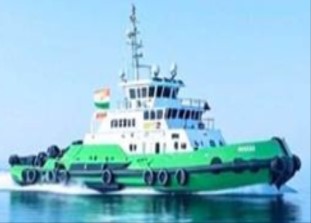
Key Highlights: Both species were discovered in Meghalaya and belong to the Salticidae family, a group of agile “jumping spiders” known for their exceptional vision, swift reflexes and precise predatory behaviour. Instead of relying on webs to trap prey, they stealthily approach and leap instantly to capture it.
Asemonea dentis: Only the third Indian species recorded under the Asemonea genus, which remains poorly documented in the country.
Named dentis due to a distinctive tooth-like projection on the male’s palpal femur.
Males exhibit a greenish-brown body with a pale-yellow V-shaped abdominal pattern.
Females are creamy white with subtle black markings.
Colyttus nongwar: The second species in India belonging to the rare Oriental genus Colyttus.
Named after Nongwar, the Khasi Hills village where it was first observed.
Both sexes feature an oval reddish-brown carapace, a light-brown abdomen with a creamy band at the front, and five distinct chevron patches towards the rear.
2. Narco Test: Recently, the Supreme Court ruled that any forced or involuntary narco-analysis test is unconstitutional and legally invalid.
About Narco Test: An investigative technique in which it is expected that an accused may reveal hidden facts while under the influence of specific drugs.
Process: The subject is sedated with substances such as barbiturates—commonly Sodium Pentothal—which lower inhibition and impair reasoning.
It is considered a non-violent investigative method, similar to polygraph tests and brain mapping.
Article 20: Clause (3): Protects individuals from self-incrimination; no accused person can be compelled to testify against themselves.
Other Clauses: Clause (1): Guards against ex-post facto criminalisation.
Clause (2): Prevents double jeopardy. Together, all three clauses form the backbone of India’s criminal justice framework.
Article 21: Ensures personal liberty, which includes the Right to Privacy.
A non-consensual narco test is a violation of this right and therefore unconstitutional.
3. Sujalam Bharat App: Recently, the Ministry of Jal Shakti launched the Sujalam Bharat App, a key digital platform under the Jal Jeevan Mission (JJM) aimed at improving efficiency and transparency in rural drinking water supply management.
Sujalam Bharat App: To establish a unified digital identity—Sujal Gaon ID—for every rural water scheme, enabling end-to-end, real-time monitoring of infrastructure from the water source to individual households under JJM.
Developed with support from Bhaskaracharya National Institute for Space Applications and Geo-informatics (BISAG-N).
The platform is integrated with PM Gati Shakti GIS, allowing accurate geospatial mapping of water networks, asset inventories, water quality parameters, and community-generated feedback.
Seeks to decentralise governance by placing complete water-system information in the hands of citizens and Gram Panchayats, thereby strengthening community ownership and improving accountability of service providers.
Envisioned as an “Aadhaar for rural water systems,” the app serves as the core digital framework for a transparent, responsive, and citizen-focused water supply ecosystem.
4. World Inequality Report 2026: Recently, the World Inequality Report 2026 (3rd edition), released by the World Inequality Lab, reported that global inequality has risen to its highest level in recorded history.
Key Findings: The richest 001% possess three times more wealth than the bottom 50%. The top 10% control 75% of global wealth, whereas the bottom half holds only 2%.
The top 10% of earners now receive more income than the remaining 90% combined. The poorest 50% earn less than 10% of total global income.
Women earn 61% of men’s hourly wages when unpaid work is excluded, and just 32% when it is included. Their share of global labour income remains slightly above 25%, a figure largely unchanged since 1990.
The poorest 50% contribute only 3% of emissions tied to private capital ownership, while the richest 10% account for 77% of such emissions.
India-Specific Findings: India’s standing in global income distribution has slipped, with a major share of its population shifting from the global middle 40% to the bottom 50%.
The top 10% own around 65% of the country’s wealth, and the top 1% alone holds nearly 40%.
The top 10% capture 58% of national income, leaving only 15% for the bottom half.
Female labour force participation remains extremely low at 7%, with almost no improvement over the past decade.
5. Western Tragopan: Recently, India’s western tragopan has seen its population stabilise through captive-breeding, yet human disturbance and broken habitats continue to endanger the species.
About Western Tragopan: Often called the western horned tragopan, it is among the rarest pheasant species globally. Its striking plumage and sizeable appearance have earned it the local name jujurana or king of birds. Naturally shy and mostly terrestrial, the species is most active during dawn and dusk, navigating quietly through dense undergrowth. It is also the state bird of Himachal Pradesh.
Distribution: The species is endemic to the northwestern Himalayas, found in a narrow belt stretching from Hazara in northern Pakistan through Jammu & Kashmir and Himachal Pradesh, up to western Garhwal. The Great Himalayan National Park (GHNP) hosts the world’s largest known population.
Habitat: Western tragopans prefer dense forests with an understory of ringal (dwarf bamboo).
Diet: Their food primarily consists of leaves, shoots, and seeds, supplemented by insects and other small invertebrates.
Breeding: Breeding occurs between May and June, when they lay 3–5 eggs in well-concealed nests on the forest floor.
Threats: The species faces pressure from habitat degradation, hunting, livestock grazing, and the collection of minor forest produce such as medicinal herbs.
Conservation Status: IUCN Red List: Vulnerable.
6. Diving Support Craft (DSC) A20: Recently, the Indian Navy announced plans to commission Diving Support Craft (DSC) A20 at Kochi under the Southern Naval Command.
About Diving Support Craft A20: The first vessel in the series of indigenously designed and built Diving Support Craft.
It is the lead ship among five such vessels being constructed by Titagarh Rail Systems Limited (TRSL), Kolkata.
The craft is designed to execute a wide range of diving and underwater missions in coastal waters.
Features: Offers greater stability, a larger deck area, and improved seakeeping, making it suitable for precision diving operations.
Equipped with state-of-the-art diving equipment that adheres to the highest safety and operational standards.
The vessel has a displacement of around 390 tons.
Built according to Naval Rules and Regulations of the Indian Register of Shipping (IRS).
7. Polar Bears: Recently, a study by the University of East Anglia (UK) indicated that polar bears in southeastern Greenland are experiencing genetic changes that may aid their survival as the Arctic continues to warm.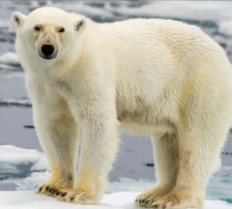
Key Findings: Researchers analysed blood samples from 12 polar bears in northeastern Greenland and 5 in southeastern Greenland. They examined the activity of “jumping genes” — mobile genetic elements that can alter how other genes function — and compared how their activity relates to temperature differences between the two regions.
While northeastern Greenland remains colder and more stable, the southeastern region is warmer, less icy, and more similar to conditions polar bears are expected to face in the future. These environmental differences appear to be shaping gene behaviour in southeastern bears.
Key Genetic Findings: Genes associated with heat stress, aging, and metabolism showed distinct activity in bears from southeastern Greenland.
Researchers observed changes in gene expression linked to fat processing, a crucial adaptation when food is scarce.
These changes suggest that southeastern bears may be gradually adjusting to less fatty, more plant-based diets, unlike the predominantly seal-based diets in the north.
8. Human-Rating: Recently, as India moves toward its maiden human spaceflight under Gaganyaan, a crucial yet often unseen engineering process has taken centre stage, human-rating.
About Human-rating: A rigorous engineering, testing, and certification process that ensures a launch vehicle and spacecraft are safe enough to carry astronauts.
Key goal: To bring the risk of a catastrophic event down to an acceptable, quantifiable threshold.
Benchmark standard: According to NASA, human-rated systems should have ≤0.2% probability of loss of crew during ascent and descent.
Human-rated launch systems must incorporate: Duplicate avionics and sensors.
Ensures the mission remains safe even after single-point failures.
An active Crew Escape System (CES) that can rapidly pull astronauts away if the rocket malfunctions
The system must continue to function safely even if one component fails.
Stable pressure, temperature, oxygen supply, CO₂ removal, humidity and emergency systems inside the crew module.
Human-rated rockets undergo far more exhaustive testing than cargo rockets to meet strict loss-of-crew probability targets.
9. Jan Swasthya Abhiyan: Recently, the National Convention on Health Rights, organised by Jan Swasthya Abhiyan, reiterated the demand to recognise access to health care as a fundamental right in India.
Key Highlights: The event was strategically held between Global Human Rights Day (December 10) and Universal Health Coverage Day (December 12).
India’s Health Sector: India’s per capita government health expenditure is just $25, far below global norms.
The Union Budget allocates only ~2% to the health sector, restricting the strengthening of public health systems.
Out-of-Pocket Costs: 48% of total health spending is borne directly by households.
Medicine Affordability: Around 80% of essential medicines fall outside price-control mechanisms.
Right to Health Matters: Helps ensure that vulnerable groups receive essential medical care.



Refine your answer writing skills and elevate your UPSC preparation with personalized support and expert feedback.
Fill out the form to get started with the program or any other enquiries !




Are you dreaming of becoming an IAS officer? Then, IAShub can be your best guide. It is one of the Best IAS Coaching in Delhi. Many students who want to clear the UPSC exam join IAShub for learning. The institute gives both online and offline classes. Their teachers are experienced and helpful. They easily explain every topic. Students also get notes, tests, and tips to do well in the exam.
IAShub is in Delhi and is trusted by many UPSC students. It offers coaching for every part of the UPSC exam – Prelims, Mains, and Interview. The classes are simple and easy to understand. The teachers are experts and guide students in the right way. IAShub is also known for its helpful notes, test series, and answer-writing practice. IAShub is the best coaching in Delhi and also gives UPSC Online Classes. This helps students from any place in India to learn. The online classes are live and also recorded. So, students can watch them anytime. These classes cover the full UPSC syllabus.
Here are some important services provided by IAShub:
The UPSC Civil Services Exam has three parts:
This exam is tough, but with the right guidance, it becomes easy to manage. Students must study smart and stay regular.
IAShub supports students from the beginning to the end. It gives the right books, tests, and notes. The classes are easy to follow, and the teachers are always ready to help. Students get personal doubt sessions too. The test series and answer checking help students learn where they need to do better. Also, free study materials save time and money.
IAShub also guides students during the final stage – the interview. Experts take mock interviews and give useful tips. This full support makes IAShub one of the best IAS coaching in Delhi.
 Detailed Solutions & Explanations
Improve Your Answer Writing & Strategy
Detailed Solutions & Explanations
Improve Your Answer Writing & Strategy

