


 theIASHub | 12 Sep, 2025


1. Red Ivy Plant: Recently, the Jawaharlal Nehru Tropical Botanic Garden & Research Institute (JNTBGRI), Palode, developed an innovative multi-layered wound-healing pad by unlocking the therapeutic properties of the red ivy plant.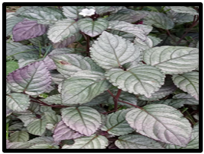
Key Highlights: Plant source: Red ivy plant (Strobilanthes alternata), locally called murikooti pacha, Acanthaceae family.
Key discovery: Identification and isolation of acteoside molecule from red ivy plant for the first time.
Product developed: Multi-layered wound-healing pad using nanomaterials (electro-spun nanofibers).
Key ingredient: Acteoside molecule (effective even at 2% concentration) + antibiotic neomycin sulfate.
Pad design: Electro-spun nanofiber layer (biodegradable, non-toxic, allows gas exchange).
Sodium alginate-based super absorbent sponge (absorbs wound exudate).
Activated carbon layer (absorbs and prevents odour).
Benefits: Prevents microbial growth, speeds healing, absorbs secretions, controls odour.
Efficacy: Animal studies show significantly faster wound healing.
Availability: First multifunctional wound dressing pad of this kind in India.
Affordability: Materials are accessible and cost-effective, enabling large-scale production.
2. Household Surveys: Recently, the National Statistics Office (NSO) under MoSPI announced two flagship nationwide household surveys — the All India Debt and Investment Survey (AIDIS) and the Situation Assessment Survey (SAS) of Agricultural Households.
Originated as the All India Rural Credit Survey (1951-52); expanded in 1961-62 to cover both debt and investment.
Conducted once every 10 years; latest round in 2019 (77th Round) on request of the RBI.
Provides insights on: Levels of household indebtedness
Asset ownership and distribution in rural vs. urban areas
Credit markets and financial inclusion trends
Tracks a wide set of indicators such as: Household income and expenditure
Indebtedness and access to credit
Land and livestock ownership
Crop and livestock production patterns
Farming practices and adoption of technology
Access to government schemes and crop insurance
3. Samudra Pradakshina: Recently, Raksha Mantri Shri virtually flagged off ‘Samudra Pradakshina’, the world’s first Tri-service all-women circumnavigation sailing expedition from the Gateway of India, Mumbai.
The mission was described as a symbol of Nari Shakti, Armed Forces unity, Aatmanirbhar Bharat, and India’s global vision, highlighting the courage of the 10 women officers on this voyage.
About Samudra Pradakshina Vessel: Indian Army Sailing Vessel (IASV) Triveni, an indigenously built 50-foot Class A yacht from Puducherry.
Duration: 9 months (September 2025 – May 2026).
Route: Approx. 26,000 nautical miles on an easterly course.
Rounds the three great Capes – Leeuwin, Horn, and Good Hope.
Covers all major oceans including the challenging Southern Ocean and Drake Passage.
Crew to conduct scientific research with the National Institute of Oceanography:
Study of microplastics.
Documentation of ocean life.
Awareness campaigns on marine health.
IASV Triveni represents Aatmanirbhar Bharat in defence innovation and maritime self-reliance.
4. Special Economic Package: Recently, Mauritius and India held discussions to strengthen ties, leading to the announcement of a Special Economic Package covering health, infrastructure, maritime cooperation, and strategic projects.
Establishment of an AYUSH Centre of Excellence.
Setting up of a Veterinary School and Animal Hospital.
Provision of helicopters.
Development of Motorway M4.
Development of Ring Road Phase II
Assistance in development and surveillance of Chagos Marine Protected Area.
5. Biosignatures: Recently, NASA announced its strongest evidence that life may have once existed on Mars, after the Perseverance rover detected potential biosignatures in a rock sample.
Key Findings: Initial scans revealed chemical compositions and structures suggesting possible microbial activity from billions of years ago.
On Earth, such materials are excellent preservers of microbial life.
Biosignature: Any object, structure, or chemical composition that may suggest a biological origin.
Cheyava Falls minerals could have formed via electron-transfer reactions, a process microbes use to generate energy.
But: Similar mineral combinations can also arise abiotically (without life).
6. Non-Communicable Diseases: Recently, a Lancet study revealed a rise in deaths from non-communicable diseases in India between 2010 and 2019, contrasting with a global decline.
Males: Probability of dying from NCDs (birth–80 years) rose from 56% (2001) → 8% (2010) → 57.9% (2019).
Females: Probability was 7% (2001) → dipped slightly to 46.6% (2010) → then sharply increased to 48.7% (2019).
Major contributors: heart disease and diabetes.
Lung cancer mortality rose in India (along with Armenia, Iran, Egypt, Papua New Guinea), while globally male lung cancer mortality declined in 92% of countries.
Global: From 2010–2019, NCD mortality declined in ~80% of countries, covering 70%+ of global population.
Reductions in cardiovascular disease mortality (heart attacks, strokes) drove much of global improvement.
Gains offset by rising deaths from dementia, neuropsychiatric conditions (alcohol use disorder), and cancers like pancreatic & liver.
7. Isobutanol Blending: Recently, India started exploring isobutanol blending with diesel after unsuccessful ethanol-diesel trials. This move aims to boost biofuels, support farmers, reduce oil imports, and promote sustainable energy use.
Produced through both petrochemical routes and biomass fermentation.
Lower hygroscopicity – absorbs less water than ethanol, which reduces corrosion risks in engines and fuel pipelines.
Also being studied as a standalone fuel.
Under evaluation for CNG–isobutanol flex-fuel applications, especially in tractors and agricultural machinery.
Aligns with National Biofuel Policy (2018) targets for energy transition.
Supports farmer incomes by creating new markets for bio-based fuel feedstock.
8. Pallas’s Cat: Recently, a wildlife survey in Arunachal Pradesh captured the first-ever photographic evidence of the elusive Pallas’s cat in the state. This rare finding adds to the region’s rich biodiversity significance.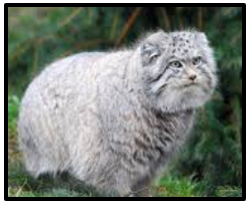
It was first described in 1776 by naturalist Peter Simon Pallas, after whom it is named, based on specimens from near Lake Baikal, Russia.
Prefers rocky montane grasslands and shrublands where snow cover remains under 15–20 cm.
Primary prey includes lagomorphs (hares, pikas) and rodents
Fur colour: pale silvery-gray to light brown.
Distinctive traits: Broad head, high-set eyes, and low-set ears.
Tail tipped and ringed with black.
Some individuals show faint dark body markings.
Adaptation: longer fur on the underparts (twice the length of upper fur) to provide insulation while lying on cold ground.
Conservation Status:
CITES: Appendix II
IUCN Red List: Least Concern



Refine your answer writing skills and elevate your UPSC preparation with personalized support and expert feedback.
Fill out the form to get started with the program or any other enquiries !




Are you dreaming of becoming an IAS officer? Then, IAShub can be your best guide. It is one of the Best IAS Coaching in Delhi. Many students who want to clear the UPSC exam join IAShub for learning. The institute gives both online and offline classes. Their teachers are experienced and helpful. They easily explain every topic. Students also get notes, tests, and tips to do well in the exam.
IAShub is in Delhi and is trusted by many UPSC students. It offers coaching for every part of the UPSC exam – Prelims, Mains, and Interview. The classes are simple and easy to understand. The teachers are experts and guide students in the right way. IAShub is also known for its helpful notes, test series, and answer-writing practice. IAShub is the best coaching in Delhi and also gives UPSC Online Classes. This helps students from any place in India to learn. The online classes are live and also recorded. So, students can watch them anytime. These classes cover the full UPSC syllabus.
Here are some important services provided by IAShub:
The UPSC Civil Services Exam has three parts:
This exam is tough, but with the right guidance, it becomes easy to manage. Students must study smart and stay regular.
IAShub supports students from the beginning to the end. It gives the right books, tests, and notes. The classes are easy to follow, and the teachers are always ready to help. Students get personal doubt sessions too. The test series and answer checking help students learn where they need to do better. Also, free study materials save time and money.
IAShub also guides students during the final stage – the interview. Experts take mock interviews and give useful tips. This full support makes IAShub one of the best IAS coaching in Delhi.
 Detailed Solutions & Explanations
Improve Your Answer Writing & Strategy
Detailed Solutions & Explanations
Improve Your Answer Writing & Strategy

