2 Minute Series_11th December 2025

THEIASHUB
Get an Instant Call Back from Our Expert Mentors Now!
+91

11th December 2025

  1. India Skills Report 2026: Recently, the India Skills Report 2026 was released, offering an in-depth assessment of the nation’s employability landscape based on 100,000+ candidate evaluations from the Global Employability Test (G.E.T.).
  • About India Skills Report: The report has been released annually since its first edition in 2014.
  • Jointly prepared by the Educational Testing Service (ETS) along with CII, AICTE, and the Association of Indian Universities (AIU).
  • Objective: To evaluate India’s employability trends, identify skill gaps, and support policymaking, industry strategies, and institutional workforce planning.
  • Theme for 2026: Focuses on gig work, freelancing, AI-enabled roles, remote work, and entrepreneurship.
  • Key Findings: National employability improved from 2% (2022) to 54.81% (2025) and further to 56.3% (2026).
    - India accounts for 16% of the global AI workforce, projected to reach 25 million experts by 2027.
    - More than 90% of employees now use generative AI tools, showing strong digital penetration across workplaces.
    - India’s gig and freelance workforce is expected to grow to 5 million by 2030, with project-based hiring rising 38% annually.
    - Most Employable States (2026): Uttar Pradesh, Maharashtra, and Karnataka.
  1. Deepavali: Recently, Deepavali, India’s festival of lights, was officially inscribed on UNESCO’s Representative List of the Intangible Cultural Heritage of Humanity.
  • Key Highlights: Announcement made during the 20th session of UNESCO’s Intergovernmental Committee at the Red Fort, New Delhi.
  • UNESCO recognises Deepavali as living heritage that: Strengthens social bonds- 
    - Supports traditional craftsmanship
    - Reinforces generosity, well-being, and cultural values
    - Contributes to Sustainable Development Goals (livelihoods, gender equality, cultural education, community welfare)
  • Role of the Indian Diaspora: Southeast Asia, Africa, Gulf countries, Europe and The Caribbean
    - Diaspora celebrations have strengthened cultural bridges worldwide.
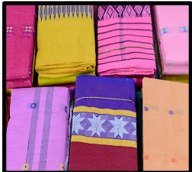
  1. Tangail Saree: Recently, at the 20th Session of the UNESCO Intergovernmental Committee for the Safeguarding of Intangible Cultural Heritage, Bangladesh secured international recognition for the Tangail saree weaving tradition.

  • About Tangail saree: Originates from the Tangail district of Bangladesh.
  • It is handwoven using cotton or silk, often adorned with delicate floral and geometric motifs.
  • Known for being lightweight, the saree is valued for its soft texture, elegant borders, and vibrant colours.
  • Cultural Importance: The Tangail saree holds a special place in Bengali cultural identity.
    - It is traditionally worn during festivals, weddings, and major celebrations, symbolising artistry, heritage, and community pride.
  • Significance of the UNESCO Recognition: The inscription marks the fulfilment of a long-standing national aspiration for Bangladesh.
    - It brings global recognition to Tangail’s weaving communities, who have preserved and refined this craft over more than two centuries.
    - The honour is expected to elevate international awareness, support preservation efforts, and strengthen artisan livelihoods.
    - In 2024, India granted a Geographical Indication (GI) tag to the “Tangail Saree of Bengal”.
  1. Global Environment Outlook-7 (GEO-7): Recently, the United Nations Environment Programme’s (UNEP) Global Environment Outlook-7 (GEO-7) reported nine million annual deaths, with over 90% occurring in low- and middle-income countries.
  • Key Findings: Air pollution contributes to nine million deaths every year, mostly in low- and middle-income countries. Pollution and climate change are creating a “vicious cycle”, intensifying health and ecological damage.
  • Wildfires have become more frequent and intense due to high temperatures and prolonged droughts.
  • Global temperature in 2024 rose to 55°C above pre-industrial levels, further destabilizing atmospheric chemistry.
  • Global atmospheric concentrations of major GHGs—CO₂, methane (CH₄), nitrous oxide—continue to rise.
  • SO₂ and NO₂ levels decreased in Europe and North America but increased across parts of Asia.
  • 5 levels improved in parts of North America, Europe, Sub-Saharan Africa, Southeast Asia.
  • Major megacities like Delhi, Tehran, and Lagos continue to record dangerously high pollution.
  • Nanoparticles from fossil fuels, transport, and industry pose rising health risks yet remain poorly monitored. Microplastics increasingly affect regional and transboundary air quality.
  • Pollution is now linked not only to respiratory and heart diseases but also to cognitive decline, dementia, and type-2 diabetes, including among children.
  1. Climate-Driven Mass Extinction: Recently, a study in Global Change Biology warned that climate-driven extreme heat and rapid land-use change could push nearly 8,000 vertebrate species toward extinction by century’s end.
  • Key Findings: The study assessed 30,000 vertebrate species to determine how extreme heat and land conversion will reshape their future ranges.
  • By 2100, around 7,895 species may become globally threatened as they are exposed to extreme heat events and land use changes across their entire geographic range.
  • Amphibians and reptiles are projected to be far more exposed to unsuitable conditions than birds and mammals under every future scenario.
  • Even in the most optimistic scenario, amphibians may lose 23% and reptiles 13% of their 2015 suitable ranges.
  • Birds and mammals fare comparatively better, with only 2% and 4% loss under similar conditions.
  • Species with smaller range sizes, especially amphibians and reptiles, face significantly higher extinction pressure.
  • The synergistic impact of climate change and land use is expected to hit several regions particularly hard: Sahel Region: Sudan, Chad, Mali
    - Middle East: Afghanistan, Iraq, Saudi Arabia
    - South America: Brazil, Bolivia, Paraguay
    - South Asia: India and Australia: Western Australia
  1. Goniopora Coral Colonies: Recently, a catastrophic combination of extreme ocean heat and a rare coral disease black band disease (BBD) wiped out nearly 75% of Goniopora coral colonies at One Tree Reef on the Great Barrier Reef.
  • Key Findings: Mortality occurred during the fourth global mass bleaching event, affecting 84% of reefs worldwide.
  • Goniopora corals are normally thermally tolerant, making the collapse especially alarming.
  • Bleaching Followed by Rare Disease Outbreak: Severe bleaching weakened corals, enabling rapid and unprecedented spread of BBD.
    - BBD, historically rare in the southern Great Barrier Reef, spread epizootically, infecting 61% of bleached colonies within months.
    - Disease affected only bleached corals; other genera that bleached in 2024 did not develop BBD.
    - Surveys of 700+ colonies confirmed widespread bleaching, rapid disease progression, and high mortality.
  1. Hydrogen-Powered Train: Recently, India achieved a major technological milestone by completing its first indigenous hydrogen-powered train-set, marking a significant step toward cleaner, alternative-fuel mobility in the railway sector.
  • Key Highlights: Represents a major milestone in clean-energy transition for national rail transport.
  • A hydrogen production plant is being established at Jind.
  • Hydrogen will be produced using the electrolysis process, the key method for generating green hydrogen.
  • Plant will supply hydrogen fuel specifically for the new train-set.
  • The indigenously designed system is currently the world’s longest hydrogen train-set on broad gauge with 10 coaches. At 2400 kW, it is also the most powerful hydrogen train-set globally in its category.
  • Fully designed and developed in India, showcasing railway sector innovation and engineering leadership.
  • Reinforces the nation’s commitment to self-reliance in advanced mobility technologies.
  • Environmental Benefits: Zero CO₂ emissions — the only emission is water vapour.
  1. AviSpray-10c: Recently, AvironiX Drones, a Chennai-based deep-tech company specialising in precision agriculture and defence technology, announced the launch of its latest innovation, the AviSpray-10c.
  • About the AviSpray-10c: A backpack-sized agricultural spraying drone, making it 53% smaller than most current-generation models.
  • The device aims to reduce the cost, operational complexity, and manpower required for drone-based crop spraying.
  • Unlike many agri-drones tested mainly in controlled settings, the AviSpray-10c has undergone extensive real-world validation.
  • The drone is built using insights from over 6,000 acres of actual spraying operations across crops like sugarcane and paddy, ensuring practical field-readiness.
  • Key Advantages: Backpack-sized design enables easy transport on scooters and bicycles.
    - Removes the need for large transport vehicles or permanent drone mounting boxes.
    - Allows single-operator deployment without requiring any support staff.
    - Capable of covering up to 5 acres per battery charge, about 60% more than many comparable platforms.
    - Requires fewer batteries, lowering upfront costs and fuel consumption.
    - Delivers 2× better spraying accuracy than conventional models.
    - Equipped with terrain-following radar, collision-avoidance technology, and multiple nozzle options.
    - Features swappable chemical tanks for faster turnaround during operations.
  1. Sudden Stratospheric Warming (SSW): Recently, meteorologists warned that a Sudden Stratospheric Warming (SSW) may occur in December 2025, which could disrupt winter weather across the Northern Hemisphere.
  • About SSW: Refers to a rapid temperature increase — sometimes up to 50°C within a few days, in the stratosphere, the atmospheric layer above the troposphere.
  • The event is triggered when Rossby waves rise from the troposphere and dissipate in the stratosphere, transferring energy and momentum
  • This process weakens the polar vortex, a strong ring of westerly winds that normally keeps cold Arctic air confined near the poles.
  • How SSW Disrupts the Atmosphere: When Rossby waves disrupt the polar vortex, the circulation slows and the air mass stops spinning effectively.
    - As the spinning weakens, the air compresses and heats up, causing a dramatic rise in stratospheric temperatures.
    - The warmed air then propagates downward, disturbing the jet stream — the high-altitude wind band that shapes weather patterns.
    -  A distorted jet stream allows cold Arctic air to spill southward into the mid-latitudes.


UPSC QEP 2026 Batch 5 - English
Buy now View Details
Submit Your Details to Learn More
I agree to give my consent to receive updates through SMS/Email & WhatsApp*.

NEEV GS + CSAT Foundation 2026/27
Buy now View Details


Join theIAShub’s Mains Answer Writing Program

Refine your answer writing skills and elevate your UPSC preparation with personalized support and expert feedback.

Fill out the form to get started with the program or any other enquiries !

I agree to give my consent to receive updates through SMS/Email & WhatsApp*.

Best IAS Coaching In Delhi, UPSC Online & Offline Classes by IAShub

Are you dreaming of becoming an IAS officer? Then, IAShub can be your best guide. It is one of the Best IAS Coaching in Delhi. Many students who want to clear the UPSC exam join IAShub for learning. The institute gives both online and offline classes. Their teachers are experienced and helpful. They easily explain every topic. Students also get notes, tests, and tips to do well in the exam.

UPSC Online Classes by IAShub

IAShub is in Delhi and is trusted by many UPSC students. It offers coaching for every part of the UPSC exam – Prelims, Mains, and Interview. The classes are simple and easy to understand. The teachers are experts and guide students in the right way. IAShub is also known for its helpful notes, test series, and answer-writing practice. IAShub is the best coaching in Delhi and also gives UPSC Online Classes. This helps students from any place in India to learn. The online classes are live and also recorded. So, students can watch them anytime. These classes cover the full UPSC syllabus.

Key Offerings Provided by IAShub

Here are some important services provided by IAShub:

  • UPSC Prelims: IAShub teaches for Prelims with a focus on basics. It also gives daily current affairs and monthly magazines.
  • Classroom Courses: IAShub has classroom learning for students in Delhi. The environment is good and peaceful for study.
  • Live Classes: Students who live far can join live UPSC online classes. These classes are just like real classes.
  • QEP for Mains: The Quality Enrichment Program (QEP) is special for Mains preparation. It helps students write better and faster.
  • Answer Writing: Regular answer writing practice is given. Teachers also check answers and give tips to improve.
  • Free Resource: IAShub gives free notes by toppers and helpful Main Booster material.
  • Test Series: Test series are available for every subject. These help students know their weak points and improve.
  • Interview Guidance Session: IAShub also gives interview practice sessions with experts. These help students feel confident.

UPSC Exam Overview

The UPSC Civil Services Exam has three parts:

  • Prelims: It has two papers: General Studies and CSAT.
  • Mains: It has nine papers, including essays and optional subjects.
  • Interview: It tests the personality and confidence of the student.

This exam is tough, but with the right guidance, it becomes easy to manage. Students must study smart and stay regular.

How IAShub Helps in the UPSC Journey

IAShub supports students from the beginning to the end. It gives the right books, tests, and notes. The classes are easy to follow, and the teachers are always ready to help. Students get personal doubt sessions too. The test series and answer checking help students learn where they need to do better. Also, free study materials save time and money.
IAShub also guides students during the final stage – the interview. Experts take mock interviews and give useful tips. This full support makes IAShub one of the best IAS coaching in Delhi.

Best IAS Coaching In Delhi FAQs

Yes, IAShub offers live and recorded online classes. Students can attend from any part of India.

Classes are available in both English and Hindi, so students can choose the language they are comfortable with.

The classroom centre is located in Delhi. Students can visit and join offline batches there.

IAShub gives interview guidance sessions to help students prepare for the final round of UPSC.