01st October 2025
1. Antlion: Recently, researchers discovered two new species of
antlions belonging to the family
Myrmeleontidae under the order Neuroptera.
- About Antlions: A group of nearly 2,000 insect species.
- They belong to the family Myrmeleontidae.
- Their name comes from the predatory behaviour of their larvae, which often dig pits in sandy soil to trap ants and other small insects.
- Indophanes keralaensis: Found in Sairandhri and Siruvani (Palakkad district) and Pampadum Shola National Park (Idukki). Name honours Kerala and the Western Ghats biodiversity hotspot.
- Indophanes sahyadriensis: Recorded from Siruvani (Palakkad), Pakshipathalam and Thirunelly (Wayanad), and Ranipuram (Kasaragod). Name refers to Sahyadri (Western Ghats), known for unique native habitats.
- Genus Indophanes: Previously: 9 species worldwide (China, India, Nepal, Pakistan, Sri Lanka).
- Now: 11 species worldwide.
- In India: 5 species total, of which 3 from Kerala.
2. Bathukamma Festival: Recently, Telangana’s iconic Bathukamma Festival celebrations were recognized by the Guinness World Records.

- About Bathukamma Festival: State Festival of Telangana, dedicated to Goddess Gauri/Parvati, symbolizing fertility and womanhood.
- Duration: Celebrated for 9 days, starting on Mahalaya Amavasya (Sept–Oct) and concluding on Saddula Bathukamma, two days before Dussehra (Dasara).
- Tradition: Women create conical stacks of seasonal flowers (marigold, gunuka, tangedu, banthi, chrysanthemum) arranged to resemble a temple gopuram.
- Agricultural Importance: Marks the end of monsoon and the beginning of the winter cropping season
- Guinness World Records Highlights: Largest Floral Installation: A 63.11-foot Bathukamma, made with 10.7 tonnes of flowers in 11 layers, was showcased.
- Synchronized Dance: Nearly 1,354 women performed traditional dances in concentric circles around the floral arrangement.
3. Environmental Surveillance: Recently, monitoring pathogens in the environment, especially through wastewater surveillance, has emerged as a vital tool for predicting and controlling disease outbreaks.
- About Environmental surveillance: Tracks pathogens (bacteria, viruses, parasites) from wastewater, sewage, soil, and other environmental samples.
- Samples are collected from sewage treatment plants, hospital effluents, railway stations, airplane toilets, etc.
- Pathogens are shed in stool and urine of infected individuals.
- Soil samples can track diseases caused by parasitic worms like roundworms and hookworms.
- Rigorous protocols ensure standardized collection, processing, detection, and genome sequencing to identify variants.
- Benefits of early warning: Helps in public health planning and outbreak preparedness.
- Detects infection spread in the community, including asymptomatic carriers.
- India’s current efforts: ICMR to start wastewater surveillance for 10 viruses in 50 cities.
4. Air Pollution: Recently, a study by the Indian Institute of Technology-Delhi (IIT-D) in collaboration with Climate Trends found that cutting air pollution could lead to major health improvements.
- Key Findings: Cutting air pollution by 30% can significantly reduce the prevalence of heart disease, diabetes, anaemia, low birth weight, and respiratory infections.
- Data sources: NFHS-5 disease prevalence, Indian epidemiological studies, and satellite-based PM 2.5 data.
- A new “health benefit assessment dashboard” was launched, covering 641 districts (2011 boundaries).
- Heart disease prevalence among women could decline by 3%-10%, with the biggest gains in Assam, Jammu & Kashmir, and Nagaland.
- Diabetes prevalence could fall by 8%-25%, with highest benefits in Delhi, Uttar Pradesh, Bihar, Assam, and Haryana.
- Hypertension prevalence could decline by 2%-8%, especially in Punjab, Haryana, Delhi, Assam, Bihar, and Uttar Pradesh.
- Among children, cleaner air could lower cases of anaemia, low birth weight, and lower respiratory infections.
- The Indo-Gangetic plains and eastern states would see the strongest health benefits for children.
5. Acoustic Vehicle Alerting Systems: Recently, the Ministry of Road Transport and Highways mandated that all new and existing electric vehicles (EVs) must have
Acoustic Vehicle Alerting Systems, as per the Central Motor Vehicles Rules.
- About AVAS: A safety device that generates artificial sound cues in electric and hybrid vehicles to make them more noticeable.
- Activation Range: Works automatically between 0–20 km/h, when EVs are otherwise almost silent.
- Sound Design: Emits a steady, low-volume artificial tone to alert pedestrians.
- Above 20 km/h: Additional artificial sound is unnecessary as tyre and aerodynamic noise provide sufficient auditory signals.
- Pedestrian Safety: Electric vehicles (EVs) are nearly silent at low speeds since they lack an internal combustion engine.
- To prevent accidents and ensure pedestrian safety, especially for the visually impaired, sound alerts are essential.
- Applicability: The mandate applies to all M and N category vehicles, which include: Cars, Buses, Trucks, E-rickshaws and E-carts.
6. Increasing Tree Size Across Amazonia: Recently, a study titled Increasing tree size across Amazonia, published in Nature Plants, found that Amazon rainforest trees are growing larger each decade due to rising CO₂ levels.
- Key Findings: Tree size in the Amazon is increasing by about 3.3% in diameter every decade.
- Normally, in old-growth forests, average tree size stays constant (saplings replace fallen big trees).
- In the Amazon, this balance has shifted due to rising atmospheric CO2 (up nearly 20% in 30 years).
- Growth is linked to the carbon fertilisation effect: higher CO2 → more photosynthesis → faster growth.
- Significance: Bigger trees can absorb more carbon than before, strengthening the Amazon as a carbon sink.
- Provides some reassurance that forests are helping buffer climate change impacts.
- About Amazon Rainforest: World’s largest tropical rainforest, spread across 9 South American countries (60% in Brazil).
- Covers ~1% of Earth’s surface but harbours 10% of known wildlife species.
- Estimated to store 150–200 billion tonnes of carbon.
- Called the “lungs of the planet” for its role in absorbing CO2 and releasing oxygen.
7. Swachh Shehar Jodi: Recently, the Ministry of Housing and Urban Affairs (MoHUA) launched the
Swachh Shehar Jodi (SSJ) initiative under the
Swachh Bharat Mission–Urban (SBM-U).
- About SSJ: It is a structured mentorship and collaboration program involving 72 mentor cities and nearly 200 mentee cities.
- Mentor-mentee pairings are based on the Swachh Survekshan rankings: Top-performing cities are designated as mentor cities and Low-performing cities are chosen as mentee cities.
- Aim: To help low-performing cities improve their cleanliness and sanitation performance by leveraging the experience of successful cities.
- Key objectives: Replicating proven best practices in sanitation and waste management.
- Facilitating knowledge-sharing, peer learning, and adoption of innovative solutions across cities.
8. India’s Dietary Habits: Recently, a study by ICMR-INDIAB and MDRF, published in Nature Medicine, revealed that India’s dietary habits are driving a surge in lifestyle-related health issues. The research highlights a sharp rise in diabetes, obesity, and other metabolic disorders.
- Key Findings: 62% of calories in Indian diets come from carbohydrates (mostly low-quality sources: white rice, milled wheat, refined grains, added sugar).
- Protein intake low: averages 12%E (below optimal).
- High sugar intake: At least 21 states/UTs exceed the national recommendation (<5%E of energy from added sugar).
- Fat intake: Within guideline (≤30%E), but saturated fat exceeds safe threshold (7%E) in all but 4 states (Jharkhand, Chhattisgarh, Arunachal Pradesh, Manipur).
- Protective fats (MUFA & omega-3 PUFA) remain low nationwide.
- Regional differences: Refined cereal intake highest in Northeast (51.7%E), then South (36%E) and East (31.5%E) — mostly from white rice (95%).
- Central (30.9%E) and Northern (27.8%E) India consume more milled wheat flour.
- Millets minimal (1.4%E) except in Karnataka, Gujarat, Maharashtra.
- Northeast highest protein intake (13.8%E) – Nagaland (18%), Mizoram (16%), Manipur & Meghalaya (14%).
- North had highest dairy protein (3.6%E), while East (1.2%E) & Northeast (1.1%E) had lowest.
9. Ophiorrhiza Echinata: Recently, a new coffee plant species, Ophiorrhiza echinata, was discovered in the Western Ghats. It was found in the shola forests of Devikulam, Idukki, and Kerala.
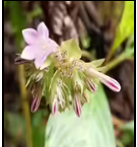
- About Ophiorrhiza echinata: Grows in the ecotone region between evergreen forests and grasslands.
- Found at an altitude of 1,630 m above sea level.
- Belongs to the Rubiaceae family.
- Closely related to Ophiorrhiza mungos (Indian Snake Root), known for its role in cancer treatment and antidote preparations.
- May have medicinal potential (further studies needed on chemical components).
- Restricted to montane evergreen forests, making it ecologically vulnerable to human pressures.
- Highlights importance of conserving shola forests – called the “womb of speciation”.
- Broader Significance: Adds to the number of endemic Rubiaceae species in the Western Ghats.
- Reinforces the ecological uniqueness of the region.
- India produced ~363,500 metric tonnes of coffee in 2024–25 (mainly Arabica and Robusta).
- Globally, there are 100+ coffee plant species, with 10+ species found in the Western Ghats.


 theIASHub | 01 Oct, 2025









 Detailed Solutions & Explanations

