2 Min Series 5 November 2025

THEIASHUB
Get an Instant Call Back from Our Expert Mentors Now!
+91

05th November 2025

1. QS Asia University Rankings: Recently, nine of India’s top ten institutions in the QS Asia University Rankings 2026, including seven leading IITs, experienced a decline in their positions.

  • Key Highlights: IIT Delhi remains the top-ranked Indian institution, but its rank fell from 44 to 59.

  • IIT Bombay experienced the sharpest drop, falling 23 places from 48 to 71.
  • Chandigarh University was the only Indian institution in the top 10 (India list) to improve, moving from 120 to 109.
  • Despite ranking drops, overall scores for Indian institutions improved, indicating increased competition, not reduced performance.
  • Top Asian ranks are dominated by universities from Hong Kong, China, Singapore, and also South Korea and Malaysia.
  • University of Hong Kong ranked 1st, followed by Peking University (2nd), and National University of Singapore & Nanyang Technological University (joint 3rd).
  • Indian IITs perform well in academic reputation, employer reputation, staff with PhD, and research output per faculty.
  • China added the most new entries (261), more than India (137).

2. CITES: Recently, a CITES verification mission recommended that India halt imports of critically endangered wildlife, including gorillas, orangutans, chimpanzees and snow leopards, until stronger checks are in place.

  • Key Highlights: The concern is that wild-caught animals are being passed off as captive-bred, enabling illegal wildlife trade.

  • India is a party to CITES since 1976; import/export of endangered species requires permits from authorities in both countries.
  • The mission reviewed imports linked to Vantara’s Greens Zoological Rescue & Rehabilitation Center (GZRRC) and Radha Krishna Temple Elephant Welfare Trust (RKTEWT) in Jamnagar.
  • The report acknowledged that both facilities are high quality and say that no animals were bought, yet documentation raises doubts about the true origin of many animals.
  • Some imports came from commercial breeding facilities abroad that may not be registered as zoos, which is required under India’s Wildlife Protection Act.
  • The report says India must verify past imports, especially those routed through transit hubs like the UAE, to ensure they were not taken from the wild.
  • It emphasizes the need for stronger due diligence, documentation, and traceability of animal origin before approving imports.

3. POCSO Act: Recently, the Supreme Court noted that the POCSO (Protection of Children from Sexual Offences) Act is often being misused in marital disputes and in cases involving consensual adolescent relationships.

  • About POCSO Act: Enacted in 2012, is India’s first dedicated law aimed at addressing sexual offences against children.
  • It is implemented by the Ministry of Women and Child Development.
  • The law seeks to protect children from sexual assault, sexual harassment, and pornography, and mandates the setting up of Special Courts for speedy trials.
  • The Act was amended in 2019 to introduce stricter punishments to deter offenders and ensure the dignity and safety of children.
  • Key Provisions: Gender-Neutral Law: A child is defined as any person below 18 years, regardless of gender.

                     - Mandatory Reporting: Failure to report a sexual offence against a child by a responsible adult or institution head is a punishable offence.

                     - No Limitation Period: A survivor may report abuse at any time, even after many years.

                     - Protection of Identity: The identity of the child victim cannot be disclosed in any media unless permitted by the Special Court.

4. FAO Report: Recently, an FAO report (State of Food and Agriculture 2025) warned that global land degradation is affecting 1.7 billion people, reducing food production and harming ecosystems.

  • Key Findings: India is among the countries with the highest crop yield losses due to human-induced land degradation.

  • Agricultural expansion remains the major driver of global deforestation, responsible for nearly 90% of forest loss.
  • Between 2001–2023, global agricultural land area reduced by 78 million hectares (mha): Cropland expanded by 78 mha and Pastures and meadows shrank by 151 mha
  • Regional impacts: Sub-Saharan Africa: Cropland ↑ 69 mha, Forest loss ↑ 72 mha
                 -Latin America: Cropland ↑ 25 mha, Forest loss ↑ 85 mha
  • Around 6 million hectares of cropland are abandoned each year, largely due to land degradation.
  • The report says reversing just 10% of degraded cropland could produce enough food for 154 million additional people annually.
  • Degradation hotspots overlap with high poverty and child malnutrition, especially in Southern Asia (including India) and Sub-Saharan Africa.
  • About 47 million stunted children (under 5) live in areas hit by severe yield losses from land degradation.

5. Cycad Plants: Recently, AIIMS Bhubaneswar began studying Cycad plants amid concerns that they may contain BMAA, a compound suspected to be a neurotoxin.
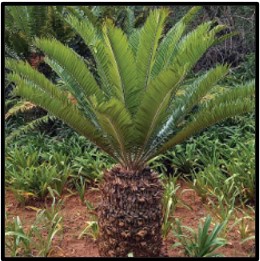
  • About Cycads: Palm-like, woody gymnosperms, considered one of the oldest plant groups, having existed for over 300 million years, even alongside dinosaurs.
  • Habitat: Found in diverse environments including rainforests, semi-deserts, grasslands, and seasonally dry forests.
  • Distribution: Found across tropical and subtropical regions of the Americas, Caribbean, sub-Saharan Africa, Madagascar, eastern India, China, Japan, Southeast Asia, Oceania, and Australia.
  • Key Characteristics: They are long-lived and unisexual plants with thick, fleshy root systems.

               - Identified by large, pinnate leaves and the presence of cones.

               - Many cycad species are fire-resistant, capable of regenerating leaves after fire damage.

               - Grow in varied soil conditions, including nutrient-rich, sandy, rocky, swampy, and saline soils.

6. Melatonin: Recently, doctors raised concerns about the rising, unsupervised use of melatonin supplements, as many people are taking them for sleep without medical advice.

  • About Melatonin: A naturally produced hormone in the human body that regulates the sleep–wake cycle.
  • It is released by the pineal gland, with production increasing in darkness and reducing when exposed to light.
  • Melatonin levels rise in the evening, signaling the body to prepare for sleep, and usually take 30–45 minutes to show full effect.
  • The hormone reaches peak levels during the night and gradually reduces toward morning to help the body wake up.
  • Synthetic melatonin, known as exogenous melatonin, is manufactured in laboratories and sold as a sleep supplement.
  • It is commonly used by people experiencing sleep disturbances or those who travel frequently across time zones (to manage jet lag).
  • Excess or improper use of melatonin supplements may lead to: Headaches, Hormonal imbalances, Mood swings and Disruption of the natural sleep rhythm.

7. Western Disturbance: Recently, the India Meteorological Department (IMD) announced that a new Western Disturbance is expected to affect weather conditions over northwest India, including Delhi-NCR.

  • About Western Disturbance: An extratropical storm system that originates in the Mediterranean region. It travels eastward and brings winter rain and snowfall to northwest India, Pakistan, and the Himalayan region. It is primarily driven by westerly jet streams in the mid-latitudes.
  • Origin: Forms in the Mediterranean Sea region due to interaction between cold polar air and warm subtropical air.
  • Cyclogenesis: This contrast leads to the formation of a low-pressure cyclonic system in the upper atmosphere.
  • Movement: Carried eastward by the subtropical westerly jet stream, collecting moisture from the Mediterranean, Caspian, and Black Seas.
  • Dissipation: Releases moisture over the Himalayas as rain or snow and weakens
  • Factors Influencing WDs: Jet Stream Position & Strength
          - Himalayan Topography, which forces air to rise and cool
          - Temperature Contrast between polar and tropical air masses
          - Sea Surface Temperature variations in the Mediterranean and Eurasian regions

8. Pilia Malenadu: Recently, researchers studying biodiversity in the Western Ghats discovered a new spider species named Pilia malenadu.
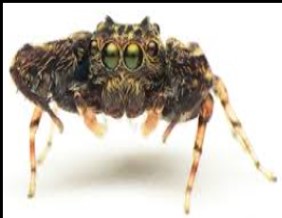
  • About Pilia Malenadu: It is a newly identified species belonging to the genus Pilia, which includes jumping spiders.
  • The species was discovered at Madhugundi in Mudigere taluk, Chikkamagaluru, Karnataka, near the foothills of the Western Ghats.
  • The name “Pilia malenadu” was chosen to honour the region where it was found.
  • This discovery is notable because the last Pilia genus spider was recorded over 123 years ago (in 1902) in Kerala.
  • For the first time, researchers have been able to record both the male and female of the species.
  • These spiders were found only on two plant species: Memecylon umbellatum and Memecylon malabaricum
  • They were discovered hidden between the leaves of these plants.

9. Unconstitutional Intrusion: Recently, the Supreme Court decided to examine whether prohibiting married couples with secondary infertility from using surrogacy for a second child amounts to an unconstitutional intrusion into private and reproductive choices.

  • Key Highlights: The case challenges Section 4(iii)(C)(II) of the Surrogacy (Regulation) Act, 2021, which allows surrogacy only for couples without any surviving child, with limited exceptions.
  • The Centre argues there is no fundamental right to surrogacy, since it involves the use of another woman’s body; the right exists only as a statutory privilege, not a constitutional guarantee.
  • The government says surrogacy should be used only as a last resort, after trying natural conception and assisted reproductive technologies (ART).
  • The petitioning couple argues that secondary infertility can be emotionally distressing, and the state should not interfere in reproductive decisions of citizens.
  • The petitioners ask the court to read down the law to allow surrogacy for families who already have a child but cannot conceive again.
  • The Centre notes that the law already includes exceptions—surrogacy is allowed for a second child only if the first child has severe disability or life-threatening condition.
  • The petitioner highlighted that India does not have a one-child policy and pointed to adoption laws that allow families to adopt a second or third child, arguing that surrogacy should be treated similarly.


UPSC QEP 2026 Batch 5 - English
Buy now View Details
Submit Your Details to Learn More
I agree to give my consent to receive updates through SMS/Email & WhatsApp*.

NEEV GS + CSAT Foundation 2026/27
Buy now View Details


Join theIAShub’s Mains Answer Writing Program

Refine your answer writing skills and elevate your UPSC preparation with personalized support and expert feedback.

Fill out the form to get started with the program or any other enquiries !
I agree to give my consent to receive updates through SMS/Email & WhatsApp*.

Best IAS Coaching In Delhi, UPSC Online & Offline Classes by IAShub

Are you dreaming of becoming an IAS officer? Then, IAShub can be your best guide. It is one of the Best IAS Coaching in Delhi. Many students who want to clear the UPSC exam join IAShub for learning. The institute gives both online and offline classes. Their teachers are experienced and helpful. They easily explain every topic. Students also get notes, tests, and tips to do well in the exam.

UPSC Online Classes by IAShub

IAShub is in Delhi and is trusted by many UPSC students. It offers coaching for every part of the UPSC exam – Prelims, Mains, and Interview. The classes are simple and easy to understand. The teachers are experts and guide students in the right way. IAShub is also known for its helpful notes, test series, and answer-writing practice. IAShub is the best coaching in Delhi and also gives UPSC Online Classes. This helps students from any place in India to learn. The online classes are live and also recorded. So, students can watch them anytime. These classes cover the full UPSC syllabus.

Key Offerings Provided by IAShub

Here are some important services provided by IAShub:

  • UPSC Prelims: IAShub teaches for Prelims with a focus on basics. It also gives daily current affairs and monthly magazines.
  • Classroom Courses: IAShub has classroom learning for students in Delhi. The environment is good and peaceful for study.
  • Live Classes: Students who live far can join live UPSC online classes. These classes are just like real classes.
  • QEP for Mains: The Quality Enrichment Program (QEP) is special for Mains preparation. It helps students write better and faster.
  • Answer Writing: Regular answer writing practice is given. Teachers also check answers and give tips to improve.
  • Free Resource: IAShub gives free notes by toppers and helpful Main Booster material.
  • Test Series: Test series are available for every subject. These help students know their weak points and improve.
  • Interview Guidance Session: IAShub also gives interview practice sessions with experts. These help students feel confident.

UPSC Exam Overview

The UPSC Civil Services Exam has three parts:

  • Prelims: It has two papers: General Studies and CSAT.
  • Mains: It has nine papers, including essays and optional subjects.
  • Interview: It tests the personality and confidence of the student.

This exam is tough, but with the right guidance, it becomes easy to manage. Students must study smart and stay regular.

How IAShub Helps in the UPSC Journey

IAShub supports students from the beginning to the end. It gives the right books, tests, and notes. The classes are easy to follow, and the teachers are always ready to help. Students get personal doubt sessions too. The test series and answer checking help students learn where they need to do better. Also, free study materials save time and money.
IAShub also guides students during the final stage – the interview. Experts take mock interviews and give useful tips. This full support makes IAShub one of the best IAS coaching in Delhi.

Best IAS Coaching In Delhi FAQs

Yes, IAShub offers live and recorded online classes. Students can attend from any part of India.

Classes are available in both English and Hindi, so students can choose the language they are comfortable with.

The classroom centre is located in Delhi. Students can visit and join offline batches there.

IAShub gives interview guidance sessions to help students prepare for the final round of UPSC.