


 theIASHub | 29 Nov, 2025


1. MH-60 Romeo Helicopter: Recently, India signed Letters of Offer and Acceptance (LOAs) with the US for 5-year sustainment support of the Indian Navy’s MH-60R helicopter fleet.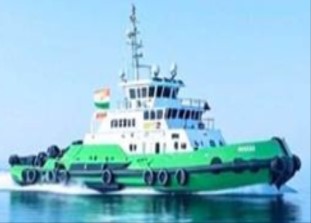
About MH-60 Romeo: Considered the world’s most advanced maritime helicopter and serves as the S. Navy’s primary anti-submarine and anti-surface warfare platform.
Built by Lockheed Martin, it is designed for all-weather land and maritime operations.
Equipped with modern avionics, sensors, and mission systems.
Anti-Surface Warfare (ASuW)
Search and Rescue (SAR)
Naval Gunfire Support (NGFS)
Surveillance & reconnaissance
Communications relay
Logistics and personnel transfer
Vertical replenishment (VERTREP)
It can operate from frigates, destroyers, cruisers, amphibious ships, and aircraft carriers, making it effective in both littoral combat and open-ocean operations.
2. Central Ground Water Board: A new report by the Central Ground Water Board has revealed alarming levels of toxic metals and chemical contaminants in Delhi’s groundwater, posing severe long-term health risks for residents dependent on bore wells and hand pumps.
Delhi recorded highest proportion of lead-contaminated samples during pre-monsoon, 3% samples exceeded BIS limits (vs Assam 3.23%, Rajasthan 2.04%).
Lead impacts children’s cognition, kidneys, BP, and is a probable carcinogen.
Uranium linked to kidney damage and carcinogenic risks.
NW belt of Punjab-Haryana-Delhi-Rajasthan-UP is identified as a uranium hotspot
Health Risks Highlighted: Fluorosis, Methemoglobinemia (blue-baby syndrome), Kidney damage, Carcinogenic effects and Neurological impairment.
3. World Health Organization: Recently, the World Health Organization released it’s first-ever guideline on infertility prevention, diagnosis, and treatment, calling on countries to ensure accessible, science-based fertility care for all.
Encourages governments to integrate fertility treatment into national health financing. E.g.: IVF and related services included under insurance or public schemes.
Focus on tackling untreated STIs, tobacco use, and lifestyle-related infertility. E.g.: Smoking cessation reduces infertility risk in both men and women.
Advises balanced diet, physical activity, and avoiding tobacco and harmful substances. E.g.: Couples planning pregnancy guided on nutrition and fitness.
Encourages teaching fertility concepts in schools and healthcare facilities. E.g.: Youth receiving early information on reproductive timelines.
Understanding the Global Infertility Burden: Infertility defined as failure to conceive after 12 months of unprotected sex. E.g.: Applies to couples across all income and age groups.
4. Pallid Harrier: Recently, with the onset of winter, migratory Pallid Harriers from Central Asia have begun reaching India, but rapidly declining grasslands and the loss of roosting sites have sparked serious conservation concerns.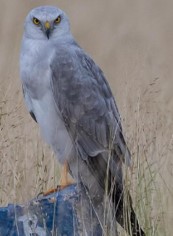
A medium-sized migratory raptor known for its graceful flight and marked sexual dimorphism.
In India, it is commonly seen in semi-arid and arid grasslands, sparse scrub habitats, and occasionally in the shola grasslands of the Western Ghats.
Wintering Range: Africa, India, Southeast Asia
Females: Brown upperparts with white upper tail coverts (“ringtail”), buff underparts streaked with brown, and a distinct facial pattern.
Juveniles: Rufous (reddish-brown) with a characteristic whitish neck collar or “boa.”
Also preys on small terrestrial birds, lizards, frogs, and insects including locusts and dragonflies.
Wildlife Protection Act, 1972: Schedule IV
5. Operation Sagar Bandhu: Recently, India initiated ‘Operation Sagar Bandhu’ to support cyclone-hit Sri Lanka, delivering urgent humanitarian assistance after Cyclone Ditwah triggered extensive floods and landslides across the island nation.
A C-130 aircraft reached Colombo with food items, sanitary supplies and essential rations. E.g.: Relief handed over at Bandaranaike International Airport at 1:30 a.m.
NDRF teams travelled with eight tonnes of specialist rescue equipment. E.g.: Teams equipped for flood rescue, debris clearance and emergency response.
6. Vitamin B12: Recently, it has been observed that early symptoms of Vitamin B12 deficiency often manifest on the skin—such as hyperpigmentation, dryness, or paleness—due to reduced oxygen and nutrient delivery to skin cells.
It is essential for maintaining healthy nerve cells, forming red blood cells, and producing DNA.
Since the body cannot make B12 on its own, it must be obtained from food or supplements.
Naturally occurs only in animal-based foods: fish, meat, poultry, eggs, milk, and dairy products.
Plant foods do not contain B12 unless they are fortified.
The liver stores Vitamin B12, and the body can retain it for 2–5 years.
Excess B12 is removed through the urine.
Vitamin B12 Deficiency: More likely in vegetarians and vegans, as plant foods lack B12.
Older adults and people who’ve undergone stomach surgery may have absorption issues.
People with digestive disorders like Crohn’s disease or celiac disease are also at risk.
Severe deficiency can cause fatigue, muscle weakness, digestive problems, nerve damage, vision issues, and mood changes.
It may also lead to anaemia or generally low blood counts.
7. Bonded Labourers: Recently, a new national report named 'Migrant Bonded Labour in India' revealed that most rescued bonded labourers in India continue to be denied compensation and basic rehabilitation support, exposing systemic failures in the implementation of existing protection schemes.
8. SoLAR Phase II: Recently, the International Water Management Institute (IWMI) and the Swiss Agency for Development and Cooperation launched SoLAR Phase II.
About SoLAR Phase II: A multi-country programme to accelerate climate-resilient, equitable solar irrigation across India, Bangladesh, Kenya and Ethiopia.
Phase I generated strong evidence on technical, economic and environmental performance of solar irrigation pumps (SIPs). E.g.: Grid-connected SIPs delivered higher CO₂ offsets than off-grid systems.
Phase II extends work from South Asia to East Africa. E.g.: Kenya and Ethiopia added to India and Bangladesh.
Solar Energy’s Growing Role in Agriculture: Solar pumps provide affordable irrigation power and cut diesel use. E.g.: Off-grid SIP pilots significantly reduced farmers’ diesel expenditure.
Supports emerging models like agrivoltaics: Integrating solar panels with crops increases land productivity. E.g.: Dual use of farmland for energy and farming in India’s pilot projects.
Strong government initiatives driving adoption: India scaling solar pumps through PM-KUSUM scheme. E.g.: 1.43 million farmers benefitted from PM-KUSUM by July 2025.
9. Grey Seal: Recently, researchers discovered that grey seal milk contains 332 distinct types of oligosaccharides — complex sugars crucial for early development and immunity.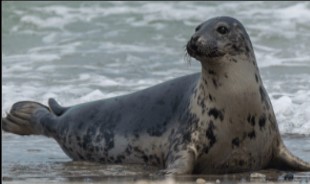
Also called the Atlantic seal or horsehead seal.
Found along both coasts of the North Atlantic Ocean.
Pups have white lanugo fur, which absorbs sunlight and helps retain warmth.
Exhibits bottling behaviour — staying upright in water with only the head above the surface.



Refine your answer writing skills and elevate your UPSC preparation with personalized support and expert feedback.
Fill out the form to get started with the program or any other enquiries !




Are you dreaming of becoming an IAS officer? Then, IAShub can be your best guide. It is one of the Best IAS Coaching in Delhi. Many students who want to clear the UPSC exam join IAShub for learning. The institute gives both online and offline classes. Their teachers are experienced and helpful. They easily explain every topic. Students also get notes, tests, and tips to do well in the exam.
IAShub is in Delhi and is trusted by many UPSC students. It offers coaching for every part of the UPSC exam – Prelims, Mains, and Interview. The classes are simple and easy to understand. The teachers are experts and guide students in the right way. IAShub is also known for its helpful notes, test series, and answer-writing practice. IAShub is the best coaching in Delhi and also gives UPSC Online Classes. This helps students from any place in India to learn. The online classes are live and also recorded. So, students can watch them anytime. These classes cover the full UPSC syllabus.
Here are some important services provided by IAShub:
The UPSC Civil Services Exam has three parts:
This exam is tough, but with the right guidance, it becomes easy to manage. Students must study smart and stay regular.
IAShub supports students from the beginning to the end. It gives the right books, tests, and notes. The classes are easy to follow, and the teachers are always ready to help. Students get personal doubt sessions too. The test series and answer checking help students learn where they need to do better. Also, free study materials save time and money.
IAShub also guides students during the final stage – the interview. Experts take mock interviews and give useful tips. This full support makes IAShub one of the best IAS coaching in Delhi.
 Detailed Solutions & Explanations
Improve Your Answer Writing & Strategy
Detailed Solutions & Explanations
Improve Your Answer Writing & Strategy

