2 Min Series 28 October 2025

THEIASHUB
Get an Instant Call Back from Our Expert Mentors Now!
+91

28th October 2025

  1. Taal Volcano: Recently, the Taal Volcano in the Philippines erupted three times, drawing renewed attention to one of the nation’s most active and closely monitored volcanic systems.
  • About Taal Volcano: Situated in Batangas province, about 70 km south of Manila, Philippines.
  • Classification: Designated as a “complex volcano” by the Philippine Institute of Volcanology and Seismology (PHIVOLCS) due to its unique multi-vent structure.
  • Eruption History: Taal is an active volcano located within a large caldera.
  • It has recorded at least 38 eruptions over the past 450 years.
  • The caldera is believed to have formed through a series of prehistoric eruptions between 140,000 and 5,380 BCE.
  • Features of Taal Volcano: A stratovolcano that hosts a crater lake on a 5-km-wide volcanic island situated within a massive caldera. Unlike typical cone-shaped volcanoes, Taal comprises multiple stratovolcanoes, conical hills, and craters of varying shapes and sizes — giving it a fragmented and layered structure.
  1. INS Ikshak: Recently, the Indian Navy announced plans to commission the indigenously built Survey Vessel (Large) ‘Ikshak’ at Naval Base Kochi.
  • About INS Ikshak: Type: Survey Vessel (Large) – Third of its class.
  • Built by: Garden Reach Shipbuilders & Engineers (GRSE) Ltd, Kolkata.
  • Supervised by: Directorate of Ship Production and the Warship Overseeing Team (Kolkata).
  • Indigenous Content: Over 80%, reflecting the collaborative success between GRSE and Indian MSMEs.
  • Project Vision: Symbolizes India’s commitment to the Aatmanirbhar Bharat initiative through state-of-the-art, indigenously developed naval platforms.
  • Capabilities and Features: Conducting hydrographic survey operations for charting maritime zones and ensuring safe navigation.
  • Can serve as a Humanitarian Assistance and Disaster Relief (HADR)
  • Can be converted into a Hospital Ship during emergencies or natural disasters.
  • First Survey Vessel (Large) class ship with dedicated accommodation for women, showcasing the Navy’s progressive and inclusive approach towards a gender-balanced fleet.
  • Meaning: The Guide’, symbolizing its role in charting uncharted waters, ensuring safe passage for mariners, and strengthening India’s maritime security.
  1. Saranda Forest: Recently, the Supreme Court of India ordered the notification of 856 sq km of the Saranda Forest, including 816 sq km of reserved forest, as a Wildlife Sanctuary to protect its fragile ecosystem and rich biodiversity.
  • About Saranda Forest: The name Saranda originates from the Ho language, meaning “seven hundred hills.”
  • Location: Situated in the West Singhbhum district of Jharkhand, within the Eastern Himalaya Biodiversity Hotspot.
  • Ecosystem: One of India’s densest and most biodiverse Sal (Shorea robusta) forests.
    - Also supports species like bamboo, mahua, and terminalia.
    - The Karo and Koina rivers flow through the forest, enriching its ecosystem.
  • Fauna: Home to Asian elephants, four-horned antelopes, sloth bears, and civets.
    - Forms part of key elephant corridors linking Keonjhar and Sundargarh (Odisha) and Hasdeo-Arand (Chhattisgarh).
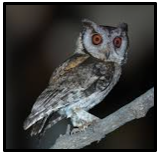
  1. Indian Scops Owl: Recently, the Indian scops owl (Otus bakkamoena) was recorded for the first time near the Daroji Sloth Bear Sanctuary in Karnataka, marking a significant addition to the region’s biodiversity records.

  • About Indian Scops Owl: A small, nocturnal bird of prey native to South Asia, known for its exceptional camouflage and distinctive frog-like “wuatt” calls.
  • Color: Greyish body with subtle streaks.
  • Eyes: Dark and round, aiding nocturnal vision.
  • Special Features: Prominent ear-like tufts that help it blend seamlessly with tree bark, making it nearly invisible during the day.
  • Habitat Range: Prefers forests, woodlands, gardens, and agricultural landscapes with dense foliage.
  • Distribution: Widely found across South Asia, including Pakistan, India, Nepal, and Sri Lanka.
  • Ecological Role: Plays a key role in regulating insect populations, maintaining ecological balance.
  • Acts as an indicator species, reflecting the health of local ecosystems.
  • Conservation Status: IUCN Red List: Least Concern
  • CITES: Appendix II
  • Wildlife Protection Act, 1972: Schedule II (protected species).
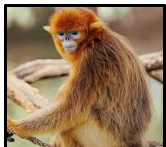
  1. Golden Snub-nosed Monkey: Recently, China launched a new phase of its Wildlife Diplomacy by loaning golden snub-nosed monkeys (Rhinopithecus roxellana) to zoos in France and Belgium under a 10-year agreement.
  • About Golden Snub-nosed Monkey: These rare primates, native to central China, are being promoted as new animal ambassadors, symbolizing a potential successor to China’s famous panda diplomacy.
  • Scientific Name: Rhinopithecus roxellana
  • Habitat: Found in the mountainous forests of central and southwestern China.
  • Conservation Status: Endangered (IUCN Red List).
  • Distinctive Features: Golden-orange fur and blue face.
  • Thick coat adapted to cold, high-altitude climates.
  • Cultural Significance: Holds an important place in Chinese folklore and art.
  • Often associated with the Monkey King (Sun Wukong) from classical Chinese literature.
  1. Yuge Yugeen Bharat National Museum: Recently, plans were revealed for the first gallery of the Yuge Yugeen Bharat National Museum to open by the end of 2026. When completed, it will stand as the world’s largest museum, exceeding the present National Museum in size and significance.
  • About Yuge Yugeen Bharat National Museum: Developed by: The Ministry of Culture, Government of India.
  • Part of: The Central Vista redevelopment project, complementing other cultural initiatives such as the PM Museum, National Archives Digitisation, and the Cultural Mapping of India.
  • Location: In the North and South Block buildings of the Central Vista, New Delhi.
  • Theme: Based on 5,000 years of Indian civilization, showcasing its continuity, diversity, and cultural evolution through time.
  • Heritage Collection: The museum will display rare and historically significant artifacts from museums and collections across India, including:
    - Indus Valley terracotta hourglass from Kalibangan (2500–1700 BC).
    - Gupta-period sculptures (5th century).
    - Chola bronzes (10th–11th centuries).
  • The collection aims to represent the continuum of India’s civilizational journey — from ancient archaeology to modern art.
  1. East Timor (Timor-Leste): Recently, East Timor (Timor-Leste) officially became the 11th member of ASEAN at the 47th ASEAN Summit held in Kuala Lumpur.
  • About East Timor (Timor-Leste): Official Name: Democratic Republic of Timor-Leste.
  • Status: A sovereign island nation and one of the world’s youngest republics, having gained independence in 2002.
  • Location: Occupies the eastern half of Timor Island in the Malay Archipelago, bordered by Indonesia to the west and the Timor Sea (north of Australia) to the south.
  • Capital: Dili.
  • Geographical Features: Predominantly mountainous terrain with Mount Tatamailau (2,963 m) as the highest point.
    - Experiences a dry tropical climate with sandalwood vegetation.
    -  Rich in biodiversity, including species like civet cats and crocodiles.
  1. Benzene: Recently, despite being discovered over two centuries ago, benzene remains a fundamental and influential molecule in both modern industry and scientific advancement.
  • About Benzene: A colorless liquid with a sweet, aromatic odor.
  • Discovery: In 1825, English scientist Michael Faraday isolated benzene from the oily residue of illuminating gas used in London’s street lamps. Later, August Kekulé proposed its cyclic structure, which became a cornerstone of organic chemistry.
  • Properties: Benzene evaporates quickly into the air and dissolves only slightly in water.
    - It is highly flammable and produced through both natural processes and human activities.
    - Natural sources include volcanic eruptions and forest fires.
    - Benzene serves as a base compound for producing styrene, phenol, cyclohexane, nylon, and polystyrene.
    - It belongs to the BTEX group (Benzene, Toluene, Ethylbenzene, Xylene), known as aromatic hydrocarbons due to their distinctive sweet smell.
  • Applications: Widely used in industrial manufacturing, benzene is a precursor for plastics, resins, nylon, and synthetic fibers.
  • It is also employed in producing rubbers, lubricants, dyes, detergents, pharmaceuticals, and pesticides.
  • Health Impact: Prolonged exposure to benzene can cause severe health issues such as acute myeloid leukaemia, aplastic anemia, and myelodysplastic syndrome.
  1. CRYODIL: Recently, researchers from the National Institute of Animal Nutrition and Physiology (NIANP), Bengaluru, operating under the Indian Council of Agricultural Research (ICAR), created CRYODIL.
  • About CRYODIL: An egg yolk-free, ready-to-use semen extender specifically designed for buffaloes.
  • It has been developed by NIANP, Bengaluru, under the ICAR
  • It is the first of its kind in India, formulated for the cryopreservation of buffalo semen.
  • The product has a longer shelf life of 18 months or more.
  • The post-thaw progressive motility (the ability of sperm to swim effectively after freezing and thawing) was found to be significantly higher (P ≤ 0.05) in CRYODIL compared to traditional egg yolk-based extenders.
  • Enhanced post-thaw motility improves the chances of successful fertilisation and pregnancy.
  • CRYODIL is also more economical to produce than conventional egg yolk-based semen extenders.
  1. Ollo Tribe: Recently, the Khonsa Battalion of the Assam Rifles launched a skill-based program under Operation Sadbhavana to foster self-reliance and inclusive growth among the women of the Ollo tribe.
  • About Ollo Tribe: Also known as Oloh or Lazu Naga, is an indigenous community living in the Laju Circle of Tirap district, Arunachal Pradesh, and in parts of Myanmar.
  • Despite living across two countries, the Ollo people maintain close cultural and social ties.
  • They speak the same dialect, practice the same religion, and follow similar customs and traditions.
  • The community follows a clan-based hereditary chieftaincy system.
  • Ollo society is deeply patriarchal, with clearly defined gender roles and male-dominated succession and property rights.
  • Family, kinship, and leadership are governed by traditional norms emphasizing male authority.
  • Historically, the Ollos were known for their distinctive facial tattoos and head-hunting traditions.
  • The tribe now balances modern development with the preservation of cultural heritage.
  • Traditional Ollo houses are built on stilts, while village chiefs live in houses made of massive carved blocks and wooden pillars.
  • According to the 2011 Census, the Ollo tribe’s population in India is just over 1,500.


UPSC QEP 2026 Batch 5 - English
Buy now View Details
Submit Your Details to Learn More
I agree to give my consent to receive updates through SMS/Email & WhatsApp*.

NEEV GS + CSAT Foundation 2026/27
Buy now View Details


Join theIAShub’s Mains Answer Writing Program

Refine your answer writing skills and elevate your UPSC preparation with personalized support and expert feedback.

Fill out the form to get started with the program or any other enquiries !

I agree to give my consent to receive updates through SMS/Email & WhatsApp*.

Best IAS Coaching In Delhi, UPSC Online & Offline Classes by IAShub

Are you dreaming of becoming an IAS officer? Then, IAShub can be your best guide. It is one of the Best IAS Coaching in Delhi. Many students who want to clear the UPSC exam join IAShub for learning. The institute gives both online and offline classes. Their teachers are experienced and helpful. They easily explain every topic. Students also get notes, tests, and tips to do well in the exam.

UPSC Online Classes by IAShub

IAShub is in Delhi and is trusted by many UPSC students. It offers coaching for every part of the UPSC exam – Prelims, Mains, and Interview. The classes are simple and easy to understand. The teachers are experts and guide students in the right way. IAShub is also known for its helpful notes, test series, and answer-writing practice. IAShub is the best coaching in Delhi and also gives UPSC Online Classes. This helps students from any place in India to learn. The online classes are live and also recorded. So, students can watch them anytime. These classes cover the full UPSC syllabus.

Key Offerings Provided by IAShub

Here are some important services provided by IAShub:

  • UPSC Prelims: IAShub teaches for Prelims with a focus on basics. It also gives daily current affairs and monthly magazines.
  • Classroom Courses: IAShub has classroom learning for students in Delhi. The environment is good and peaceful for study.
  • Live Classes: Students who live far can join live UPSC online classes. These classes are just like real classes.
  • QEP for Mains: The Quality Enrichment Program (QEP) is special for Mains preparation. It helps students write better and faster.
  • Answer Writing: Regular answer writing practice is given. Teachers also check answers and give tips to improve.
  • Free Resource: IAShub gives free notes by toppers and helpful Main Booster material.
  • Test Series: Test series are available for every subject. These help students know their weak points and improve.
  • Interview Guidance Session: IAShub also gives interview practice sessions with experts. These help students feel confident.

UPSC Exam Overview

The UPSC Civil Services Exam has three parts:

  • Prelims: It has two papers: General Studies and CSAT.
  • Mains: It has nine papers, including essays and optional subjects.
  • Interview: It tests the personality and confidence of the student.

This exam is tough, but with the right guidance, it becomes easy to manage. Students must study smart and stay regular.

How IAShub Helps in the UPSC Journey

IAShub supports students from the beginning to the end. It gives the right books, tests, and notes. The classes are easy to follow, and the teachers are always ready to help. Students get personal doubt sessions too. The test series and answer checking help students learn where they need to do better. Also, free study materials save time and money.
IAShub also guides students during the final stage – the interview. Experts take mock interviews and give useful tips. This full support makes IAShub one of the best IAS coaching in Delhi.

Best IAS Coaching In Delhi FAQs

Yes, IAShub offers live and recorded online classes. Students can attend from any part of India.

Classes are available in both English and Hindi, so students can choose the language they are comfortable with.

The classroom centre is located in Delhi. Students can visit and join offline batches there.

IAShub gives interview guidance sessions to help students prepare for the final round of UPSC.