2 Min Series 28 November 2025

THEIASHUB
Get an Instant Call Back from Our Expert Mentors Now!
+91

 28th November 2025 


  1. Tex-RAMPS: Recently, the government approved the Tex-RAMPS (Textiles Focused Research, Assessment, Monitoring, Planning and Start-up)
  • About Tex-RAMPS: Aims to future-proof India’s textiles & apparel (T&A) ecosystem.
  • Financial Outlay & Duration: ₹305 crore, period 2025–26 to 2030–31.
  • Implemented as a Central Sector Scheme, fully funded by Ministry of Textiles.
  • Significance: Research & Innovation: Promotes advanced work in smart textiles, sustainable materials, process efficiency, and emerging textile technologies.
  • Data, Analytics & Diagnostics: Establishes robust systems for employment studies, supply-chain mapping, and the India-Size study.
  • Ensures evidence-based policymaking.
  • Integrated Textiles Statistical System (ITSS)
  • Real-time integrated data & analytics platform.
  • Supports monitoring, planning, and strategic decisions.
  • Generates new jobs in the textile value chain.
  • Deepens cooperation among States, industry, academia, and government institutions.
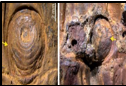
  1. Bamboo Stem: Recently, researchers discovered an exceptionally well-preserved 37,000-year-old fossil bamboo stem in the Chirang River deposits of the Imphal Valley, Manipur.
  • Key Highlights: It carries clear thorn-scar marks, a feature almost never preserved in fossils.
  • Scientific Importance: Represents the earliest thorny bamboo fossil from Asia.
  • May rewrite botanical history by providing first direct evidence of ancient bamboo defence structures.
  • Why Bamboo Fossils Are Rare: Bamboo has hollow, fibrous stems that decompose quickly.
  • Fossilization of such delicate tissues is exceedingly uncommon, making this find scientifically valuable.
  • Detailed lab examination of nodes, buds, and thorn scars led to its classification as Chimonobambusa manipurensis.
  • Comparative study with modern species like Bambusa bambos and Chimonobambusa callosa helped reconstruct its morphology and ecological role.
  • First Evidence of Thorniness in Ice Age Asia: Confirms that thorn-based defence mechanisms in bamboo already existed during the Ice Age (~37,000 years ago).
  • Shows ancient bamboos evolved strategies to deter herbivores similar to present-day.
  1. Persons with Disabilities: Recently, the Supreme Court urged the Central government to explore creating a stringent law similar to the SC/ST (Prevention of Atrocities) Act to criminalise derogatory acts or comments targeting persons with disabilities (PwDs) and individuals with rare medical conditions.
  • Key Highlights: Court emphasised protection of PwDs from online ridicule, mocking, and insensitive content.
  • Stressed the need for effective legal safeguards in the digital age.
  • Court’s Approach: SC refrained from imposing legal punishment on the influencers. Instead, it reminded them of their social responsibility as public figures.
  • Influencers asked to conduct at least two programmes/shows per month highlighting:
  • Success stories of specially-abled persons, and direct engagement with PwDs.
  • Aim: Use their online reach to create awareness and dignity for PwDs.
  • Larger Implication: Reflects Judiciary’s concern over rising digital insensitivity, trolling, and hate content.
  • Indicates a possible policy push towards stronger protection for persons with disabilities.
  1. India and Indonesia: Recently, India and Indonesia made significant headway in strengthening their defence cooperation, including a forward push on the proposed BrahMos supersonic missile
  • Key Highlights: Both countries reiterated commitment to a rules-based Indo-Pacific, upholding sovereignty and international law.
  • Strong synergy highlighted between the ASEAN Outlook on the Indo-Pacific (AOIP) and India’s Indo-Pacific Oceans Initiative (IPOI).
  • Agreement to deepen cooperation through platforms such as the Indian Ocean Rim Association (IORA), where India holds the chair. g.: Alignment strengthens regional maritime order.
  • Indonesia welcomed India’s proposal to establish a Joint Defence Industry Cooperation Committee.
  • Focus areas include: Technology transfer, Joint research & development, Certification harmonisation and Supply-chain integration
  • Both sides committed to strengthening cooperation in: Maritime domain awareness, Cyber resilience and Joint operational readiness
  • Plan to expand officer exchanges and training programmes was also discussed. g.: Tri-services coordination continues to deepen.
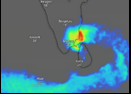
  1. Cyclone Ditwah: Recently, the India Meteorological Department (IMD) warned that Cyclone Ditwah, which formed over the southwest Bay of Bengal, may undergo rapid intensification.
  • About Cyclone Ditwah: Origin: Southwest Bay of Bengal, near the Sri Lankan coast.
  • It is the fourth tropical cyclone of the North Indian Ocean season.
  • Initially a depression, then quickly intensified to a deep depression, and further to a cyclone.
  • Expected movement: North-northwestwards across Sri Lanka and the adjoining Bay of Bengal.
  • Likely to approach: North Tamil Nadu, Puducherry & Southern Andhra Pradesh
  • Rapid Intensification: Defined as wind speed increase of 55 km/hr or more within 24 hours.
  • More common now due to warmer oceans, but often poorly captured by weather models, leading to limited early warning.
  1. Sirpur Archaeological Site: Recently, the Government of India began preparing Chhattisgarh’s 5th-century Sirpur archaeological site for nomination to the UNESCO World Heritage List.
  • About Sirpur Archaeological Site: Location: Mahasamund district, Chhattisgarh, on the banks of the Mahanadi River.
  • Represents a 5th–12th century urban settlement.
  • Served as the capital of Dakshina Kosala, ruled by the Panduvanshi and later the Somavamshi
  • Identified in 1871 (reported in 1882) by Alexander Cunningham.
  • Known as a multi-religious cultural centre.
  • Cultural Importance: Sirpur was a major Buddhist hub with extensive viharas, meditation halls, and stupas.
  • Also contained a 6th-century market complex, highlighting its role as both a religious and commercial
  • Key Archaeological Features: Excavations have uncovered: 22 Shiva temples, 5 Vishnu temples, 10 Buddhist viharas and 3 Jain viharas
  • Notable Monuments: Lakshmana Temple: Dedicated to Lord Vishnu. One of India’s best-preserved brick temples, built around the 7th century.
  • Surang Tila: Temple complex built on a high raised terrace. Designed in panchayatana style — one central shrine with four subsidiary shrines.
  • Tivaradeva Mahavihara: A major Buddhist monastery. Contains an important Buddha sculpture
  1. International Monetary Fund (IMF): Recently, the International Monetary Fund (IMF) assigned India’s national accounts statistics, including GDP and GVA estimates, a ‘C’ grade, the second-lowest rating in its four-tier system.
  • Key Highlights: The IMF noted that India’s datasets suffer from methodological weaknesses, insufficient reflection of the informal sector, and outdated base years, all of which “hamper surveillance”.
  • ‘C’ Grade Means: The IMF categorises data quality as A, B, C, or D.
  • A ‘C’ indicates that the data “have some shortcomings that somewhat hamper surveillance.”
  • This review comes just ahead of India’s release of Q2 national accounts on November 28, 2028. g.: Gaps in methodology reduce the reliability of economic monitoring.
  • IMF gave India’s Consumer Price Index (CPI) a ‘B’ grade, meaning “some shortcomings but broadly adequate”. The IMF assigned a ‘B’ grade for: Government finance statistics
  • External sector statistics
  • Monetary and financial statistics
  • Inter-sectoral consistency
  • Key Weaknesses: IMF highlights reliance on an old base year for GDP and GVA calculations.
  • GDP deflators still depend on wholesale price indices due to the absence of updated producer price indices.
  • IMF says there is “room for improvement” in other statistical methods used in quarterly accounts.
  1. Mini-Lightning,” on Mars: Recently, NASA’s Perseverance rover recorded the first direct audio evidence of electrical discharges, or “mini-lightning,” on Mars. The findings were published in Nature.
  • Key Findings: The rover’s microphone recorded a static-like pop, signalling a tiny electric discharge during the passage of a dust devil.
  • This marks the most direct observational evidence yet of atmospheric electricity on Mars.
  • No visible lightning bolt was observed — only its audio signature, comparable to hearing mini-thunder.
  • Scientists estimate the discharge occurred just six feet from the rover. g.: Smaller zaps were detected even closer, just inches away.
  • These discharges resemble the tiny shock you get after walking on carpet and touching metal.
  • Martian mini-lightning is only centimeter-scale, unlike Earth’s massive cloud-to-ground bolts.
  • Despite their miniature size, the sparks could affect chemical reactions in Mars’s atmosphere.
  • They pose no risk to astronauts, but could threaten electronics and spacesuits over time. g.: Repeated micro-shocks may degrade sensitive instruments.
  1. Bnei Menashe: Recently, Israel approved a plan to bring the remaining 5,800 members of the Bnei Menashe community from India’s northeast to Israel over the next five years.
  • About the Bnei Menashe: Are an ethnic group from Mizoram and Manipur who believe they descend from the biblical tribe of Manasseh, one of Israel’s “lost tribes.”
  • Originally Christians who later adopted Judaism, they follow Jewish customs and festivals such as Sukkot.
  • Historians estimate their arrival in India around 300–500 years ago, though their ancestral exile predates the Roman dispersion.
  • Their renewed engagement with Israel and global Jewry began in the 1980s, leading to the adoption of modern Jewish practices.
  • Nearly half the community has already migrated to Israel and gained citizenship.
  • Under the new plan, around 1,200 members will move to Israel by 2026, followed by 4,600 more by 2030, completing the community’s relocation.


UPSC QEP 2026 Batch 5 - English
Buy now View Details
Submit Your Details to Learn More
I agree to give my consent to receive updates through SMS/Email & WhatsApp*.

NEEV GS + CSAT Foundation 2026/27
Buy now View Details


Join theIAShub’s Mains Answer Writing Program

Refine your answer writing skills and elevate your UPSC preparation with personalized support and expert feedback.

Fill out the form to get started with the program or any other enquiries !

I agree to give my consent to receive updates through SMS/Email & WhatsApp*.

Best IAS Coaching In Delhi, UPSC Online & Offline Classes by IAShub

Are you dreaming of becoming an IAS officer? Then, IAShub can be your best guide. It is one of the Best IAS Coaching in Delhi. Many students who want to clear the UPSC exam join IAShub for learning. The institute gives both online and offline classes. Their teachers are experienced and helpful. They easily explain every topic. Students also get notes, tests, and tips to do well in the exam.

UPSC Online Classes by IAShub

IAShub is in Delhi and is trusted by many UPSC students. It offers coaching for every part of the UPSC exam – Prelims, Mains, and Interview. The classes are simple and easy to understand. The teachers are experts and guide students in the right way. IAShub is also known for its helpful notes, test series, and answer-writing practice. IAShub is the best coaching in Delhi and also gives UPSC Online Classes. This helps students from any place in India to learn. The online classes are live and also recorded. So, students can watch them anytime. These classes cover the full UPSC syllabus.

Key Offerings Provided by IAShub

Here are some important services provided by IAShub:

  • UPSC Prelims: IAShub teaches for Prelims with a focus on basics. It also gives daily current affairs and monthly magazines.
  • Classroom Courses: IAShub has classroom learning for students in Delhi. The environment is good and peaceful for study.
  • Live Classes: Students who live far can join live UPSC online classes. These classes are just like real classes.
  • QEP for Mains: The Quality Enrichment Program (QEP) is special for Mains preparation. It helps students write better and faster.
  • Answer Writing: Regular answer writing practice is given. Teachers also check answers and give tips to improve.
  • Free Resource: IAShub gives free notes by toppers and helpful Main Booster material.
  • Test Series: Test series are available for every subject. These help students know their weak points and improve.
  • Interview Guidance Session: IAShub also gives interview practice sessions with experts. These help students feel confident.

UPSC Exam Overview

The UPSC Civil Services Exam has three parts:

  • Prelims: It has two papers: General Studies and CSAT.
  • Mains: It has nine papers, including essays and optional subjects.
  • Interview: It tests the personality and confidence of the student.

This exam is tough, but with the right guidance, it becomes easy to manage. Students must study smart and stay regular.

How IAShub Helps in the UPSC Journey

IAShub supports students from the beginning to the end. It gives the right books, tests, and notes. The classes are easy to follow, and the teachers are always ready to help. Students get personal doubt sessions too. The test series and answer checking help students learn where they need to do better. Also, free study materials save time and money.
IAShub also guides students during the final stage – the interview. Experts take mock interviews and give useful tips. This full support makes IAShub one of the best IAS coaching in Delhi.

Best IAS Coaching In Delhi FAQs

Yes, IAShub offers live and recorded online classes. Students can attend from any part of India.

Classes are available in both English and Hindi, so students can choose the language they are comfortable with.

The classroom centre is located in Delhi. Students can visit and join offline batches there.

IAShub gives interview guidance sessions to help students prepare for the final round of UPSC.