2 Min Series 26 November 2025

THEIASHUB
Get an Instant Call Back from Our Expert Mentors Now!
+91

26th November 2025

  1. Exercise Suryakiran: Recently, the 19th edition of the Joint Military Exercise SURYAKIRAN XIX – 2025 commenced at Pithoragarh, Uttarakhand.
  • About Exercise Suryakiran: An annual, bilateral, battalion-level military exercise conducted alternately by India and Nepal to enhance defence cooperation, coordination, and operational preparedness.
  • Aim: To improve interoperability in jungle warfare, mountain warfare, counter-terrorism operations, and to integrate modern technologies for more effective joint operations.
  • Suryakiran Ex. 2025: Participating Contingents: India: 334 personnel from the ASSAM Regiment|
    - Nepal: 334 personnel from the DEVI DATTA Regiment
  • Operational Focus: Conduct of sub-conventional operations under Chapter VII of the UN Mandate, with emphasis on: Jungle warfare
    - Counter-terrorism in mountainous terrain
    - HADR (Humanitarian Assistance & Disaster Relief)
    - Medical response
    - Environmental conservation
    - Integrated ground–aviation operations
  • Interoperability & UN Alignment: Focus on improving operational harmony, reducing risks to life and property in peacekeeping roles, and aligning drills with UN standards.
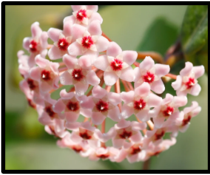
  1. Hoya Dawodiensis: Recently, a major scientific breakthrough was reported from Itanagar, Arunachal Pradesh, with the discovery of a new plant species named Hoya dawodiensis.
  • About Hoya Dawodiensis: Family: Apocynaceae
  • Genus: Hoya — a diverse group of tropical flowering plants
  • Habitat: Found growing on streamside trees in the remote, biodiversity-rich Vijoynagar valley. The region lies along the Myanmar border and near Namdapha National Park.
  • Key Features: Growth Form: A delicate, climbing plant.
    - Flowers: Glossy, white, star-shaped blooms arranged in clusters.
    - Flowering Period: Late September to November.
  • Conservation Status: Classified as Critically Endangered (IUCN)|
    - Only 3–4 individual plants are currently known in the wild.
    - Major Threat: Habitat pressure from shifting cultivation in the area.
  • Additional Findings: Hoya yingjiangensis has been recorded for the first time in India.
    - Hoya nummularia has been documented for the first time in Arunachal Pradesh.
  1. Bioremediation Method: Recently, the Hyderabad Metropolitan Development Authority (HMDA) proposed an advanced in-situ bioremediation technique to restore the water quality of Hussain Sagar Lake.
  • About Bioremediation Method: The process uses enzyme solutions and Bokashi balls to activate beneficial microorganisms that naturally degrade pollutants.
  • Objectives: Remove foul odour, Control algal growth, Improve water and sediment quality, Enhance dissolved oxygen levels and Restore the lake’s ecological balance
  • About Bokashi Balls: Bokashi balls are tennis-ball-sized organic spheres packed with Effective Microorganisms (EM) for treating polluted water.
  • How They Work: They sink to the bottom and slowly break apart, releasing EM cultures directly into the sediment.
  • Benefits: Microbes break down organic sludge
    - Neutralise harmful substances
    - Reduce foul odours and anaerobic decomposition
  1. Fujiwhara Effect: Recently, global weather models signalled the development of two cyclonic storms in the Bay of Bengal, raising the possibility of a rare Fujiwhara interaction that greatly complicates cyclone forecasting.
  • About Fujiwhara Effect: A rare meteorological phenomenon in which two nearby cyclonic systems begin to rotate around a common centre due to interaction between their wind circulations.
  • First described by Sakuhei Fujiwhara in 1921.
  • Most often observed when cyclones in the tropical belt come within ~1,400 km of each other.
  • Conditions Favouring: Both storms rotating counter-clockwise (Northern Hemisphere).
    - Warm sea surface temperatures above 26°C that sustain convection.
    - Low vertical wind shear, ensuring structural stability.
  • Key Features: Mutual Rotation: Both cyclones circle a common centre anti-clockwise, altering trajectory and speed.
    - Energy Exchange: The stronger cyclone may draw momentum or moisture from the weaker one.
    - Track Uncertainty: Steering winds become disrupted, making landfall and intensity predictions more difficult.
    - Potential Stalling: Slower movement may increase rainfall duration and flood risk.
  1. Road Dust: Recently, road dust has surfaced as a significant source of PM₁₀ pollution in Indian cities, especially in the context of the NCAP target of reducing PM₁₀ levels by 40% by 2025–26.
  • Consequences of Road Dust: Health Impacts: Continuous exposure to coarse and fine dust particles leads to more respiratory ailments and eye irritation. ICMR reports show increased OPD visits during high-pollution episodes.
  • Ambient Air Pollution: Road dust accounts for 20–52% of PM₁₀ and 8–25% of PM₂.₅, worsening AQI and intensifying winter smog in metropolitan clusters.
  • Heat Amplification: Bare verges and open soil surfaces raise local temperatures and promote dust resuspension. IPCC AR6 indicates that urban greening can lower heat by 2–4°C.
  • Economic Losses: Pollution-related illness reduces labour productivity, contributing to an estimated 4% GDP loss (World Bank).
  • Why Road Dust Reduction Matters: Largest PM₁₀ Source: With a 20–52% share across 17 surveyed cities, road dust control is essential for meeting NCAP targets and reducing premature deaths.
    - Regional Necessity: Northern India’s high silt loads make dust suppression critical to stabilising urban air quality; for instance, Delhi records an average 47 g/m² silt load.
    - Policy Priority: Nearly 64% of NCAP budget has already been allocated for dust mitigation measures.
  1. Capital Gains Account Scheme (CGAS): Recently, the Ministry of Finance issued the Capital Gains Accounts (Second Amendment) Scheme, 2025, introducing key changes to the Capital Gains Account Scheme (CGAS),
  • About CGAS, 1988: Introduced in 1988 to help taxpayers claim exemptions on long-term capital gains.
  • Under Section 54 of the Income Tax Act, capital gains must be reinvested within 3 years to avoid tax. When taxpayers cannot reinvest before the ITR filing due date, they may deposit the unutilised gains into CGAS.
  • Deposits must be made before filing the income tax return.
  • Money deposited in CGAS is treated as reinvestment, making the taxpayer eligible for exemption.
  • Short-term capital gains are not eligible under this scheme.
  • Second Amendment: Earlier, CGAS deposits were limited to public sector banks and a few older institutions.
    - Now, 19 major private banks (all non-rural branches) can accept and maintain CGAS deposits.
    - Non-rural means branches in locations with population ≥ 10,000 (2011 Census).
    - The amended scheme formally includes electronic modes of deposit, such as:
    UPI, IMPS, NEFT, RTGS, credit/debit cards, net banking, BHIM/Aadhaar Pay, etc.
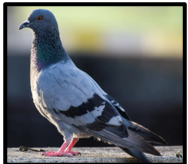
  1. Pigeons: Recently, a study published in Science indicated that pigeons sense Earth’s magnetic field through tiny electrical currents produced in their inner ears.
  • Key Findings: Many animals like birds, insects, turtles, also detect magnetic fields for migration and locating feeding grounds.
  • Researchers exposed six pigeons to a magnetic field slightly stronger than Earth's, with the birds’ heads immobilised.
  • The magnetic field was rotated to simulate how a pigeon’s head would naturally move relative to Earth’s geomagnetic field.
  • Scientists mapped brain activity and compared the results with pigeons not exposed to the magnetic field.
  • Vestibular nuclei (brainstem region receiving input from the inner ear) were activated by magnetic fields.
  • Signals travelled to: Mesopallium — integrates sensory information and Hippocampus — responsible for spatial navigation
  • Single-cell sequencing revealed proteins in inner-ear cells that are sensitive to electromagnetic changes.
  • Conclusion: When pigeons bob their heads, their inner-ear loops detect electric currents linked to Earth's magnetic field. This allows them to navigate long distances back to their home location.
  1. Assam Prohibition of Polygamy Bill, 2025: Recently, the Assam government tabled the Assam Prohibition of Polygamy Bill, 2025, which proposes strict penalties.
  • Key Highlights: The Bill makes polygamy a criminal offence, with: Up to 7 years’ imprisonment + fine for entering into a second marriage while the first is valid.
  • Up to 10 years’ imprisonment if the person hides an existing marriage.
  • Punishment doubled for repeat offenders.
  • Jurisdiction & Coverage: Applicable across Assam except Sixth Schedule areas.
    - Does not apply to Scheduled Tribes under Article 342, whose customary laws permit multiple marriages.
    - Covers residents of Assam entering polygamous marriages outside the State.
    - Includes non-residents who own immovable property in Assam or receive State-funded benefits/subsidies.
  1. SC Over CCTV Non-Compliance: Recently, the Supreme Court strongly rebuked the Union government for not adhering to its 2020 order directing the installation of CCTV cameras in police stations and interrogation rooms of central agencies.
  • Key Highlights: It has been five years since the 2020 judgment made CCTV installation mandatory in all police stations and central agencies with interrogation powers.
  • Court expressed shock over continued custodial torture, citing 11 custodial deaths in 8 months in Rajasthan.
  • Only 11 States/UTs have filed compliance reports; Centre has filed none.
  • SG argued that CCTVs outside police stations may be counter-productive, citing security concerns.
  • Court suggested open correction centres to reduce overcrowding and prison expenditure.
  • 2020 Supreme Court judgment mandated CCTV and audio-video recording in:
    - All police stations
    - Offices of central investigative agencies (NIA, CBI, ED, NCB, DRI, SFIO, etc.)
    - Any agency with interrogation and arrest powers
    - CCTV installation aimed to safeguard the right to dignity and life and act as a deterrent to custodial torture.


UPSC QEP 2026 Batch 5 - English
Buy now View Details
Submit Your Details to Learn More
I agree to give my consent to receive updates through SMS/Email & WhatsApp*.

NEEV GS + CSAT Foundation 2026/27
Buy now View Details


Join theIAShub’s Mains Answer Writing Program

Refine your answer writing skills and elevate your UPSC preparation with personalized support and expert feedback.

Fill out the form to get started with the program or any other enquiries !

I agree to give my consent to receive updates through SMS/Email & WhatsApp*.

Best IAS Coaching In Delhi, UPSC Online & Offline Classes by IAShub

Are you dreaming of becoming an IAS officer? Then, IAShub can be your best guide. It is one of the Best IAS Coaching in Delhi. Many students who want to clear the UPSC exam join IAShub for learning. The institute gives both online and offline classes. Their teachers are experienced and helpful. They easily explain every topic. Students also get notes, tests, and tips to do well in the exam.

UPSC Online Classes by IAShub

IAShub is in Delhi and is trusted by many UPSC students. It offers coaching for every part of the UPSC exam – Prelims, Mains, and Interview. The classes are simple and easy to understand. The teachers are experts and guide students in the right way. IAShub is also known for its helpful notes, test series, and answer-writing practice. IAShub is the best coaching in Delhi and also gives UPSC Online Classes. This helps students from any place in India to learn. The online classes are live and also recorded. So, students can watch them anytime. These classes cover the full UPSC syllabus.

Key Offerings Provided by IAShub

Here are some important services provided by IAShub:

  • UPSC Prelims: IAShub teaches for Prelims with a focus on basics. It also gives daily current affairs and monthly magazines.
  • Classroom Courses: IAShub has classroom learning for students in Delhi. The environment is good and peaceful for study.
  • Live Classes: Students who live far can join live UPSC online classes. These classes are just like real classes.
  • QEP for Mains: The Quality Enrichment Program (QEP) is special for Mains preparation. It helps students write better and faster.
  • Answer Writing: Regular answer writing practice is given. Teachers also check answers and give tips to improve.
  • Free Resource: IAShub gives free notes by toppers and helpful Main Booster material.
  • Test Series: Test series are available for every subject. These help students know their weak points and improve.
  • Interview Guidance Session: IAShub also gives interview practice sessions with experts. These help students feel confident.

UPSC Exam Overview

The UPSC Civil Services Exam has three parts:

  • Prelims: It has two papers: General Studies and CSAT.
  • Mains: It has nine papers, including essays and optional subjects.
  • Interview: It tests the personality and confidence of the student.

This exam is tough, but with the right guidance, it becomes easy to manage. Students must study smart and stay regular.

How IAShub Helps in the UPSC Journey

IAShub supports students from the beginning to the end. It gives the right books, tests, and notes. The classes are easy to follow, and the teachers are always ready to help. Students get personal doubt sessions too. The test series and answer checking help students learn where they need to do better. Also, free study materials save time and money.
IAShub also guides students during the final stage – the interview. Experts take mock interviews and give useful tips. This full support makes IAShub one of the best IAS coaching in Delhi.

Best IAS Coaching In Delhi FAQs

Yes, IAShub offers live and recorded online classes. Students can attend from any part of India.

Classes are available in both English and Hindi, so students can choose the language they are comfortable with.

The classroom centre is located in Delhi. Students can visit and join offline batches there.

IAShub gives interview guidance sessions to help students prepare for the final round of UPSC.