2 Min Series 25 November 2025

THEIASHUB
Get an Instant Call Back from Our Expert Mentors Now!
+91

25th November 2025

1. HAMMER: Recently, Bharat Electronics Limited (BEL) and Safran Electronics & Defence (SED) of France signed a Joint Venture Cooperation Agreement (JVCA) to produce HAMMER.
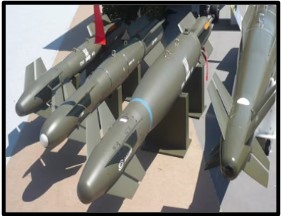
  • About HAMMER: Stands for Highly Agile Modular Munition Extended Range) is a smart, precision-guided, glide-bomb weapon with a range up to 70 km.
  • It can be fitted on 250 kg, 500 kg, and 1,000 kg standard bombs and is known for high accuracy, modular design, and adaptability across platforms.
  • India had earlier procured HAMMER urgently in 2020 during the China–Ladakh standoff to arm Rafale fighter jets.
  • The weapon is all-weather, jam-resistant, can be launched from low altitude, works over rough terrain, and can penetrate fortified targets, making interception difficult.
  • The new JV will be a 50:50 private limited company, focused on local manufacturing, supply, and maintenance of HAMMER for the Indian Air Force and Indian Navy.
  • Indigenisation level of components will progressively increase to up to 60%, including key electronics, mechanical parts, and sub-assemblies.

2. Solaras S2: Recently, Grahaa Space, a Bengaluru-based spacetech startup, received IN-SPACe authorisation to launch its maiden nano-satellite mission named Solaras S2.

  • Key Highlights: The launch will take place from Alcântara Space Center (CEA), Brazil, using the Hanbit-Nano launch vehicle developed by Innospace (South Korea).

  • Solaras S2 is a technology demonstration mission aimed at qualifying Grahaa Space’s nano-satellite bus and platform.

  • The mission is a key technical step to validate the startup’s readiness for its next phase of satellite missions.

  • Support for the project came from the STIIC incubation centre at IIST Trivandrum and IN–SPACe.

  • Upcoming missions will focus on: Qualifying the communications module

  • Collecting geospatial data using the optical payload

  • Establishing inter-satellite links

  • The long-term aim is to build reliable nano-satellite capability to provide near-real-time geospatial data for various ground applications.

  • The startup focuses on developing a constellation of nano-satellites in low Earth orbit for on-demand earth observation.

3. Hayli Gubbi Volcano: Recently, India began preparing for possible air travel disruptions as volcanic ash from Ethiopia’s Hayli Gubbi volcano drifted toward the Indian mainland. The volcano has erupted for the first time in 10,000 years.

  • Key Highlights: The eruption sent a massive ash cloud up to 14 km high, drifting across the Red Sea, Yemen, Oman, Pakistan, and reaching India.

  • Affected Indian regions include: Delhi, parts of Uttar Pradesh, Bihar, Sikkim, Arunachal Pradesh, and central India.

  • Volcanic ash contains abrasive, glass-like particles that:

  • Can damage aircraft engines

  • Melt at high temperatures

  • Solidify into glass-like deposits on turbine blades

  • Affect engine performance and safety

  • About Hayli Gubbi: Situated about 800 km (500 miles) northeast of Ethiopia’s capital, Addis Ababa.

  • It is the southernmost volcano in the Erta Ale Range, a major volcanic chain in the Afar region of Ethiopia. This is famous for its persistent lava lakes and is largely composed of shield volcanoes.

4. Asian and Pacific Centre for Development of Disaster Information Management: Recently, the 10th Session of the Asian and Pacific Centre for Development of Disaster Information Management (APDIM) on inclusive disaster risk data governance was held in New Delhi.

  • About APDIM: A regional institution under the UN Economic and Social Commission for Asia and the Pacific (ESCAP).
  • Vision: To ensure disaster risk information is effectively generated and used to support sustainable development across Asia–Pacific.

  • Mandate: To minimise human and material losses from natural hazards and strengthen the design, investment, and implementation of disaster risk reduction and resilience strategies.

  • Governance: Managed by a Governing Council of eight ESCAP member countries, elected for three-year terms.

  • India is a member for 2022–2025.
  • Headquarters: Tehran, Iran.
  • Functions: Risk Information & Knowledge Repository: Acts as a regional hub to enhance the science–policy interface for disaster management.
  • Information Capacity & Application: Supports knowledge exchange, sharing of best practices, and capacity-building among Asia–Pacific countries.
  • Regional Cooperation: Promotes cross-country coordination, dialogue, and collaboration for improved disaster risk information management.

5. Auramine O: Recently, India has been dealing with repeated food adulteration cases where non-permitted synthetic dyes are used, especially the commonly found auramine O.

  • About Auramine O: A bright yellow industrial dye, widely used in textiles, leather, paper, printing inks, and lab staining—not approved as a food colour in India, the EU, the U.S., or most countries.

  • Inspections and studies have revealed auramine in sweets, savoury snacks, and brightly coloured street foods, especially items resembling saffron or turmeric.
  • Food adulteration has a long history in India, involving dyes and chemicals like metanil yellow, rhodamine B, Sudan dyes, argemone oil, calcium carbide, urea, mineral oils, and chalk powder, indicating structural regulatory weaknesses.
  • o   Health Risks: Liver & kidney damage, Spleen enlargement, Mutagenic effects and Potential carcinogenic outcomes.
  • o   The IARC (WHO) classifies industrial production of auramine as Group 1 – carcinogenic to humans, while ingestion is classified as possibly carcinogenic.
  • o   Even low-dose, long-term exposure can cause physiological and genetic damage.
  • o   Children are at greater risk due to higher consumption of bright-coloured foods.

6. Ningaloo Reef: Recently, a new survey showed that nearly 70% of corals at the UNESCO-listed Ningaloo Reef in Western Australia have died.

  • Key Findings: Australia experienced its longest, largest, and most intense marine heatwave ever recorded, leading to severe mass bleaching.

  • Coral mortality now exceeds 60% across eight northern lagoon sites between Osprey Sanctuary Zone and Tantabiddi Sanctuary Zone.
  • Researchers assessed 1,600+ corals, only ~600 survived — most bleached corals did not recover.
  • Earlier estimates indicated 30–90% bleaching along the 1,500-km coastline of Ningaloo.
  • Bleaching extended even to supposedly resilient areas like Rowley Shoals and northern Kimberley reefs.
  • The underwater heatwave superheated the entire water column down to 300 meters — unprecedented in Australia.
  • A few resilient species survived (e.g., Veron’s tube coral, lesser knob coral).
  • But dominant species such as staghorn corals (Acropora) and thin birdsnest coral have largely died out.
  • Between Jan 2023 and Sep 2025, 4% of the world’s coral reef area experienced bleaching-level heat stress, with documented mass bleaching in 83 countries/territories.

7. Uranium: Recently, a new study found alarming levels of uranium in the breast milk of women across six districts in Bihar.

  • Key Findings: Uranium levels reached up to 25 µg/L, with every sample showing contamination; there is no global permissible limit for uranium in breast milk.

  • Earlier studies in the region had already detected arsenic and lead in breast milk, indicating a worsening pattern of toxic exposure.
  • The findings pose significant health risks for infants, who are more vulnerable to non-carcinogenic effects than mothers.
  • No carcinogenic risk was observed, but infants face a high potential for non-cancer health complications due to uranium exposure.
  • Uranium levels were measured using the Agilent 7850 LC-ICP-MS.
  • Study published in Nature journal titled: “Discovery of uranium content in breast milk and assessment of associated health risks for mothers and infants in Bihar, India.”
  • 70% of infants exposed showed potential for non-carcinogenic health impacts.
  • Likely sources of contamination: Drinking water and locally grown food. Both linked to areas with known groundwater uranium contamination.
  • India has uranium-contaminated groundwater in 151 districts across 18 states.
  • In Bihar, 11 districts face groundwater uranium contamination: Gopalganj, Saran, Siwan, East Champaran, Patna, Vaishali, Nawada, Nalanda, Supaul, Katihar, and Bhagalpur.

8. Biomass Pellet Plant: Recently, the Union Minister for New and Renewable Energy inaugurated a 240-tonnes-per-day biomass pellet plant in Rewari, Haryana, marking a key milestone in the State’s clean energy transition and India’s renewable energy push.

  • Key Highlights: The plant uses paddy straw, mustard straw and cotton stalks to produce biomass pellets for co-firing in thermal power plants, helping reduce pollution, carbon emissions, and stubble burning.

  • The initiative will boost rural livelihoods, create new income streams for farmers, and support the clean fuel ecosystem.

  • National Policy on Biomass Co-firing: GoI has notified a new policy mandating biomass pellet / MSW charcoal co-firing in all coal-based power plants.
  • Thermal plants must co-fire 5% biomass nationally; 7% for Delhi-NCR

  • At least 50% of biomass for NCR plants must come from local paddy residue & stubble, directly addressing farm burning.

  • Government is strengthening source segregation and regulatory systems to support MSW charcoal production despite waste-quality challenges.

9. R21/Matrix-M Malaria Vaccine: Recently, Gavi and UNICEF signed a new agreement to make the R21/Matrix-M malaria vaccine significantly more accessible and affordable.
  • About R21/Matrix-M: The second malaria vaccine to receive a WHO recommendation, following RTS, S/AS01 approved in 2021.
  • It was developed by the University of Oxford and is being manufactured and scaled up by the Serum Institute of India (SII).
  • The vaccine uses Novavax’s adjuvant technology and has met WHO standards for safety, quality, and effectiveness.
  • Adjuvants are ingredients added to vaccines to boost the immune response, making the vaccine more effective.
  • The Matrix-M component in R21 is a proprietary saponin-based adjuvant developed by Novavax.


UPSC QEP 2026 Batch 5 - English
Buy now View Details
Submit Your Details to Learn More
I agree to give my consent to receive updates through SMS/Email & WhatsApp*.

NEEV GS + CSAT Foundation 2026/27
Buy now View Details


Join theIAShub’s Mains Answer Writing Program

Refine your answer writing skills and elevate your UPSC preparation with personalized support and expert feedback.

Fill out the form to get started with the program or any other enquiries !

I agree to give my consent to receive updates through SMS/Email & WhatsApp*.

Best IAS Coaching In Delhi, UPSC Online & Offline Classes by IAShub

Are you dreaming of becoming an IAS officer? Then, IAShub can be your best guide. It is one of the Best IAS Coaching in Delhi. Many students who want to clear the UPSC exam join IAShub for learning. The institute gives both online and offline classes. Their teachers are experienced and helpful. They easily explain every topic. Students also get notes, tests, and tips to do well in the exam.

UPSC Online Classes by IAShub

IAShub is in Delhi and is trusted by many UPSC students. It offers coaching for every part of the UPSC exam – Prelims, Mains, and Interview. The classes are simple and easy to understand. The teachers are experts and guide students in the right way. IAShub is also known for its helpful notes, test series, and answer-writing practice. IAShub is the best coaching in Delhi and also gives UPSC Online Classes. This helps students from any place in India to learn. The online classes are live and also recorded. So, students can watch them anytime. These classes cover the full UPSC syllabus.

Key Offerings Provided by IAShub

Here are some important services provided by IAShub:

  • UPSC Prelims: IAShub teaches for Prelims with a focus on basics. It also gives daily current affairs and monthly magazines.
  • Classroom Courses: IAShub has classroom learning for students in Delhi. The environment is good and peaceful for study.
  • Live Classes: Students who live far can join live UPSC online classes. These classes are just like real classes.
  • QEP for Mains: The Quality Enrichment Program (QEP) is special for Mains preparation. It helps students write better and faster.
  • Answer Writing: Regular answer writing practice is given. Teachers also check answers and give tips to improve.
  • Free Resource: IAShub gives free notes by toppers and helpful Main Booster material.
  • Test Series: Test series are available for every subject. These help students know their weak points and improve.
  • Interview Guidance Session: IAShub also gives interview practice sessions with experts. These help students feel confident.

UPSC Exam Overview

The UPSC Civil Services Exam has three parts:

  • Prelims: It has two papers: General Studies and CSAT.
  • Mains: It has nine papers, including essays and optional subjects.
  • Interview: It tests the personality and confidence of the student.

This exam is tough, but with the right guidance, it becomes easy to manage. Students must study smart and stay regular.

How IAShub Helps in the UPSC Journey

IAShub supports students from the beginning to the end. It gives the right books, tests, and notes. The classes are easy to follow, and the teachers are always ready to help. Students get personal doubt sessions too. The test series and answer checking help students learn where they need to do better. Also, free study materials save time and money.
IAShub also guides students during the final stage – the interview. Experts take mock interviews and give useful tips. This full support makes IAShub one of the best IAS coaching in Delhi.

Best IAS Coaching In Delhi FAQs

Yes, IAShub offers live and recorded online classes. Students can attend from any part of India.

Classes are available in both English and Hindi, so students can choose the language they are comfortable with.

The classroom centre is located in Delhi. Students can visit and join offline batches there.

IAShub gives interview guidance sessions to help students prepare for the final round of UPSC.