2 Min Series 24 November 2025

THEIASHUB
Get an Instant Call Back from Our Expert Mentors Now!
+91

24th November 2025

  1. AUSINDEX 2025: Recently, India and Australia strengthened their maritime cooperation by conducting the bilateral naval exercise AUSINDEX 2025 in the Northern Pacific.
  • About AUSINDEX 2025: It is a significant maritime exercise held every two years, and has been conducted regularly since 2015.
  • Indian Naval Ship INS Sahyadri and Australian Navy’s HMAS Ballarat participated in AUSINDEX 2025 in the Northern Pacific.
  • Warships and aircraft from both navies conducted intense joint naval drills and coordinated operations, enhancing maritime cooperation.
  • The exercise aimed to boost interoperability and deepen strategic partnership between India and Australia.
  • INS Sahyadri, an indigenously designed and constructed Guided Missile Stealth Frigate, reflects the Aatmanirbhar Bharat
  • The ship has a strong record of participation in multiple bilateral and multilateral exercises and long-range operational deployments.
  1. Chimpanzees: Recently, a study published in Science revealed that chimpanzees can weigh evidence, revise their beliefs, and make rational decisions much like humans.
  • Key Findings: Research observed 15–23 chimpanzees at Ngamba Island Sanctuary through five behavioural tests.
  • Aim: To see whether chimpanzees follow the latest clue or combine, remember, and update information like rational thinkers.
  • Findings from the Five Tests: Chimpanzees prioritised strong clues over weak ones, even when the strong clue appeared later.
  • They consistently chose the most reliable clue, regardless of clue type or order.
    - They kept multiple options in mind, selecting weak evidence over no evidence when the strongest clue was removed.
    - They revised choices only when new information was added, not repeated signals.
    - They updated beliefs when a “defeater” contradicted earlier strong evidence, but ignored it when irrelevant.
    - These abilities would be hard to observe reliably in the wild, but the findings raise bigger evolutionary questions about how much rational thinking humans share with chimpanzees and other great apes.
  1. Leptospirosis: Recently, Jamaica reported a leptospirosis outbreak in the aftermath of Hurricane Melissa’s devastation.
  • About Leptospirosis: A potentially fatal bacterial infection caused by Leptospira interrogans (Leptospira).
  • The bacteria enter the human body through small cuts or cracks, especially on the feet.
  • More common in warm, humid regions and occurs in both rural and urban settings.
  • Disease Progression: The illness often occurs in two phases: First phase: fever, chills, headache, muscle pain, vomiting, or diarrhoea. A brief recovery may follow.
    - Second phase (if it develops): more severe, involving kidney or liver failure or meningitis.
  • The disease is treatable with antibiotics when diagnosed in time.
  • Transmission: Primarily a contagious disease among animals, reaching humans only under specific environmental conditions.
    - Carriers include both wild and domestic animals—rodents, cattle, pigs, dogs, etc.
    - Transmission occurs when infected animals shed Leptospira in their urine, contaminating soil, water, and surroundings.
    - Animals may continue excreting the bacteria for months or even years, sustaining the transmission cycle.
  1. Centre for Research and Planning (CRP): Recently, a new report released by the Supreme Court’s Centre for Research and Planning (CRP) urged the Indian judiciary to discard several colonial-era and caste-loaded job titles.
  • Key Highlights: The report argues these terms perpetuate a “grammar of inequality” rooted in feudal, colonial, and caste-based hierarchies.
  • Titled Reforming Administrative Nomenclature in the Indian Judiciary, the report highlights that administrative language should reflect dignity, equity, and constitutional values.
  • The report notes that terms like “halalkhor” and “scavenger” violate the constitutional prohibition of caste-based discrimination.
  • It recommends aligning administrative language with the Constitution:
    - halalkhor → sanitation assistant
    - dhobi → laundry operator
    - coolie → freight assistant
    - cycle sawar → logistics assistant
    - basta bardar → document handler
    - bundle lifter → material coordinator
    - masalchi → kitchen assistant
    - malan → horticulture attendant
    - scavenger → sanitation assistant
  • The report stresses that language itself is the judiciary’s first act of justice, shaping recognition, dignity, and institutional culture.
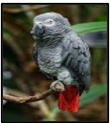
  1. African Grey Parrot: Recently, State Forest Departments across India reported having no official records of African grey parrot trade or any registered breeders.
  • About African Grey Parrots (Psittacus Erithacus): Are widely available in pet markets despite having no authorised breeders or pet shops registered with State Forest Departments.
  • The species is listed in CITES Appendix I, requiring special permits like CITES registration, import certificates, and DGFT licences for legal trade.
  • The parrot is also classified as Endangered by the IUCN, with wild populations decimated due to heavy capture for global pet trade.
  1. India-Brazil-South Africa (IBSA): Recently, in the India-Brazil-South Africa (IBSA) forum, India urged Brazil and South Africa to emphasize unity, cooperation and humanity at a time when global geopolitics is increasingly fractured.
  • Key Highlights: A firm call was made to eliminate double standards on terrorism and advance coordinated global action.
  • Proposal to institutionalise a National Security Advisers–level dialogue among India, Brazil, and South Africa.
  • Suggestion to create an IBSA Fund for Climate-Resilient Agriculture to support sustainable and adapted farming systems.
  • Call for establishing a Digital Innovation Alliance to share digital public infrastructure such as UPI, CoWIN-like platforms, cybersecurity frameworks, and women-led tech solutions.
  • Recommendation to unveil the digital initiative at India’s upcoming AI Impact Summit.
  • IBSA highlighted as a grouping that connects three continents, three democracies, and three major emerging economies.
  • Appreciation for the existing IBSA Fund, credited with completing around 50 development projects across 40 countries in education, health, women’s empowerment, and solar energy.
  • India and South Africa reviewed bilateral ties, exploring deeper cooperation in AI, digital public infrastructure, critical minerals, and mutual investments.
  • South Africa welcomed growing Indian investments in infrastructure, technology, mining, innovation, and start-up sectors.


  1. India & Georgia: Recently, India strengthened its cooperation with Georgia in sericulture, textiles, apparel, and carpet trade.
  • Key Highlights: Representing the International Sericultural Commission (ISC), India delivered the Opening Address at the 11th BACSA (Black, Caspian Seas and Central Asia Silk Association) International Conference – CULTUSERI 2025.
  • Technical papers presented included: The Chronicles of Wild Silk
    - Indo-Bulgarian collaboration on a productive bivoltine silkworm hybrid for India
    - The Central Silk Board (CSB) showcased the innovative “5-in-1 Silk Stole”, integrating Mulberry, Oak Tasar, Tropical Tasar, Muga, and Eri silks—highlighted as a potential flagship global product.
  • Key Outcomes: Enhanced India–Georgia cooperation in sericulture research and textiles & apparel trade.
    - Elevated India’s innovation through the 5-in-1 Silk Stole.
    - Identified new areas for trade diversification, including carpets and premium textiles.
    - Reinforced India’s global leadership through strong participation in BACSA.
  1. Moss Spores: Recently, a new study found that moss spores exposed for nine months outside the International Space Station (ISS) survived and retained their ability to reproduce after returning to Earth.
  • About Moss: One of Earth’s oldest and hardiest plant groups
  • Over 80% survived, and nearly all of those successfully germinated once back on Earth
  • The species tested was Physcomitrium patens, known for its resilience in extreme environments on Earth (Antarctica, deserts, volcanic fields).
  • Spores survived exposure to vacuum, cosmic radiation, microgravity, and extreme temperatures for 283 days.
  • Chlorophyll levels remained normal, with only a 20% drop in chlorophyll a, which did not affect overall health.
  • Multiple layers of spore walls provided passive shielding, protecting the spores from space stresses.
  • Based on findings, scientists estimate moss spores could survive ~15 years in space.
  • Why This Is Significant: Demonstrates that moss is highly durable even in harsh extra-terrestrial conditions.
    - Opens possibilities for supporting human habitats on the Moon or Mars.
  • Moss could help in future space colonies with: Oxygen generation, Humidity control, Soil formation & offers insights into designing sustainable life-support systems in long-term space missions.
  1. Sukhna Wildlife Sanctuary: Recently, a nine-day wildlife census began at the Sukhna Wildlife Sanctuary to prepare a comprehensive inventory of its animals and birds.
  • About Sukhna Wildlife Sanctuary: Located in Chandigarh, the sanctuary lies near the well-known Sukhna Lake at the foothills of the Shivalik range.
  • Established in 1998, it covers 2600 hectares and includes around 150 water bodies in its catchment area.
  • The area is geographically fragile, with sandy Shivalik soil and clay pockets, making it prone to soil erosion during heavy rains.
  • The sanctuary features a mix of forests, grasslands, and wetlands, with Sukhna Lake playing a central ecological role.
  • Major flora includes Khair, Phulai, Kikar, Shisham, Amaltas, Moonj, Jhingan, Amla, Rati, Vasaka, and others.
  • Common mammals: Squirrels, Common Mongoose, Indian Hare, Porcupine, Jungle Cat, Jackal, Wild Boar, etc.
  • The sanctuary is notable for having the largest clustered population of sambar in the country.
  • Birdlife includes Peacocks, Hill Mynas, Black Drongos, Jungle Crows, Parrots, Doves, and various migratory species.


UPSC QEP 2026 Batch 5 - English
Buy now View Details
Submit Your Details to Learn More
I agree to give my consent to receive updates through SMS/Email & WhatsApp*.

NEEV GS + CSAT Foundation 2026/27
Buy now View Details


Join theIAShub’s Mains Answer Writing Program

Refine your answer writing skills and elevate your UPSC preparation with personalized support and expert feedback.

Fill out the form to get started with the program or any other enquiries !

I agree to give my consent to receive updates through SMS/Email & WhatsApp*.

Best IAS Coaching In Delhi, UPSC Online & Offline Classes by IAShub

Are you dreaming of becoming an IAS officer? Then, IAShub can be your best guide. It is one of the Best IAS Coaching in Delhi. Many students who want to clear the UPSC exam join IAShub for learning. The institute gives both online and offline classes. Their teachers are experienced and helpful. They easily explain every topic. Students also get notes, tests, and tips to do well in the exam.

UPSC Online Classes by IAShub

IAShub is in Delhi and is trusted by many UPSC students. It offers coaching for every part of the UPSC exam – Prelims, Mains, and Interview. The classes are simple and easy to understand. The teachers are experts and guide students in the right way. IAShub is also known for its helpful notes, test series, and answer-writing practice. IAShub is the best coaching in Delhi and also gives UPSC Online Classes. This helps students from any place in India to learn. The online classes are live and also recorded. So, students can watch them anytime. These classes cover the full UPSC syllabus.

Key Offerings Provided by IAShub

Here are some important services provided by IAShub:

  • UPSC Prelims: IAShub teaches for Prelims with a focus on basics. It also gives daily current affairs and monthly magazines.
  • Classroom Courses: IAShub has classroom learning for students in Delhi. The environment is good and peaceful for study.
  • Live Classes: Students who live far can join live UPSC online classes. These classes are just like real classes.
  • QEP for Mains: The Quality Enrichment Program (QEP) is special for Mains preparation. It helps students write better and faster.
  • Answer Writing: Regular answer writing practice is given. Teachers also check answers and give tips to improve.
  • Free Resource: IAShub gives free notes by toppers and helpful Main Booster material.
  • Test Series: Test series are available for every subject. These help students know their weak points and improve.
  • Interview Guidance Session: IAShub also gives interview practice sessions with experts. These help students feel confident.

UPSC Exam Overview

The UPSC Civil Services Exam has three parts:

  • Prelims: It has two papers: General Studies and CSAT.
  • Mains: It has nine papers, including essays and optional subjects.
  • Interview: It tests the personality and confidence of the student.

This exam is tough, but with the right guidance, it becomes easy to manage. Students must study smart and stay regular.

How IAShub Helps in the UPSC Journey

IAShub supports students from the beginning to the end. It gives the right books, tests, and notes. The classes are easy to follow, and the teachers are always ready to help. Students get personal doubt sessions too. The test series and answer checking help students learn where they need to do better. Also, free study materials save time and money.
IAShub also guides students during the final stage – the interview. Experts take mock interviews and give useful tips. This full support makes IAShub one of the best IAS coaching in Delhi.

Best IAS Coaching In Delhi FAQs

Yes, IAShub offers live and recorded online classes. Students can attend from any part of India.

Classes are available in both English and Hindi, so students can choose the language they are comfortable with.

The classroom centre is located in Delhi. Students can visit and join offline batches there.

IAShub gives interview guidance sessions to help students prepare for the final round of UPSC.