22nd October 2025
1. Ministry of Women and Child Development (WCD): Recently, the Ministry of Women and Child Development (WCD) was honoured for its outstanding contribution to the implementation of the PM JANMAN initiative.
- About PM JANMAN Scheme: Initiated on 15 November 2023 (Janjatiya Gaurav Divas), building on the Pradhan Mantri-PVTG Development Mission from the 2022–23 Union Budget.
- Objective: To uplift Particularly Vulnerable Tribal Groups (PVTGs) through integrated socio-economic development.
- Beneficiaries: Covers 75 PVTG communities across 18 states and 1 UT (Andaman & Nicobar Islands).
- Nodal Ministry: Implemented by the Ministry of Tribal Affairs, in collaboration with 9 line ministries and state governments.
- Focus Areas: 11 interventions in housing, water, health, education, nutrition, livelihood, and electrification to improve living standards of PVTGs.
2. Childhood Lead Exposure: Recently, a new international study revealed that
lead exposure among children continues to impose a massive economic and developmental burden worldwide.
- Key Findings: Published in Communications Earth & Environment estimates that childhood lead exposure costs the world $3.4 trillion annually, equal to over 2% of global GDP (2019).
- Unequal Burden: Low- and middle-income countries (LMICs) suffer the heaviest losses, as weak regulations and informal recycling expose millions of children to toxic levels of lead.
- Current Production: Global lead production stands at 16 million tonnes per year, mainly used in batteries, paints, and consumer goods. Rising demand for electrification may worsen pollution if recycling remains unsafe.
- Health Impacts: Lead crosses the placenta and blood–brain barrier, harming developing foetuses and children.
- Even low exposure can cause brain damage, lower IQ, and behavioural issues.
- Children with 10 micrograms of lead per litre of blood may lose 1 IQ point.
- Studies across Asia, Africa, South America, and New Zealand show widespread exposure above safe limits.
3. Central Asian Mammals Initiative (CAMI): Recently,
Central Asian countries endorsed a six-year work programme under the
Central Asian Mammals Initiative (CAMI) to protect 17 iconic transboundary mammal species.
- About CAMI: Launched in 2014 at COP11 to the Convention on the Conservation of Migratory Species of Wild Animals (CMS).
- Provides a common regional framework to tackle major threats to migratory and transboundary species across Central Asia.
- Species Covered (17 total): Argali sheep, Asiatic cheetah, Asiatic wild ass, Bukhara deer, Eurasian lynx, Gobi bear, Goitered gazelle, Kiang, Mongolian gazelle, Pallas’s cat, Persian leopard, Przewalski’s horse, Saiga antelope, Snow leopard, Urial, Wild camel, and Wild yak.
- Host Country: The meeting was hosted by Uzbekistan, during its presidency of the 14th CMS COP.
- Participation: Delegates from Bhutan, China, India, Kazakhstan, Kyrgyzstan, Mongolia, Nepal,
- Pakistan, Tajikistan, Turkmenistan, and Uzbekistan attended.
- Iran and Russia participated online and endorsed the programme for regions under their jurisdiction.
- Successes in conservation of Saiga antelope, Bukhara deer, and Persian leopard.
- Challenges identified include
- habitat fragmentation, climate change, migration barriers, poaching, and limited cross-border coordination.
4. Black Holes: Recently, a study by the
Indian Institute of Astrophysics (IIA) revealed how
black holes suppress star formation through powerful radiation and high-speed jets.
- Key Finding: Both intense radiation from supermassive black holes and high-speed radio jets work together to eject gas from galaxy centers, suppressing star formation and controlling galactic growth.
- Data Used: The study analyzed over 500 nearby galaxies with active galactic nuclei (AGN) using:
- Sloan Digital Sky Survey (SDSS) – optical data
- Very Large Array (VLA) – radio data
- Quantitative Findings: Outflows are detected in 56% of radio-detected galaxies, compared to 25% in those without radio emission. Outflow speeds reach up to 2,000 km/s, often escaping the galaxy’s gravity.
- Role of Jets: Radio jets act as boosters, enhancing gas ejection but are not the main cause. They strengthen the link between black hole luminosity/power and outflow energy.
- Scientific Significance: Explains why some galaxies have very low star-formation rates.
- Enhances understanding of the interconnection between black holes, jets, and galactic evolution.
5. Scheme for Indian-Origin Scientists and Researchers: Recently, the Government of India initiated preparations to launch a new scheme designed to attract top Indian-origin “
star faculty” and researchers residing abroad back to the nation’s academic and research ecosystem.
- Key Highlights: The initiative is being shaped by the Principal Scientific Adviser’s Office, in consultation with: Department of Higher Education (Ministry of Education), Department of Science and Technology (DST) & Department of Biotechnology (DBT)
- Objective: To strengthen India’s R&D ecosystem by bringing back established Indian-origin scientists with strong academic credentials for defined research tenures in premier Indian institutions.
- Host Institutions: Returning researchers will be placed in: IITs, Top national research laboratories, and Autonomous institutions under DST and DBT.
- The scheme will focus initially on 12–14 STEM fields deemed strategically vital for national capacity building.
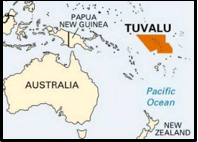
6. Tuvalu: Recently, the Government of
Tuvalu officially became the 90th State Member of the International Union for Conservation of Nature (IUCN).
- About Tuvalu: Formerly known as the Ellice Islands, is an island nation located in the west-central Pacific Ocean.
- It is the fourth smallest country in the world, with a total land area of just 26 sq. km.
- Positioned roughly halfway between Australia and Hawaii, Tuvalu’s closest neighbours are Kiribati to the north and Fiji to the south.
- The country comprises a group of small islands and atolls primarily formed from coral reefs and volcanic rock.
- All its islands are low-lying, with the highest elevation being only 5 metres above sea level, making Tuvalu extremely vulnerable to sea level rise.
- The nation has no rivers and experiences a hot, rainy tropical climate.
- Capital: Funafuti
- Languages: Tuvaluan (widely spoken) and English
- Currency: Tuvalu dollar (par with the Australian dollar)
- Tuvalu gained independence from the United Kingdom in October 1978.
- Tuvalu’s economy is small and primarily subsistence-based. Most citizens engage in subsistence farming, supported by remittances from relatives working abroad. Limited exports include copra, while additional income comes from the sale of postage stamps and fishing license fees paid by foreign fleets.
7. We Rise: Recently, the
Women Entrepreneurs Reimagining Inclusive and Sustainable Enterprises (We Rise) initiative was jointly launched by NITI Aayog’s
Women Entrepreneurship Platform (WEP) and DP World under WEP’s Award to Reward (ATR) initiative.
- About We Rise: The initiative specifically supports product-centric women entrepreneurs, expanding their access to international trade and market opportunities.
- Aim: To empower women entrepreneurs in India by helping them scale their businesses globally through: Trade facilitation, Mentorship, Capacity building & Strategic partnerships
- Nature of Collaboration: A unique public-private partnership, designed to unlock global trade potential and enable women-led enterprises to grow sustainably and inclusively.
- About Women Entrepreneurship Platform (WEP): Established by NITI Aayog in 2018 as an aggregator platform; transitioned into a public-private partnership in 2022.
- Purpose: To strengthen India’s women entrepreneurship ecosystem and promote women-led development.
- Functions: WEP acts as an enabler, addressing six key needs for women entrepreneurs:
- Access to finance
- Market linkages
- Training and skilling
- Mentoring and networking
- Compliance and legal support
- Business development services
8. Monoclonal Antibody against Malaria: Recently,
MAM01, a new monoclonal antibody (mAb), was developed to prevent malaria by neutralising the
Plasmodium falciparum parasite before it enters the bloodstream.
- Key Highlights: It represents a passive immunisation approach, differing from conventional vaccines that stimulate an active immune response.
- Developed by: Created by the Center for Vaccine Development and Global Health (CVD) at the University of Maryland School of Medicine, USA.
- Aim: Designed to offer immediate and long-lasting protection against malaria — particularly for young children and pregnant women in endemic regions.
Seeks to overcome the limitations of current malaria vaccines that require multiple doses and boosters.
- Key Features: Targets a conserved region of the Plasmodium falciparum circumsporozoite protein (CSP), essential for liver cell infection.
- A single dose can provide months-long protection with minimal side effects.
- Achieved 100% protection at the highest dose, with no serious adverse effects.
- Showed dose-dependent efficacy, with higher antibody levels yielding stronger protection.
- It holds immense promise for sub-Saharan Africa, where malaria causes over 600,000 deaths annually, and supports the WHO Global Technical Strategy (GTS) 2025–2030 for malaria elimination.
9. Nafithromycin: Recently, India developed its first indigenously discovered antibiotic,
Nafithromycin, as announced by the Union Minister of Science and Technology.
- About Nafithromycin: Developed with support from the Biotechnology Industry Research Assistance Council (BIRAC).
- Marketed under the trade name “Miqnaf.”
- It is the first antibiotic molecule fully conceptualized, developed, and clinically validated in India.
- Objective: Aimed at combating Antimicrobial Resistance (AMR) — a growing global health threat caused by pathogens becoming resistant to existing drugs.
- Clinical Use: Effective against resistant respiratory infections, especially in cancer patients and poorly controlled diabetics.
- Specifically designed to treat Community-Acquired Bacterial Pneumonia (CABP).
- Offers potent coverage against both typical and atypical bacterial pathogens.


 theIASHub | 22 Oct, 2025









 Detailed Solutions & Explanations

