2 Min Series 17 November 2025

THEIASHUB
Get an Instant Call Back from Our Expert Mentors Now!
+91

 17th November 2025


  1. Climate and Nature Finance: Recently, India, along with 12 countries and an African regional alliance, announced plans to set up a national “climate and nature finance” platform at COP30.
  • Key Highlights: The platform will be coordinated through the Green Climate Fund (GCF) to streamline access to climate finance and move away from a fragmented approach.
  • GCF is the world’s largest climate finance mechanism with $19 billion committed — but only 25% disbursed as of 2024 due to complex compliance processes and limited technical support.
  • Developing countries, including India, are demanding priority for adaptation finance and better access mechanisms.
  • India is leading calls at COP30 for concrete progress under Article 9.1 of the Paris Agreement, which obligates developed nations to fund mitigation and adaptation.
  • Platform Objectives: Support smoother, more coordinated access to GCF funding.
  • Help India prepare for upcoming National Adaptation Plans.
  • Strengthen the global effort to finalise indicators for the Global Goal on Adaptation (GGA), from 10,000 options narrowed down to 100 indicators to be adopted at COP30.
  1. New Garrisons: Recently, India strengthened its eastern defences by establishing three new garrisons near the sensitive Siliguri Corridor (‘Chicken’s Neck’).
  • Key Highlights: The new locations include: Lachit Borphukan Military Station in Dhubri, Assam, Forward bases at Kishanganj (Bihar) and Forward base at Chopra (West Bengal)
  • All three are positioned close to the India–Bangladesh border to enhance security.
  • Why this move: Triggered by regional shifts after the political change in Bangladesh and China’s increasing presence near the Siliguri corridor.
  • The Siliguri Corridor is India’s narrow and vital link to the Northeastern States, making it strategically vulnerable.
  • Purpose of the New Garrisons: Improve surveillance, operational readiness, and rapid response capabilities.
  • Enhance coordination with BSF, which guards the Bangladesh frontier.
  • Reinforce the overall security framework of the eastern sector.
  1. Vrindavani Vastra: Recently, the Assam Chief Minister announced that a landmark Memorandum of Understanding (MoU) will be signed in London with the British Museum to facilitate the return of the sacred Vrindavani Vastra to Assam under a loan agreement.
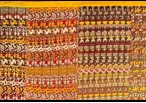
  • About Vrindavani Vastra: A 400-year-old Assamese textile masterpiece, depicting scenes from Krishna’s childhood and divine pastimes in Vrindavan.
  • Woven in silk using the intricate lampas technique, which requires two weavers working together.
  • Features richly coloured threadwork — red, white, black, yellow, green and more.
  • Created under the guidance of Srimanta Sankardeva, commissioned by Koch king Nara Narayan, who ruled parts of present-day Assam and West Bengal.
  • Nara Narayan offered refuge to Sankardeva when he faced persecution instigated by Brahmin priests in the Ahom kingdom.
  • The textile embodies the richness of Assamese weaving traditions, blending multiple artistic influences.
  • It travelled from Assam to Tibet before being acquired by the British Museum in 1904.
  • The displayed piece is 5 metres long, made from several silk drapes; originally it consisted of 15 separate panels stitched together later.
  • Revered as a sacred artistic treasure, Vrindavani Vastra holds a central place in Assamese Vaishnav heritage.
  1. Exercise Garuda: Recently, the Indian Air Force (IAF) participated in the 8th edition of Exercise Garuda 25 alongside the French Air and Space Force (FASF).
  • About Exercise Garuda: A bilateral air exercise held between India and France.
  • Objective: To sharpen operational tactics and procedures in realistic combat conditions, promote mutual learning, and strengthen interoperability between the Indian Air Force (IAF) and the French Air and Space Force (FASF).
  • 2025 Exercise: India is participating with Su-30MKI fighter aircraft.
  • C-17 Globemaster III aircraft are providing airlift support for induction and de-induction.
  • IL-78 air-to-air refuelling tankers are being used to extend range and endurance of fighters.
  • The exercise includes complex simulated air combat missions such as air-to-air combat, air defence, and joint strike operations.
  • Aim: To refine tactics and procedures in realistic operational conditions.
  1. Senkaku Islands: Recently, a China Coast Guard ship formation sailed through waters near the Japan-administered Senkaku Islands, calling it a “rights enforcement patrol.”
  • About the Senkaku Islands
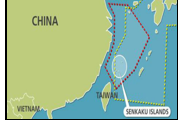
  • The Senkaku Islands are an uninhabited island group in the East China Sea, located about 90 nautical miles north of Japan’s Yaeyama Islands (Okinawa Prefecture) and 120 nautical miles northeast of Taiwan.
  • They are known by different names: Diaoyu Islands in mainland China, Diaoyutai Islands in Taiwan, and Pinnacle Islands by various international observers.
  • Geography: The group includes: Uotsuri, Kuba, Taisho (Kumeakashima), Kitakojima, Minamikojima, Tobise, Okinokitaiwa, and Okinominamiiwa
  • Combined land area: Around 6.3 sq. km, with Uotsuri Island being the largest at 6 sq. km.
  • Geologically, the islands feature conglomerate sandstone, tuff, andesite, andesitic lava, and coral formations uplifted during the Holocene era.
  • The region is highly volcanic, with active fault lines influencing land formation.
  1. Seeds Bill 2025: Recently, the Centre issued the Draft Seeds Bill 2025 to replace the Seeds Act 1966 and the Seeds (Control) Order 1983, following unsuccessful attempts in 2004 and 2019.
  • Key Provisions of the Draft Seeds Bill 2025
  • Mandatory Dealer Registration: All seed dealers and distributors must secure State-issued registration certificates before selling, storing, importing, exporting, or supplying seeds.
  • Uniform Seed Quality Standards: Seed varieties must meet prescribed norms for germination, genetic purity, seed health, and trait expression, in line with Indian Minimum Seed Certification Standards.
  • Controlled Imports: Permits import of unregistered seed varieties solely for research and trials, subject to Central approval.
  • Institutional Mechanism: Establishes Central and State Seed Committees responsible for oversight, coordination, and dispute resolution.
  • Penalty Framework: Minor offences are decriminalised, while serious violations continue to attract stringent penalties.
  • Supply Chain Transparency: Strengthens oversight of seed distribution, certification, and overall supply chain integrity.
  1. Maram Naga Tribe: Recently, the Centre approved ₹9 crore under the Jan Man Scheme for development, welfare initiatives, and cultural preservation of the Maram Naga tribe in Manipur.
  • About the Maram Naga Tribe: Part of the wider Naga ethnic group, residing in Northeast India and parts of Western Myanmar.
  • Their primary homeland lies in the Senapati district of Manipur, surrounded by other Naga tribes.
  • They are considered members of the Tibeto-Burman family of the Mongoloid racial group.
  • Language: The Maram community belongs to the Sino-Tibetan linguistic family.
  • They speak the Maram language, which shows dialectal variations depending on the region.
  • The language is written using the Roman script.
  • Occupation: Agriculture is the main livelihood activity.
  • They practise shifting cultivation and also engage in wet rice cultivation.
  • Hunting serves as an important secondary occupation.
  • Beliefs and Festivals: Marams worship a range of supernatural spirits, both benevolent and malevolent.
  • Their major festivals include Punghi (July) and Kanghi (December).
  • They also celebrate a distinctive festival called Mangkang in April, dedicated to women of the community.
  1. Greenland: Recently, Greenland’s Parliament passed a law restricting foreign nationals from owning property on the island.
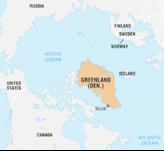
  • About Greenland: The world’s largest island (excluding continents), situated between North America and Europe in the North Atlantic Ocean.
  • Geographically, it is considered part of the North American continent.
  • Formerly a Danish colony, it now functions as an autonomous territory of Denmark.
  • Borders: North: Arctic Ocean
  • East: Greenland Sea
  • Southeast: North Atlantic Ocean
  • Southwest: Davis Strait
  • West: Baffin Bay
  • Capital: Nuuk
  • Geographical Features: Climate: Located within the polar zone, with harsh winters reaching –50°C and cool summers rarely exceeding 10–15°C.
  • Highest Point: Gunnbjorn’s Fjeld
  • Key Natural Resources: Coal, iron ore, lead, zinc, molybdenum, diamonds, gold, platinum, and niobium.
  1. Annual Indian Military Heritage Festival (IMHF): Recently, the United Service Institution of India (USI) held the Third Annual Indian Military Heritage Festival (IMHF) in New Delhi.
  • Key Highlights: Event gathered military leaders, policymakers, diplomats, scholars, authors, think-tanks, industry, and the public.
  • Focus: Showcasing India’s military heritage, discussing contemporary strategic and security issues, and highlighting emerging defence ideas.
  • Sessions Covered: Operation Sindoor & Aatmanirbhar Bharat
  • The War India Forgot
  • Future Conflicts & Strategic Horizons
  • Technology & Strategy in future warfare
  • Great Indian Military Leaders & Systems
  • Taming the Waves
  • Military Biographies
  • Tibet Issues
  • Assam’s Modern Journey
  • BSF–Bangladesh relations
  • Valour & Honour of the Indian Army
  • Lessons from the 1965 Indo-Pak War


UPSC QEP 2026 Batch 5 - English
Buy now View Details
Submit Your Details to Learn More
I agree to give my consent to receive updates through SMS/Email & WhatsApp*.

NEEV GS + CSAT Foundation 2026/27
Buy now View Details


Join theIAShub’s Mains Answer Writing Program

Refine your answer writing skills and elevate your UPSC preparation with personalized support and expert feedback.

Fill out the form to get started with the program or any other enquiries !

I agree to give my consent to receive updates through SMS/Email & WhatsApp*.

Best IAS Coaching In Delhi, UPSC Online & Offline Classes by IAShub

Are you dreaming of becoming an IAS officer? Then, IAShub can be your best guide. It is one of the Best IAS Coaching in Delhi. Many students who want to clear the UPSC exam join IAShub for learning. The institute gives both online and offline classes. Their teachers are experienced and helpful. They easily explain every topic. Students also get notes, tests, and tips to do well in the exam.

UPSC Online Classes by IAShub

IAShub is in Delhi and is trusted by many UPSC students. It offers coaching for every part of the UPSC exam – Prelims, Mains, and Interview. The classes are simple and easy to understand. The teachers are experts and guide students in the right way. IAShub is also known for its helpful notes, test series, and answer-writing practice. IAShub is the best coaching in Delhi and also gives UPSC Online Classes. This helps students from any place in India to learn. The online classes are live and also recorded. So, students can watch them anytime. These classes cover the full UPSC syllabus.

Key Offerings Provided by IAShub

Here are some important services provided by IAShub:

  • UPSC Prelims: IAShub teaches for Prelims with a focus on basics. It also gives daily current affairs and monthly magazines.
  • Classroom Courses: IAShub has classroom learning for students in Delhi. The environment is good and peaceful for study.
  • Live Classes: Students who live far can join live UPSC online classes. These classes are just like real classes.
  • QEP for Mains: The Quality Enrichment Program (QEP) is special for Mains preparation. It helps students write better and faster.
  • Answer Writing: Regular answer writing practice is given. Teachers also check answers and give tips to improve.
  • Free Resource: IAShub gives free notes by toppers and helpful Main Booster material.
  • Test Series: Test series are available for every subject. These help students know their weak points and improve.
  • Interview Guidance Session: IAShub also gives interview practice sessions with experts. These help students feel confident.

UPSC Exam Overview

The UPSC Civil Services Exam has three parts:

  • Prelims: It has two papers: General Studies and CSAT.
  • Mains: It has nine papers, including essays and optional subjects.
  • Interview: It tests the personality and confidence of the student.

This exam is tough, but with the right guidance, it becomes easy to manage. Students must study smart and stay regular.

How IAShub Helps in the UPSC Journey

IAShub supports students from the beginning to the end. It gives the right books, tests, and notes. The classes are easy to follow, and the teachers are always ready to help. Students get personal doubt sessions too. The test series and answer checking help students learn where they need to do better. Also, free study materials save time and money.
IAShub also guides students during the final stage – the interview. Experts take mock interviews and give useful tips. This full support makes IAShub one of the best IAS coaching in Delhi.

Best IAS Coaching In Delhi FAQs

Yes, IAShub offers live and recorded online classes. Students can attend from any part of India.

Classes are available in both English and Hindi, so students can choose the language they are comfortable with.

The classroom centre is located in Delhi. Students can visit and join offline batches there.

IAShub gives interview guidance sessions to help students prepare for the final round of UPSC.