16th October 2025
1. Military Combat Parachute System (MCPS): Recently, the Defence Research and Development Organisation (DRDO) successfully tested the
Military Combat Parachute System (MCPS) during a combat freefall jump from 32,000 feet, marking a major milestone in India’s aerial delivery capability.
- Key Highlights: The test was conducted by Indian Air Force jumpers, proving the system’s efficiency, reliability, and advanced design.
- The MCPS is now the only parachute system in operational use by the Indian Armed Forces that can be deployed above 25,000 feet.
- Key Features: Lower rate of descent for safer landings.
- Superior steering and navigation accuracy, allowing precise landings at designated zones.
- Integration with Navigation with Indian Constellation (NavIC) for independent positioning and resistance to external interference or denial of service.
- Strategic Advantages: Enables safe high-altitude operations and enhances tactical flexibility for Indian paratroopers.
- Ensures self-reliance by reducing dependence on foreign parachute systems.
- Reduced maintenance turnaround time compared to imported systems, ensuring higher operational availability.
2. Impatiens Rajibiana: Recently, the
Botanical Survey of India (BSI) identified a new species of balsam flower,
Impatiens rajibiana, further enriching India’s floral diversity.
- About Impatiens Rajibiana: Newly discovered species of the balsam family (Balsaminaceae).
- Found in the natural forests of Shergaon, located in the West Kameng district of Arunachal Pradesh.
- Grows in moist, shaded forest areas at an elevation above 2,000 meters.
- Like many balsams, it is likely endemic to the region and found in limited populations.
- Significance: India is home to around 230 known species of balsams, including the commonly known Impatiens balsamina (garden balsam or touch-me-not).
- Arunachal Pradesh is a biodiversity hotspot, where over 16 new balsam species were identified between 2013 and 2017, including Impatiens godfreyi and Impatiens sashinborthakurii.
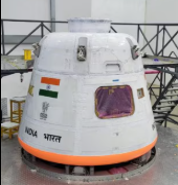
3. Crew Escape System (CES): Recently, the
Indian Space Research Organisation (ISRO) developed a cost-effective, single-stage Test Vehicle powered by the
Vikas engine to validate the
Crew Escape System (CES), a vital safety component for the upcoming Gaganyaan human spaceflight mission.
- About CES: An emergency safety mechanism designed to rapidly pull the crew module (with astronauts) away from the launch vehicle in case of a launch abort or critical failure.
- It ensures that astronauts are taken to a safe distance before the launch vehicle encounters a catastrophic event.
- Types of Crew Escape Systems: Puller Type: Used in ISRO’s Gaganyaan mission. The CES pulls the crew module away using rocket-powered motors positioned above it.
- Pusher Type: Used in systems like SpaceX’s Falcon 9. The crew module is pushed away using compact, high-thrust liquid-fuel engines located beneath it.
- The Integrated Vehicle Health Management (IVHM) System — a sophisticated network of sensors, electronics, and software — continuously monitors: Vehicle systems and crew health parameters in real time. Detects anomalies early, minimizes false alarms, and automatically activates the CES when required.
4. Neurological Health Crisis: Recently, the World Health Organization (WHO) warned that the world is failing to tackle a rising
neurological health crisis, with stroke, dementia, and epilepsy causing over 11 million deaths each year.
- Key Findings: Neurological disorders such as stroke, dementia, and epilepsy now cause over 11 million deaths annually, making them one of the world’s leading causes of death and disability.
- Massive Reach: More than 3 billion people — 40% of the global population — live with neurological conditions, according to the WHO Global Status Report on Neurology (October 2025).
- Policy Gaps: Less than one in three countries (32%, 63 nations) have national brain health policies.
- Only 18% (34 countries) have dedicated budgets for neurological care.
- Merely 25% of nations include neurological disorders in universal health coverage.
- Inequities between Nations: Low-income countries have over 80 times fewer neurologists than wealthy nations.
- Lack of stroke units, rehabilitation, and palliative care leaves millions untreated.
- Rural and underserved areas face stigma, exclusion, and financial hardship.
5. Astra Mark 2: Recently, the Defence Research and Development Organisation (DRDO) announced plans to extend the range of the
Astra Mark 2 air-to-air missile beyond 200 kilometres, marking a significant boost to India’s indigenous missile capabilities.
- About Astra Mark 2: A Beyond Visual Range (BVR) air-to-air missile currently under development by DRDO.
- Over 50 public and private industries, including Hindustan Aeronautics Limited (HAL), have contributed to the project alongside various DRDO laboratories.
- The Astra Mark-1, already operational with the Indian Air Force (IAF), has a range of 90–100 km and is integrated with the LCA Tejas and Su-30 MKI fighter jets.
- The Astra Mark 2 will significantly enhance India’s air superiority in long-range aerial engagements and has potential for export to friendly nations.
- Key Features: Unlike the single-pulse propulsion of Astra Mk-1, the Astra Mk-2 uses a dual-pulse solid-fueled motor, enabling a greater range and higher energy efficiency.
- Specifications: Length:6 m, Diameter: 190 mm , Weight: ~175 kg, Speed: Up to Mach 4.5 and Effective Range: 150–180 km (planned to exceed 200 km)
6. IUCN Red List: Recently, the
IUCN Red List update warned that India’s open ecosystems —
grasslands, deserts, and scrublands, are under growing ecological stress.
- Key Finding: The IUCN Red List (2025) update reveals that India’s open natural ecosystems — grasslands, semi-arid areas, deserts, croplands, hilly scrublands, and fallow lands — are increasingly threatened.
- Four Indian Bird Species Uplisted: Indian Courser: from Least Concern → Near Threatened
- Indian Roller: from Least Concern → Near Threatened
- Rufous-tailed Lark: from Least Concern → Near Threatened
- Long-billed Grasshopper-warbler: from Vulnerable → Endangered
- Reason for Concern: All four species depend on open natural ecosystems, which are rapidly declining due to:
- Expansion of power infrastructure
- Agricultural intensification
- Spread of invasive species
- Afforestation converting open lands into woodlands
- Broader Assessment: 1,360 bird species globally were reassessed in the latest IUCN update.
- 12 Indian species were included — 8 downlisted (improved) and 4 uplisted (worsened).
7. Limestone: Recently, the Ministry of Mines reclassified limestone as a major mineral, ending its previous dual status as both a major and minor mineral.
- About the Notification: The new directive eliminates the earlier end-use-based distinction, where limestone used for industrial purposes was treated as a major mineral and that used for building materials (lime production) as a minor mineral.
- Henceforth, all limestone will be uniformly treated as a major mineral under the Mines and Minerals (Development and Regulation) Act, 1957 (MMDR Act).
- About Limestone: A sedimentary rock primarily composed of calcium carbonate (CaCO₃) in the form of calcite or aragonite, sometimes mixed with dolomite.
- Formation: Originates through biogenic precipitation (from marine organisms) or mechanical deposition of pre-existing limestone.
- Uses: Key raw material for cement, steel, fertilizer, glass, sugar, and chemical
- Widely used in construction and agriculture.
- Geological Importance: Often contains well-preserved fossils, making it crucial for studying Earth’s evolutionary and climatic history.
8. Left-Wing Extremism (LWE): Recently, the Union Home Ministry announced that
Left-Wing Extremism (LWE), commonly known as the Maoist insurgency, is now limited to only 11 districts nationwide, with just three districts in Chhattisgarh classified as “most affected.”
- Key Highlights: The number of Left-Wing Extremism (LWE)-affected districts in India has reduced to 11, down from 18 earlier this year (2025) and 126 in 2013.
- Most-Affected Areas: Only three districts — Bijapur, Sukma, and Narayanpur (all in Chhattisgarh) — are now classified as “most-affected.”
- Other Affected Districts: Chhattisgarh: Dantewada, Gariaband, Kanker, Mohla-Manpur-Ambagarh Chowki
- Jharkhand: West Singhbhum
- Madhya Pradesh: Balaghat
- Maharashtra: Gadchiroli
- Odisha: Kandhamal
- Security Operations: Since 2021, over 100 forward-operating bases have been established, mainly in Chhattisgarh, enhancing security presence and area control.
9. World Trade Organization (WTO): Recently, China filed a formal complaint with the
World Trade Organization (WTO), accusing India of offering
unfair subsidies for electric vehicles (EVs) and batteries that allegedly breach global trade norms.
- Key Highlights: China’s Allegation: India’s measures breach the principle of national treatment (equal treatment for foreign and domestic firms).
- The subsidies act as import substitution, which is explicitly prohibited under WTO rules.
- These policies unfairly benefit Indian industries and undermine China’s trade interests.
- India’s Policies in Question: The Electric Vehicle Policy and the Production-Linked Incentive (PLI) Scheme, both aimed at boosting domestic manufacturing.
- India’s Response: Commerce Secretary Rajesh Agrawal stated that the ministry will review China’s detailed submissions before responding.
10. Commonwealth Games (CWG): Recently, Ahmedabad was selected as the host city for the 2030
Commonwealth Games (CWG), marking the centenary edition of this prestigious event.
- Key Highlights: Historic Context: India last hosted the CWG in Delhi 2010, which faced criticism for poor planning, infrastructure delays, and corruption allegations.
- Strategic Step for Olympics: The 2030 CWG is viewed as a stepping stone for India’s 2036 Olympics bid, showcasing its readiness and reliability.
- Olympic Strategy: India aims to prove itself as a “reliable destination” through transparent and timely infrastructure completion — learning from past mistakes.
- Upcoming Sporting Events in India: 2027 Women’s Volleyball World Championship
- 2028 World U20 Athletics Championships


 theIASHub | 16 Oct, 2025




 Detailed Solutions & Explanations

