15th October 2025
1. India’s Twinning Rate: Recently, a new international study found that
India’s twinning rate, the number of twin births per 1,000 deliveries, is expected to decline in the coming decades.
- Key Highlights: Twin pregnancies carry higher risks for mothers and babies; knowing twinning rates helps public health systems prepare for high-risk deliveries.
- Why it matters demographically: Twinning reflects fertility trends, maternal age patterns, and use of fertility treatments — important for understanding population dynamics.
- Key projections for India: India’s twin birth rate expected to decline by 10.5% by 2100.
- Despite this fall, India will still have one of the world’s largest populations of twins due to its large population size.
- India projected to account for 4% of all twin births among the studied countries.
- Reasons for decline: Falling fertility rates (below replacement level) mean fewer births overall in India and Bangladesh.
- Offsetting factor: More women giving birth at older ages, which slightly increases the chance of twins.
- Underestimation warning: Study may underestimate India’s future twinning rates since it didn’t factor in the rise in medically assisted reproduction (MAR) — such as ovulation induction, artificial insemination, and IVF — which has been increasing in India.
- Global insight: Studies show a 40–50% rise in twinning rates in high-income countries due to MAR alone.
2. Mission Drishti: Recently, Indian space-tech startup GalaxEye Space, founded by IIT Madras alumni, announced
‘Mission Drishti’, the world’s first multi-sensor Earth Observation satellite, scheduled for launch in the first quarter of 2026.
- About Mission Drishti: The first satellite globally to integrate multiple sensing technologies — combining Synthetic Aperture Radar (SAR) and optical sensors on a single platform. This allows for real-time, high-resolution, and all-weather Earth observation.
- Objective: To deliver multi-source geospatial intelligence for sectors such as defence, disaster management, infrastructure, utilities, agriculture, and financial risk analysis, thereby supporting data-driven governance and national security.
- Key Features: Provides 1.5-meter resolution, among the best in its category.
- Weighs 160 kg, making it India’s largest privately built satellite so far.
- Utilizes AI-based data fusion for advanced geospatial insights and precision planning.
- Plans to deploy 8–10 satellites over four years, creating a global observation network.
3. Sundarbans National Park: Recently, the
IUCN World Heritage Outlook 4, released at the ongoing IUCN Congress in Abu Dhabi, reported a serious decline in the ecological health of the
Sundarbans National Park, one of India’s key ecosystems and a UNESCO World Heritage Site.
- Key Findings: Climate change – rising sea levels, frequent storm surges, and salinity changes are degrading mangroves.
- Pollution – heavy metal contamination and unsustainable resource extraction.
- Pathogens – Bangladesh’s Sundarbans facing “top dying disease” in mangroves.
- Human pressures – habitat clearance, illegal logging, road building, waste disposal, and encroachment.
- Ecological Impact: These combined pressures are reducing mangrove diversity, degrading coastal ecosystems, and threatening biodiversity — including the Bengal tiger and numerous aquatic species dependent on mangrove stability.
4. Synchronous All India Elephant Estimation (SAIEE): Recently, the Union Environment Ministry released the results of the long-delayed Synchronous All India Elephant Estimation (SAIEE) 2021–25.
- Key Findings: comparison with 2017: 2017 estimate: 27,312 elephants and 2025 estimate: 22,446 elephants
- Decline: 4,065 elephants (17.81%)
- Regional Distribution: Western Ghats: 11,934 elephants (highest)
- North Eastern Hills & Brahmaputra floodplains: 6,559
- Shivalik Hills & Gangetic plains: 2,062
- Central India & Eastern Ghats: 1,891
- New Methodology: Genetic Mark–Recapture: Adopted from tiger estimation framework, dividing forest habitats into smaller 100 sq km, 25 sq km, and 4 sq km grids.
- Combined ground sign surveys with genetic analysis of dung samples.
- Over 20,000 dung samples collected → 4,065 unique elephants identified via DNA analysis.
- Genetic mark–recapture model helps estimate population density and abundance with higher accuracy.
- Earlier censuses relied on direct sightings, waterhole counts, and dung-decay methods — now replaced with this DNA-based model.
5. Microplastic Contamination: Recently, a new scientific study found alarming levels of
microplastic contamination in Goa’s estuarine fish species.
- Key Findings: Conducted by scientists from CSIR–National Institute of Oceanography (Goa) and Academy of Scientific and Innovative Research (Ghaziabad), the study examined 251 fish from nine commercial species along Goa’s coast to assess microplastic contamination and health risks.
- Researchers found 4,871 polluting particles in the fish samples — 3,369 of them were plastic polymers of 19 types.
- More contamination was recorded on the sea floor (benthic zone) than in open waters (pelagic zone).
- Fish-level effects: Disrupted gene expression, oxidative stress, reproductive damage, and stunted growth in fish.
- Human-level effects: Eating contaminated fish may cause immune dysfunction, brain toxicity, and higher cancer risk.
6. International Institute for Environment and Development: Recently, the
International Institute for Environment and Development reported that India could reduce climate-related economic losses by over 80% and save billions by investing early in social protection and resilience systems.
- Key Finding for India: Without anticipatory action, India could lose over $11.16 billion in a severe climate shock.
- By investing $2.2 billion in early resilience measures, India could avoid over $46 billion in losses, cutting potential damages by more than 80%.
- This represents a fivefold return on every rupee spent compared to post-disaster recovery.
- Study Scope and Method Analysed 62 years of disaster data and 10,000+ simulations per country across eight countries — India, Bangladesh, Pakistan, Ethiopia, Ghana, Malawi, Senegal, and Uganda.
- Compared four intervention types: Existing social protection programmes, Humanitarian aid, Anticipatory Direct Benefit Transfers (DBTs) and Early resilience investments
- Anticipatory Social Protection Index for Resilience (ASPIRE):
- Evaluates 69 indicators of preparedness.
- India scores strongly in digital registries and scalable employment schemes.
- Weaknesses in early warning integration and funding alignment.
7. Forest Declaration Assessment 2025: Recently, the
Forest Declaration Assessment 2025 reported that the health of the world’s forests has reached a crisis point.
- Key Findings: The world is off track to halt and reverse deforestation by 2030, a key global pledge.
- Deforestation surged 63% above global targets in 2024.
- Global forest loss (2024): 1 million hectares, exceeding the annual target of 5 million hectares.
- Pledge deviation: This is 3 million hectares higher than what was committed under major global forest agreements.
- Tropical moist forests degraded (2024): 8 million hectares, more than double the targeted limit.
- Mining Expansion: 77% of global mines located within 50 km of Key Biodiversity Areas (KBAs). Forest loss in KBAs rose 47% in 2023–24, totaling 17 million hectares, putting the world 104% off track from zero tree-cover loss by 2030.
- Illegal deforestation (for agriculture): Estimated 61–94% of tropical deforestation.
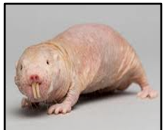
8. Naked Mole Rats: Recently, a study revealed that
naked mole rats have evolved a unique
DNA repair mechanism that may explain their exceptional longevity and disease resistance.
- Key Findings: The study focuses on the cyclic GMP-AMP synthase (cGAS) enzyme, which behaves differently in naked mole rats compared to humans and mice.
- In humans and mice: cGAS interferes with DNA repair, leading to higher risks of aging and cancer.
- In naked mole rats: cGAS enhances DNA repair and maintains genome stability, contributing to their long lifespan.
- About Naked Mole Rat: Small, hairless burrowing rodent native to East Africa.
- Distribution: Southern Ethiopia, Kenya, Somalia, and Djibouti.
- Habitat: Dry regions of tropical grasslands and savannas.
- Diet: Herbivorous, feeding mainly on large underground tubers.
- Conservation Status: Least Concern (IUCN).
9. Fare Se Fursat Scheme: Recently, the Union Civil Aviation Minister launched Alliance Air’s “
Fare Se Fursat”
Fixed Airfare Scheme, offering stable, affordable fares in line with the government’s UDAN (Ude Desh ka Aam Nagrik) vision.
- About “Fare Se Fursat” Fixed Airfare Scheme: An innovative scheme by Alliance Air, introducing a single, fixed airfare for each route — unchanged regardless of when the ticket is booked, even for last-minute travel.
- Objective: To democratize aviation by making flying affordable, stress-free, and accessible for the middle class and first-time travellers.
- Key Features: One uniform fare per route, with no price surge close to departure dates.
- Removes uncertainty linked to dynamic ticket pricing, ensuring budget predictability for travellers.
- Encourages participation from Tier-2 and Tier-3 cities, promoting regional connectivity.
- - Embodies the spirit of “Naye Bharat ki Udaan”, emphasizing aviation as a public service rather than a purely profit-driven enterprise.
10. World Health Organization: Recently, the
World Health Organization issued a medical product alert about three contaminated oral liquid medicines detected in India.
- Key Highlights: Contaminated Products Identified: COLDRIF – manufactured by Sresan Pharmaceutical
- Respifresh TR – manufactured by Rednex Pharmaceuticals
- ReLife – manufactured by Shape Pharma
- Nature of Contamination: The Central Drugs Standard Control Organisation (CDSCO) detected the presence of Diethylene Glycol (DEG), a toxic and potentially fatal chemical present in these medicines.
- WHO emphasized that these contaminated syrups are unsafe, especially for children, and can result in severe or fatal poisoning.
- WHO advisory to Indian National Regulatory Authorities (NRAs):
- Conduct targeted market surveillance, especially in informal and unregulated supply chains.
- Ensure heightened vigilance in detecting substandard products.


 theIASHub | 15 Oct, 2025









 Detailed Solutions & Explanations

